

Bicycle crashes in the United States are a growing concern as urban cycling popularity rises. Riders face a variety of risks, from car collisions and distracted driving to road hazards and poorly maintained bike lanes. When a crash occurs, understanding your rights and the steps involved in filing a bicycle crash injury claim is crucial. This blog explores how fault is determined, what evidence matters most, and practical tips for settlement negotiations.
Bicycle injuries often involve complex liability issues. Fault may be shared between drivers, riders, and occasionally municipalities. Medical documentation, eyewitness accounts, and accident reconstruction can all influence the outcome of a claim. Learning how to navigate these factors early improves the likelihood of a fair settlement and ensures that the injured party’s legal rights are protected.
For more authoritative guidance on bicycle accidents and legal steps, FindLaw provides a detailed overview.
Understanding Fault in Bicycle Accidents
Determining fault in a bicycle crash is one of the most critical components of an injury claim. California, like most U.S. states, uses a comparative fault system. This means that damages may be reduced if the rider is found partially responsible. For example, if a cyclist runs a red light and collides with a vehicle, the compensation may be adjusted according to the percentage of fault assigned.
Liability may not be obvious in many cases. Drivers might fail to yield, swerve unexpectedly, or be distracted by smartphones. Cyclists may occasionally misjudge traffic, fail to signal, or ride outside designated lanes. Municipalities may also be responsible when dangerous road conditions, such as potholes or poorly marked bike lanes, contribute to a crash. Evaluating these factors requires careful analysis of the crash scene, witness statements, and photographic evidence.
Key Evidence in Bicycle Crash Injury Claims
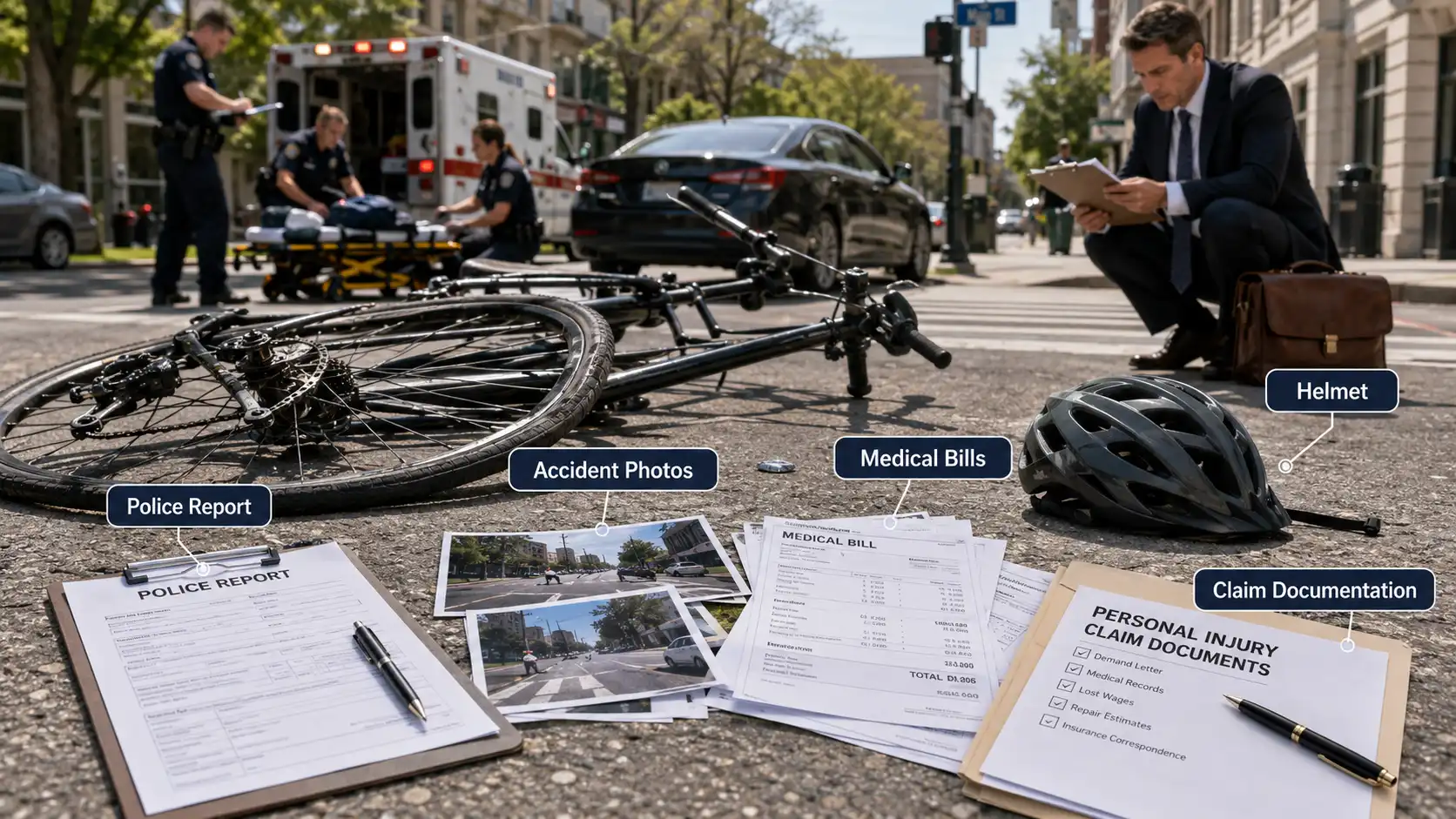
Evidence is the backbone of a successful bicycle crash claim. Collecting and preserving it promptly ensures accuracy and strengthens your case.
Accident Documentation: Photos of the scene, vehicle damage, road conditions, and injuries provide visual proof of the circumstances. Whenever possible, use a smartphone to capture multiple angles immediately after the incident.
Medical Records: Injuries often develop or worsen over time. Keep thorough documentation from emergency rooms, urgent care, physical therapy sessions, and any specialist consultations. Medical records help establish the severity of injuries and necessary treatment.
Witness Statements: Eyewitness accounts can confirm how the crash occurred and support your version of events. Police reports often include statements from other riders, drivers, or pedestrians present.
Digital Evidence: Dashcam footage, security cameras, or smartphone videos can be compelling in disputes about fault. GPS or e-bike sensor data may also provide valuable insight into speed and trajectory.
Accident Reconstruction: In serious crashes, legal professionals or engineers may conduct a reconstruction to illustrate the sequence of events. This includes mapping vehicle paths, impact points, and final positions to clarify liability.
Properly organized evidence not only strengthens a claim but also reduces the risk of disputes with insurance companies.
Steps to Filing a Bicycle Crash Injury Claim
Filing a claim involves several methodical steps:
- Seek Medical Attention: Prioritize health first. Documenting injuries is essential for legal and insurance purposes.
- Report the Incident: Notify local authorities promptly. Police reports create official records that support your claim.
- Gather Evidence: Collect photos, witness information, medical records, and digital data from any devices involved.
- Notify Insurance: Contact your insurer and, if applicable, the driver’s insurance company. Provide accurate facts without admitting fault.
- Consult an Attorney: Attorneys experienced in bicycle crash injury claims guide you through the process, evaluate liability, and handle negotiations. They help ensure that your damages for medical bills, lost wages, and pain and suffering are properly considered.
Each step is designed to establish fault clearly and support a fair resolution.
Challenges in Bicycle Crash Claims
Bicycle injury claims can present unique challenges. Insurance companies may attempt to minimize payouts, especially in cases where fault is not obvious. They often scrutinize rider behavior, previous health conditions, and accident documentation. In multi-party collisions, determining fault percentages can become complex, especially when both driver and cyclist share responsibility.
Additionally, e-bike and e-scooter accidents are on the rise, introducing additional liability issues, including battery fires, speed-related injuries, and malfunctioning vehicles. Cases involving shared mobility programs, like city e-bike rentals, may require claims against the company in addition to the driver. Legal guidance is often necessary to navigate these complexities effectively.

Settlement Tips for Bicycle Crash Injury Claims
Negotiating a settlement requires preparation, documentation, and patience:
Know Your Damages: Understand the full impact of your injuries, including current and future medical costs, lost income, and non-economic damages like pain and suffering.
Keep Detailed Records: Maintain a comprehensive file of medical bills, repair costs, lost wages, and communications with insurers.
Avoid Early Low Offers: Insurers may offer quick settlements to reduce liability. Evaluate offers carefully with legal guidance.
Negotiate with Evidence: Present your documented evidence, witness accounts, and any reconstruction analysis to support your claim.
Consider Alternative Dispute Resolution: Mediation or arbitration can expedite settlements while avoiding lengthy court proceedings.
Successful negotiations often balance legal strategy with realistic expectations, ensuring fair compensation without prolonged litigation.
Common Mistakes to Avoid
Bicyclists frequently make errors that reduce the value of their claims:
- Failing to document the crash immediately.
- Ignoring injuries that seem minor initially.
- Admitting fault inadvertently in statements to police or insurers.
- Not preserving physical evidence like bike damage or helmet condition.
- Delaying consultation with an attorney.
Avoiding these mistakes helps maintain credibility and strengthens the claim.
Legal Support and Resources
Professional legal guidance is highly recommended for anyone filing a bicycle crash injury claim. Attorneys specializing in personal injury or bicycle accidents understand state laws, insurance tactics, and evidence requirements. They help establish fault, evaluate damages, and negotiate settlements efficiently.
Authoritative resources provide additional guidance for riders, including FindLaw’s Bicycle Accident Overview, which details legal steps, liability considerations, and injury claims in the United States.
Conclusion
Bicycle crashes can have serious physical, financial, and emotional consequences. Understanding fault, preserving evidence, and negotiating settlements carefully are essential for protecting your legal rights. Proper preparation, medical documentation, and legal guidance increase the likelihood of a fair outcome.
As urban cycling continues to grow, riders must remain vigilant, informed, and proactive when accidents occur. Consulting an attorney experienced in bicycle crash injury claims can simplify the process, clarify liability, and provide guidance for achieving a favorable settlement.