
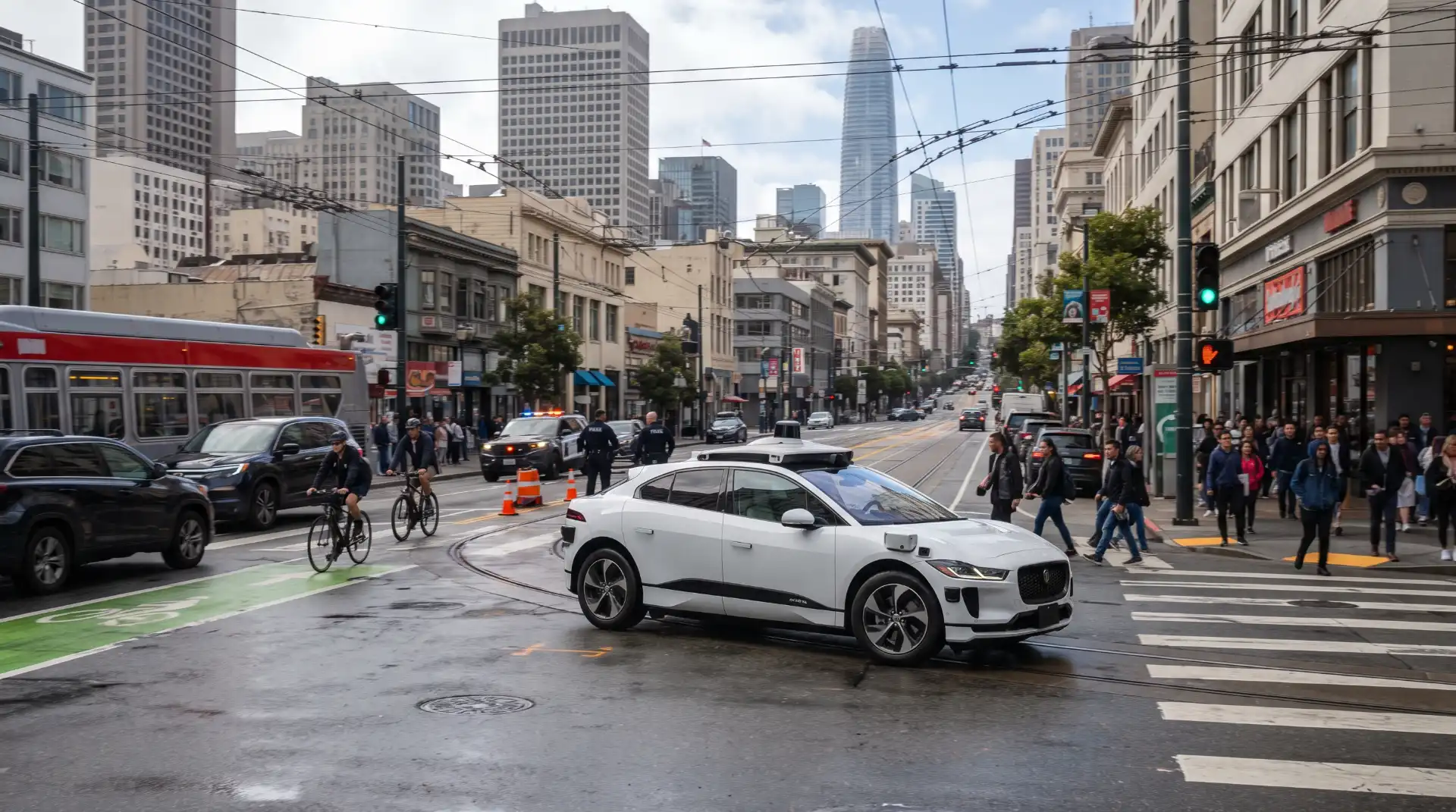
Autonomous vehicles have moved from experimental technology into an increasingly visible part of transportation in California. San Francisco has become one of the most closely watched cities in the country for driverless vehicle operations, placing autonomous vehicles directly into an environment filled with pedestrians, cyclists, buses, delivery trucks, motorcycles, conventional passenger cars, construction activity, steep streets, narrow lanes, and complicated intersections.
As robotaxis become more familiar on San Francisco streets, accidents involving these vehicles create legal questions that are different from many traditional car crashes. In an ordinary collision, investigators can usually identify a human driver who was responsible for steering, braking, accelerating, observing traffic, and making decisions immediately before the impact. With a driverless vehicle, the investigation may need to examine the actions of an automated driving system as well as the companies responsible for the vehicle, software, maintenance, deployment, or technology.
This does not mean that every accident involving an autonomous vehicle is automatically the responsibility of the robotaxi company. Another driver may have caused the collision. A pedestrian or cyclist may have unexpectedly entered the vehicle’s path. A roadway condition could have contributed. A mechanical problem, sensor issue, software problem, maintenance failure, or combination of factors could also become relevant.
For an injured person, the most important question is therefore not simply whether the vehicle was autonomous. The more important question is what caused the accident and which party may be legally responsible for that cause?
What Is an Autonomous Vehicle Accident?
An autonomous vehicle accident is a collision or other traffic incident involving a vehicle that uses automated-driving technology to perform some or all of the driving task. The technology can involve cameras, radar, lidar where applicable, GPS and mapping systems, onboard computers, artificial intelligence, electronic control systems, and other sensors or software.
It is important to distinguish fully driverless vehicles from ordinary vehicles equipped with advanced driver-assistance systems. Lane-keeping assistance, adaptive cruise control, automatic emergency braking, parking assistance, and similar technologies can help a human driver, but those features do not necessarily mean the vehicle is operating autonomously.
This distinction can become particularly important when determining responsibility after a collision. A human driver using an assistance system may still have an active responsibility to monitor the roadway and control the vehicle. A driverless robotaxi presents a different situation because the automated system may be responsible for performing the driving task at the time of the crash.
This distinction is also important when comparing autonomous vehicle accidents with other technology-related crashes. Your site’s article on Lane Keeping Assist Accidents and Driver Responsibility explains how driver-assistance technology can affect an accident investigation without necessarily eliminating the driver’s responsibility.
Why San Francisco Is a Challenging Environment for Autonomous Vehicles
San Francisco presents an unusually complicated driving environment. The city contains steep grades, narrow streets, one-way roadways, dense pedestrian activity, bicycle infrastructure, public transportation, frequent delivery activity, construction zones, parked vehicles, unusual intersections, and heavy traffic.
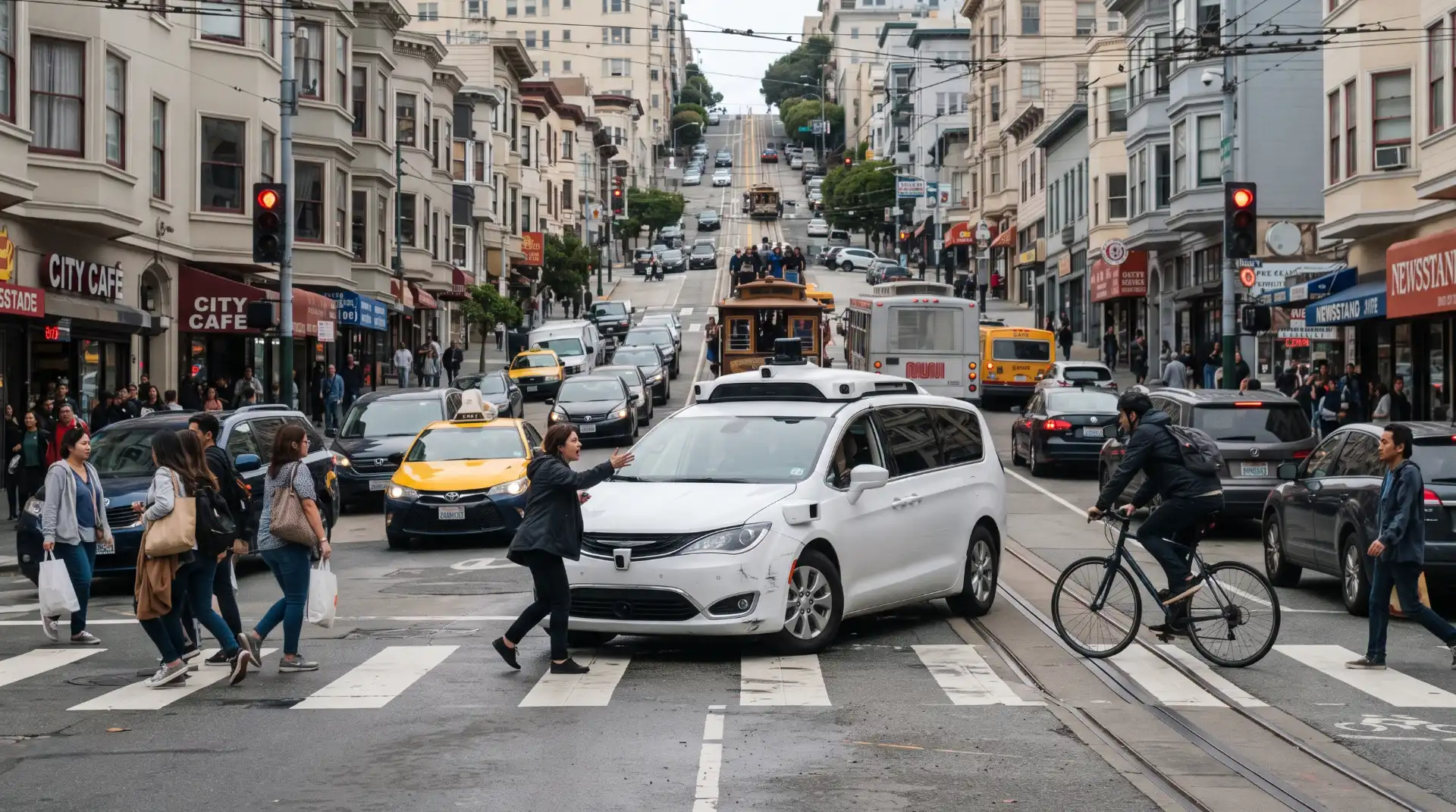
A vehicle traveling through the city may encounter several different traffic situations within a very short distance. A clear roadway can quickly become congested. A pedestrian can enter a crosswalk. A cyclist can move alongside traffic. A bus can stop near an intersection. A delivery vehicle can temporarily obstruct visibility. Construction can alter lane markings or change the normal path of traffic.
Human drivers have to process these conditions continuously. Autonomous vehicles are also expected to interpret the environment and respond appropriately based on their technology and operating conditions.
When a collision occurs, investigators may therefore need to determine what the vehicle’s system detected, what it was programmed or designed to do, what action it took, and whether that action was reasonable under the circumstances.
Who Can Be Responsible for a San Francisco Robotaxi Accident?
There is no single rule that makes one party responsible for every autonomous vehicle collision. Liability depends on the facts surrounding the accident and the legal theory that applies to those facts.
Potentially responsible parties can include the company operating the autonomous vehicle, the vehicle manufacturer, the developer of the automated-driving system, a technology supplier, a maintenance company, another driver, a commercial vehicle operator, or another party whose conduct or product contributed to the collision.
In some cases, more than one party may share responsibility. For example, a vehicle could have a software problem while another driver simultaneously makes an unsafe lane change. An investigation would need to determine whether either event caused the crash and whether both contributed to the injuries.
This is one reason autonomous vehicle accident cases can become more complicated than conventional two-car collisions.
Can the Robotaxi Operator Be Held Responsible?
The company operating a robotaxi may become an important part of an accident investigation. The operator can have responsibilities involving vehicle deployment, maintenance, monitoring, operational limitations, safety procedures, and compliance with applicable regulations.
Investigators may examine whether the vehicle was being operated within its approved conditions and whether required systems were functioning properly.
For example, if a vehicle experienced a known problem before the collision and the operator continued to deploy it without appropriate corrective action, that information could become relevant. Similarly, if a maintenance issue was not properly addressed, investigators may need to determine whether the problem contributed to the accident.
However, the mere fact that an autonomous vehicle belongs to or is operated by a particular company does not automatically establish negligence or legal liability.
Can a Vehicle Manufacturer Be Responsible?
The vehicle manufacturer may become relevant when the physical vehicle or one of its components allegedly contributed to the crash.
Autonomous vehicles depend on many interconnected components. Cameras, sensors, braking systems, steering components, computers, communications equipment, and other electronic systems can all affect vehicle operation.
If a component was defectively manufactured, improperly installed, inadequately maintained, or otherwise failed in a way that contributed to the collision, investigators may need to determine whether a product-related claim is appropriate.
The investigation may involve examining the physical vehicle, repair records, maintenance history, technical specifications, previous complaints, system warnings, and other available evidence.
Not every component failure automatically creates manufacturer liability. The specific cause of the failure and the legal requirements for a product liability claim must be evaluated based on the circumstances.
What If the Software Causes the Accident?
Software is one of the most important differences between traditional vehicles and highly automated vehicles.
An autonomous vehicle uses software to process information from sensors and make decisions about movement. The system may determine whether to slow down, stop, accelerate, steer, change position, or continue along a particular path.
If the system misunderstands the environment, an accident could potentially occur.
For example, a system could potentially misinterpret a roadway feature, incorrectly classify an object, misunderstand a temporary traffic pattern, or fail to respond appropriately to another road user.
Proving that software caused a crash, however, can be technically difficult. Investigators may need to determine what information the system received, what the system recognized, what decision it made, and whether the decision was consistent with the vehicle’s intended operation.
This is why electronic data and technical analysis can be particularly important in autonomous vehicle cases.
Why Autonomous Vehicle Data Can Be Critical Evidence
A conventional accident investigation may rely heavily on witness statements, photographs, police reports, vehicle damage, and video footage. An autonomous vehicle accident may involve these same sources of evidence while also generating additional technical information.
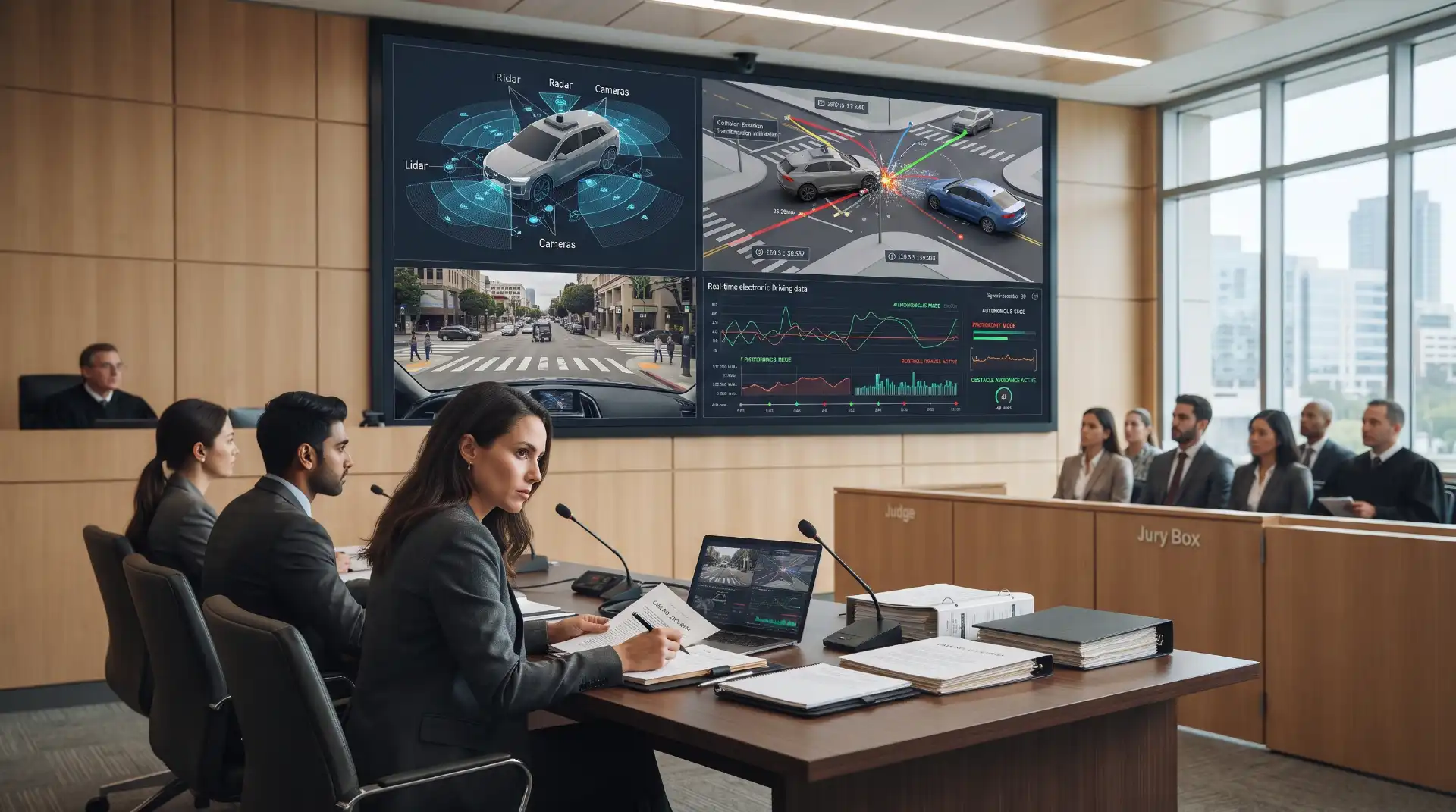
Depending on the vehicle and circumstances, relevant information could include system status, sensor information, vehicle speed, braking activity, steering commands, system warnings, software information, and other electronic records.
California’s autonomous vehicle regulatory system includes collision reporting requirements and technical information requirements. The California DMV states that manufacturers testing autonomous vehicles must report collisions involving their vehicles when the collision results in property damage, bodily injury, or death.
Current California regulatory materials also contemplate additional information about autonomous vehicle operation, including technical information and data relating to sensors, vehicle speed, acceleration, braking, steering commands, and other system activity.
This type of information can be extremely important when determining what happened immediately before a crash.
What Happens If an Autonomous Vehicle Sensor Fails?
Sensors are fundamental to automated driving. The vehicle needs accurate information about the surrounding environment to make appropriate driving decisions.
A sensor problem could potentially affect how the system identifies vehicles, pedestrians, bicycles, lane boundaries, road hazards, or other objects.
Investigators may therefore examine whether a sensor was working correctly before the accident, whether the system identified a fault, whether a warning appeared, and whether the vehicle should have stopped operating after detecting the problem.
Physical damage can also be important. If a previous collision damaged a sensor and the vehicle was returned to service without proper inspection or calibration, maintenance records could become relevant to a later accident investigation.
Could Poor Maintenance Cause a Robotaxi Crash?
Maintenance is another potential issue in autonomous vehicle accident cases.
A driverless vehicle may depend on sophisticated cameras, sensors, computers, braking components, steering systems, tires, suspension components, and other equipment. Proper maintenance can therefore be important to safe operation.
If a vehicle was not properly inspected or repaired, an accident investigation may examine whether that failure contributed to the crash.
Maintenance records can provide evidence about when a vehicle was inspected, what problems had previously been identified, what repairs were performed, and whether technicians identified recurring issues.
For an injured person, these records may be difficult to obtain independently. That is one reason early preservation of evidence can be important in cases involving commercial or autonomous vehicles.
What If Another Driver Causes the Robotaxi Collision?
Autonomous vehicle technology does not automatically make the robotaxi responsible for every accident involving it.
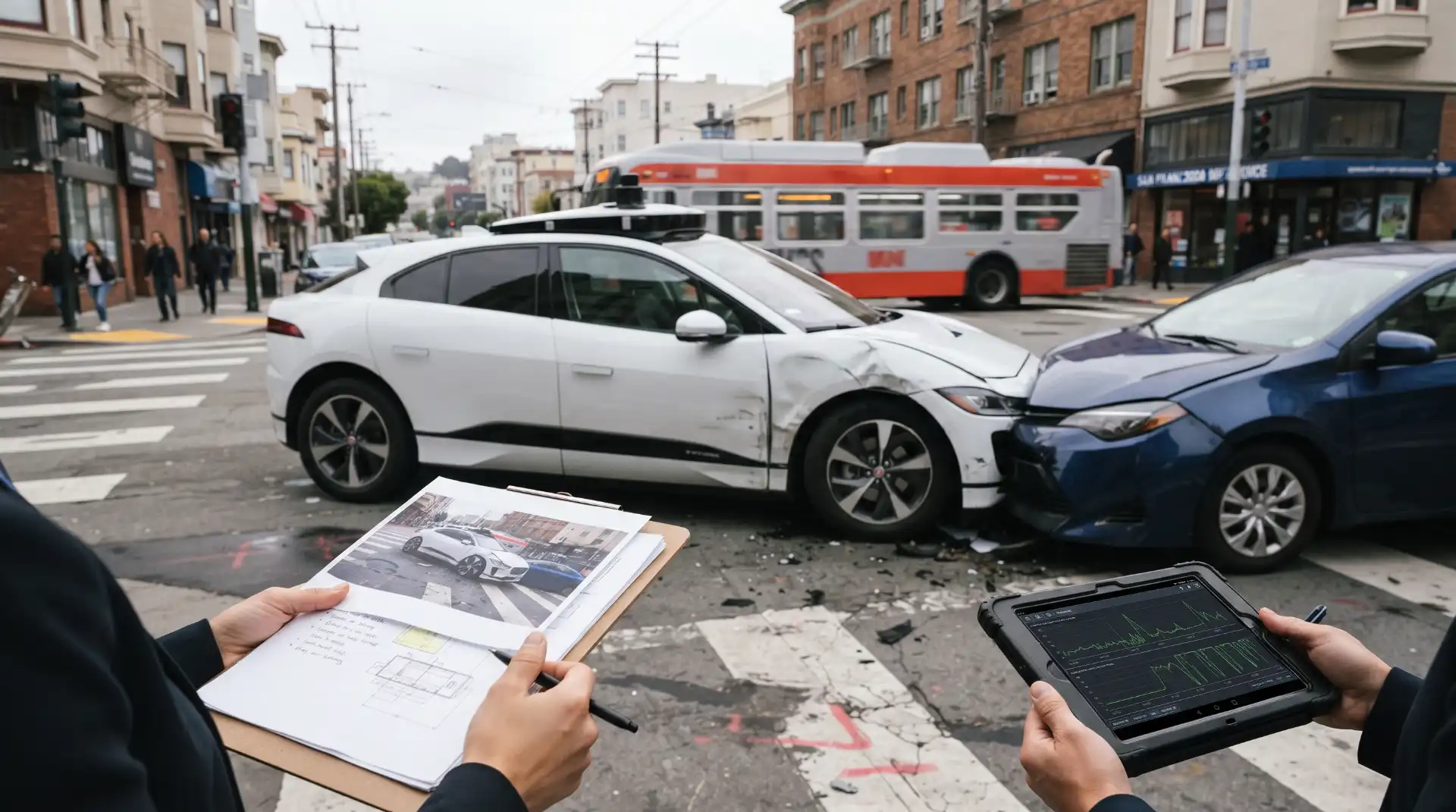
Another driver may speed, follow too closely, run a red light, make an unsafe lane change, fail to yield, drive while distracted, or otherwise create the circumstances leading to the crash.
Imagine that a human driver suddenly turns across the path of a robotaxi. If the autonomous vehicle responds appropriately but cannot avoid the collision because the other driver created an unexpected hazard, the human driver’s actions may become the primary focus of the investigation.
This is particularly important because accident liability is based on causation and responsibility, not simply on which vehicle uses more advanced technology.
Multi-Vehicle Robotaxi Accidents Can Be Extremely Complicated
A crash involving three or four vehicles can create significantly more complicated questions.
Consider a hypothetical collision in which one driver makes an unsafe lane change, a second driver brakes suddenly, a robotaxi reacts to the changing traffic, and a fourth vehicle strikes the rear of another vehicle.
Investigators may need to reconstruct the accident one event at a time.
Which vehicle created the initial hazard? Which driver had an opportunity to avoid the collision? Did the autonomous vehicle react appropriately? Did another driver have enough time to stop? Did the first impact cause the later collision?
Accident reconstruction may be necessary to determine the sequence of events and whether multiple parties contributed to the final injuries.
Robotaxi Accidents Involving Pedestrians
Pedestrian accidents can be particularly serious because people outside vehicles have little physical protection during an impact.
San Francisco’s pedestrian-heavy environment means autonomous vehicles must interact with people crossing streets, standing near intersections, walking beside traffic, and moving around parked or stopped vehicles.
When an autonomous vehicle strikes a pedestrian, investigators may need to examine the pedestrian’s location, traffic signals, crosswalk markings, lighting conditions, visibility, vehicle speed, roadway configuration, and the vehicle’s sensor information.
Video footage can become particularly important because it may help show exactly when the pedestrian entered the vehicle’s path and how the vehicle responded.
A pedestrian’s legal claim may also involve medical evidence documenting the severity and long-term consequences of the injuries.
Robotaxi Accidents Involving Cyclists
Cyclists can face similar risks when traveling around autonomous vehicles.
A bicycle may move alongside traffic, travel within a bike lane, pass a stopped vehicle, enter an intersection, or adjust its position to avoid a roadway obstruction.
An autonomous vehicle collision with a cyclist may therefore require an examination of bicycle positioning, vehicle positioning, lane markings, traffic signals, visibility, vehicle speed, sensor detection, and the actions of both road users.
Because cyclists have relatively little protection compared with occupants of passenger vehicles, even a moderate collision can cause serious injuries.
What If a Robotaxi Passenger Is Injured?
A passenger injured inside a driverless vehicle may have a different legal situation from another motorist involved in the collision.
The passenger generally did not control the steering wheel, braking system, acceleration, or automated-driving software. Instead, the passenger entered the vehicle expecting it to transport them.
If the vehicle crashes, the investigation may therefore focus heavily on the operation of the automated system and the conduct of any other party involved.
The passenger should preserve trip information, receipts, communications, photographs, medical records, and other documentation connected with the ride and accident.
These records can help establish when and where the trip occurred and may assist in identifying the vehicle and operator involved.
Evidence to Preserve After a San Francisco Robotaxi Accident
Evidence can disappear quickly after a collision. This is especially important when digital evidence is involved.
Potentially useful evidence may include photographs of the accident scene, vehicle damage, traffic signals, lane markings, road conditions, surveillance footage, dashcam recordings, witness information, police reports, medical records, ride receipts, trip information, and communications with the autonomous vehicle operator.
People involved in a collision should also avoid deleting relevant digital records simply because they appear unimportant at first.
A ride confirmation that seems routine may later help establish the time and location of the accident. A photograph of a damaged bumper may help document the impact location. A screenshot showing the trip may help identify the vehicle involved.
Preserving information early can make it easier to reconstruct the accident later.
Why Surveillance Video Can Be Important
San Francisco contains numerous businesses, residential buildings, traffic cameras, and other potential sources of video footage.
A single recording may not show an entire collision, but several camera angles can sometimes provide a clearer picture.
Video can help show where vehicles were traveling, whether a pedestrian was already crossing, whether another driver changed lanes, what traffic signal was displayed, and how the vehicles moved immediately before impact.
Because many surveillance systems automatically overwrite older footage, potentially useful recordings may not remain available indefinitely.
California Autonomous Vehicle Reporting Requirements
California has established a regulatory framework for autonomous vehicle testing and deployment.
The California DMV currently explains that manufacturers can operate under different permit categories, including testing with a safety driver, driverless testing, and deployment. The approved operating conditions can vary by permit holder and may include geographic, weather, time-of-day, and speed restrictions.
The DMV also provides a public process for reporting an autonomous vehicle incident or safety concern. Its current incident-reporting page provides information for reporting concerns to the DMV and points consumers toward the National Highway Traffic Safety Administration’s autonomous vehicle complaint process.
Readers looking for current official information can review the California DMV Autonomous Vehicle Incident Reporting resource.
California’s Autonomous Vehicle Rules Are Continuing to Develop
Autonomous vehicle regulation is not static. California continues to update its regulatory framework as driverless technology develops.
For example, California DMV materials explain that 2026 regulatory changes include additional requirements relating to autonomous vehicles and interactions with first responders. The DMV identifies AB 1777 as establishing additional requirements beginning July 1, 2026, including requirements involving communication with first responders for certain driverless vehicles.
The changing regulatory environment is important for accident investigations because the legal responsibilities surrounding autonomous vehicles can develop alongside the technology itself.
This also means that information published several years ago may not accurately describe the current regulatory environment.
Could an Autonomous Vehicle Accident Become a Product Liability Case?
Some autonomous vehicle accidents may involve product liability theories when evidence suggests that a defective product or component contributed to the accident.
A product-related investigation might involve the vehicle’s hardware, sensors, braking components, steering components, computer systems, or other equipment.
Software may also become relevant in cases involving automated-driving technology, although the specific legal theory will depend on the facts and applicable law.
It is important not to assume that every technology malfunction automatically creates a product liability claim. The investigation must establish what failed, why it failed, whether the failure caused the accident, and which party may legally be responsible.
Could a Cybersecurity Problem Cause an Autonomous Vehicle Accident?
Modern vehicles increasingly rely on electronic communications, wireless systems, cloud-based services, software, and computer-controlled functions.
A cybersecurity problem could theoretically create another category of accident investigation.
If unauthorized access or another cybersecurity event interfered with vehicle operation, investigators might need to determine whether a cyber event actually occurred and whether it caused the vehicle to behave differently.
These cases could require highly specialized technical investigation in addition to traditional accident reconstruction.
How Insurance Claims May Work After a Robotaxi Accident
Insurance issues can become complicated when an autonomous vehicle is involved.
A passenger injured inside the vehicle may have different potential claims from a pedestrian struck by the robotaxi. Another driver involved in the collision may need to pursue a claim against a different responsible party.
Insurance companies may investigate the accident by reviewing police reports, photographs, video recordings, vehicle damage, medical records, witness statements, and available technical evidence.
The presence of multiple potentially responsible parties can also create questions about which insurance policies apply and how responsibility should be allocated.
Determining insurance coverage is separate from determining fault. Even when an insurance policy may provide coverage, the parties may still dispute who caused the accident.
Why Autonomous Vehicle Accident Investigations Can Take Time
An autonomous vehicle collision can require significantly more technical investigation than a straightforward two-car crash.
Investigators may need to obtain electronic vehicle information, review video recordings, examine maintenance records, analyze physical damage, identify software or system information, interview witnesses, and reconstruct the sequence of events.
Several companies may possess different portions of the evidence.
The operator may have trip records. The vehicle manufacturer may have vehicle information. The technology provider may have system information. A maintenance company may have repair records. A city agency may have traffic-camera footage.
Bringing these pieces together can take time.
How a San Francisco Autonomous Vehicle Accident May Be Reconstructed
Accident reconstruction generally begins by establishing the sequence of events.
Investigators may determine where each vehicle was positioned, how fast it was traveling, what direction it was moving, what traffic controls were present, and what happened immediately before impact.
Physical evidence can then be compared with video and electronic information.
For example, damage patterns can help identify impact locations. Skid marks or other roadway evidence can help establish braking activity. Video may show vehicle movement. Electronic records may provide information about braking or steering commands.
When several sources of evidence agree, investigators may be able to develop a much stronger reconstruction of the collision.
Three Important Internal Resources for San Francisco Accident Readers
Readers researching autonomous vehicle crashes may also benefit from related accident information already published on this website.
Lane Keeping Assist Accidents and Driver Responsibility: https://www.sanfranciscoautoaccidentattorney.com/lane-keeping-assist-accidents-driver-responsibility/
This article provides useful background on the distinction between driver-assistance technology and fully autonomous driving. That distinction is important when evaluating responsibility after a technology-related crash.
Turo and Peer-to-Peer Car Sharing Accidents in San Francisco: https://www.sanfranciscoautoaccidentattorney.com/turo-and-peer-to-peer-car-sharing-accidents-in-san-francisco/
This resource explains how modern vehicle-sharing arrangements can create additional questions involving drivers, owners, platforms, and insurance coverage.
San Francisco Speed Camera Tickets and Car Accidents: https://www.sanfranciscoautoaccidentattorney.com/san-francisco-speed-camera-tickets-and-car-accidents-what-drivers-should-know/
This article discusses how automated traffic enforcement evidence can intersect with accident investigations and why a traffic citation does not automatically determine civil liability.
Common Mistakes After an Autonomous Vehicle Accident
One common mistake is assuming that the robotaxi company is automatically responsible simply because its vehicle was involved.
Another mistake is assuming the opposite: that an autonomous vehicle cannot be held responsible because no human driver was behind the wheel.
Both assumptions can be incorrect.
Responsibility should be based on evidence showing what caused the accident.
Another mistake is failing to preserve digital information. Trip receipts, application information, photographs, text messages, emails, videos, and other records can become useful later.
People may also make the mistake of discussing fault before the complete circumstances are understood. An accident can involve multiple factors that are not immediately obvious at the scene.
What Should You Do After a San Francisco Robotaxi Crash?
The first priority after any crash is safety and medical attention. If someone is seriously injured or the roadway remains dangerous, emergency assistance should be requested.
When it is safe to do so, people involved in the collision should document the accident scene. Photographs can capture vehicle damage, road markings, traffic signals, surrounding vehicles, construction conditions, visibility, and other important details.
Witness information should also be preserved whenever possible.
If the accident involved a robotaxi passenger trip, information identifying the trip, vehicle, time, location, and operator should be preserved.
Medical treatment should also be documented. Medical records can become important evidence when an injury claim is evaluated.
People should avoid modifying, deleting, or intentionally interfering with electronic evidence that could later be relevant.
Can an Attorney Investigate the Technology Behind the Crash?
An attorney handling an autonomous vehicle injury claim may need to investigate more than traditional driver conduct.
The investigation could involve identifying the vehicle operator, manufacturer, technology provider, maintenance company, insurance coverage, witnesses, surveillance footage, electronic records, and applicable regulatory requirements.
In technically complicated cases, attorneys may also work with accident reconstruction specialists, engineers, vehicle experts, or other professionals who can analyze technical evidence.
The goal is not simply to determine whether the vehicle was autonomous. The goal is to determine whether the vehicle’s operation, another person’s conduct, a defective component, inadequate maintenance, roadway condition, or another factor caused the collision.
Frequently Asked Questions About San Francisco Autonomous Vehicle Accidents
Who is liable if a robotaxi causes a crash?
Liability depends on the cause of the accident. Potentially responsible parties may include the robotaxi operator, vehicle manufacturer, technology provider, maintenance company, another driver, or another party whose conduct contributed to the collision.
Can I sue a robotaxi company after an accident?
A claim may be possible when the available evidence supports a legally recognized basis for liability. The specific facts of the accident must be evaluated to determine which parties may be responsible.
What if I was a passenger in the robotaxi?
A passenger may have potential claims depending on the cause of the accident and applicable law. Because the passenger generally did not control the vehicle, evidence concerning the vehicle’s automated operation may become particularly important.
What if another driver caused the robotaxi accident?
The other driver may be responsible if their negligent or unlawful conduct caused the collision. Autonomous technology does not automatically make the robotaxi operator responsible for every crash.
Can autonomous vehicle data help prove fault?
Potentially. Depending on the vehicle and circumstances, electronic records may provide information about speed, braking, steering, system status, sensor activity, warnings, or other aspects of the vehicle’s operation.
Can surveillance video help with a robotaxi accident claim?
Yes. Traffic cameras, business security systems, residential cameras, dashcams, and smartphone recordings may help establish the positions and movements of vehicles and pedestrians before a collision.
Does California regulate driverless vehicles?
Yes. The California DMV maintains a regulatory program covering autonomous vehicle testing and deployment, including permit requirements, reporting obligations, collision reports, and other safety-related requirements.
Can I report an autonomous vehicle safety concern in California?
Yes. The California DMV provides an autonomous vehicle incident and safety-concern reporting process. The DMV also provides information about reporting autonomous vehicle safety complaints to the National Highway Traffic Safety Administration.
Is an autonomous vehicle accident automatically a product liability case?
No. A technology-related accident may involve product liability, negligence, maintenance issues, driver conduct, roadway conditions, or other legal theories depending on the facts. An investigation is necessary to determine what caused the crash.
Final Thoughts on San Francisco Robotaxi Accident Liability
Autonomous vehicles are changing the way people think about transportation and traffic safety in San Francisco. As driverless vehicles become more common on city streets, collisions involving these vehicles will create increasingly important questions about responsibility, evidence, insurance, technology, and California law.
A robotaxi accident cannot be analyzed exactly like every conventional car crash. The investigation may need to examine software, sensors, vehicle data, automated-driving decisions, maintenance records, operating conditions, and regulatory requirements in addition to traditional evidence such as photographs, witnesses, police reports, traffic signals, and video footage.
At the same time, autonomous technology does not automatically make the robotaxi company liable. Another driver may have caused the collision. A pedestrian or cyclist may have contributed to the circumstances. A roadway problem may have played a role. A maintenance failure or defective component may also become relevant.
The central issue is causation.
Who created the dangerous situation? What did the autonomous vehicle detect? What did it do in response? Could the collision have been avoided? Was the vehicle operating properly? Did another party contribute to the crash? What evidence can establish the sequence of events?
These questions can require a detailed investigation, particularly when the collision causes serious injuries.
California’s regulatory framework also continues to evolve. The California DMV currently provides autonomous vehicle regulations, incident-reporting resources, permit information, and collision-reporting resources for the public and industry.
For anyone injured in a San Francisco autonomous vehicle accident, preserving evidence early can be extremely important. Photographs, video, witness information, medical documentation, trip records, electronic evidence, vehicle information, and other records may help establish what happened.
Because autonomous vehicle accident cases can involve multiple potentially responsible parties and technically complex evidence, an injured person may benefit from obtaining legal advice about the specific circumstances of the collision, potential claims, insurance coverage, evidence preservation, and applicable California deadlines.
For current official information about reporting autonomous vehicle incidents and safety concerns in California, visit the California Department of Motor Vehicles Autonomous Vehicle Incident Reporting resource.