
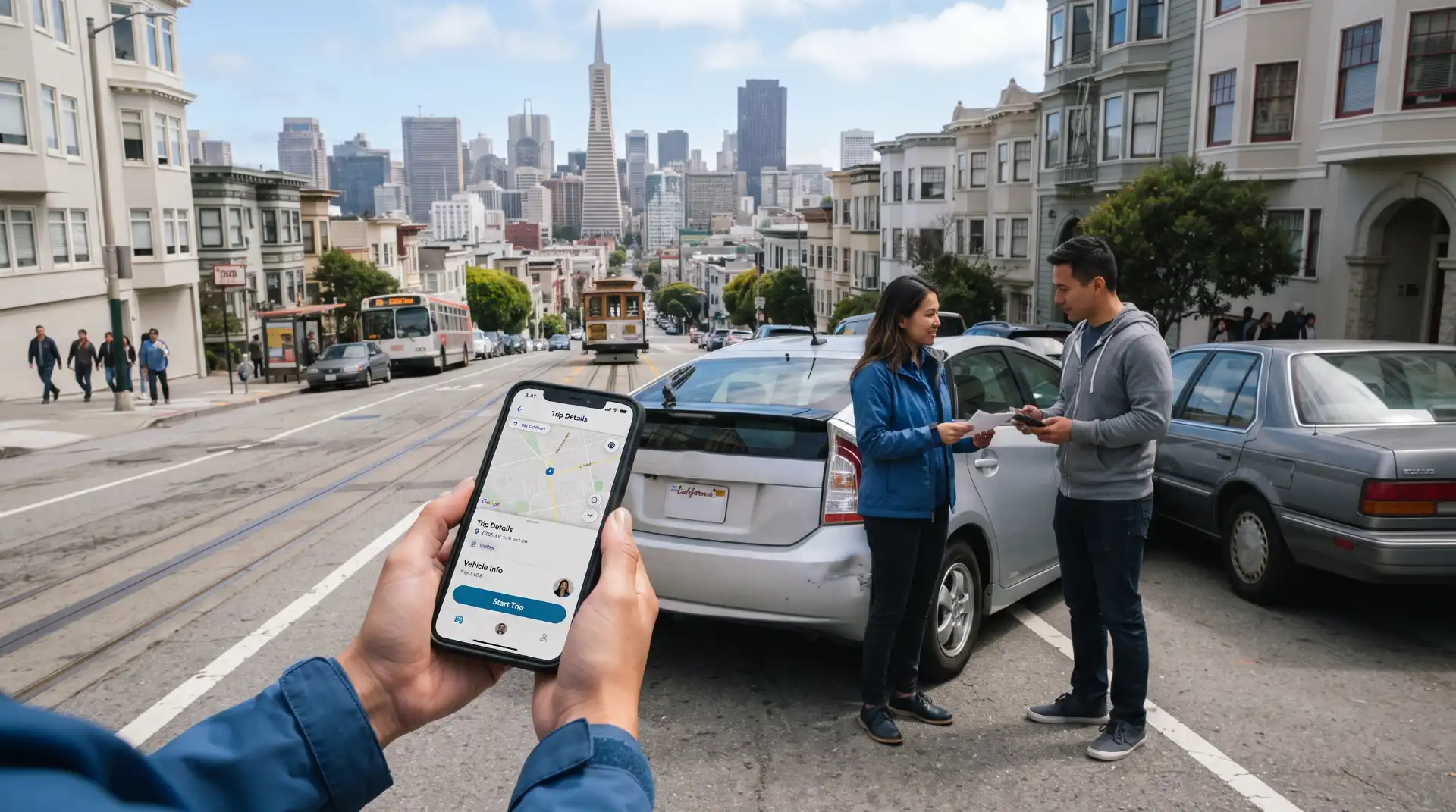
Peer-to-peer car sharing has transformed the way visitors and residents get around San Francisco. Instead of reserving a vehicle from a traditional rental-car counter, drivers can use platforms such as Turo to temporarily use privately owned vehicles listed by individual owners.
The system can be convenient, particularly in a city where travelers may want a vehicle for only part of their visit. But when a collision happens, determining which insurance policy applies and who may be legally responsible can become considerably more complicated than after an ordinary car accident.
A Turo or other peer-to-peer car-sharing accident may involve the driver who reserved the vehicle, the vehicle’s owner, another motorist, the car-sharing program, one or more insurance companies, and potentially additional parties if a mechanical problem or roadway condition contributed to the collision.
California has specific laws governing what it calls personal vehicle sharing programs. Those laws establish insurance requirements, address responsibility during the sharing period, and require programs to keep certain electronic trip records.
Understanding these rules can be particularly important after a peer-to-peer car-sharing accident in San Francisco.
What Is Peer-to-Peer Car Sharing?
Peer-to-peer car sharing allows a private vehicle owner to make a vehicle available to another person through an online platform.
The concept resembles a rental in practical terms because one person temporarily obtains the right to use another person’s vehicle. Legally and from an insurance standpoint, however, California distinguishes qualifying personal vehicle-sharing programs from traditional rental-car businesses.
A typical transaction begins when a user chooses an available vehicle through an app or website. The reservation usually identifies a beginning and ending time, the person permitted to drive, the vehicle, and any protection options selected for the trip.
The user then takes control of the vehicle for the agreed period and returns it when the reservation ends.
That timeline can become extremely important if an accident occurs.
California law requires qualifying personal vehicle-sharing programs to maintain electronic records identifying information such as when the sharing occurred, the vehicle’s initial and final locations, and the mileage driven while someone other than the owner controlled it.
Those digital records can help answer one of the most important questions after a collision: Was the vehicle actually being used through the car-sharing program at the time of the accident?
Peer-to-Peer Car Sharing Is Not the Same as Ridesharing
Turo-style car sharing is sometimes confused with Uber, Lyft, and other rideshare services, but the business models are different.
With a rideshare service, a driver generally uses a vehicle to transport passengers. The customer pays for transportation rather than taking possession of the vehicle.
With peer-to-peer car sharing, the customer becomes the temporary driver of the vehicle.
That distinction affects insurance.
California has separate statutory frameworks for transportation network companies and personal vehicle-sharing programs. Someone involved in a collision should therefore avoid assuming that Uber or Lyft insurance rules apply simply because an app was involved.
The relevant question is what type of platform was being used and what role the vehicle was performing at the time of the crash.
Why Turo Accidents Can Become Complicated
A typical two-car collision might involve two drivers and two personal auto insurance policies.
A peer-to-peer car-sharing collision can add several layers.
The person driving the shared vehicle may have personal auto insurance. The owner has a separate personal policy. The sharing program must provide insurance during qualifying sharing periods under California law. The driver or owner may also have selected additional protection.
Then there may be another driver’s policy if a third-party motorist caused the accident.
Disagreements can arise over which coverage is primary, whether a particular policy applies, when the reservation began or ended, who was actually driving, and whether the use complied with the program’s terms.
For someone injured in the crash, identifying the correct coverage can therefore be just as important as establishing who caused the collision.
California Has Specific Laws for Personal Vehicle Sharing
California Insurance Code Sections 11580.24 and 11580.241 establish many of the state’s rules for personal vehicle sharing.
Under California law, a qualifying personal vehicle-sharing program facilitates the sharing of privately owned passenger vehicles for noncommercial use.
The law addresses what happens when someone other than the vehicle’s owner controls the car through the program.
During that period, California generally places significant responsibility on the personal vehicle-sharing program. The statute provides that when a loss or injury occurs while the vehicle is being operated and controlled by someone other than its owner through the program, the program assumes the owner’s liability and is considered the owner for purposes specified by the statute.
The exact application of these provisions depends on the circumstances, making the reservation timeline and electronic records especially important.
What Insurance Must a California Car-Sharing Program Provide?
California strengthened its personal vehicle-sharing insurance requirements beginning in 2025.
Under current Insurance Code §11580.241, a qualifying personal vehicle-sharing program must provide insurance for the vehicle and operator during the sharing period with minimum limits of:
$45,000 for bodily injury or death to one person, $90,000 for bodily injury or death to multiple people in one occurrence, and $15,000 for property damage.
These are minimum statutory amounts, not necessarily the total insurance available after every peer-to-peer car-sharing accident.
Additional coverage may have been purchased or provided. Another responsible driver’s insurance may also apply.
The statute further requires personal vehicle-sharing programs to give owners and drivers an opportunity to obtain additional insurance or protection beyond the mandatory minimum.
For accident victims, the practical lesson is that the first policy discovered is not always the only available source of coverage.
The Vehicle Owner’s Personal Auto Insurance May Not Apply
One of the most important misconceptions about peer-to-peer car-sharing accidents is that the vehicle owner’s personal insurance will automatically cover everything.
California law allows the insurer listed on the privately owned vehicle to exclude coverage while someone else uses the car through a personal vehicle-sharing program.
The California Department of Insurance has specifically warned consumers that personal vehicle sharing may be handled differently from a traditional rental.
A driver’s personal insurance policy may not automatically extend the expected coverage to the shared vehicle. The vehicle owner’s policy may contain an exclusion. Credit-card benefits that apply to conventional rental cars may also treat peer-to-peer car-sharing vehicles differently.
That is why drivers should review their available coverage before a trip rather than assuming that insurance works exactly like it does at a traditional rental counter.
After an accident, copies of the reservation, protection plan, personal policies, and program insurance information should be preserved.
Who Is Responsible If the Turo Driver Causes the Accident?
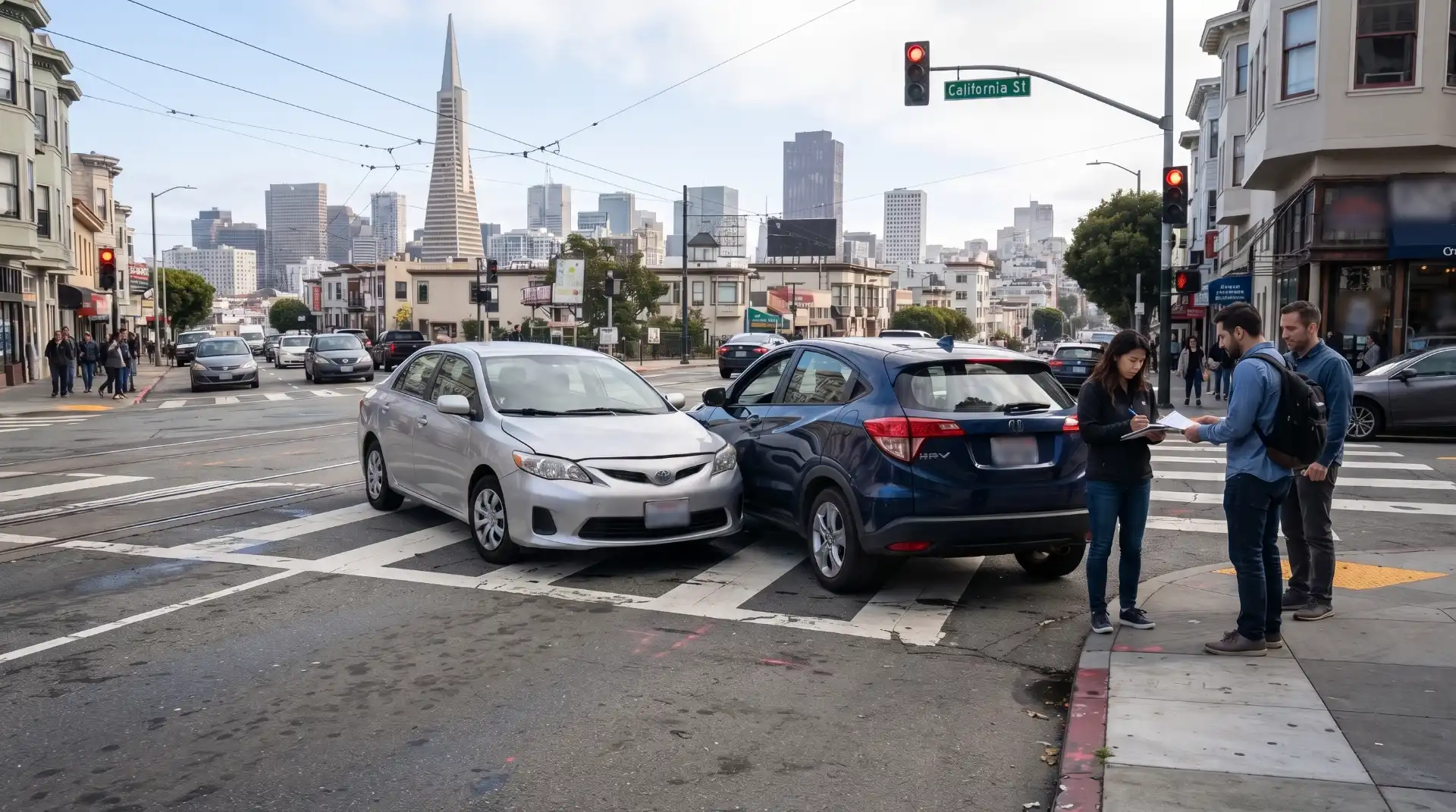
Suppose a person reserves a shared vehicle and rear-ends another car while driving through San Francisco.
If the shared-vehicle driver caused the collision through negligent driving, the driver’s conduct will generally be a central issue.
The fact that the vehicle belongs to someone else does not give the temporary driver permission to ignore California traffic laws.
A person operating a shared vehicle must still drive reasonably, maintain a safe following distance, obey traffic signals, yield when required, avoid distracted driving, and adjust speed to roadway conditions.
The car-sharing program’s applicable insurance may become relevant because the accident occurred during the sharing period.
The precise amount available depends on the applicable policies, statutory requirements, and circumstances of the transaction.
Determining fault remains a separate issue from determining insurance coverage.
Readers can also review the site’s How to Prove Fault in a San Francisco Car Accident guide for more information about evidence commonly used when liability is disputed.
What If Another Driver Causes the Crash?
Not every accident involving a Turo vehicle is caused by the person renting it.
Suppose a visitor is driving a shared vehicle legally through an intersection when another driver runs a red light and hits the car.
The at-fault motorist’s liability insurance may become the primary focus of the injury claim.
The fact that one vehicle was obtained through a peer-to-peer platform does not automatically shift responsibility to the platform or vehicle owner.
Investigators would still examine the actions that caused the crash.
Evidence could include traffic-camera footage, witness statements, vehicle damage, skid marks, photographs, electronic vehicle data, police documentation, and other available records.
Car-sharing records remain relevant because they help establish who possessed and operated the shared vehicle at the time.
What If More Than One Driver Shares Fault?
California follows a pure comparative fault system.
That means responsibility for an accident can be allocated among multiple parties rather than assigned entirely to one person.
Consider a collision in which another motorist makes an unsafe lane change while the car-sharing driver is traveling faster than conditions reasonably allow.
Both actions could potentially contribute to the crash.
Determining each person’s share of responsibility requires evaluating the evidence rather than simply identifying who received a traffic citation or who owns the vehicles.
This is another reason accident photographs, witnesses, video footage, and electronic records can become important.
Can the Vehicle Owner Be Responsible for a Mechanical Problem?
Peer-to-peer car sharing creates an additional issue that does not arise as frequently in ordinary rental-car accidents: the vehicle was privately owned before another person drove it.
Imagine a renter begins driving and discovers that the brakes respond poorly. A tire then fails, or a steering problem causes the driver to lose control.
The investigation may need to look beyond driver behavior.
Maintenance history could become relevant. Investigators may examine inspection records, tire condition, repair invoices, dashboard warnings, owner communications, vehicle photographs, and whether anyone knew about a dangerous condition before the trip.
Liability in these circumstances is highly fact-specific.
A mechanical failure does not automatically mean the vehicle’s private owner is legally responsible. Investigators must determine what failed, why it failed, whether the condition was reasonably discoverable, and whether the problem caused or contributed to the collision.
A repair shop, parts manufacturer, or another entity could potentially become relevant depending on the evidence.
California’s personal vehicle-sharing statute also specifies that nothing in the law eliminates liability of a sharing program for its own acts or omissions resulting in injury.
Why the Reservation Period Matters So Much
One of the most important factual questions in a peer-to-peer car-sharing accident is exactly when the sharing period was in effect.
Suppose a reservation officially ends at noon, but a collision occurs at 12:20 p.m.
Had the driver properly extended the reservation? Had the program received communication terminating or extending the trip? Had the car already been returned to the designated location? Had the owner regained control?
Those details can affect which rules or insurance policies apply.
California law addresses when a personal vehicle-sharing program’s statutory responsibility continues and when control returns to the owner.
For that reason, seemingly routine digital information can become critical accident evidence.
App timestamps, reservation extensions, return confirmations, location data, mileage records, messages between the owner and renter, and platform communications may help reconstruct the precise timeline.
California Requires Electronic Trip Records
Unlike many ordinary car accidents, peer-to-peer sharing transactions create a built-in digital paper trail.
California law requires personal vehicle-sharing programs to collect and maintain verifiable electronic records showing the date and time of vehicle use, initial and final locations, and miles driven while the vehicle is under another person’s control through the program.
These records may help resolve a dispute about whether a particular collision occurred during an active sharing period.
They can also corroborate other evidence.
For example, a driver may say the accident occurred shortly before returning the vehicle. Electronic location records and mileage may help establish whether that account matches the trip information.
Digital evidence can therefore be especially valuable in Turo and other peer-to-peer car-sharing cases.
Save the Car-Sharing Reservation After an Accident
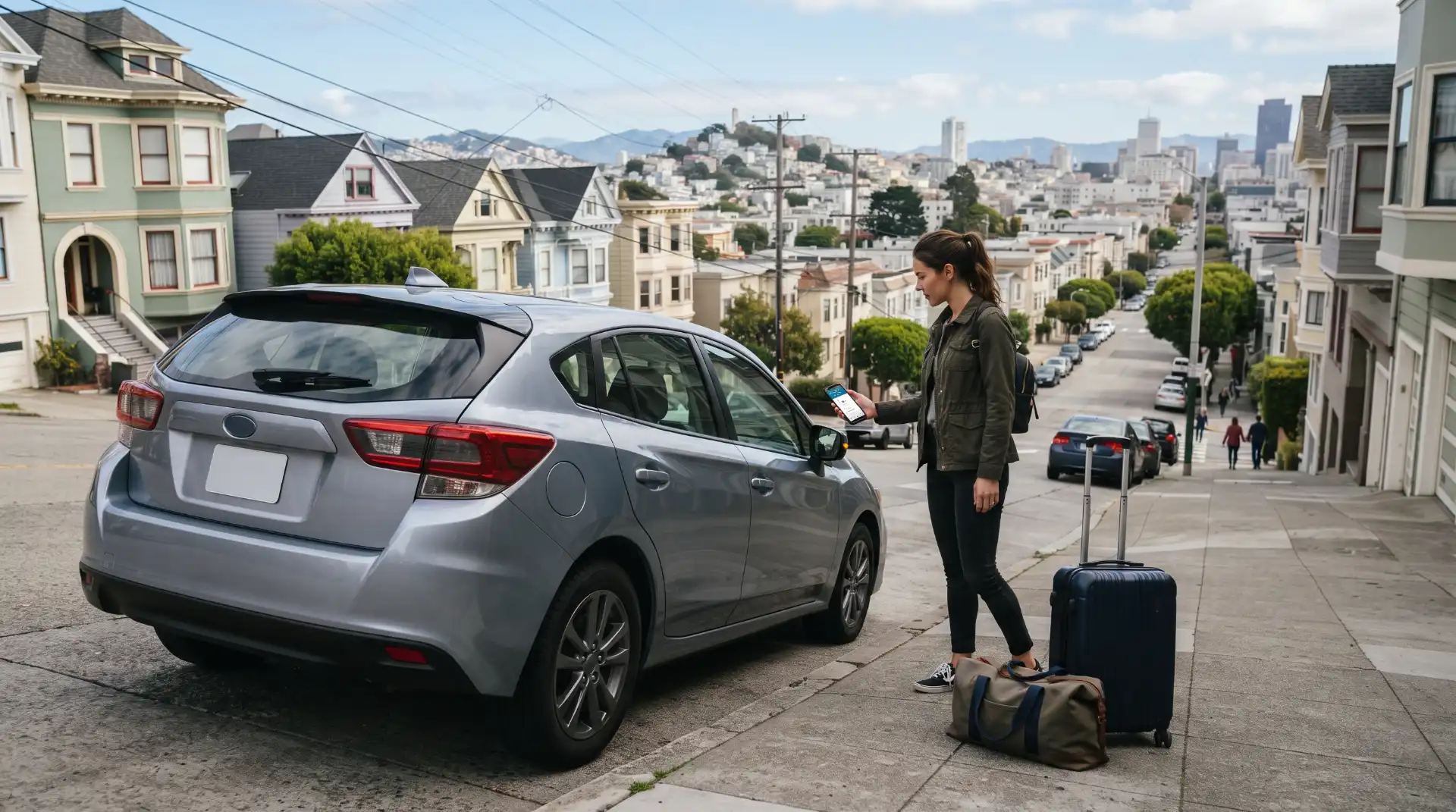
Drivers should avoid deleting or losing access to the trip details after a collision.
Save the reservation confirmation, vehicle listing, driver’s account information, protection-plan selection, check-in and checkout photos, pickup location, return instructions, trip extensions, messages, receipts, and any accident reports submitted through the platform.
Screenshots can provide useful backup documentation.
The vehicle listing itself may also contain relevant information about the car’s mileage, model, listed condition, features, and statements made about the vehicle before the trip.
If a mechanical problem becomes an issue, photographs taken during the check-in process could help establish the vehicle’s appearance and condition when the driver received it.
Check-In and Checkout Photos Can Become Evidence
Many peer-to-peer platforms encourage or require users to photograph the vehicle before and after a trip.
Those photographs initially seem intended to resolve disputes over scratches, dents, fuel levels, or cleaning.
After a serious collision, however, they may become more important.
Pre-trip images might show tire condition, exterior damage, warning lights, windshield problems, or other visible features.
Post-accident images can document new damage.
Timestamped photographs may also help establish where the vehicle was and when control changed between the owner and driver.
The original digital files should be preserved where possible because their metadata may contain additional information.
What If Someone Other Than the Reserved Driver Was Driving?
Another potential complication arises when the person behind the wheel is not the person identified in the reservation.
Peer-to-peer platforms generally establish eligibility and authorized-driver requirements through their terms.
An unauthorized driver can create contractual and insurance disputes.
However, an injured third party should not assume that no insurance exists merely because someone violated a platform rule.
Coverage questions must be evaluated under California law and the actual policy language.
Investigators will want to establish who was driving, why that person had possession of the vehicle, whether the program knew or approved the driver, and whether the reservation terms were followed.
Driver identification can come from witness statements, police reports, app records, messages, surveillance video, and other evidence.
How Credit-Card Rental Coverage Can Create Confusion
Many travelers are accustomed to declining rental-car protection because their credit card provides some type of rental vehicle benefit.
That assumption can create problems with peer-to-peer car sharing.
The California Department of Insurance warns consumers that credit-card companies may treat personal vehicle-sharing programs differently from traditional rental agencies.
Some credit-card benefits may exclude peer-to-peer transactions entirely or provide narrower protection.
Coverage terms can also change.
A renter who plans to rely on a credit card should therefore review the current benefit terms rather than assuming that seeing the word “rental” means every type of vehicle-sharing transaction qualifies.
After an accident, written credit-card benefit documents may need to be reviewed alongside personal auto coverage and the program’s protection terms.
San Francisco Creates Unique Risks for Visiting Drivers
Peer-to-peer vehicles can be especially appealing to travelers who arrive in San Francisco without a car.
But the city’s streets can be challenging for people who have never driven there.
San Francisco combines steep grades, cable-car tracks, bicycle infrastructure, transit-only lanes, closely spaced intersections, heavy pedestrian activity, limited parking, one-way streets, delivery traffic, and neighborhoods where visibility can change quickly.
An unfamiliar driver may also be operating an unfamiliar vehicle.
A person who normally drives a small sedan might reserve a large SUV. Someone accustomed to a gasoline vehicle may choose an electric vehicle with different acceleration and regenerative-braking characteristics.
None of those circumstances excuses negligent driving.
They can, however, become part of understanding how an accident happened.
The driver remains responsible for adapting to the vehicle and road conditions.
Accidents Involving Pedestrians and Cyclists
A shared vehicle can cause injuries to someone who never used the platform.
A pedestrian crossing the street, a bicyclist traveling through a bike lane, or a motorcyclist struck by a shared vehicle may have no direct relationship with the vehicle owner or the car-sharing service.
For these victims, determining insurance coverage can still require examining the reservation.
The investigation may need to establish that the driver was operating through the personal vehicle-sharing program at the exact time of impact.
Once that is confirmed, the applicable program coverage and other insurance can be evaluated.
The victim’s claim still centers on negligence, causation, injuries, and damages.
What Evidence Matters After a Turo Accident?
Traditional accident evidence remains important even when a shared vehicle is involved.
Photographs can document impact points, vehicle positions, roadway conditions, traffic signals, lane markings, and property damage.
Witnesses may explain how the collision occurred.
Video from businesses, residential security systems, dashcams, traffic infrastructure, or other vehicles may help establish the sequence of events.
Police documentation can identify drivers and vehicles.
Modern vehicles may also contain event data recorder information capable of providing technical details such as speed and braking around the time of a qualifying crash event.
The peer-to-peer reservation adds another evidence category: platform data.
A strong investigation considers both.
Readers who need a broader overview can review the site’s What to Do After a Car Accident in San Francisco: A Step-by-Step Guide.
What to Do Immediately After a Peer-to-Peer Car-Sharing Crash
Safety should come first.
If anyone may be injured, seek appropriate emergency assistance. Move out of immediate traffic danger when possible and lawful.
Document the scene before conditions change. Photograph every involved vehicle, license plates, vehicle positions, traffic controls, nearby intersections, and visible damage.
Exchange information with the other drivers and obtain contact information from witnesses.
In addition to ordinary accident documentation, save all information connected with the car-sharing trip.
Do not rely on being able to retrieve every detail from the app months later.
Report the collision through the appropriate channels required by the platform and applicable insurers, but avoid guessing about responsibility before the facts have been investigated.
Medical Documentation Still Matters
The unusual insurance structure of a Turo accident should not distract from another important issue: documenting injuries.
Some injuries may not be immediately obvious after a collision.
Medical records can help document the symptoms reported, diagnoses made, treatment provided, and connection between the collision and subsequent care.
Insurance disputes can become more difficult when there are large unexplained gaps between an accident and medical evaluation.
Someone experiencing symptoms after a crash should make health decisions based on appropriate medical advice rather than on assumptions about whether the claim is serious enough.
What Compensation May Be Available?
The damages available after a peer-to-peer car-sharing accident generally depend on the same principles that apply to other California motor vehicle collisions.
An injured person may seek compensation for reasonable medical expenses attributable to the accident, lost income or reduced earning capacity when supported by evidence, property damage, and qualifying noneconomic losses such as pain and suffering.
The amount recoverable depends on the facts, available insurance, causation, and comparative fault.
A temporary vehicle arrangement does not automatically increase or reduce the value of an injury claim.
The main difference is that identifying all potentially applicable coverage may require additional investigation.
For more background on the claims process, readers can review How to File a Personal Injury Claim After a San Francisco Car Accident.
Insurance Disputes Can Involve Several Companies
A peer-to-peer crash can produce a chain of insurers pointing at one another.
The shared vehicle’s personal insurer may rely on a vehicle-sharing exclusion. A renter’s insurer may question whether its policy extends to the shared vehicle. A credit-card issuer may say the transaction is outside its rental coverage. Another driver’s insurer may dispute fault.
Meanwhile, the sharing program’s coverage must be evaluated under California law and the actual policy terms.
These disagreements can make the claims process slower than expected.
That is why determining coverage should begin with documents rather than assumptions.
The reservation agreement, statutory program coverage, optional protection, personal policies, driver status, and exact sharing period can all matter.
The site’s article How Insurance Companies Try to Undervalue Your Claim — and How to Fight Back discusses broader insurance-claim issues that can arise after California accidents.
Why California’s Insurance Rules Matter in 2026
California’s current personal vehicle-sharing insurance rules reflect how much peer-to-peer transportation has changed.
The state now specifically requires qualifying programs to provide minimum insurance during vehicle sharing, offer opportunities for additional protection, make disclosures about potential coverage gaps, and preserve electronic trip information.
Those provisions have been in effect since January 1, 2025 and remain highly relevant to accidents occurring in 2026.
The rules also make clear why older online advice about Turo insurance can be unreliable.
A blog article written several years ago may describe outdated limits or older sharing-program requirements.
People involved in current accidents should look at the law and insurance terms in effect on the date of the collision.
Why the California Department of Insurance Recommends Checking Coverage
The California Department of Insurance has issued a consumer alert specifically addressing rental vehicles and personal vehicle-sharing programs.
The agency advises consumers to verify coverage before renting or sharing a vehicle because personal auto policies and credit-card benefits may handle peer-to-peer arrangements differently from conventional rentals.
That guidance is useful not just before a trip but also after a collision.
Instead of assuming that a particular policy applies, obtain and review the relevant documents.
Understanding what each policy actually covers can prevent confusion when claims begin.
Final Thoughts
Turo and other peer-to-peer car-sharing services make accessing a vehicle in San Francisco easier, but an accident involving one of these cars can produce insurance questions that do not usually arise in an ordinary collision.
California has a specific legal framework for personal vehicle sharing. Qualifying programs must maintain insurance while the vehicle is being shared, provide disclosures regarding coverage, and preserve electronic records about the trip.
At the same time, a vehicle owner’s ordinary personal auto insurance may exclude losses occurring during the sharing period, and a renter’s personal policy or credit-card benefits may not operate the same way they would for a traditional rental car.
For those reasons, a careful investigation should establish not only how the accident happened, but also who controlled the shared vehicle, when the reservation was active, which protection was selected, what insurance policies existed, and what electronic trip information is available.
Preserving the reservation, photographs, app records, communications, insurance documents, witness information, and accident-scene evidence can make those questions easier to answer.
As peer-to-peer car sharing becomes a more common part of transportation in San Francisco, understanding these insurance and liability issues can help drivers, passengers, pedestrians, cyclists, and vehicle owners better navigate the aftermath of a collision.