
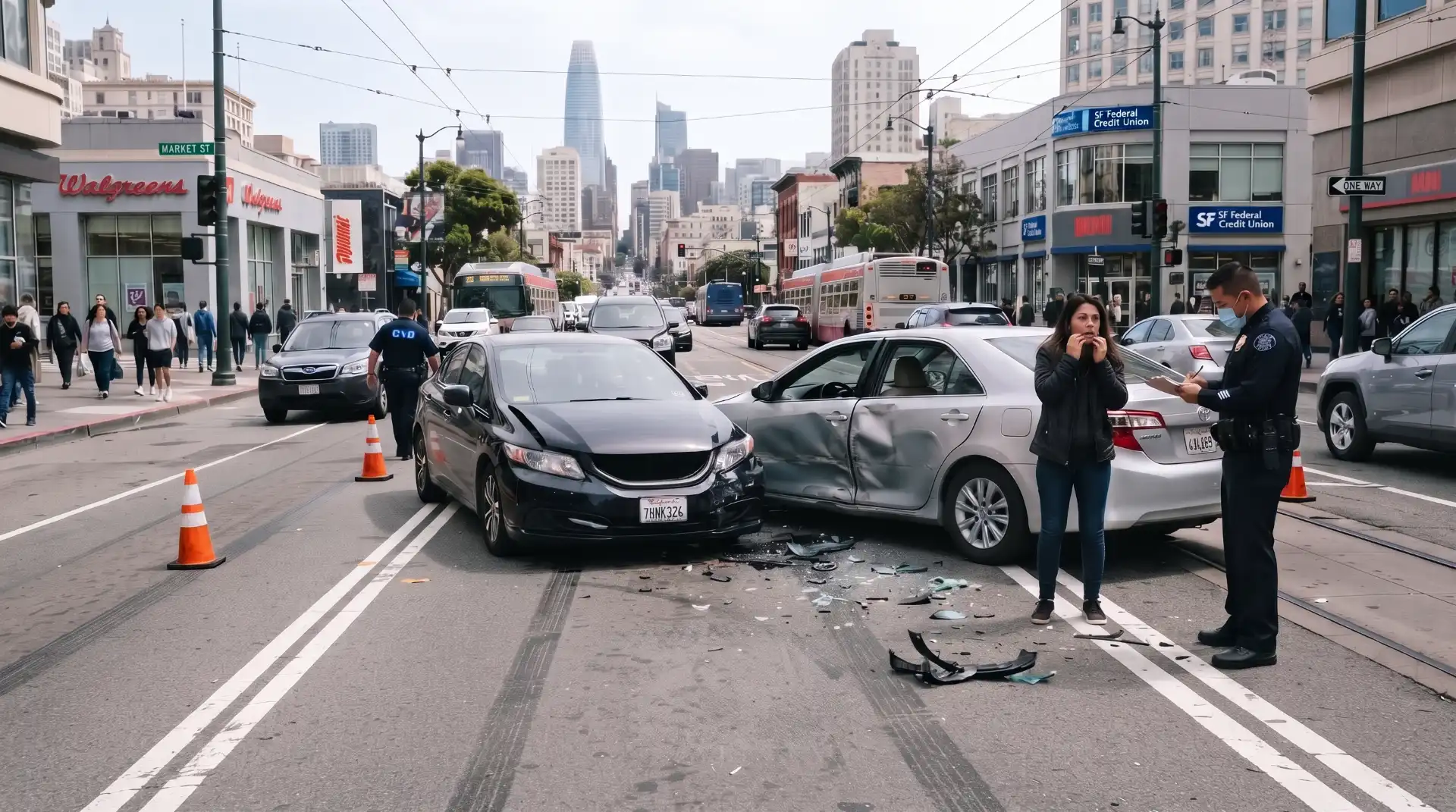
Driving in California can require patience, attention, and considerable awareness of surrounding traffic. In a city such as San Francisco, drivers regularly encounter congested streets, narrow roadways, steep hills, busy intersections, bicycles, pedestrians, public transportation, freeway entrances, and vehicles attempting to merge into limited spaces. These conditions can become frustrating, but frustration behind the wheel can turn into dangerous behavior when a driver begins taking unnecessary risks.
Aggressive driving can contribute to serious car accidents because it often involves multiple unsafe behaviors at the same time. A driver may follow another vehicle too closely, accelerate excessively, weave through traffic, make abrupt lane changes, block another driver, ignore traffic signals, or attempt to intimidate another motorist. When these actions lead to a collision, determining what happened can become important for an injured person’s insurance claim or potential personal injury case.
California’s Department of Motor Vehicles recognizes aggressive driving and road rage as separate but related safety concerns. The DMV describes aggressive driving as operating a vehicle in a selfish, bold, or pushy manner without regard for the rights or safety of others, while road rage involves operating a vehicle with the intent of harming another person or physically assaulting a driver or vehicle.
For someone injured in an aggressive-driving crash, the legal question is usually not simply whether the other driver appeared angry. The more important questions involve what the driver actually did, whether those actions were unreasonable under the circumstances, whether they caused the collision, and what injuries and losses resulted.
This distinction matters because anger itself does not automatically establish civil liability. Evidence showing dangerous driving behavior and a connection between that behavior and the accident can be much more important than assumptions about a driver’s emotional state.
What Is Aggressive Driving in California?
Aggressive driving can take many forms. Some incidents involve one obvious maneuver, while others involve a sequence of increasingly dangerous actions. A driver may become frustrated by traffic and begin following another vehicle too closely. The driver might then change lanes repeatedly, accelerate around slower traffic, make an unsafe pass, or attempt to force another vehicle out of the way.
The California DMV specifically warns against behaviors such as tailgating, unnecessary lane changes, weaving between freeway lanes, and other conduct that can create dangerous traffic conditions.
Aggressive driving can include behavior such as excessive or unsafe speed, tailgating, abrupt lane changes, unsafe passing, racing, blocking another vehicle, cutting off another motorist, disregarding traffic signals, or using a vehicle in a threatening manner. Not every traffic violation will necessarily create liability for every accident, but a traffic violation can become important evidence when it is connected to a crash.
Road rage can be more serious because the conduct may involve an intentional attempt to threaten, intimidate, or harm another person. The California DMV explains that road rage can involve operating a motor vehicle with the intent to harm others or physically assaulting a driver or vehicle.
For an accident claim, it is therefore useful to focus on observable conduct rather than relying only on labels. Instead of simply saying that another driver was experiencing road rage, evidence might show that the driver followed the victim’s vehicle for several blocks, repeatedly attempted to pass, intentionally moved into the victim’s lane, or collided with the vehicle during an aggressive maneuver.
Those details can provide a much clearer picture of what happened.
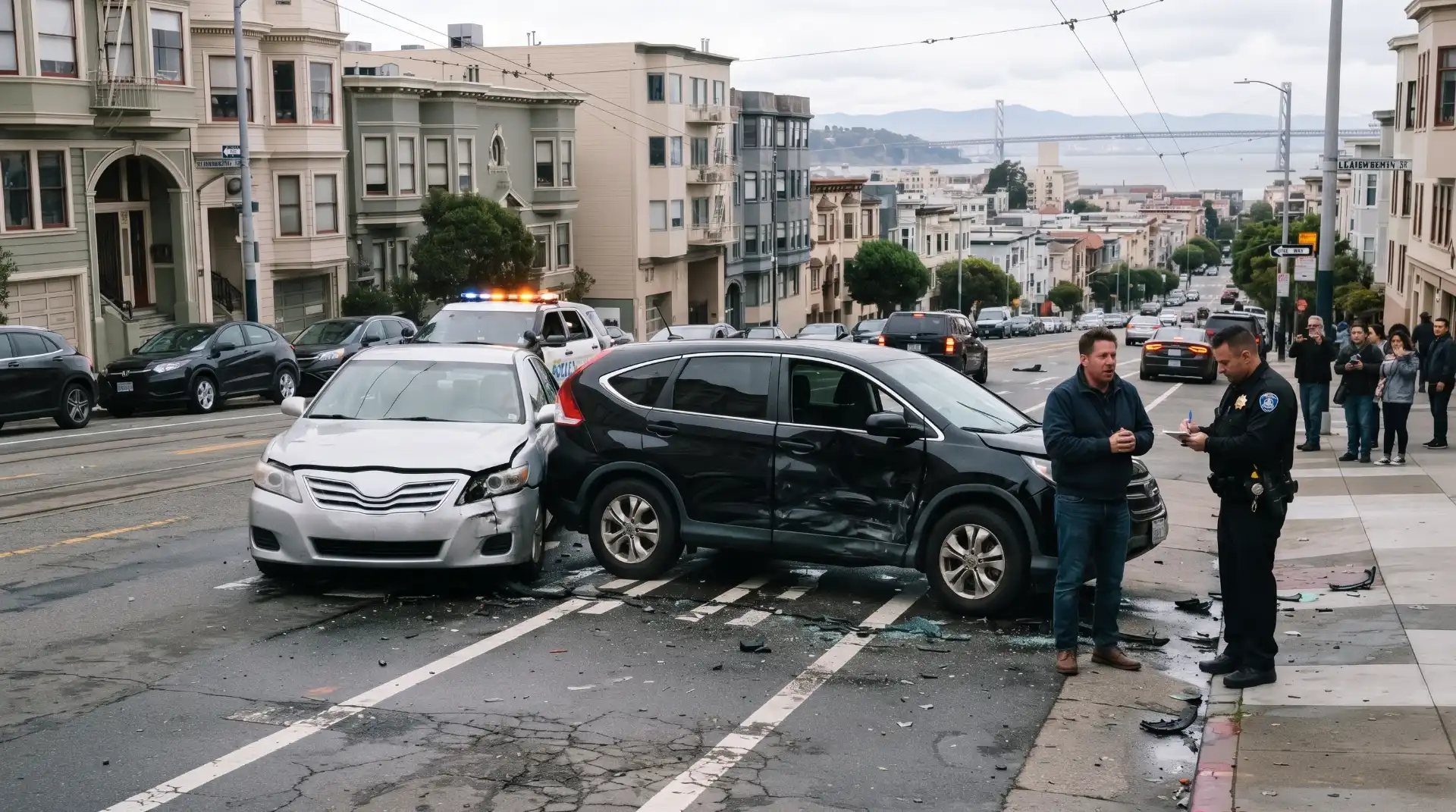
How Aggressive Driving Can Cause a Car Accident
Aggressive driving increases the possibility of a collision because it reduces the amount of time available for drivers to recognize hazards and respond appropriately. When vehicles are traveling too closely together or changing lanes rapidly, even a small mistake can create a chain reaction.
Tailgating is one example. A driver following too closely may have insufficient time to stop if the vehicle ahead brakes suddenly. The California DMV recommends maintaining a safe following distance and explains that tailgating reduces a driver’s ability to see the road ahead and react when the vehicle in front stops unexpectedly.
Unsafe lane changes create another common risk. A driver attempting to move rapidly through congested traffic may fail to check a blind spot or may move into a lane without leaving enough space. California’s DMV instructs drivers to signal, check mirrors, and check blind spots before changing lanes.
Aggressive speeding can also increase the severity of a crash. Speed affects how much distance a vehicle travels before the driver can react and how much force can be involved in a collision. California’s DMV emphasizes that drivers must adjust speed according to current road and traffic conditions rather than treating the posted speed limit as a guarantee that a particular speed is always safe.
In San Francisco, aggressive maneuvers can become particularly dangerous because drivers may encounter pedestrians, cyclists, buses, parked vehicles, delivery vehicles, intersections, and narrow lanes within a relatively short distance. A maneuver that might already be risky on an open road can become substantially more dangerous in a crowded urban environment.
Common Types of Aggressive-Driving Crashes
Aggressive-driving collisions do not all happen in the same way. Understanding the type of crash can help explain what evidence may be relevant when determining how the collision occurred.
Rear-End Collisions
Tailgating can lead to rear-end collisions when an aggressive driver follows too closely and cannot stop in time. Evidence may include vehicle damage, photographs of the roadway, traffic-camera footage, dashcam recordings, witness accounts, and statements made by the involved drivers.
A rear-end collision may appear straightforward, but circumstances can vary. Traffic may have stopped suddenly, the following driver may have been speeding, or another vehicle may have made an unexpected maneuver immediately before the crash.
Unsafe Lane-Change Crashes
Aggressive drivers may weave through traffic or move rapidly between lanes. A driver who changes lanes without properly checking surrounding traffic can strike another vehicle or force another motorist to take evasive action.
These collisions may involve side-impact damage, damage to multiple vehicles, or evidence that one vehicle crossed a lane marking. Dashcam footage can be especially useful when the actual lane movement happened only seconds before impact.
Sideswipe Collisions
A sideswipe may occur when a driver moves into another lane without noticing a vehicle already occupying that space. When aggressive lane changes happen repeatedly, determining which vehicle moved into which lane can become important.
Photographs showing the location and direction of damage can help investigators understand how the vehicles interacted. Witnesses may also provide useful information about what happened immediately before the collision.
Multi-Vehicle Crashes
Aggressive driving can produce chain-reaction crashes. One driver may suddenly brake or change lanes, causing another vehicle to collide with it. That vehicle may then strike a third vehicle.
These cases can be more complicated because several drivers may have contributed to different parts of the sequence. California uses a comparative fault system, meaning a person’s own negligence may be considered when determining the amount of damages recoverable. California’s Judicial Council provides civil jury instructions addressing comparative fault and allocation of responsibility.
How Road Rage Can Affect a California Accident Claim
An injured driver may wonder whether proving road rage changes the entire legal case. Generally, the important issue remains whether the other driver’s conduct caused the accident and resulting harm.
Evidence that a driver was acting aggressively can nevertheless be significant. If a motorist was intentionally pursuing another vehicle, repeatedly attempting to force it from the road, or driving dangerously in response to a perceived slight, those circumstances could help explain why the collision occurred.
The exact legal consequences depend on the facts of the case. A civil injury claim and a criminal or traffic proceeding are separate matters, even when they arise from the same incident.
For example, law enforcement may investigate whether a driver’s conduct violated a criminal traffic law. Separately, an injured person may pursue compensation for medical expenses, lost income, property damage, and other losses through an insurance claim or civil action.
A criminal citation or conviction may become relevant evidence, but an injured person’s civil claim does not necessarily depend on the other driver being criminally prosecuted.
Evidence That Can Help Prove Aggressive Driving
Evidence can become particularly important when a driver denies behaving aggressively. Memories can differ immediately after a stressful collision, and drivers may describe the same sequence of events differently.
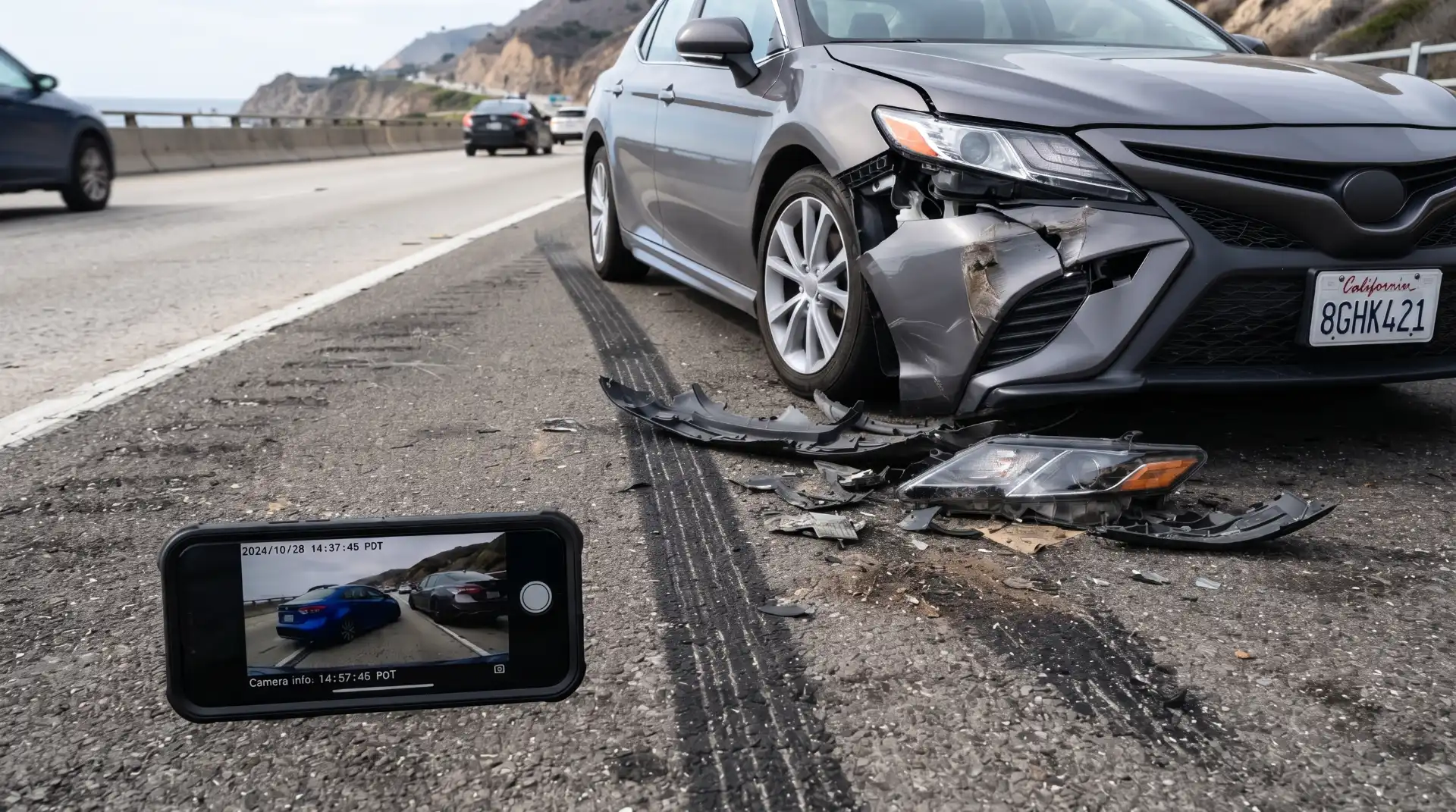
Photographs taken at the accident scene can document vehicle positions, damage, skid marks, lane markings, traffic signals, roadway conditions, and surrounding signs. If it is safe to do so, photographs can help preserve details that may change once vehicles are moved.
Dashcam footage can be valuable because it may capture the moments leading up to a collision rather than only the aftermath. A recording may show a vehicle following too closely, changing lanes suddenly, speeding through an intersection, or making another dangerous maneuver.
Witness information can also matter. A person who saw the interaction before the collision may be able to describe how the vehicles were moving, whether one driver was following another, and whether the collision appeared intentional or accidental.
Police reports can provide another source of information. Officers may document statements from drivers and witnesses, physical evidence, road conditions, vehicle damage, and their observations at the scene.
Nearby businesses or buildings may also have security cameras. In an urban area such as San Francisco, video footage can potentially exist near intersections, parking areas, commercial properties, or other locations. The availability and retention period of such footage varies, so identifying potentially relevant recordings promptly can be important.
Phone records or other digital evidence may sometimes become relevant when distracted driving is alleged, although access to private records can involve legal and procedural requirements.
What to Do After an Aggressive-Driving Crash
Safety should come before attempting to collect evidence. If an aggressive driver remains angry or threatening after the collision, engaging with that person can create additional danger.
The California DMV advises motorists confronted by aggressive drivers to make an effort to get out of the way, avoid eye contact and gestures, and refuse to react to provocative behavior. The DMV also recommends contacting law enforcement when it can be done safely.
After a collision, move to a safe location when possible and appropriate. If someone is injured or there is an immediate safety emergency, call 911.
Once the situation is safe, exchange required information with the other driver and cooperate with responding law enforcement. Avoid arguing about who caused the accident at the scene. A heated confrontation can make an already stressful situation more dangerous.
If witnesses are present, obtain their contact information if they are willing to provide it. Take photographs of the vehicles and surrounding roadway when doing so is safe. Preserve any dashcam footage rather than deleting or overwriting it.
Medical evaluation can also be important when an injury is suspected. Some accident-related symptoms may not become obvious immediately, particularly after the initial adrenaline and stress of a collision have subsided.
Should You Report a Driver Who Is Experiencing Road Rage?
When a driver is actively behaving in a dangerous or threatening manner, safety should take priority over confrontation. A motorist should not attempt to chase an aggressive driver or deliberately remain nearby to obtain identifying information if doing so increases the risk of another collision.
If it is safe, a driver can report dangerous behavior to law enforcement and provide useful details such as the vehicle description, license plate information, location, direction of travel, and description of the conduct.
The California DMV’s driver guidance similarly recommends avoiding confrontation and reporting aggressive drivers when it can be done safely.
If an accident has already occurred, the police report may provide an important record of the incident. However, the report is only one piece of evidence. Photographs, witness statements, video, medical records, vehicle damage, and other documentation may also be relevant.
Medical Injuries After Aggressive-Driving Crashes
The injuries caused by aggressive driving can range from relatively minor soft-tissue injuries to serious trauma. The severity depends on factors such as vehicle speed, point of impact, occupant position, use of restraints, vehicle design, and whether multiple impacts occurred.
Common accident-related injuries can include neck injuries, back injuries, shoulder injuries, fractures, bruising, traumatic brain injuries, and other forms of physical trauma. Emotional distress can also follow a frightening collision, particularly when the circumstances involved intentional intimidation or threatening behavior.
Medical documentation can help establish what injuries were diagnosed and what treatment was recommended. Keeping records of appointments, prescriptions, diagnostic testing, rehabilitation, and other treatment can make it easier to document the medical consequences of a crash.
It is also important not to assume that a lack of immediate severe pain means there is no injury. Some conditions can become more noticeable after the initial shock of an accident wears off.
Anyone experiencing concerning symptoms after a collision should seek appropriate medical attention.
How Insurance Companies May Evaluate an Aggressive-Driving Accident
Insurance claims generally require an investigation into how the accident occurred and what damages resulted. The insurer may review statements, photographs, police reports, medical documentation, vehicle damage, witness accounts, and other evidence.
The presence of aggressive driving can affect the factual analysis because it may help explain why a collision occurred. However, the injured person’s claim still generally requires evidence connecting the other driver’s conduct to the accident and resulting losses.
An insurer may also question the extent of claimed injuries, the necessity of medical treatment, the amount of lost income, or whether another factor contributed to the accident.
For this reason, documentation should be consistent and organized. Medical records should accurately describe symptoms and treatment. Employment records may help document lost wages. Repair estimates and photographs can support property-damage claims.
Statements made after an accident can also matter. Drivers should be truthful when speaking with insurers and law enforcement, while avoiding speculation about facts they do not actually know.
California Comparative Fault and Aggressive Driving Cases
California’s comparative fault rules can become relevant when more than one person contributed to an accident.
For example, suppose one driver was aggressively changing lanes but another driver was also traveling too fast for the traffic conditions. If the evidence supports some responsibility on both sides, fault may need to be allocated between the parties.
The Judicial Council of California’s civil jury instructions address comparative negligence and explain how a claimant’s own negligence may be considered in determining damages rather than automatically preventing recovery.
This means an accident should not necessarily be viewed as a simple question of whether one person was entirely responsible. The evidence may show different contributions by multiple parties.
That is one reason accident documentation can be important. Video, photographs, witness statements, physical evidence, and other records can help establish the sequence of events more accurately.
Does Road Rage Automatically Mean Punitive Damages?
Not necessarily. An allegation of road rage does not automatically mean an injured person will receive punitive damages.
Punitive damages involve a different legal standard from ordinary compensation for medical bills, lost income, property damage, and other losses. Whether punitive damages may be available depends on the specific facts and applicable California law.
The distinction is important because people sometimes assume that particularly angry or reckless behavior automatically creates an additional financial penalty. The actual legal requirements are more specific.
An attorney evaluating an individual case may consider whether the evidence supports a claim for punitive damages and whether the applicable legal requirements are satisfied.
When Another Driver Intentionally Hits a Vehicle
A collision caused by an intentional act can raise different issues from an ordinary negligent-driving accident.
For example, if a driver intentionally rams another vehicle after a confrontation, the circumstances may involve both civil and criminal considerations. The police may investigate the conduct, while the injured person may separately consider a civil claim for resulting injuries and losses.
Intent can be difficult to establish based solely on a driver’s statements. Evidence may include dashcam footage, witness testimony, vehicle movements, prior interactions immediately before the collision, communications, and statements made after the incident.
It is important not to assume that every serious or unusual accident was intentional. A dangerous maneuver may result from negligence, poor judgment, distraction, or another factor without an intent to cause harm.
The evidence must therefore be examined carefully.
Aggressive Driving on San Francisco Streets
San Francisco presents several roadway characteristics that can make aggressive driving particularly hazardous. Drivers may encounter steep streets, dense traffic, narrow lanes, busy commercial corridors, pedestrians, cyclists, transit vehicles, delivery vehicles, and frequent intersections.
A driver attempting to save a few seconds by weaving through traffic can create risks for everyone nearby. The California DMV specifically advises drivers to maintain space around their vehicles, avoid unnecessary lane changes, and remain attentive to surrounding traffic.
Aggressive driving can also become especially dangerous around pedestrian-heavy areas. A driver who is focused on confronting another motorist may pay less attention to people crossing the roadway or vehicles entering an intersection.
For accident victims in San Francisco, the location of the collision may therefore be relevant to understanding visibility, traffic patterns, roadway design, and the sequence of events.
Aggressive Driving on California Freeways
California freeways can also provide opportunities for aggressive behavior to escalate quickly. High traffic volumes, merging vehicles, sudden congestion, lane reductions, and changing speeds can create stressful conditions.
A driver who repeatedly changes lanes at high speed may have little room to correct a mistake. If another vehicle suddenly appears in a blind spot, the resulting collision can involve substantial force.
The California DMV recommends scanning ahead, maintaining a safe following distance, checking blind spots, and creating additional space when necessary.
Aggressive freeway driving can also result in secondary crashes. One vehicle may avoid an initial collision by swerving, only to strike another vehicle or roadside object.
When several vehicles become involved, accident reconstruction and careful evidence analysis may become particularly useful.
How Dashcam Footage Can Strengthen an Accident Investigation
Dashcams have become increasingly common among American drivers. When properly preserved, a recording can provide a chronological view of what occurred immediately before and during a collision.
A dashcam may capture traffic conditions, lane positions, vehicle speed indicators, turn signals, braking behavior, and interactions between vehicles. In an aggressive-driving case, it may also capture repeated tailgating or sudden lane changes.
However, dashcam footage should be preserved in its original form whenever possible. Editing a clip, recording over the memory card, or deleting portions can make later review more difficult.
Drivers should also remember that a dashcam does not automatically prove every aspect of a legal claim. The recording must be interpreted together with other evidence and the applicable legal standards.
Why Witnesses Can Be Important in Road Rage Cases
Aggressive-driving incidents can happen quickly. The involved drivers may remember the sequence differently, particularly when the accident occurs during a confrontation.
An independent witness may have observed the vehicles before the collision and can sometimes provide information neither driver can establish alone.
A witness might have seen one vehicle following another, an unsafe lane change, a sudden acceleration, a driver attempting to block another vehicle, or a collision at an intersection.
Witnesses should not be pressured to adopt a particular version of events. Their value comes from accurately reporting what they personally observed.
If a witness voluntarily provides contact information, preserve it with the rest of the accident documentation.
What If the Aggressive Driver Leaves the Scene?
A road-rage incident can become even more complicated if the other driver leaves after the collision.
California hit-and-run laws can apply depending on the circumstances, and an injured person may need to deal with both the investigation and insurance process.
If a driver leaves the scene, useful information can include the vehicle’s make, model, color, license plate number, direction of travel, and distinctive characteristics. Dashcam footage and witnesses can be particularly important.
Do not pursue a fleeing driver. Following the vehicle can create another dangerous situation. Instead, provide available information to law enforcement.
Insurance coverage may also become important in a hit-and-run situation, depending on the driver’s policy and the circumstances of the accident.

What Compensation May Be Available After an Aggressive-Driving Crash?
The damages available in a California personal injury claim depend on the facts and applicable law. Depending on the circumstances, a claim may involve medical expenses, lost wages, property damage, and other economic losses.
Some cases can also involve compensation for noneconomic harm, such as pain and suffering. The amount and availability of damages depend on the evidence and circumstances of the individual case.
Medical expenses can include emergency treatment, physician appointments, diagnostic testing, physical therapy, medication, and other reasonably necessary treatment associated with the accident.
Lost income may become significant when injuries prevent someone from working. In more serious cases, future earning capacity may also become an issue.
Property damage is another separate consideration. Vehicle repair or replacement costs may need to be documented through estimates, invoices, photographs, and insurance records.
A complete evaluation should consider the full impact of the accident rather than focusing only on the immediate vehicle damage.
Why Early Legal Guidance Can Matter
Aggressive-driving accidents can involve disputed facts, multiple vehicles, conflicting accounts, insurance questions, and potentially significant injuries.
Early legal guidance can help an injured person understand what evidence may matter and how the claim process generally works. An attorney may also assess whether additional evidence, such as video recordings or witness information, should be pursued.
This can be particularly important when the other driver denies aggressive behavior or claims that the injured person caused the collision.
The California courts explain that the Judicial Council’s CACI instructions are the official civil jury instructions approved for use in California, although interpretation of California law remains with the Legislature and reviewing courts.
Because personal injury law is fact-specific, information found online should not be treated as a substitute for advice about a particular accident.
How to Reduce the Risk of a Road-Rage Collision
Drivers cannot control how other motorists behave, but they can make choices that reduce the likelihood of an escalating confrontation.
The California DMV recommends giving aggressive drivers room, avoiding gestures, not tailgating, and allowing aggressive drivers to pass rather than challenging them.
If another motorist appears angry, maintaining distance can be safer than trying to prove a point. A driver who is being followed should avoid stopping in an isolated location to confront the other motorist.
If the aggressive driver continues following or threatening the motorist, finding a safe public location or contacting law enforcement may be more appropriate than continuing a confrontation.
The objective is to separate the vehicles and prevent an argument from becoming another collision.
Frequently Asked Questions About Aggressive Driving Accidents in California
Is aggressive driving the same as road rage?
No. The California DMV distinguishes the concepts. Aggressive driving involves unsafe, pushy, or reckless behavior that disregards the rights or safety of others, while road rage can involve driving with an intent to harm or physically assaulting another driver or vehicle.
Can aggressive driving make someone liable for a car accident?
It can, depending on the evidence and circumstances. The important issue is generally whether the driver’s conduct breached an applicable duty of care and caused the collision and resulting damages.
What evidence can prove aggressive driving?
Potential evidence can include dashcam recordings, surveillance footage, photographs, police reports, witness testimony, vehicle damage, skid marks, traffic-camera evidence, and other records that help establish what happened.
What should I do if another driver is experiencing road rage?
Avoid confrontation, create distance, and prioritize safety. The California DMV recommends getting out of the aggressive driver’s way when possible, avoiding eye contact and gestures, and reporting dangerous driving when it can be done safely.
Can I sue someone who intentionally caused a crash?
An intentional collision can create civil and potentially criminal issues, but the available claims depend on the specific circumstances and evidence. A lawyer can evaluate whether the facts support a civil claim.
What if both drivers contributed to the accident?
California’s comparative fault principles may allow responsibility to be allocated among parties rather than treating the case as an all-or-nothing question. The Judicial Council’s CACI materials discuss comparative fault in California civil cases.
Should I record an aggressive driver?
Safety should come first. A driver should not use a phone or recording device in a way that creates another distraction or causes them to remain near a threatening motorist. If a dashcam is already operating, its footage can potentially provide useful evidence.
What if the aggressive driver caused a hit-and-run?
Contact law enforcement and provide as much identifying information as possible. Vehicle description, license plate information, direction of travel, photographs, dashcam footage, and witness information can all potentially help identify the vehicle.
Final Thoughts
Aggressive driving can transform an ordinary traffic situation into a serious collision within seconds. Tailgating, unsafe lane changes, excessive speed, dangerous passing, blocking another vehicle, and other aggressive behaviors can reduce the time available to react and increase the potential consequences of a crash.
For California drivers, understanding the difference between aggressive driving and road rage can also help clarify what evidence may be relevant after an accident. The focus should remain on observable conduct, the sequence of events, causation, and the injuries and losses that followed.
If you are involved in an aggressive-driving collision in San Francisco, prioritize immediate safety, seek appropriate medical attention when necessary, report the accident, preserve available evidence, and keep records relating to your injuries and financial losses.
The California DMV provides extensive guidance on defensive driving, aggressive motorists, following distance, lane changes, and roadway safety.