
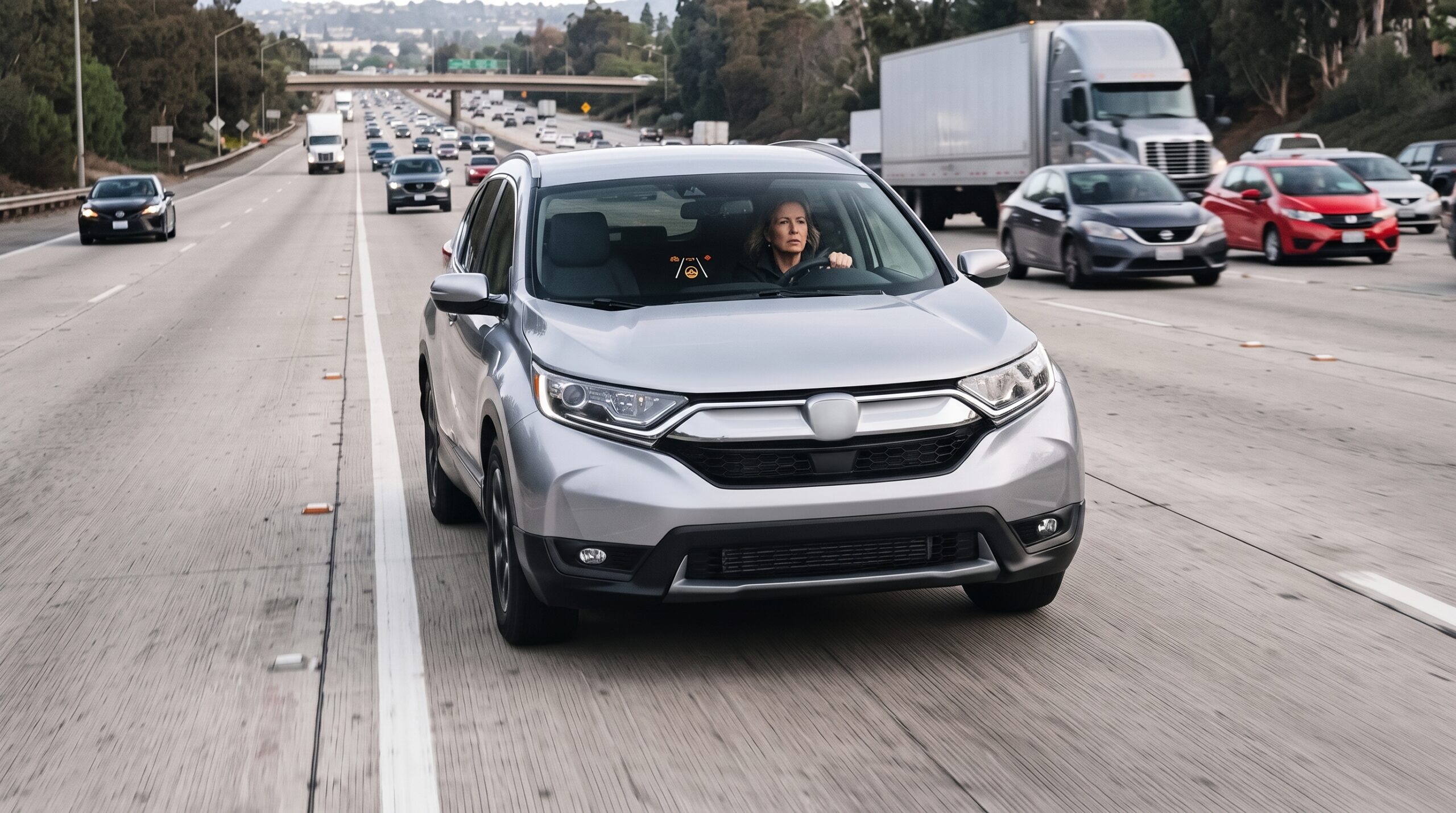
Advanced driver-assistance systems are becoming a routine part of driving in the United States. New vehicles may include lane-departure warnings, lane-keeping assistance, lane-centering technology, adaptive cruise control, automatic emergency braking, blind-spot monitoring, and other features designed to reduce crashes or make driving easier.
These technologies can improve safety, but they are not infallible. A camera may fail to recognize faded lane markings. A sensor may be blocked, damaged, improperly calibrated, or confused by unusual road conditions. Software may respond unexpectedly. A driver may also misunderstand what the technology is capable of doing and depend on it more heavily than intended.
When a vehicle equipped with lane-keeping assist suddenly moves toward another lane, fails to correct a dangerous drift, or makes an unexpected steering input that contributes to a collision, determining responsibility may be far more complicated than in an ordinary car accident.
The driver may still bear some responsibility, but the vehicle manufacturer, an ADAS component manufacturer, repair shop, calibration provider, fleet operator, or another party may also become part of the investigation. Determining liability usually requires examining not only what the drivers did but also what the vehicle’s technology detected, how it responded, and whether it was functioning as designed.
What Is Lane-Keeping Assist?
Lane-keeping assist is one type of advanced driver-assistance system, commonly abbreviated as ADAS. The technology generally relies on cameras or other sensors to detect lane markings and monitor the vehicle’s position within a lane.
When the system detects that a vehicle is unintentionally drifting toward or across a lane boundary, it may provide a warning or make a small steering or braking adjustment intended to move the vehicle back toward the proper position.
Lane-keeping assistance should not be confused with simple lane-departure warning. A lane-departure warning system usually alerts the driver through a sound, visual warning, steering-wheel vibration, or similar signal. Lane-keeping assist goes a step further by potentially applying steering or braking intervention.
Lane centering is another related technology. Rather than waiting until the vehicle approaches a lane boundary, lane-centering systems may continuously make steering adjustments to help keep the vehicle near the middle of the lane.
According to the National Highway Traffic Safety Administration, lane-keeping assistance is considered a Level 1 driver-assistance technology. The agency emphasizes that the driver remains responsible for operating and monitoring the vehicle while these systems are being used.
ADAS Does Not Mean the Vehicle Is Self-Driving
One of the most important issues in an ADAS accident is understanding the difference between driver assistance and automated driving.
Features such as lane keeping, adaptive cruise control, and many highway-assistance systems may perform individual driving functions, but that does not necessarily mean the vehicle can safely operate without driver supervision.
NHTSA states that Level 1 systems may assist with either steering or acceleration and braking, while Level 2 technology may assist with both steering and acceleration or braking at the same time. In either case, the driver is expected to remain engaged and attentive.
This distinction can become central after a crash. A driver who claims that the car was steering itself may still face questions about whether they remained attentive, maintained control, followed the owner’s manual, reacted to warnings, and used the technology only under appropriate conditions.
At the same time, labeling a system as “driver assistance” does not automatically shield a manufacturer from responsibility. If the system contains a defect, gives inadequate warnings, behaves differently from what a reasonable consumer was led to expect, or fails because of a manufacturing or software problem, additional liability issues may arise.
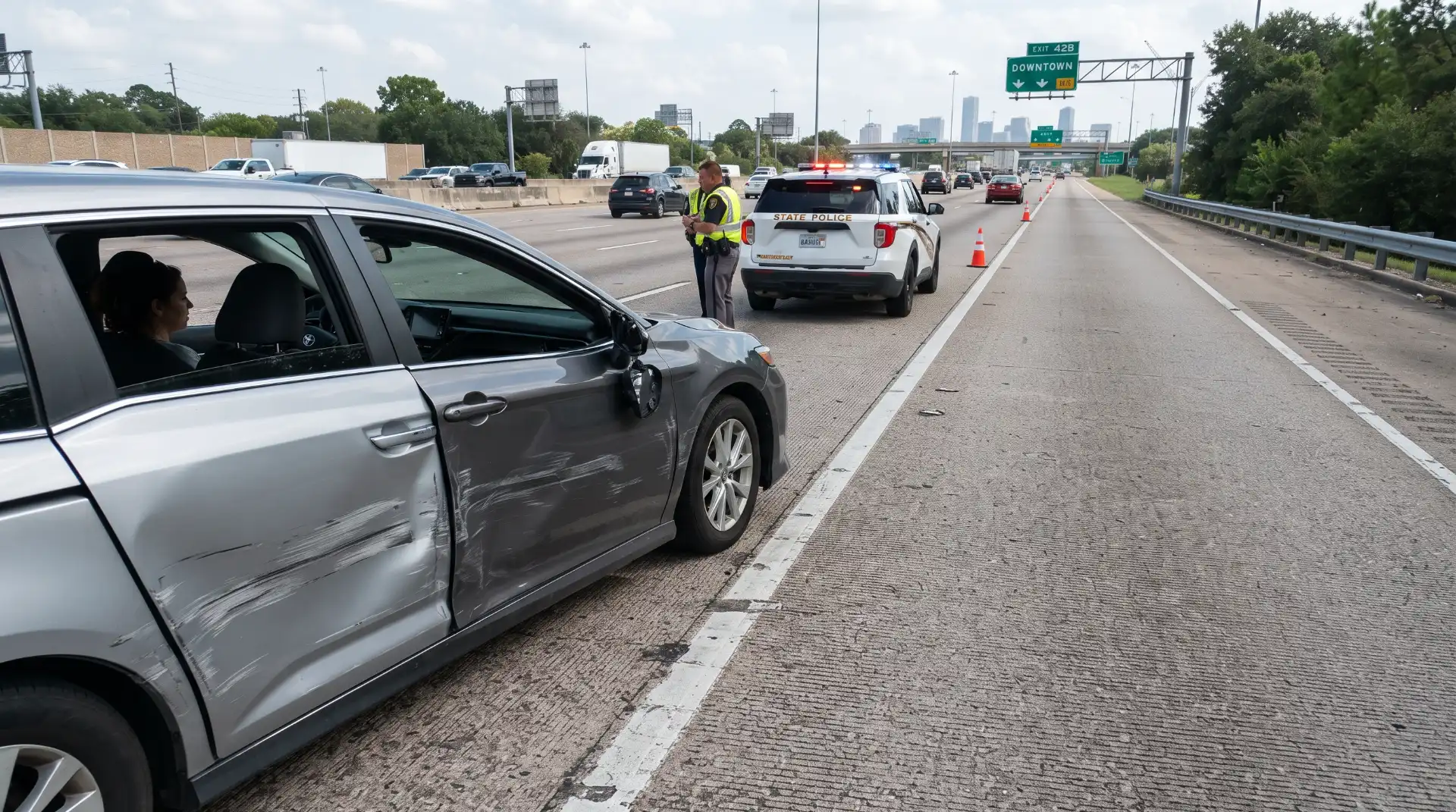
How Lane-Keeping Assist Can Contribute to a Crash
Lane-keeping systems must interpret a constantly changing environment. Cameras and sensors may need to identify lane boundaries while accounting for weather, construction zones, road curvature, shadows, temporary markings, debris, merging lanes, and surrounding vehicles.
A system may perform well in ordinary highway conditions yet struggle when lane markings are worn, covered, altered, or difficult to distinguish.
Problems can also arise when the system interprets roadway features incorrectly. A vehicle might fail to recognize that a lane is ending, identify an old construction marking as an active lane boundary, or attempt a steering correction when the driver did not expect one.
Potential ADAS-related crash scenarios include a vehicle drifting into an adjacent lane despite lane-keeping assistance being active, a sudden steering correction toward another vehicle, failure to recognize faded or temporary lane markings, unexpected disengagement of the assistance system, or a driver failing to regain control after receiving a warning.
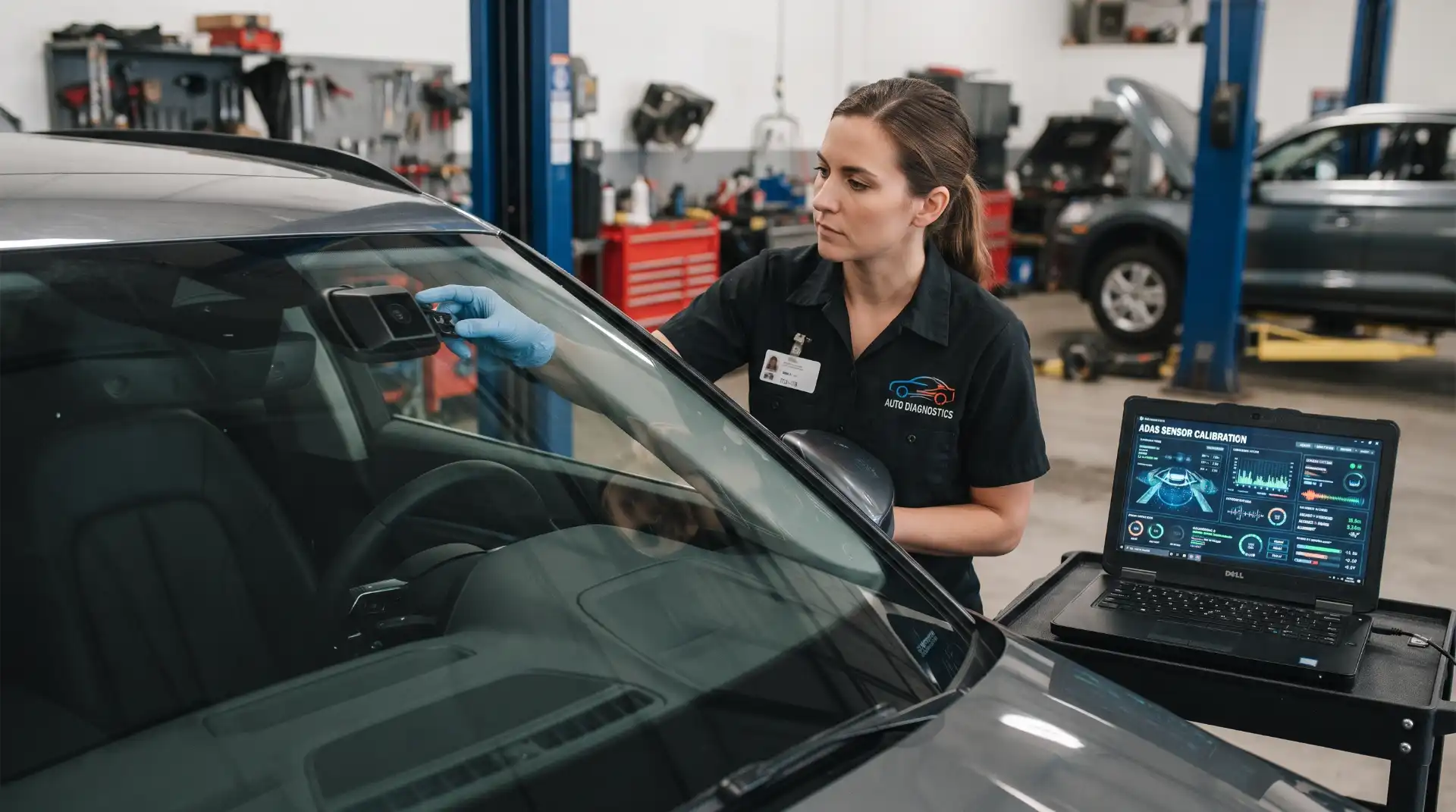
Another potential problem occurs after repairs. Modern vehicles may have cameras located near the windshield, radar sensors behind bumpers, and other electronic equipment that must be positioned precisely. Windshield replacement, collision repairs, suspension work, wheel alignment, or sensor replacement can sometimes require recalibration of ADAS equipment.
If that calibration is performed incorrectly, the technology may receive inaccurate information about the vehicle’s position or surroundings.
Driver Responsibility in an ADAS Crash
In many current passenger vehicles, the driver remains the first party investigators examine after a collision involving lane-keeping technology.
Drivers generally retain a duty to operate their vehicles safely, observe traffic conditions, remain attentive, and take control when necessary. The existence of an electronic driver-assistance feature does not normally eliminate those obligations.
For example, suppose a driver activates lane-centering assistance and then looks away from the road for an extended period. The vehicle encounters faded lane markings, drifts across the center line, and collides with another car. Even if the ADAS technology failed to provide the expected correction, the driver’s inattention may still be an important factor in determining fault.
Investigators may examine whether the driver had their hands on the steering wheel, whether the vehicle issued visual or audible warnings, how much time was available to intervene, whether the driver ignored prior alerts, and whether the technology was being used in conditions permitted by the manufacturer.
These questions are similar to the broader issues involved in proving fault in a San Francisco car accident, but an ADAS case may involve significantly more electronic and technical evidence.
Could the Vehicle Manufacturer Be Responsible?
A manufacturer may become part of an ADAS crash investigation when evidence suggests that the technology itself malfunctioned, was defectively designed, was manufactured incorrectly, or did not adequately warn users about important limitations.
Product-liability cases involving vehicle technology can be highly technical. The mere fact that an ADAS feature did not prevent a crash does not automatically prove that the system was defective. These systems are designed to assist drivers, not guarantee that every collision will be avoided.
However, questions may arise when a system behaves in a way that is inconsistent with its design specifications or creates an unreasonable hazard.
For example, investigators might examine whether the lane-keeping system repeatedly steered toward the wrong lane boundary under foreseeable road conditions, whether a known software issue had been identified, whether similar complaints had been reported, or whether the manufacturer released a recall or software update related to the same problem.
Vehicle design documents, software versions, engineering data, warranty records, recall information, technical service bulletins, and electronic logs may therefore become important evidence.
Software and Sensor Manufacturers May Also Be Examined
Automakers do not necessarily manufacture every camera, radar unit, processor, software component, or electronic control module installed in a modern vehicle.
An ADAS platform may involve technology supplied by multiple companies. Depending on the facts of a crash, attorneys and engineers may investigate whether a defective component or software system contributed to the failure.
For instance, a camera could fail to provide usable information to the lane-control system. A software algorithm could interpret roadway data incorrectly. A steering-control module could fail to execute a command properly. Communication between electronic modules could also be disrupted.
Determining whether one of these failures occurred often requires access to electronic records and expert analysis rather than relying solely on visible vehicle damage.
Repair Shops and ADAS Calibration Providers
Liability may also extend beyond the driver and manufacturer if a vehicle’s ADAS equipment was recently repaired or calibrated.
Many driver-assistance technologies depend on precisely aligned cameras and sensors. Even small changes in camera angle or sensor position can affect what the vehicle detects.
A windshield replacement is a common example. If a forward-facing camera is mounted near the windshield, replacing the glass may require recalibrating the camera according to manufacturer specifications.
Similarly, bumper replacement, collision repair, steering work, or suspension changes may affect radar units or other components used by ADAS.
If a repair business fails to complete a required calibration, uses improper equipment, ignores manufacturer procedures, or incorrectly certifies that the system is functioning properly, that conduct may become relevant if the vehicle later crashes because the technology received inaccurate information.
Repair orders, calibration reports, diagnostic scans, invoices, technician notes, and manufacturer repair procedures may therefore be valuable evidence.
Comparative Fault Can Divide Responsibility
ADAS crashes do not always involve one exclusively responsible party.
California, for example, applies a pure comparative negligence approach in personal injury cases. This means that responsibility can potentially be divided among multiple parties, with damages adjusted according to each party’s share of fault.
An accident might involve a driver who was partially inattentive, a lane-assistance system that failed to perform properly, and a repair facility that had previously miscalibrated the windshield camera.
The legal analysis may therefore focus on how much each factor contributed to the collision rather than simply choosing between “driver error” and “technology failure.”
Anyone involved in a California collision should understand that liability depends heavily on the individual facts and available evidence. Our article about legal rights after a San Francisco auto accident provides additional background on negligence and injury claims.
Why ADAS Crash Evidence Can Disappear Quickly
Preserving evidence is particularly important after a suspected driver-assistance failure because much of the most valuable information may be electronic.
A modern automobile can contain data from multiple control systems. Depending on the vehicle, investigators may seek information about vehicle speed, braking, steering input, driver-assistance engagement, warning messages, sensor status, software versions, and other operating conditions.
Some data may be stored only temporarily or may be overwritten as the vehicle continues to operate. Repairs, software updates, battery disconnection, or vehicle disposal may also complicate later analysis.
For that reason, an ADAS-related crash may require prompt steps to preserve the vehicle and relevant electronic records before repairs significantly alter the evidence.
Event Data Recorders and Vehicle Logs
Many vehicles contain event data recorders, sometimes informally described as automotive “black boxes.” These systems may record certain information associated with a crash event.
However, ADAS investigations may involve much more than traditional event data recorder information.
Vehicle manufacturers may store diagnostic trouble codes, sensor logs, driver-assistance status information, camera-related information, steering input data, or telematics records in other electronic modules or systems.
The exact information available depends on the make, model, year, software configuration, and circumstances of the collision.
Obtaining and interpreting this data may require specialized equipment and experts familiar with automotive electronics and accident reconstruction.
Physical Evidence Still Matters
Technology does not replace traditional accident evidence.
Photographs of tire marks, lane boundaries, road construction, temporary striping, weather conditions, vehicle damage, and the final resting positions of the vehicles can help investigators determine whether the lane-assistance system reacted appropriately.
Dashcam footage can be particularly important. Video may show the vehicle slowly drifting before impact, making an abrupt steering correction, crossing unusual pavement markings, or encountering a construction configuration that confused the system.
Witness statements may also establish whether the vehicle moved suddenly or gradually before the collision.
Police reports, traffic-camera footage, nearby surveillance video, road-design records, and roadway maintenance information can provide additional context.
Was the System Supposed to Work Under Those Conditions?
A central question in many ADAS cases is whether the technology was being used inside or outside its intended operating conditions.
Vehicle manuals commonly identify circumstances in which lane assistance may be limited. These can include poorly visible lane markings, severe weather, glare, construction zones, unusual road geometry, dirt or snow covering sensors, or other situations that interfere with camera visibility.
If the driver ignored warnings that the system was unavailable, the defense may argue that the driver should have relied exclusively on manual control.
On the other hand, if the vehicle indicated that the system was active and functioning normally but then reacted unexpectedly in an ordinary and foreseeable driving situation, investigators may scrutinize the system more closely.
ADAS Safety Benefits Do Not Eliminate Failure Risks
The fact that driver-assistance technology can malfunction does not mean the technology is generally unsafe.
The Insurance Institute for Highway Safety reports that several crash-avoidance technologies, including lane-departure prevention, have demonstrated real-world safety benefits. IIHS reported in March 2026 that safety benefits can increase when multiple crash-avoidance systems are bundled together.
IIHS has also reported that lane-departure warning systems are associated with reductions in certain single-vehicle, sideswipe, and head-on crashes reported to police.
The important point is that a technology can reduce crash risk overall while still being relevant to liability when it performs improperly in an individual case.
Common Injuries in Lane-Departure and ADAS Crashes
A failure involving steering assistance can contribute to several types of collisions, including sideswipes, roadway-departure accidents, barrier impacts, rollovers, and head-on crashes.
Because some of these collisions occur at highway speeds, injuries can be significant.
Potential injuries include traumatic brain injuries, concussions, spinal injuries, fractures, internal injuries, shoulder and knee injuries, soft-tissue damage, and psychological trauma.
The seriousness of the injuries may affect not only medical treatment but also the amount and type of evidence needed to document damages.
What Compensation May Be Available?
When negligence or a defective product contributes to an accident, an injured person may potentially seek compensation for losses associated with the collision, depending on applicable state law and the facts of the case.
Recoverable damages may include medical expenses, anticipated future medical treatment, lost earnings, diminished earning capacity, rehabilitation expenses, property damage, and noneconomic losses such as pain and suffering.
Severe injuries can create long-term expenses involving surgery, physical therapy, occupational therapy, home modifications, medical equipment, and reduced ability to work.
Cases involving permanent disability or catastrophic injury may therefore require medical specialists, economists, vocational experts, and other professionals to evaluate future losses.
What to Do After a Suspected ADAS Failure
After any serious collision, immediate medical and safety needs should come first. Once the scene is secure, however, preserving information related to the driver-assistance system may become especially important.
A driver should avoid deleting vehicle-app information or resetting system settings before relevant information is preserved. Photographs of dashboard warnings, instrument-cluster messages, road markings, sensor damage, and the crash scene may help document what occurred.
It may also be useful to retain repair invoices, maintenance records, windshield replacement documents, software-update notices, owner’s manuals, recall notices, and records showing previous problems with the same technology.
If the vehicle is badly damaged, consider the importance of preserving it before authorizing disposal or extensive repairs. Once electronic modules or sensors are removed, important evidence may become more difficult to evaluate.
Our site’s What to Do After an Accident resources provide additional information about documenting an accident and protecting important evidence.
Why Expert Analysis May Be Necessary
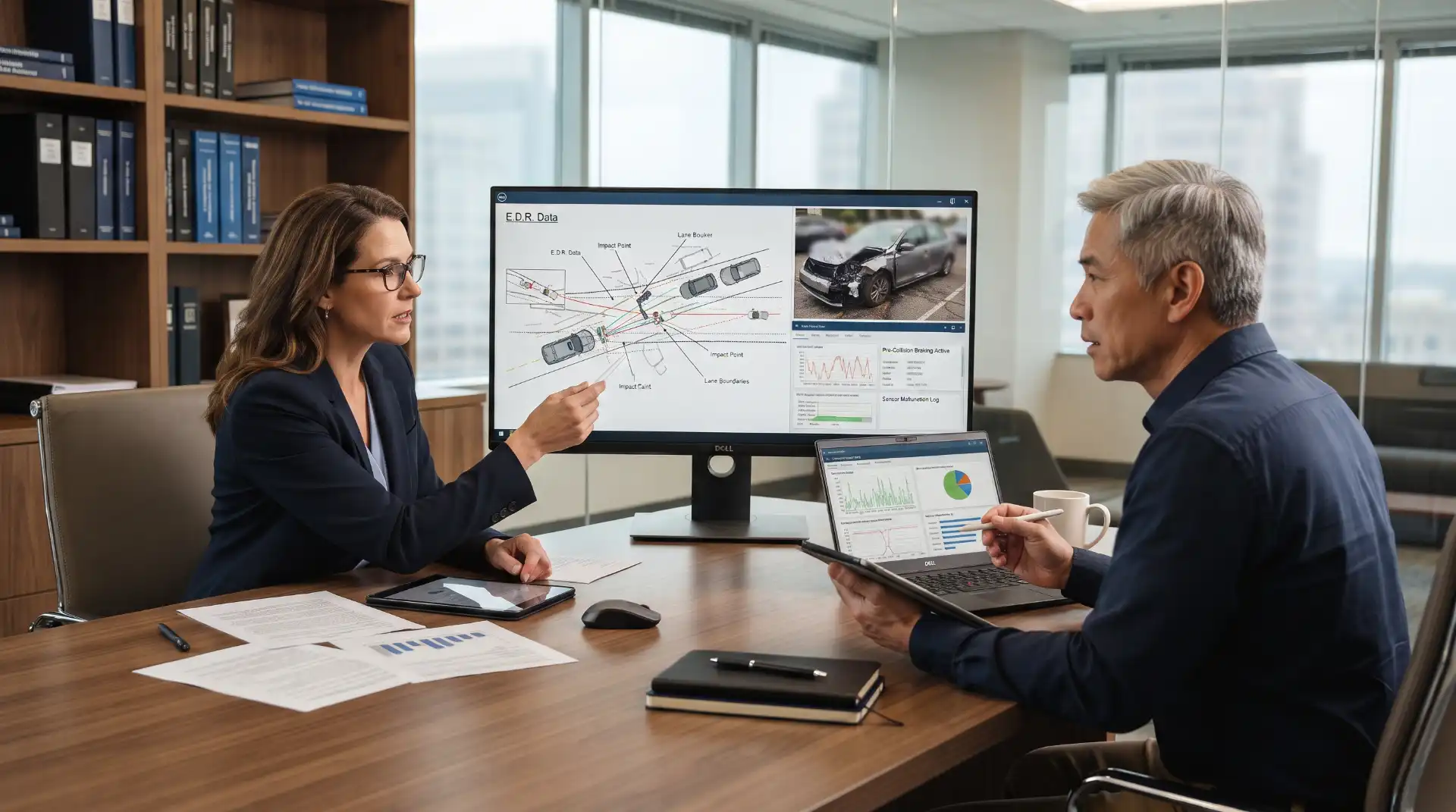
An ordinary accident reconstruction may focus on vehicle speeds, braking distances, impact angles, road conditions, and driver behavior. An ADAS investigation may require all of those elements plus analysis of software, cameras, radar units, control modules, calibration procedures, and system logs.
An automotive engineer may evaluate whether the technology operated according to design specifications. An accident reconstruction expert may determine how the steering movement affected the vehicle’s path. A software or electronic systems specialist may help determine whether fault codes or data reveal a malfunction.
These experts may also compare physical evidence with recorded vehicle information. If electronic data shows that lane-keeping assistance issued a steering command immediately before the vehicle moved into another lane, for example, that information could become important when reconstructing the sequence of events.
Insurance Companies May Dispute Technology-Related Claims
Insurance disputes can become especially complicated when a driver argues that vehicle technology contributed to the accident.
An insurer may argue that the driver remained responsible for controlling the vehicle regardless of the technology. A manufacturer may contend that the system operated properly or that environmental conditions prevented it from detecting the lane accurately.
A repair facility may deny that calibration work had anything to do with the collision.
These competing explanations are one reason preserving objective evidence is so important.
Instead of relying solely on recollections, investigators may be able to compare physical damage, video recordings, electronic data, repair history, software information, and expert analysis to determine what actually occurred.
ADAS Liability Will Continue to Evolve
Driver-assistance technology is developing rapidly. Vehicles are receiving increasingly sophisticated combinations of cameras, radar, driver-monitoring systems, lane-centering functions, automated braking, and navigation-assisted features.
The legal system will continue confronting questions about how responsibility should be divided when human decisions and automated vehicle behavior contribute to the same collision.
Current federal guidance remains clear that today’s Level 1 and Level 2 consumer driver-assistance systems require active driver supervision. At the same time, manufacturers and other companies involved in designing, producing, repairing, and maintaining vehicles may still face scrutiny when evidence suggests that a defective or improperly serviced system contributed to an accident.
The result is not a simple rule that the “driver is always responsible” or that the “manufacturer is responsible whenever technology fails.”
Instead, liability generally depends on the specific sequence of events, what each party knew or should have known, how the technology was designed to function, whether the driver responded reasonably, and what technical evidence can establish about the vehicle’s behavior.
Final Thoughts
Lane-keeping assist and other ADAS technologies have the potential to prevent crashes, reduce driver error, and make modern vehicles safer. But when these systems malfunction or respond unpredictably, identifying responsibility can require a much deeper investigation than a traditional car accident claim.
The driver may remain responsible for maintaining control and monitoring the roadway. However, evidence may also point toward a vehicle manufacturer, component supplier, software developer, repair business, calibration provider, commercial fleet operator, or multiple parties sharing responsibility.
Anyone involved in a serious accident in which lane-keeping assistance or another driver-assistance system may have played a role should consider preserving the vehicle, electronic data, repair records, photographs, videos, and other evidence before it is changed or lost.
As ADAS becomes increasingly common on American roads, understanding the difference between a safety feature and true autonomous driving will become even more important. Driver-assistance technology may help control a vehicle, but determining legal responsibility after a failure still requires careful examination of both human conduct and the technology operating behind the wheel.
This article is provided for general informational purposes and does not constitute legal advice. Liability laws and available claims may vary depending on the state and the individual circumstances of an accident.