
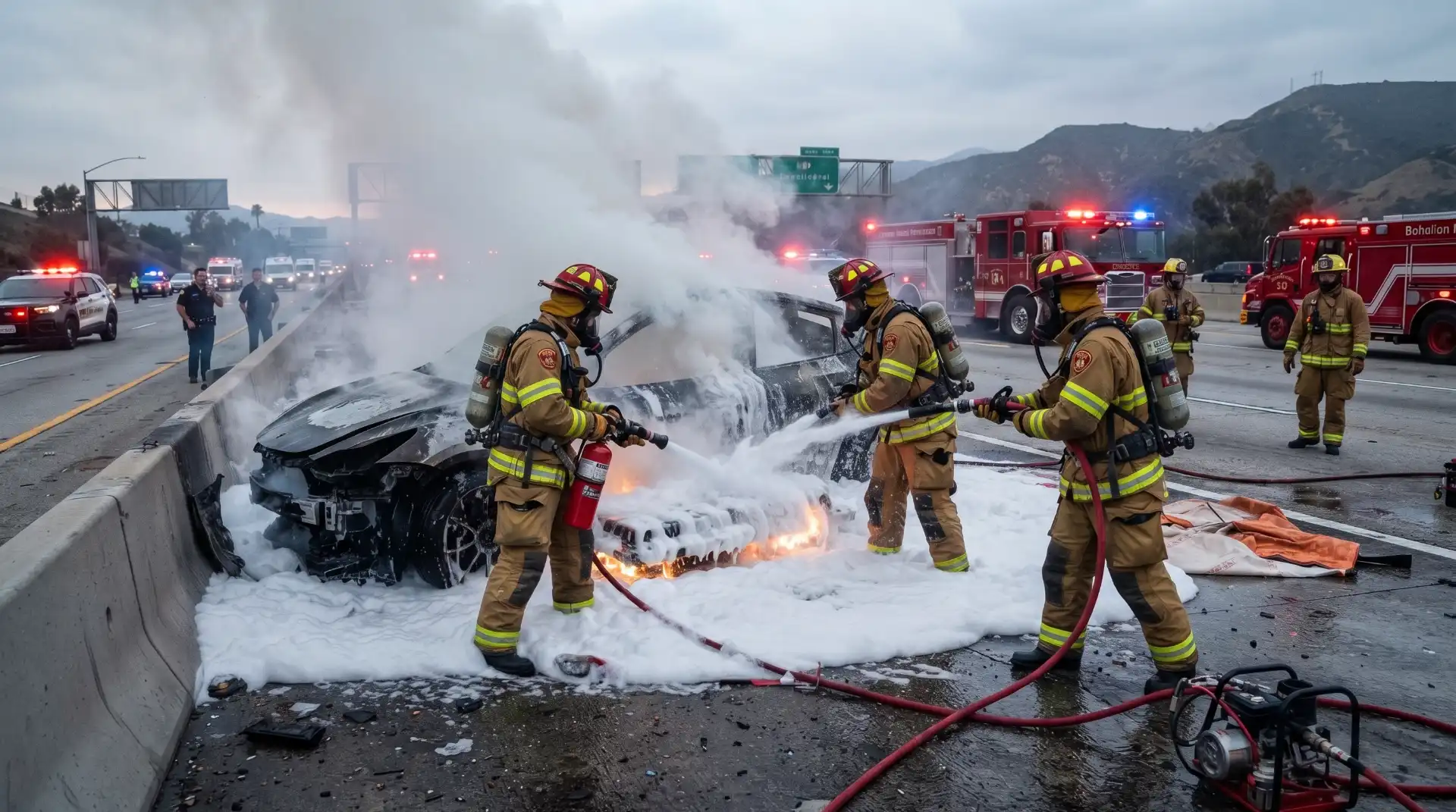
Electric vehicles have become a common sight on California roads. In cities like San Francisco, Tesla, Rivian, Lucid, Hyundai, Ford, Chevrolet, and other manufacturers continue introducing new electric models as consumers embrace cleaner transportation. California leads the nation in electric vehicle adoption, making EV-related accidents increasingly important in personal injury law.
Although electric vehicles generally meet strict federal safety standards and perform well in many crash tests, they introduce risks that differ from those associated with gasoline-powered vehicles. One of the most discussed concerns involves lithium-ion battery fires. While these fires remain relatively uncommon, they can be more difficult to extinguish, generate extreme heat, and sometimes reignite hours or even days after an accident.
When an electric vehicle battery catches fire after a collision, the legal issues surrounding an injury claim may become considerably more complex. Determining what caused the fire, who may be responsible, and how the additional injuries occurred often requires detailed investigations involving engineers, fire experts, accident reconstruction specialists, and insurance professionals.
If you or a loved one suffered injuries in an accident involving an electric vehicle battery fire, understanding how these incidents affect personal injury claims can help you better protect your legal rights.
Why Electric Vehicle Battery Fires Receive So Much Attention
Electric vehicle battery fires often generate national headlines because they differ significantly from conventional vehicle fires. Most electric vehicles use large lithium-ion battery packs mounted beneath the passenger compartment. These batteries store enormous amounts of energy, allowing vehicles to travel hundreds of miles on a single charge.
When a severe collision damages battery cells, a process known as thermal runaway may occur. During thermal runaway, one damaged battery cell overheats, triggering neighboring cells until the entire battery pack rapidly generates heat. Temperatures can reach several thousand degrees, producing intense flames and hazardous gases.
Although studies consistently show that gasoline-powered vehicles experience fires more frequently overall, electric vehicle battery fires often require specialized firefighting techniques because the batteries may continue producing heat long after the initial flames appear to be extinguished.
This unique behavior makes EV crashes more complicated for emergency responders and can significantly affect the severity of injuries suffered by occupants and nearby motorists.
According to the National Highway Traffic Safety Administration (NHTSA), ongoing research continues to evaluate electric vehicle crash safety, battery integrity, and emergency response procedures.
How Battery Fires Can Increase Injury Severity
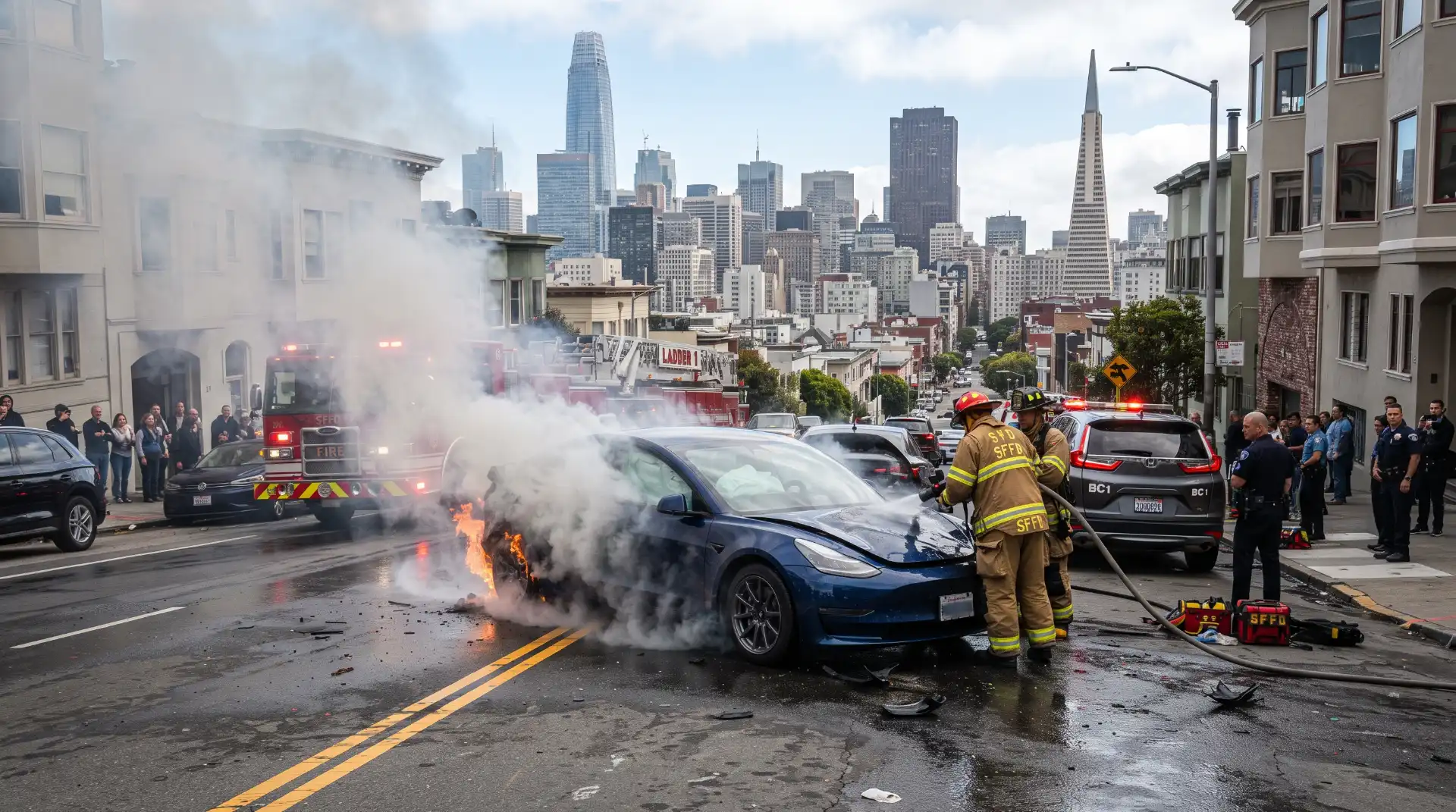
A typical traffic collision may cause broken bones, soft tissue injuries, concussions, or spinal trauma. However, when an electric vehicle battery ignites after impact, victims may suffer additional injuries beyond those caused by the crash itself.
Severe burns are among the most obvious concerns. Occupants trapped inside damaged vehicles may be exposed to intense heat within seconds, making escape far more difficult than during many conventional crashes. Smoke inhalation also presents serious health risks because battery fires can release toxic gases capable of damaging the respiratory system.
Emergency responders occasionally encounter situations where damaged batteries reignite after the vehicle has already been removed from the scene. This creates additional hazards for tow truck operators, investigators, repair facilities, and anyone handling the damaged vehicle.
The combination of collision injuries and fire-related trauma frequently results in longer hospital stays, multiple surgeries, skin graft procedures, rehabilitation, and permanent scarring. These factors often increase the overall value and complexity of an injury claim.
Does an Electric Vehicle Fire Automatically Mean the Manufacturer Is Responsible?
Many people assume that if an electric vehicle catches fire, the manufacturer must be legally responsible. In reality, determining liability is far more complicated.
Sometimes the battery fire occurs solely because another driver caused a severe collision. In these situations, the negligent driver may remain primarily responsible even though the electric vehicle eventually ignites.
Other cases may involve allegations that the battery pack failed in a manner that exceeded reasonable safety expectations. Investigators may examine whether the battery housing, cooling system, protective shielding, or electrical components contributed to the fire.
Manufacturers design electric vehicles to withstand significant impacts without catastrophic battery failure. If evidence suggests a design defect, manufacturing defect, or inadequate safety system contributed to the injuries, product liability issues may arise alongside the ordinary personal injury claim.
Not every battery fire indicates a defective vehicle. Each accident requires careful engineering analysis before legal responsibility can be determined.
Multiple Parties May Share Liability
Electric vehicle crashes often involve more than one potentially responsible party. California follows a comparative negligence system, meaning responsibility may be divided among several individuals or organizations depending on the facts.
For example, another motorist may have caused the initial collision by running a red light, while a defective battery enclosure allowed the fire to spread far more rapidly than expected. In another situation, improper repairs performed by a third-party service facility could contribute to battery failure after an otherwise moderate crash.
Construction companies, commercial fleet operators, parts manufacturers, maintenance providers, and even government agencies responsible for roadway conditions may also become involved if their negligence contributed to the accident.
Because EV crashes frequently involve overlapping legal issues, investigators often examine every contributing factor rather than focusing solely on the initial impact.
Why Technical Evidence Is More Important in EV Cases
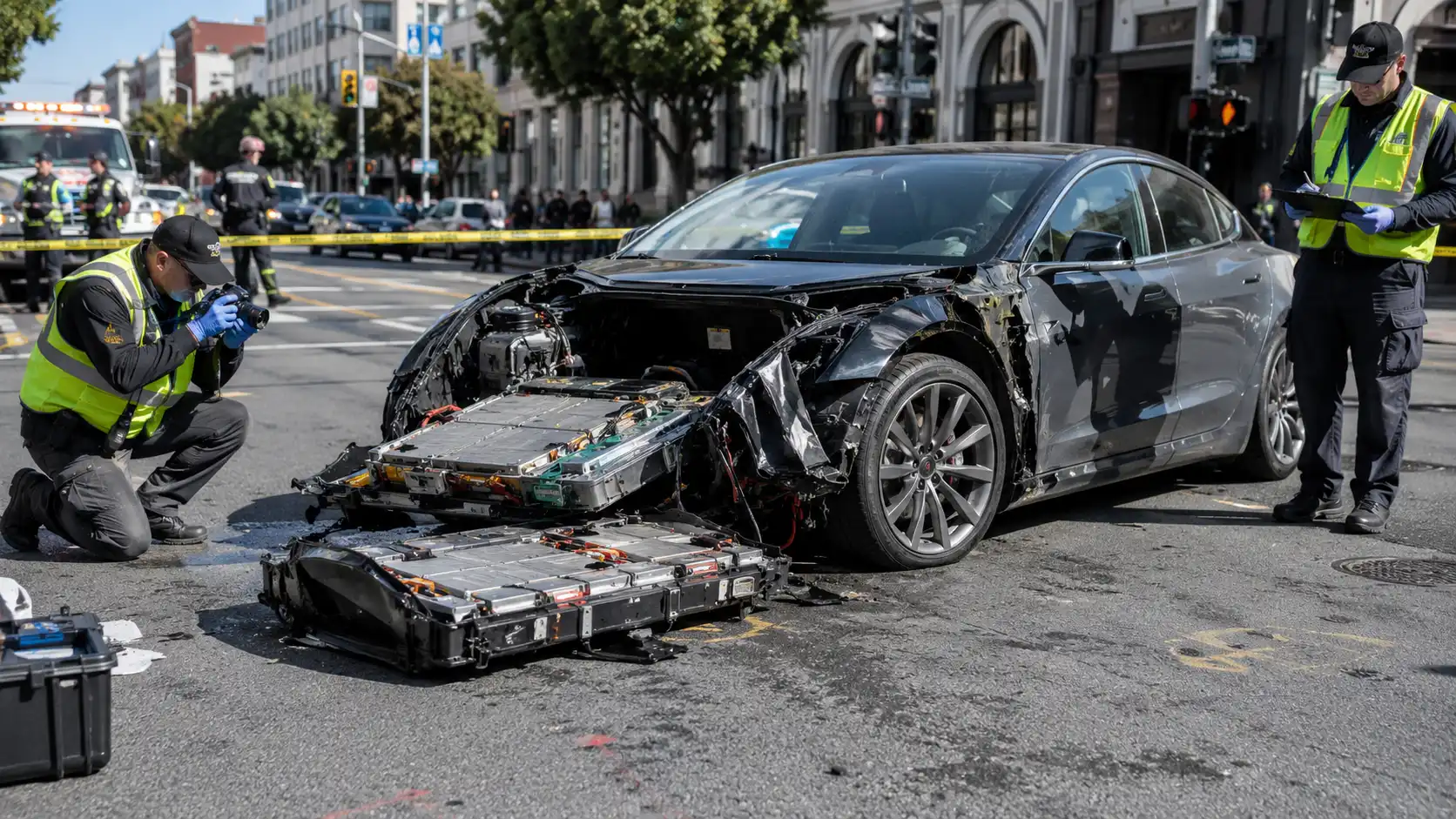
Electric vehicle accident claims frequently involve far more technical evidence than ordinary traffic collisions. Modern EVs continuously record operational data through numerous onboard sensors and electronic systems. These records may include vehicle speed, braking activity, steering input, battery temperature, charging status, impact forces, and numerous other operating conditions immediately before and after the crash.
This information can help investigators determine whether the battery was functioning normally prior to impact or whether unusual warning signs appeared beforehand.
Battery components themselves also become critical evidence. Engineers may inspect damaged cells, cooling systems, electrical connectors, protective shielding, and software logs to identify possible failures.
Fire investigators often evaluate burn patterns, ignition timing, heat damage, and suppression efforts to determine whether the fire originated within the battery pack or from another source.
Because this evidence can deteriorate quickly if damaged vehicles are dismantled or salvaged, preserving the vehicle as early as possible is often an important part of the investigation.
How Fire Investigations Affect Injury Claims
Unlike ordinary vehicle collisions, EV battery fires frequently require specialized forensic analysis. Investigators attempt to answer several important questions before liability can be determined.
They examine where the fire started, whether the battery became damaged during impact, how quickly flames spread, whether occupants had sufficient time to escape, and whether emergency responders encountered unusual difficulties extinguishing the fire.
These investigations may involve cooperation between accident reconstruction specialists, automotive engineers, fire investigators, insurance companies, and sometimes vehicle manufacturers.
The findings often influence settlement negotiations because they help establish whether the fire itself caused additional injuries beyond the original collision.
California’s Growing Electric Vehicle Population
California remains the nation’s largest electric vehicle market. The state’s climate goals, charging infrastructure, and consumer incentives have encouraged rapid EV adoption across metropolitan areas including San Francisco, Los Angeles, San Diego, Sacramento, and San Jose.
As more electric vehicles share California roads, attorneys, insurance companies, emergency responders, and courts are becoming increasingly familiar with the unique legal issues surrounding battery-related accidents.
Fire departments throughout California have also expanded specialized training programs focused on electric vehicle emergencies, recognizing that lithium-ion battery incidents require different response strategies than conventional vehicle fires.
Insurance Companies May Handle EV Claims Differently
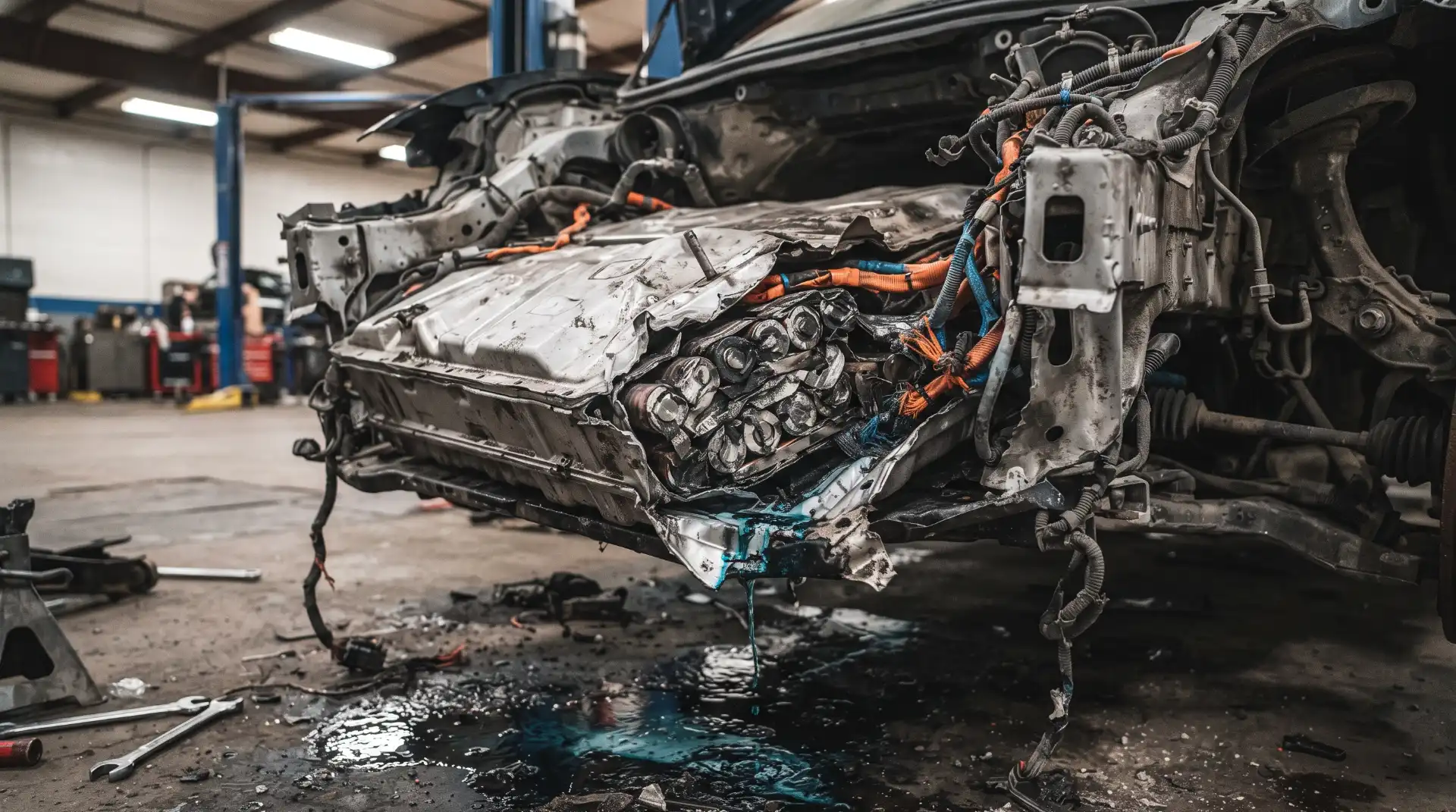
Insurance claims involving electric vehicle battery fires often require longer investigations than conventional crashes. Because battery damage can significantly increase repair costs—or result in a total loss—insurance companies frequently request extensive inspections before determining liability and vehicle value.
Medical claims may also become more complicated when victims suffer both collision injuries and thermal injuries from the subsequent fire. Burn treatment frequently involves specialized physicians, reconstructive surgery, rehabilitation, psychological counseling, and long-term follow-up care.
Insurance adjusters may consult engineers and fire experts before deciding whether additional parties should share responsibility. While this process can take longer, it also allows investigators to develop a more complete understanding of what caused the accident and resulting injuries.
The Long-Term Impact of Burn Injuries
Burn injuries often differ substantially from fractures or soft tissue injuries because their effects may continue for years after the accident. Victims frequently require multiple surgeries, skin graft procedures, infection prevention treatments, physical therapy, and psychological counseling.
Permanent scarring may affect mobility as well as emotional well-being. Individuals with severe burns sometimes experience chronic pain, nerve damage, or reduced range of motion that interferes with employment and daily activities.
These long-term consequences become important when evaluating damages in a personal injury claim. Medical experts may project future treatment needs, while vocational specialists assess how permanent injuries affect earning capacity over time.
What Evidence Should Be Preserved?
After any accident involving an electric vehicle fire, preserving evidence can become extremely important. Medical records documenting burn injuries, photographs of the vehicle, dashcam footage, witness statements, and police reports all contribute to understanding what occurred.
If possible, the damaged vehicle should remain available for inspection until investigators complete their analysis. Destroying or salvaging the vehicle too early may eliminate important evidence regarding battery performance and fire origin.
Photographs showing fire damage, roadway conditions, impact points, and surrounding vehicles may later assist engineers reconstructing the collision.
Emergency response reports generated by firefighters can also provide valuable information regarding suppression efforts, battery behavior, and the progression of the fire.
Conclusion
Electric vehicle battery fires remain relatively rare, but when they occur, they often add significant complexity to an already serious accident. Victims may suffer severe burns, smoke inhalation, and long-term medical complications that extend well beyond the injuries caused by the initial collision. Determining exactly why the battery ignited—and whether the fire resulted from crash forces, a vehicle defect, improper repairs, or another contributing factor—frequently requires detailed technical investigations involving multiple experts.
As electric vehicles become increasingly common throughout California, injury claims involving lithium-ion batteries are likely to become more frequent as well. These cases often involve multiple potentially responsible parties, extensive forensic analysis, and unique forms of evidence that differ from traditional automobile accidents. Understanding these issues can help injured individuals recognize why preserving evidence and thoroughly investigating the cause of the fire are essential steps after an EV-related crash.
Whether the accident involves another negligent driver, a defective vehicle component, or another contributing factor, each case deserves careful evaluation based on its specific facts. A comprehensive investigation helps identify all potential sources of liability while ensuring that the full extent of fire-related injuries is properly documented when pursuing compensation under California law.