
Why Black Box Data Matters After a Car Accident
A car accident can leave drivers with very different accounts of what happened. One motorist may insist that the other vehicle was speeding, while the other claims that traffic stopped unexpectedly. A driver involved in a rear-end collision might say there was no opportunity to brake, while the injured person remembers seeing the vehicle approaching at an unsafe speed. When several vehicles are involved, even witnesses may disagree about the sequence of events.
These disagreements can become important when an insurance company investigates liability or an injured person seeks compensation for medical expenses, lost income, vehicle damage, and other losses. Photographs, police reports, witness statements, and medical records all have a role in the investigation. However, another potentially valuable source of evidence may be found inside the vehicles involved: electronic crash data.
Black box data after a car accident can help investigators understand certain aspects of a vehicle’s operation immediately before, during, and sometimes after a qualifying collision. This information may help establish vehicle speed, braking activity, accelerator use, crash forces, or the status of certain safety systems, depending on the vehicle and the data available.
The technology is commonly called an event data recorder, or EDR. Although it is often compared to an airplane’s black box, a car’s EDR is different from an aircraft flight recorder and should not be mistaken for a dashboard camera. It typically captures a limited set of technical measurements rather than recording an entire trip.
For people involved in collisions in San Francisco and elsewhere in California, these records may help clarify disputed facts. They can also raise questions about evidence preservation, access to electronic information, technical interpretation, and whether a record can be used in a legal proceeding.
Understanding the capabilities and limitations of vehicle event data recorders can help accident victims make more informed decisions about documenting a crash and protecting potentially important evidence.
What Is a Vehicle Event Data Recorder?
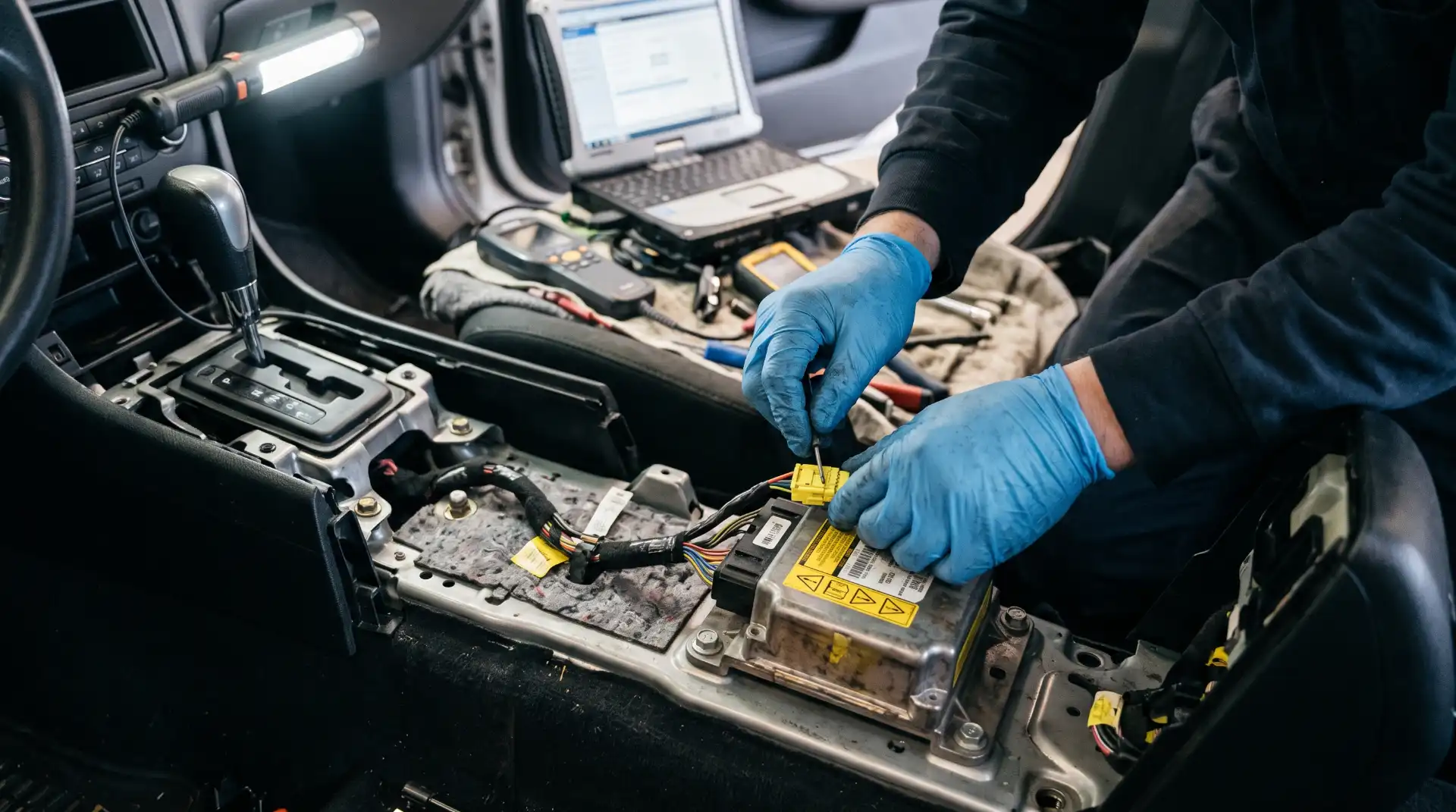
An event data recorder is an electronic device or function within a vehicle that records certain technical information associated with a qualifying event. In many passenger vehicles, the system is connected to the airbag control module or another component responsible for managing vehicle safety systems.
The National Highway Traffic Safety Administration explains that EDRs record technical vehicle and occupant information for a brief period around a crash. The precise data elements and recording capabilities vary by vehicle design and manufacturer.
For additional technical background, see the National Highway Traffic Safety Administration’s official guide to event data recorders.
The term “black box” is convenient, but it can create unrealistic expectations. A conventional EDR does not necessarily capture everything a driver does. It generally does not provide a continuous video of the road, record every conversation inside the vehicle, or produce a complete minute-by-minute history of the trip.
Instead, the system may preserve selected measurements when a particular event meets the system’s recording criteria. These measurements can give investigators a technical snapshot of the vehicle’s behavior during a short and potentially important period.
Some vehicles contain additional electronic systems that may also provide relevant evidence. Connected-car services, fleet tracking devices, navigation systems, telematics platforms, and dashcams may generate separate records. Those systems should not automatically be treated as part of the EDR because their functions, data retention practices, and access requirements can differ.
The first step in any investigation is to identify which electronic systems are present and determine whether they contain information relevant to the specific collision.
What Information Can Black Box Data Reveal?
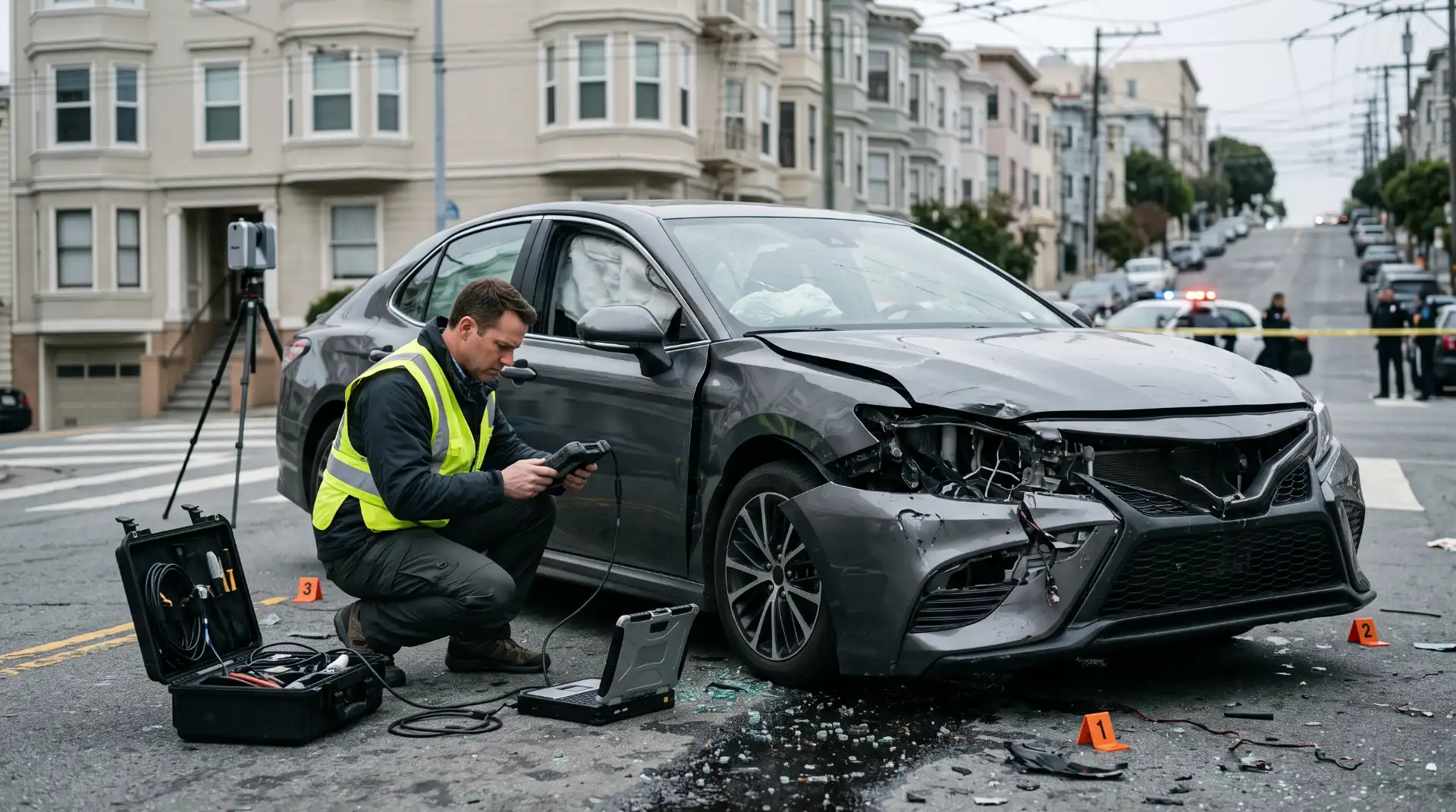
The available information depends on the vehicle’s make, model, model year, equipment, and the nature of the crash. Not every EDR records the same information, and not every collision produces a useful record.
Vehicle speed before a collision
Vehicle speed is one of the most discussed forms of EDR information. When a record contains speed measurements for the relevant period, investigators may use them to assess whether a driver’s account is consistent with the vehicle’s recorded behavior.
Consider a collision on Market Street in San Francisco. One driver says the vehicle was moving slowly in heavy traffic, while another alleges that it approached at an excessive speed and struck a stopped car. If a usable EDR record exists, the recorded measurements may help investigators evaluate those competing accounts.
Speed information can also be relevant to freeway collisions, intersection crashes, and accidents involving sudden traffic slowdowns. Investigators may compare the data with road markings, damage patterns, video footage, and witness observations.
Nevertheless, a recorded speed measurement does not automatically prove negligence. Investigators must understand the time interval represented by the data and consider the speed limit, road conditions, traffic flow, visibility, and the actions of other drivers.
Brake application and deceleration
Some EDR systems record brake-related information during the relevant pre-crash interval. This may help investigators determine whether a driver applied the brakes before impact or whether the vehicle’s movement changed during the recorded period.
In a rear-end collision, for example, a following driver might claim that the vehicle ahead stopped so suddenly that a crash was unavoidable. Available data from the following vehicle may help establish whether braking occurred during the recorded interval.
The information may also be useful when a driver claims to have attempted an emergency stop before entering an intersection or approaching a line of traffic.
However, brake-related data must be interpreted carefully. A record may indicate a particular brake status without explaining everything about the driver’s actions, the amount of braking force, the condition of the braking system, or the distance available to stop.
A lack of recorded brake application during a limited interval does not necessarily establish that a driver never attempted to slow down. The record may not cover the entire period that matters to the investigation.
Accelerator use and engine information
Depending on the vehicle, an EDR may contain accelerator-related or engine information. These details can help investigators evaluate whether a vehicle was accelerating, maintaining its speed, or responding to changing driving conditions before a collision.
Suppose a crash occurs as one vehicle enters an intersection and another vehicle approaches from a cross street. The drivers disagree about whether one of them accelerated into the intersection. If relevant data exists, investigators may examine the recorded vehicle behavior alongside signal timing, witness statements, and physical evidence.
Accelerator information alone cannot establish a driver’s intention. It does not necessarily show what the driver saw, whether the driver recognized a hazard, or why a particular maneuver occurred. Vehicle response may also depend on mechanical conditions and other technical factors.
Airbag deployment and occupant restraint information
An EDR may capture information related to airbag deployment, restraint-system status, or seat belt use. Such information can help investigators understand how certain vehicle safety systems responded during a collision.
For instance, the recorded information may provide context about the crash event and the activation of safety equipment. Investigators may compare it with vehicle damage, photographs, medical records, and other evidence to understand the circumstances surrounding an injury.
However, airbag deployment does not independently establish who caused the crash. Nor does the absence of deployment necessarily indicate that a collision was minor or that an occupant could not have been injured.
The significance of these records depends on the particular system and the question being investigated.
Crash forces and changes in vehicle motion
Certain EDRs can record information about the crash event itself, including measurements related to changes in vehicle motion. These measurements may assist qualified specialists when reconstructing the collision.
A reconstruction specialist might examine this information alongside vehicle deformation, impact locations, roadway measurements, and the final positions of the vehicles. The combined evidence can help assess how the collision occurred and whether a proposed explanation fits the physical facts.
It is important to distinguish crash measurements from a complete determination of injury severity. A technical record does not replace medical evaluation, and it cannot independently establish the cause or extent of every injury.
How Black Box Data Can Help Establish Fault in California
California accident claims often depend on evidence showing how a collision occurred, whether a party failed to use reasonable care, and whether that conduct caused the injuries or losses being claimed.
Black box data may help answer some of these questions. Its importance depends on the available record, the facts of the collision, and how the information compares with other evidence.
Reconstructing the moments before impact
The events immediately preceding a crash can be crucial to determining responsibility. Investigators may need to know whether a vehicle slowed down, accelerated, changed its movement, or attempted to avoid an obstacle.
EDR information may help clarify parts of that sequence when the relevant measurements were recorded. For example, a driver may claim that another vehicle suddenly entered the lane, leaving no time to react. The available data could help investigators assess vehicle speed or braking behavior during the recorded interval.
That information may be compared with photographs, roadway markings, witness statements, and video footage to develop a more complete timeline.
The purpose is not to make the electronic record fit one driver’s version of events. It is to evaluate whether the record supports, contradicts, or leaves unanswered important questions about the collision.
Investigating speeding and unsafe driving
A driver may be accused of traveling too fast for the conditions or exceeding a posted speed limit. EDR information may help establish the vehicle’s recorded speed during a relevant period, if that measurement is available.
Speed can matter in many San Francisco accidents, including collisions on steep streets, busy downtown intersections, freeway ramps, and roads with limited visibility. However, investigators must distinguish between the recorded speed and the legal conclusion that a driver was negligent.
A vehicle can be traveling below the posted limit and still be moving too quickly for traffic, weather, visibility, or road conditions. Conversely, a recorded speed figure must be placed in context before it can support a conclusion about fault.
Accident reconstruction experts may compare speed information with physical evidence to assess whether a driver’s conduct contributed to the collision.
Examining rear-end collisions
Rear-end crashes often involve conflicting explanations. The following driver may claim that the lead vehicle stopped abruptly, while the front driver may say the other motorist was following too closely or was distracted.
EDR information may help investigators assess the following vehicle’s speed and braking behavior during the recorded period. If data from both vehicles is available, it may provide additional context about the sequence of events.
Other evidence remains essential. Investigators may need to examine traffic conditions, vehicle spacing, the location of the impact, witness observations, and any available dashcam footage.
A record showing that a driver applied the brakes does not automatically excuse that driver from liability. The question is whether the driver acted reasonably under the circumstances and whether the available evidence supports the account of what happened.
Analyzing multi-car and chain-reaction accidents
When several vehicles collide, the order of impacts can be difficult to determine. One car may strike another, pushing it into a third vehicle. Alternatively, multiple drivers may contribute to a sequence of collisions occurring within a short period.
Where relevant data is available from several vehicles, investigators may compare the separate records to determine whether their timing and recorded movements are consistent with a proposed sequence.
For example, a freeway collision may begin when a driver fails to slow for stopped traffic. A second driver may then collide with the first vehicle, and another car may be unable to stop in time. Understanding each stage can help distinguish between the initial cause and later contributing factors.
EDR information may assist with this analysis, but it should be considered alongside damage patterns, vehicle positions, photographs, roadway evidence, and witness statements.
For readers who need guidance on documenting the immediate aftermath of a crash, the site’s step-by-step guide to what to do after a car accident in San Francisco provides related information about reporting the incident and preserving evidence.
Evaluating mechanical failure allegations
Not every collision results solely from driver behavior. A crash may involve a suspected brake failure, steering problem, defective component, or malfunctioning safety system.
In these cases, investigators may need to examine the vehicle’s mechanical condition as well as its electronic records. EDR data might provide useful context, but it does not necessarily identify the cause of a mechanical failure.
A specialist may need to inspect the vehicle, review maintenance records, examine relevant components, and determine whether a defect contributed to the crash. The electronic record can become one part of a broader technical investigation.
When a defective component may have played a role, the site’s article on San Francisco vehicle defect accidents and potential manufacturer liability offers a related starting point for understanding why the vehicle itself may require closer examination.
Comparing driver statements with technical evidence
Statements made after a collision can differ because people remember events imperfectly, experience shock, or have different views of the same situation. In other cases, a statement may be inconsistent with the physical evidence.
EDR information can help investigators evaluate whether a particular account is consistent with the recorded vehicle behavior. However, an apparent inconsistency should be examined carefully rather than automatically treated as proof that someone is being dishonest.
The record may cover only a short period, and it may not capture the specific action being discussed. A driver may accurately remember attempting to brake even if the available EDR record does not contain a measurement that clearly confirms the attempt.
Reliable conclusions require an understanding of both the strengths and the limitations of the technical evidence.
California Rules About Accessing Black Box Data
Vehicle event data is not necessarily available to anyone who requests it. California Vehicle Code section 9951 addresses certain vehicle recording devices and includes requirements concerning disclosure, retrieval, and access to recorded information.
The law generally places restrictions on retrieving certain recorded data without the registered owner’s consent, subject to exceptions provided by the statute. Depending on the circumstances, a court order or another applicable exception may be relevant.
These rules matter when the vehicle containing important information belongs to another driver, a rental company, a commercial fleet, or another organization. An injured person should not assume they can personally access the electronic systems of a vehicle involved in the crash.
Access questions may also differ depending on whether the requested information comes from an EDR, a connected-car service, a fleet tracking platform, a navigation system, or a dashcam. These technologies may be subject to different legal requirements and data policies.
In a serious accident, it may be appropriate to seek legal guidance about who controls the relevant data, how preservation should be requested, and what legal process may be necessary to obtain it.
The practical lesson is simple: identify potentially relevant evidence early and avoid assuming that every electronic record is immediately accessible or will remain available indefinitely.
How to Preserve Black Box Data After a Car Accident
Evidence preservation can be particularly important when a collision causes significant injuries, liability is disputed, or a vehicle may be repaired, dismantled, sold, or declared a total loss.
Prioritize safety and medical treatment
After a crash, seek medical attention when necessary and contact emergency services if anyone is seriously injured. Do not delay treatment to investigate a vehicle’s electronic systems.
Medical records are important because the electronic record and the injury evidence serve different purposes. EDR information may help explain the vehicle’s behavior, while medical documentation helps establish the nature, diagnosis, and treatment of an injury.
Once immediate safety concerns have been addressed, the parties can begin documenting the incident and identifying evidence that may need to be preserved.
Record the details of the collision
If it is safe, photograph the vehicles, visible damage, roadway, traffic signals, lane markings, debris, and other relevant conditions. Record the date, time, location, vehicle descriptions, and contact information for witnesses.
These details may help an investigator compare the electronic record with the physical scene. Photographs can also preserve information about the condition of the vehicles before repairs or towing arrangements change their appearance.
Do not enter traffic or attempt to inspect a damaged vehicle in an unsafe location. Safety should always take priority over collecting evidence.
Identify the vehicle and its owner
Record the make, model, model year, license plate, and available insurance details for each vehicle involved. If a commercial vehicle, rideshare car, rental vehicle, or fleet vehicle is involved, record any information that identifies the company or organization responsible for it.
This information may help determine which party can authorize retrieval of the data and who should receive a preservation request.
It is also useful to document whether the vehicle has been towed, where it is stored, and whether an insurer or repair facility has already arranged an inspection.
Request that relevant evidence be preserved
When electronic data may be important, a written preservation request can notify the vehicle owner, insurer, or other responsible party that the information may be relevant to a claim or legal dispute.
The request should identify the collision and the vehicle as clearly as possible. Depending on the situation, it may address the EDR, relevant electronic modules, vehicle condition, photographs, inspection records, and other potentially relevant materials.
A preservation letter does not automatically guarantee that the information will be retained or provide unrestricted access. It is one step in protecting evidence and documenting that its importance has been communicated.
The appropriate recipient and wording depend on the circumstances. Legal counsel can help identify relevant parties and determine whether additional procedures are necessary.
Avoid premature repairs or disposal
After a serious collision, a vehicle may be taken to a repair shop, inspected by an insurer, or declared a total loss. These processes do not automatically destroy EDR data, but changes to the vehicle can complicate the preservation of electronic or physical evidence.
If a vehicle may contain important information, consider the evidence before authorizing major repairs, dismantling, salvage, or disposal. A qualified professional may be able to determine whether the data can be retrieved and whether the vehicle needs to be inspected before its condition changes.
This is particularly important if a mechanical defect is suspected. Preserving the relevant component and documenting the inspection may be necessary to evaluate whether a failure contributed to the accident.
Use a qualified data retrieval specialist
EDR retrieval may require specialized equipment, software, and knowledge of the vehicle’s systems. A qualified professional can assess whether the vehicle supports retrieval, obtain the available data, document the process, and explain any limitations.
The retrieval process should be documented so that the source and handling of the information can be evaluated later if necessary. In a disputed claim, the parties may need to understand how the data was obtained and whether the process was appropriate for that vehicle.
A specialist should also explain what the record can and cannot establish. Obtaining a file is only the beginning; interpreting the measurements in the context of the collision is often the more challenging task.
Can Black Box Data Be Used in a California Court Case?
Potentially, yes. EDR data may be relevant in a California personal injury lawsuit or another legal proceeding involving a vehicle collision. However, relevance does not automatically mean that every record will be admitted or interpreted in the way one party prefers.
A party seeking to use EDR information may need to establish that the data is authentic, that it was retrieved reliably, and that it is relevant to the issues before the court. Depending on the dispute, technical testimony may be needed to explain the data and its limitations.
An accident reconstruction specialist may help explain recorded speed, braking activity, crash measurements, or the relationship between the data and the physical evidence. The opposing party may challenge the methodology, accuracy, completeness, or conclusions drawn from the record.
For example, a report might show that a vehicle was traveling at a particular speed during a recorded interval. The parties could still dispute whether that measurement relates to the precise moment of impact, whether the vehicle’s movement was affected by another collision, or whether the speed establishes negligence under the circumstances.
The court may need to consider those questions before deciding how the evidence can be used.
Proper preservation and documentation can make it easier to evaluate the reliability of the information. If the record’s origin or handling is unclear, disputes about authenticity and interpretation may become more complicated.
How Black Box Data Works With Other Accident Evidence
A strong accident investigation usually combines several sources of information. Each source can answer different questions, and a conclusion based on one isolated detail may overlook important circumstances.
Dashcam and surveillance footage
Dashcam footage may show lane changes, traffic signals, road conditions, pedestrians, cyclists, and the visible sequence of impacts. Business cameras, residential security systems, parking facilities, and other surveillance systems may also capture parts of a collision.
Unlike a conventional EDR, video can show visible actions and surroundings. It may help investigators understand what was happening on the road while the EDR provides technical measurements about the vehicle.
Video should be preserved promptly when possible because some systems automatically overwrite recordings after a limited period. The availability of footage depends on the camera, owner, storage system, and retention practices.
Witness statements and police reports
Witnesses may have observed details that an EDR cannot capture. A pedestrian might have seen a driver enter an intersection against a traffic signal, while another motorist may have witnessed a sudden lane change before a crash.
Police reports can document the parties, roadway conditions, statements, visible damage, and other observations. They can provide a useful starting point for an investigation, although they may not resolve every disputed issue.
Comparing witness statements with physical evidence and electronic records can help investigators identify areas of agreement and determine which questions require further examination.
Physical damage and roadway evidence
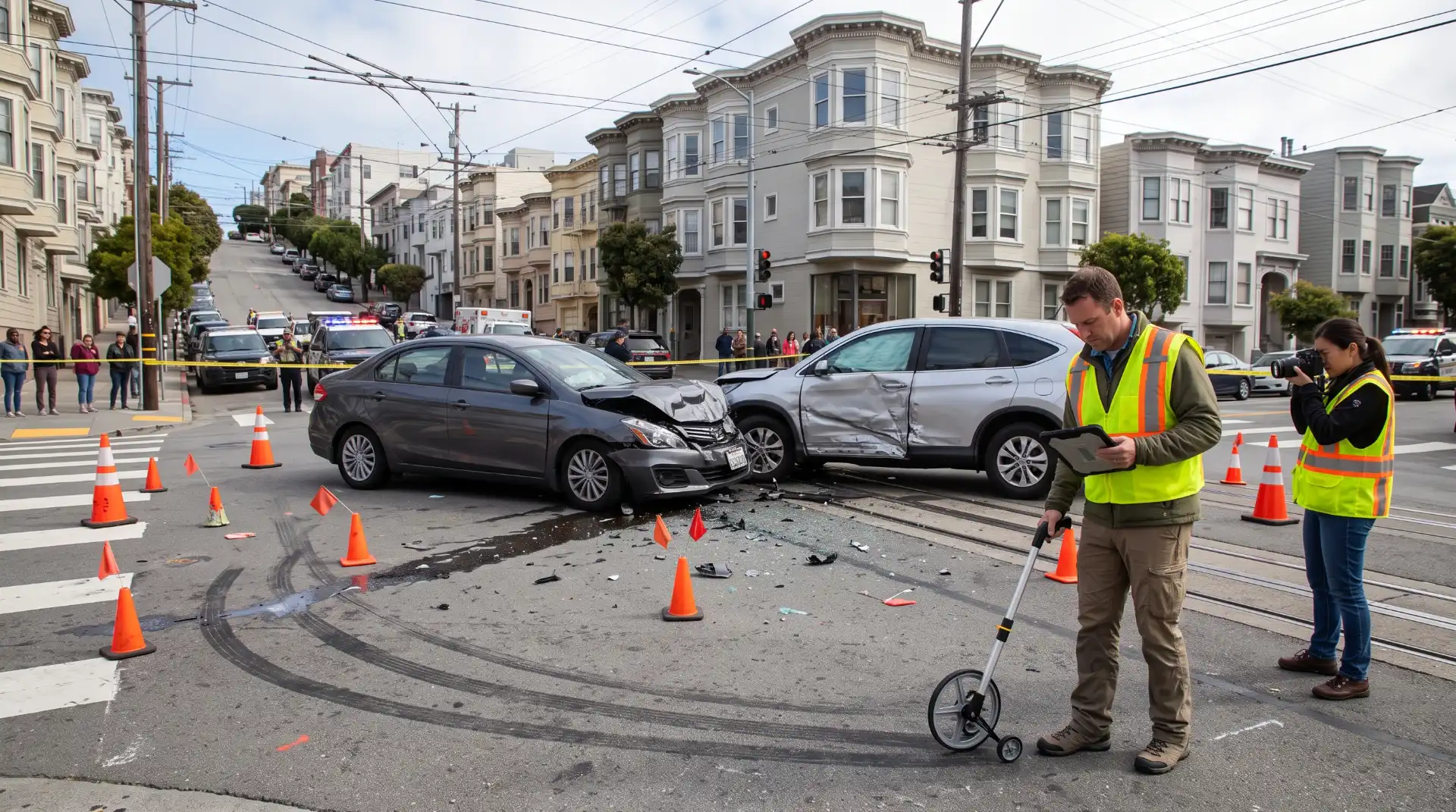
Vehicle damage can help identify the location and direction of an impact. Skid marks, debris, roadway measurements, and final vehicle positions may provide additional clues about the sequence of events.
Accident reconstruction specialists may use these details to assess different explanations of the collision. When available, EDR measurements can be incorporated into the analysis to test whether a proposed sequence is consistent with the recorded vehicle behavior.
A careful reconstruction should acknowledge uncertainty and avoid drawing conclusions beyond what the evidence supports.
Medical records and financial documentation
EDR data may help explain the circumstances of a collision, but it does not establish every element of a personal injury claim.
Medical records can document diagnoses, treatment, recovery, and the relationship between an accident and reported injuries. Employment records and financial documentation may help establish lost income or other economic losses.
The overall claim may also involve future treatment needs, rehabilitation, property damage, and other legally recoverable losses. These matters require their own evidence and analysis.
How Black Box Evidence Can Affect Insurance Negotiations
Insurance companies investigate accidents to evaluate liability, damages, and the available coverage. When the drivers disagree about how a collision occurred, EDR data may influence the direction of the investigation.
If the available information supports an injured person’s account, it may strengthen the argument that another driver contributed to the collision. If the record contradicts part of that account, the insurer may ask additional questions or seek further evidence.
Neither result should be treated as automatically decisive. An EDR record may be incomplete, difficult to interpret, or consistent with more than one explanation. Its significance depends on how it fits with the rest of the evidence.
California generally follows a comparative negligence approach. An injured person may be able to recover damages even if they share some responsibility for the accident, although the recovery may be reduced according to their percentage of fault. The application of that rule depends on the circumstances.
Black box data does not calculate a settlement or determine the percentage of fault. Instead, it may provide technical evidence that the parties consider when evaluating responsibility.
A fair assessment should also consider the documented injuries, medical expenses, lost income, property damage, and other legally recoverable losses. Strong evidence about how a crash occurred does not automatically establish the full value of a claim.
Before accepting a settlement, an injured person should understand what the offer covers, whether future losses have been considered, and whether additional evidence may materially affect the evaluation.
Important Limitations of Black Box Data
Although vehicle event data can be useful, it has several limitations.
First, not every vehicle records the same information. Some records may include relevant speed or braking measurements, while others may contain fewer useful data points. The system’s capabilities must be assessed for the particular vehicle.
Second, an EDR usually provides a limited technical record rather than a complete account of the trip. It may not explain what a driver saw, why the driver reacted, or whether a hazard was visible.
Third, the data may not cover the exact interval needed to resolve a disputed question. A record can be accurate within its intended scope without answering every question about the crash.
Fourth, technical information can be misinterpreted. Investigators need to understand the system, recording interval, data definitions, and circumstances surrounding the event. A single measurement should not be taken out of context.
Finally, an EDR may not capture factors such as a poorly designed intersection, an obstructed view, a mechanical defect, or the actions of a pedestrian. Those issues may require different types of evidence.
The limitations do not make black box evidence useless. They demonstrate why it should be analyzed as part of a broader investigation instead of being treated as a complete or unquestionable account of the collision.
How Long Is Black Box Data Retained?
There is no single retention period that applies to every vehicle or every electronic system. Storage and recording behavior depend on the system’s design, the event, and the manufacturer’s specifications.
Some EDRs preserve data when a qualifying event occurs. Other vehicle systems may use different recording and storage practices. A vehicle may also contain several electronic modules that each serve a different function.
It is therefore unwise to assume that relevant information will remain available indefinitely. It is equally unwise to assume that every subsequent trip will necessarily overwrite a particular record. The actual effect depends on the vehicle and the system involved.
When a serious injury claim is anticipated, prompt advice may help identify relevant data sources and determine whether preservation steps are appropriate. This is especially important if the vehicle is scheduled for repairs, sale, dismantling, or disposal.
If the vehicle belongs to another person or organization, access and preservation may require additional communication or legal procedures. Identifying the right party early can help prevent avoidable delays.
Are EDR Records the Same as GPS and Connected-Car Data?
No. Although these technologies may all generate electronic evidence, they serve different purposes.
An EDR typically records selected technical information associated with a qualifying crash event. A navigation system may store route information, while a connected-car service may transmit vehicle status or location data. A fleet tracking platform may record a vehicle’s movements during a work shift.
Dashcams and security cameras record visual information, while smartphones and applications may generate separate digital records. Depending on the collision, more than one source may be relevant.
For example, a commercial vehicle may have an EDR and a separate fleet management system. The EDR may provide technical information about the vehicle around impact, while the fleet system may help establish the route or timing of the trip.
These records may complement one another, but they can have different owners, retention practices, privacy implications, and access requirements. An investigation should identify the specific source rather than treating every electronic record as part of one black box file.

When Should You Seek Legal Guidance?
Not every minor collision requires a complex electronic investigation. However, guidance may be especially useful when a crash results in serious injuries, liability is disputed, multiple vehicles are involved, or the vehicle may contain evidence of a mechanical defect.
A qualified California attorney can help evaluate which records may be relevant, identify parties who may control them, and consider whether a preservation request or formal legal process is appropriate. Depending on the case, an investigation may require an EDR specialist, an accident reconstruction expert, or a vehicle engineer.
Legal guidance can also help an injured person understand how electronic evidence fits into the broader claim. The EDR may help explain the collision, but other records may be needed to establish medical expenses, lost income, future care needs, and other damages.
Deadlines may apply to personal injury claims and evidence-related procedures. California personal injury lawsuits often have a two-year limitations period, but exceptions and different deadlines can apply. Claims involving government entities may require an administrative claim much sooner. The relevant deadline should be checked for the specific case rather than assumed.
Early advice can help an injured person make informed decisions without assuming that every case requires litigation. The objective is to identify important evidence, understand the available options, and avoid preventable mistakes while the claim is being evaluated.
Frequently Asked Questions About Black Box Data
Does every car have a black box?
No. Many modern vehicles have event data recording capabilities, but the equipment and recorded information vary. The owner’s manual or a qualified vehicle-data professional may help determine whether a particular vehicle has an EDR and what information it may capture.
Can black box data prove that the other driver was speeding?
It may help establish recorded vehicle speed during a relevant interval. Investigators must still consider the applicable speed limit, road conditions, the timing of the collision, and other evidence before reaching a conclusion about negligence.
Can I access the other driver’s black box?
Not automatically. Access may depend on the vehicle owner, applicable law, consent, and any relevant legal process. California law addresses the retrieval and disclosure of certain vehicle recording data, so an injured person should not assume they can independently download another person’s information.
Does a black box record video of the crash?
A conventional EDR generally records selected technical information rather than video. Dashcams, security cameras, and certain other systems may provide footage, but these are separate evidence sources.
Can black box data be used in court?
Potentially. The data must be relevant and satisfy applicable evidentiary requirements. Questions about authenticity, retrieval, interpretation, and expert testimony may affect whether and how the record can be presented.
Can black box data help with a multi-car accident?
Yes, if relevant records are available. Investigators may compare data from several vehicles with physical damage, witness statements, video footage, and roadway evidence to help reconstruct the sequence of impacts.
What happens if the vehicle has already been repaired?
Useful data may still be available, depending on the vehicle and the repairs performed. A qualified professional can assess whether retrieval remains possible and whether other evidence needs to be preserved.
Is black box data enough to win an injury claim?
Not necessarily. EDR information may help establish how a collision occurred, but a complete claim may also require witness evidence, photographs, medical documentation, financial records, and other proof of liability and damages.
Conclusion
Black box data after a car accident can be a valuable source of technical evidence when the circumstances of a collision are disputed. Depending on the vehicle and the recorded event, an event data recorder may help investigators examine speed, braking activity, accelerator use, restraint-system information, and other aspects of a crash.
For injured people in San Francisco and throughout California, this information may help clarify conflicting accounts, support accident reconstruction, and contribute to an insurance or personal injury claim. Its value depends on timely preservation, reliable retrieval, careful interpretation, and comparison with other available evidence.
An EDR is not a complete recording of every action a driver takes, and it does not automatically determine legal fault. California’s access rules, the limitations of individual recording systems, and the requirements for using evidence in a legal proceeding all matter.
If you have been injured in a serious collision and believe electronic vehicle data could help explain what happened, consider documenting the incident, identifying potentially relevant evidence, and seeking appropriate advice about preservation. Protecting the evidence early can make it easier to investigate the crash and evaluate your options.
Disclaimer: This article is for general informational purposes only and does not constitute legal advice. Laws and deadlines may change, and outcomes depend on the facts of each case. Consult a qualified California attorney about your circumstances.