
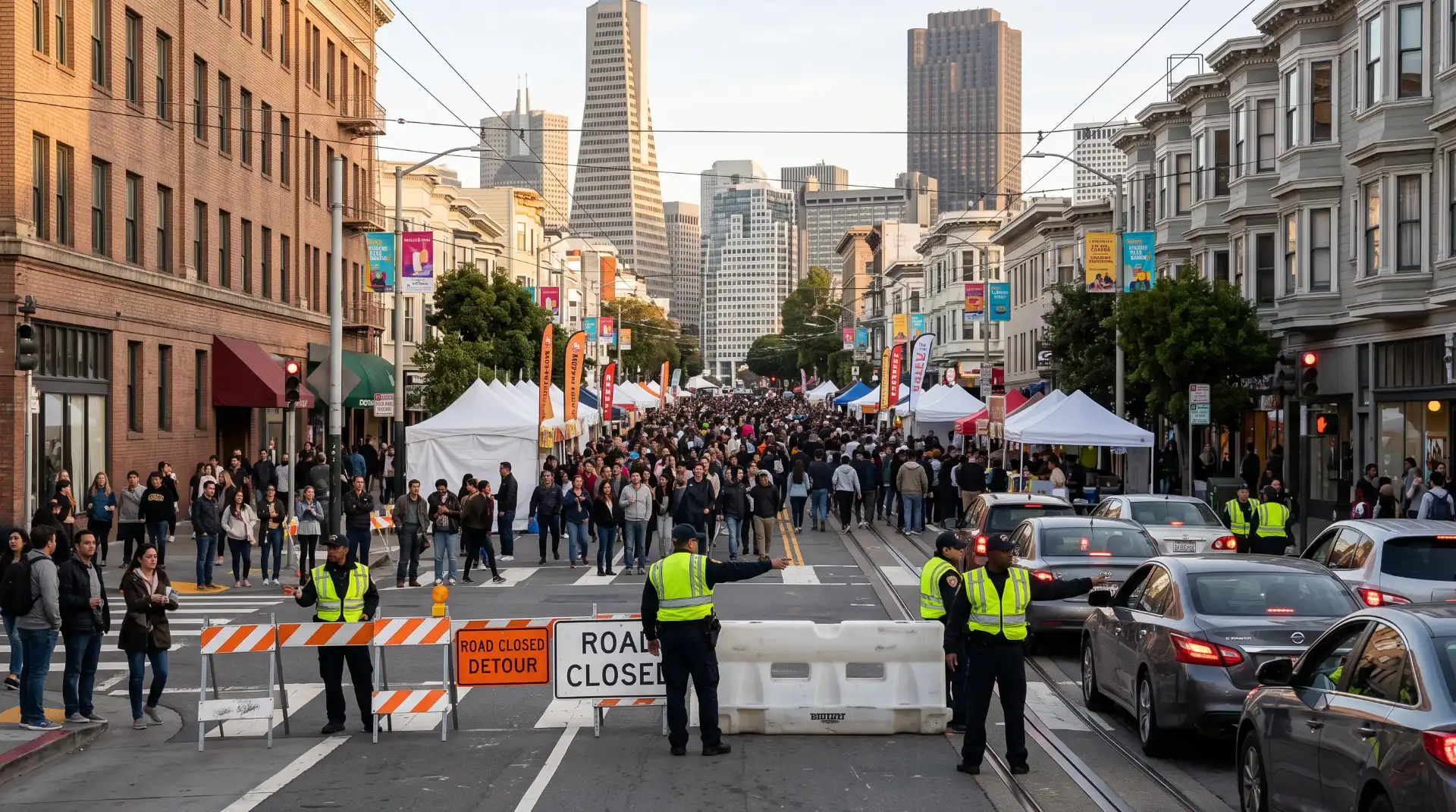
Major events are an important part of life in San Francisco. Concerts, sporting events, street festivals, parades, holiday celebrations, and public gatherings attract thousands of residents and visitors throughout the year. While these activities support local businesses and bring communities together, they can also create challenging traffic conditions that increase the risk of collisions.
Temporary road closures, unfamiliar detours, crowded intersections, restricted parking, and increased pedestrian activity can change how people move through the city. A driver traveling toward Oracle Park may encounter a sudden lane restriction, while someone leaving a concert near Chase Center may face congested streets filled with pedestrians and rideshare vehicles. These conditions can make ordinary driving decisions more complicated and increase the consequences of a momentary mistake.
When a collision occurs during a major event, determining who may be legally responsible requires more than identifying the driver involved. Depending on the circumstances, liability may extend to an event organizer, traffic-control contractor, commercial transportation company, employer, or government entity. However, no party becomes automatically liable simply because an accident occurred near an event or on a temporarily closed street.
California negligence law, public-entity liability rules, comparative fault principles, and applicable insurance policies can all influence the outcome of an accident claim. Evidence showing how the traffic-control plan was implemented, whether drivers received adequate warnings, and whether a particular party’s conduct contributed to the collision may be especially important.
This guide explains how San Francisco event traffic accidents happen, which parties may be responsible, what evidence can help establish liability, and what injured people should understand about California personal injury claims.
Understanding Event Traffic Accidents in San Francisco
San Francisco presents distinctive transportation challenges because its streets serve motorists, public transit vehicles, cyclists, pedestrians, delivery trucks, and commercial transportation services within a relatively compact urban environment. Major events add another layer of complexity by changing traffic volume and pedestrian movement, sometimes across several neighborhoods simultaneously.
Events at Oracle Park, Chase Center, Golden Gate Park, the Embarcadero, and downtown venues may require traffic restrictions, temporary parking changes, or rerouted public transportation. Street fairs and parades can close roads that normally carry substantial daily traffic, forcing motorists to find alternative routes.
The San Francisco Municipal Transportation Agency publishes information about permitted street closures and transportation changes through its Street Closure and Event List. Drivers can also review relevant event-specific transportation notices before traveling through affected neighborhoods.
These notices are intended to help people plan their journeys, but the actual traffic conditions may still be difficult to navigate. Congestion can develop quickly, temporary signs may compete for drivers’ attention, and unfamiliar detours may place additional pressure on motorists who are already searching for parking or attempting to reach a scheduled event.
Temporary Street Closures and Detours
A temporary road closure can change the direction of traffic, restrict access to familiar streets, and force motorists to use intersections they would ordinarily avoid. Drivers who discover a closure at the last moment may brake suddenly, make unsafe turns, or attempt to enter a restricted lane.
These actions can cause rear-end collisions, sideswipe accidents, intersection crashes, and conflicts with cyclists or pedestrians. When multiple drivers respond unpredictably to a detour, a relatively small traffic disruption can develop into a more serious collision.
The safety of a temporary closure depends on several factors, including sign placement, visibility, advance warnings, the condition of the alternate route, and the way vehicles are directed through intersections. The arrangement should also account for pedestrians, cyclists, emergency vehicles, and people with disabilities.
A collision does not automatically prove that the closure was negligently designed. Investigators must determine whether a particular party failed to meet an applicable duty of care and whether that failure contributed to the accident.
Crowded Intersections and Pedestrian Movement
Large public gatherings can produce sudden surges of pedestrian traffic before an event begins and when attendees leave afterward. People may cross streets in groups, wait near venue entrances, or walk between parking areas and public transportation stops.
Drivers can have difficulty identifying pedestrians who enter their field of vision from behind buses, parked vehicles, or other obstructions. Turning vehicles may also conflict with pedestrians crossing at intersections, especially when traffic queues limit visibility.
Event-related pedestrian accidents may involve a driver’s failure to yield, an unsafe crossing arrangement, poor visibility, inadequate crowd management, or several contributing circumstances. Each potential cause should be investigated rather than assuming that the presence of a crowd explains the collision.
Rideshare Pickups and Commercial Deliveries
Rideshare activity often increases near entertainment venues because attendees may prefer to travel by taxi or app-based transportation instead of searching for parking. Drivers may slow down unexpectedly, stop near crowded entrances, or make sudden lane changes when trying to locate passengers.
Commercial deliveries can create additional complications when trucks must access loading areas near streets that are temporarily restricted. A driver who attempts to maneuver a large vehicle through a congested intersection may create blind spots or block a cyclist’s path.
These situations can involve multiple parties, including the vehicle operator, an employer, a transportation company, a property manager, or an event organizer. Liability depends on each party’s actual conduct, responsibilities, and connection to the resulting injury.
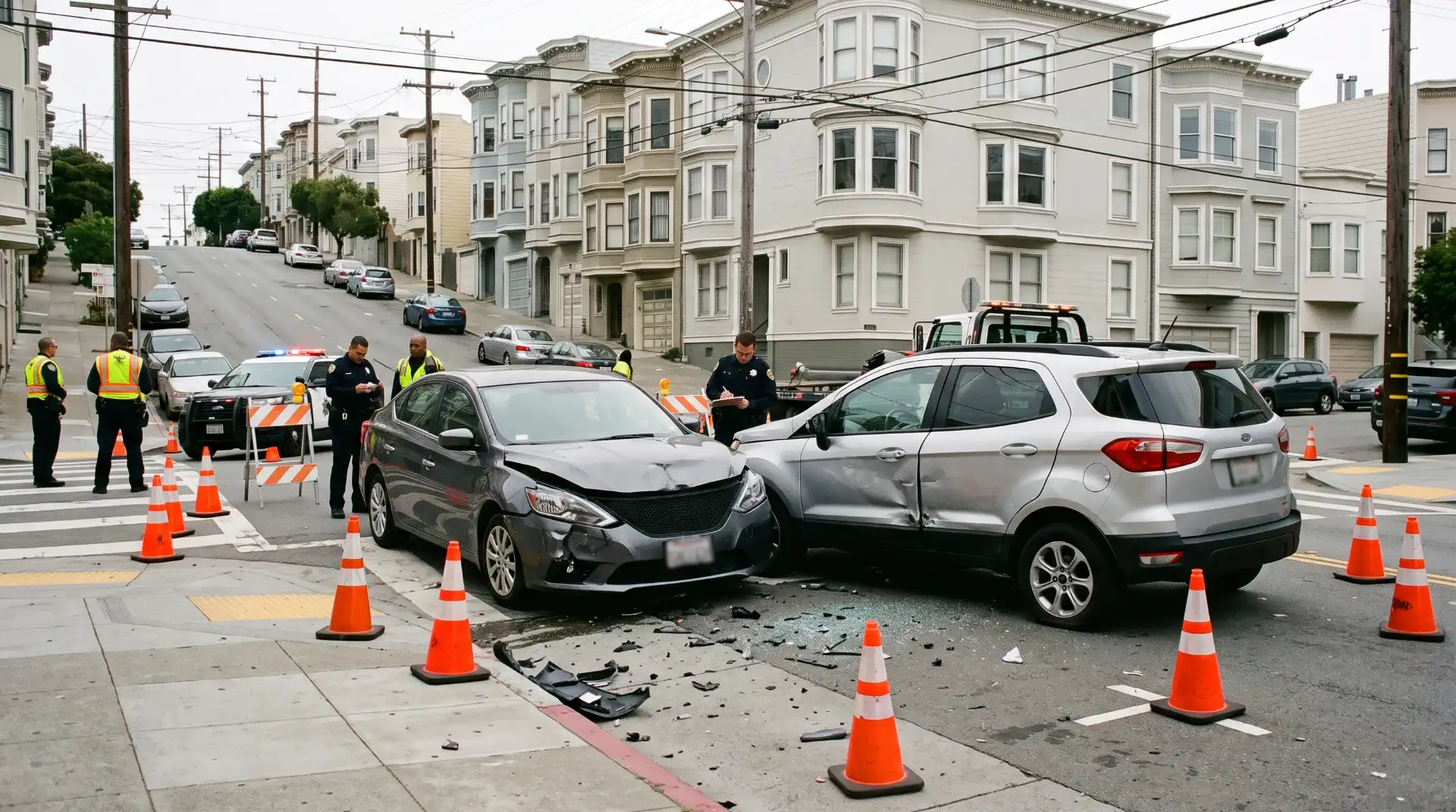
Who May Be Liable for San Francisco Event Traffic Accidents?
California negligence law generally examines whether a party owed an applicable duty of care, breached that duty, and caused or substantially contributed to an injury. In event-related collisions, several parties may require investigation because traffic management involves drivers, organizers, contractors, and public agencies with different responsibilities.
1. Negligent Drivers
Drivers are frequently investigated first after a traffic collision because their actions immediately before the crash may explain how it occurred. California motorists must exercise reasonable care, comply with applicable traffic laws, and adjust their driving to the conditions they encounter.
Event congestion does not excuse careless driving. A motorist who follows another vehicle too closely, looks at a phone while approaching stopped traffic, or accelerates through a crowded intersection may create a foreseeable risk of injury.
Consider a hypothetical accident near a stadium after a game. Vehicles are moving slowly, and a driver becomes distracted while searching for a parking garage. The driver fails to notice that the vehicle ahead has stopped and causes a rear-end collision. Evidence of distraction, inadequate following distance, and failure to respond to traffic conditions could support a negligence claim.
Another example involves a driver who attempts an abrupt U-turn after discovering that a familiar street is closed. If the maneuver places a cyclist or approaching motorist in danger, the driver’s decision may become a central issue in the investigation.
Readers can learn more about this type of hazard in the site’s related article, Unsafe U-Turns in San Francisco: When a Driver May Be Liable for a Crash.
Investigators should examine the driver’s speed, visibility, following distance, reaction time, use of a mobile device, and compliance with applicable traffic rules. Witness statements and available video may help establish whether the driver had an opportunity to avoid the collision.
2. Event Organizers and Promoters
Event organizers may face liability when their own negligent planning or operations create an unreasonable and foreseeable traffic hazard. Their responsibilities depend on their role in arranging the event, the applicable legal duties, permit conditions, contracts, and safety arrangements.
A large public festival may require plans for pedestrian entrances, emergency access, vendor deliveries, parking, crowd movement, and vehicle restrictions. If organizers fail to address a known hazard that could reasonably have been prevented, that failure may become relevant to a personal injury claim.
For example, imagine an event where attendees are directed toward an entrance that creates a predictable buildup of people beside an active vehicle lane. If the organizers know about the dangerous congestion but fail to implement reasonable crowd-management measures, their conduct may warrant investigation after a pedestrian is struck.
However, event organizers are not automatically responsible for every collision that happens nearby. Their potential liability depends on whether they owed an applicable duty, breached it, and caused or contributed to the injury.
The investigation may need to establish who controlled the relevant area, who arranged the pedestrian routes, whether the organizers complied with permit conditions, and whether the actual setup matched the approved safety plan.
3. Private Traffic-Control Contractors
Organizers and public agencies may hire contractors to install temporary signs, position barricades, direct vehicles, or manage pedestrian movement. A contractor may face a claim if negligent performance of its assigned work creates or contributes to an unsafe condition.
Potential problems include placing a barricade where it obstructs a driver’s view, failing to install a required warning, directing traffic into a hazardous conflict point, or leaving a temporary traffic arrangement in a condition that creates an unreasonable risk.
Suppose a contractor is responsible for implementing a detour around a street festival. A directional sign is placed where approaching motorists cannot reasonably see it before reaching an intersection. If the resulting confusion contributes to a collision, the contractor’s work may need to be examined.
The investigation should establish the contractor’s actual duties and whether it performed them reasonably. Contracts, work orders, inspection records, training documents, photographs, and communications concerning known hazards may help clarify responsibility.
A contractor’s involvement alone does not prove negligence, and the existence of a contract does not automatically transfer every safety responsibility from an organizer or public agency to the contractor.
4. The City of San Francisco or Another Government Entity
A government entity may potentially be liable when a legally recognized basis for public-entity liability exists. Claims against government agencies involve special rules under California law and require a more specific analysis than many claims against private motorists.
One possible legal theory involves a dangerous condition of public property. Depending on the circumstances, investigators may examine whether a public roadway or its configuration created an unreasonable risk of injury, whether the responsible public entity had the legally required notice or knowledge, and whether the condition substantially contributed to the accident.
For example, an investigation might focus on a temporary traffic arrangement that creates a dangerous obstruction or a roadway configuration that presents a foreseeable risk under the circumstances. The identity of the agency responsible for the property, the relevant maintenance duties, and the legal basis for the claim will matter.
A missing sign or confusing detour does not automatically establish public-entity liability. California law contains specific statutory requirements and limitations governing dangerous-property claims and certain traffic-control devices.
Investigators must also identify the correct public entity. Responsibility for roadway maintenance, event permitting, traffic operations, and temporary installations may involve different departments, agencies, or contractors.
The California Courts’ guide, Ask a Government Agency to Pay You by a Deadline, explains the special claim process that generally applies before a person can sue a government agency for money damages.
5. Employers and Commercial Transportation Companies
Commercial vehicles may be involved in accidents while delivering supplies, transporting event attendees, collecting equipment, or providing shuttle services. The responsible parties may include the driver, the driver’s employer, or a transportation company, depending on the circumstances.
Under California law, an employer may potentially be held responsible for an employee’s negligence when the employee was acting within the scope of employment. An employer may also face a separate claim if its own negligence contributed to the accident.
For instance, a delivery truck traveling through a restricted downtown street may strike a cyclist while attempting to enter a loading area. Investigators may need to consider the driver’s conduct, the delivery instructions, the employer’s safety procedures, and whether the driver was performing assigned work.
Rideshare drivers, taxi operators, shuttle companies, and charter transportation services may also be involved. Insurance coverage can depend on the driver’s status, the purpose of the trip, the applicable policy, and other facts.
The existence of an employer or commercial insurance policy does not automatically establish liability. The evidence must connect the defendant to the relevant duty, breach, and injury.
6. Property Owners and Venue Operators
A collision near an event may also raise questions about the role of a venue or property owner. These parties may have responsibilities relating to their own premises, entrances, loading zones, parking areas, or arrangements that affect access to public streets.
For example, a venue may use a private driveway or parking entrance that causes vehicles to queue near a public intersection. If a foreseeable hazard results from a negligent arrangement within the venue’s control, the property owner’s conduct may warrant investigation.
The analysis depends on the location of the accident, the party’s actual control, the applicable duty, and the causal relationship between the alleged negligence and the injury. A venue owner is not automatically responsible for a crash on a nearby public street merely because the collision occurred during an event.
Investigators may need to review property boundaries, access arrangements, traffic plans, contracts, and communications about recurring congestion or known hazards.
7. Multiple Parties Sharing Responsibility
Some collisions result from several contributing failures rather than a single mistake. A driver may operate a vehicle carelessly while a contractor creates a confusing detour and an organizer fails to address a known pedestrian hazard.
California generally applies comparative negligence principles, allowing responsibility to be allocated among parties according to the evidence and applicable law. An injured person may still be eligible to recover damages when partly at fault, although the amount may be reduced by their assigned share of responsibility.
For example, a driver may be found primarily responsible for failing to yield, while another party may bear part of the responsibility for a negligently implemented traffic-control arrangement. The outcome depends on the evidence and the legal claims established.
A thorough investigation should therefore consider all reasonably supported explanations for the collision instead of assuming that the first apparent mistake tells the entire story.
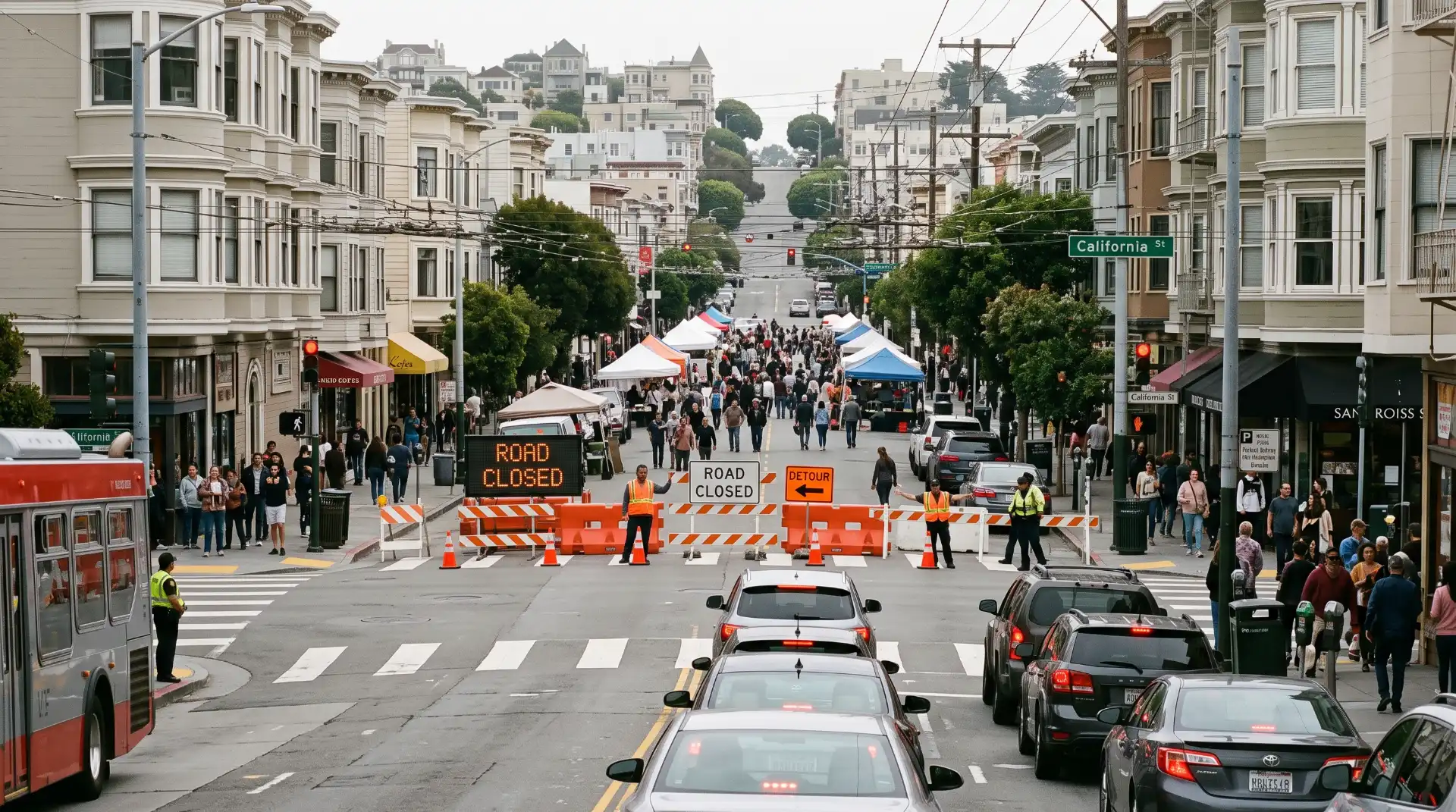
How California Negligence Law Applies to Temporary Road Closures
The legal analysis of an event-related collision begins with the specific duties that applied to the parties involved. Drivers, organizers, contractors, employers, and public entities may have different responsibilities, and the legal standards governing their conduct are not identical.
Establishing Duty and Breach
A negligence claim generally requires evidence that a defendant owed an applicable duty of care and failed to meet that duty. A driver’s duty may involve safe vehicle operation, while a contractor’s obligations may arise from its assigned traffic-control work.
An organizer’s duties depend on its role in planning and operating the event. The relevant question is whether the organizer acted reasonably under the circumstances and addressed foreseeable risks within its responsibilities.
For example, an organizer may have advance notice that thousands of attendees will leave a venue through a narrow access point. Whether its crowd-management arrangements were reasonable may depend on the expected attendance, the physical layout, available alternatives, permit conditions, and the precautions actually taken.
Evidence that a safer arrangement was possible does not automatically establish negligence. Investigators must assess the applicable standard of care and the circumstances known or reasonably foreseeable at the time.
Proving Causation
A party’s mistake does not automatically make that party legally responsible for every injury that occurs nearby. The claimant generally must establish a sufficient causal connection between the alleged negligence and the harm.
Imagine that a temporary directional sign is missing, but a driver already knows the street is closed and deliberately enters the restricted area. The missing sign may not have caused the collision if the driver’s independent conduct explains the accident.
In a different situation, an absent warning may prevent an approaching driver from recognizing a sudden change in traffic flow. If the evidence establishes that the warning’s absence substantially contributed to the crash, it may support a claim against a responsible party.
Causation can become especially complicated when the accident involves multiple vehicles, several contractors, or a combination of traffic-control and driving errors.
Comparative Negligence and Shared Fault
California’s comparative fault principles allow responsibility to be allocated when more than one party contributes to an injury. A claimant’s own negligence may reduce the amount of damages recoverable without necessarily eliminating the claim.
For example, a pedestrian might be injured when a driver turns across a crossing without keeping a proper lookout. If the evidence also establishes that the pedestrian acted negligently and that conduct contributed to the collision, the decision-maker may assign fault to both parties.
The Judicial Council of California Civil Jury Instructions provide further information about the legal principles used in California civil cases, including negligence and comparative fault.
Evidence Needed to Investigate an Event Traffic Accident
Evidence can be particularly important when a collision occurs during a temporary street closure because the scene may change quickly. Event staff may remove barricades, workers may relocate signs, and traffic may return to normal before a full investigation begins.
Preserving the relevant evidence can help establish the sequence of events, identify the parties responsible for traffic management, and determine whether a particular safety failure contributed to the injury.
Photographs and Video Recordings
Photographs can document vehicle damage, road markings, traffic signals, barricades, temporary signs, crosswalks, visibility conditions, and the overall layout of the intersection.
Wide-angle images may show how vehicles and pedestrians were directed through the area, while closer photographs can document individual signs or obstructions. If possible, the location and time of each image should be recorded.
Video recordings may be available from dash cameras, nearby businesses, residential buildings, parking facilities, transit vehicles, or other cameras in the area. Footage can help establish vehicle movements, signal timing, pedestrian activity, and the sequence of the collision.
Recordings may be deleted or overwritten according to the owner’s retention practices. A prompt request to preserve relevant footage may therefore be important, although access is not guaranteed.
Witness Statements and Traffic-Control Personnel
Witnesses may have observed the collision, the behavior of a driver, the position of a barricade, or the directions given by event personnel. Their accounts can help clarify disputed facts when the parties involved provide conflicting descriptions.
Names and contact information should be collected when safe and appropriate. Investigators may also seek information from security workers, traffic-control personnel, event employees, and people responsible for implementing the closure.
A witness who saw the traffic setup before the crash may provide useful context about whether signs were visible, whether vehicles were being redirected, and whether pedestrians were directed into a hazardous area.
Event Permits and Traffic-Management Plans
Documents relating to the event may help establish which party was responsible for a particular part of the traffic arrangement. These records may include permit applications, approved street-closure plans, detour maps, contractor agreements, safety procedures, inspection records, and communications concerning known hazards.
Comparing the approved plan with the actual setup may reveal whether the traffic controls were installed as intended. However, a deviation from a plan does not automatically prove liability; its significance depends on the applicable duty and whether it contributed to the injury.
The investigation may also need to establish who had authority to change the setup, who inspected it, and whether anyone reported a problem before the collision.
Police Reports and Medical Documentation
A police report may contain observations, diagrams, witness statements, and other information useful to an investigation. It can provide a starting point, but it may not answer every question about civil liability, particularly when a contractor’s or organizer’s conduct is involved.
Medical records can document the injuries, treatment, and potential need for further care. Medical evaluation is important even when symptoms initially appear minor because certain injuries may become more apparent over time.
Accident-related documents should be preserved alongside photographs, repair estimates, insurance correspondence, and records of expenses or time missed from work.
What Injured People Should Do After an Event-Related Collision
The immediate priority after a crash is safety and medical care. Once emergency needs have been addressed, documenting the incident and preserving available information may help support an insurance claim or legal investigation.
Seek Medical Attention and Report the Collision
Call 911 when emergency assistance is necessary, and avoid standing in active traffic lanes or placing yourself at additional risk while waiting for help. If you have symptoms that may indicate an injury, seek appropriate medical evaluation.
When appropriate, report the collision to law enforcement and follow applicable reporting requirements. Exchange contact and insurance information with other involved drivers when it is safe to do so.
Avoid assuming that the absence of immediate pain means that no injury occurred. A medical professional can evaluate symptoms and determine whether further examination or treatment is necessary.
Record the Scene When It Is Safe
Photograph the location, vehicle damage, traffic-control signs, road closures, crosswalks, and visible obstructions if it is safe and practical. Record the approximate time of the collision and the direction each vehicle was traveling.
Do not enter a restricted or dangerous area to obtain photographs. Emergency treatment should never be delayed merely to collect evidence.
If event workers or traffic-control contractors appear to have relevant information, record their roles and employer details when possible. Avoid confrontation or speculation about who is responsible.
Preserve Records and Communications
Keep copies of medical records, repair estimates, receipts, insurance communications, and other documents related to the accident. If an event organizer or transportation company provided instructions that may be relevant, preserve those messages.
Readers can find additional guidance in the site’s related article, High-Injury Corridors in San Francisco: How Dangerous Streets Can Contribute to Car Accidents.
The conditions of a particular intersection may be relevant to an investigation, but a history of collisions does not by itself prove liability for a new accident. The evidence must still establish the legally required connection between the condition or conduct and the injury.
Insurance Coverage After a San Francisco Event Traffic Accident
Insurance can be a major consideration when determining how an injured person may obtain compensation. The available coverage depends on the responsible parties, the type of vehicle involved, the applicable policy terms, and the circumstances of the collision.
The At-Fault Driver’s Insurance
When a negligent driver causes an accident, the injured person may pursue a claim under the driver’s applicable liability insurance. The insurer will generally investigate the circumstances, review the claimed losses, and assess whether coverage applies.
Disputes may arise over liability, the severity of the injuries, the value of the damages, or the limits of the policy. A collision involving multiple defendants may require separate insurance claims.
An insurer’s initial position does not necessarily resolve the legal question of fault. Relevant evidence should be evaluated before conclusions are reached.
Commercial and Event-Related Insurance
A commercial transportation company may have insurance that applies to an accident involving a vehicle operated in the course of business. Contractors and event organizers may also carry policies relevant to their operations.
However, the existence of an event-related insurance policy does not guarantee coverage for every accident near the event. The policy’s terms, exclusions, insured parties, and circumstances of the incident must be reviewed.
Where multiple parties may be liable, identifying all potentially applicable policies can be important. The claims process may involve different insurers and separate assessments of responsibility.
Uninsured or Underinsured Motorist Coverage
An injured person may have access to uninsured or underinsured motorist coverage through their own automobile policy, depending on the policy terms and circumstances. Such coverage may be relevant when the at-fault driver has no insurance or insufficient coverage for the losses.
The requirements for making a claim, the categories of covered damages, and the applicable limits depend on the policy and California law. Policyholders should review their coverage and comply with the insurer’s notification requirements.
Compensation That May Be Available After an Event Traffic Accident
When a legally responsible party causes an injury, the injured person may be entitled to seek compensation for qualifying losses. The available damages depend on the facts, the severity of the injury, the applicable law, and the evidence supporting the claim.
Medical Expenses and Future Treatment
Compensation may include reasonable medical expenses associated with the injury, such as emergency treatment, hospital care, diagnostic tests, medication, rehabilitation, and other appropriate services.
Some injuries require ongoing care or future procedures. When supported by appropriate evidence, a claim may also include reasonably anticipated future medical expenses.
Lost Income and Reduced Earning Capacity
An injured person may miss work while receiving treatment or recovering. Documented income losses may be recoverable when the applicable legal requirements are satisfied.
Serious injuries may also affect a person’s ability to return to the same occupation or earn the same income in the future. Employment records, medical evidence, and qualified professional assessments may help establish these losses.
Pain, Suffering, and Other Non-Economic Losses
California law may permit recovery for non-economic harm, including physical pain, emotional distress, and the effects of an injury on daily activities and quality of life.
These damages depend on the evidence and the individual circumstances. There is no single amount that applies to every event-related accident.
Property Damage and Other Recoverable Losses
Depending on the claim, property-related damages may include reasonable vehicle repair costs or the value of a vehicle that cannot economically be repaired. Other losses may be recoverable when supported by the facts and applicable law.
The injured person should retain estimates, invoices, photographs, and other records documenting the damage. Insurance benefits and third-party liability claims may interact, so the applicable policy terms should be reviewed carefully.
California Filing Deadlines for Event-Related Injury Claims
Filing deadlines can determine whether an otherwise supportable claim may proceed. Injured people should not assume that the time limits for claims against private drivers are identical to those for claims involving government entities.
For many California personal injury lawsuits against private parties, the general statute of limitations is two years from the date of injury, subject to applicable exceptions.
Claims against public entities are subject to the California Government Claims Act. Many personal injury claims against a public entity generally must be presented within six months of the claim’s accrual. Additional deadlines may apply after the claim is rejected.
The government claim process requires attention to the identity of the agency, the information included in the claim, the applicable deadline, and the procedures that follow the agency’s response. A claim against a city, transportation agency, or other public body should not be treated as an ordinary insurance claim against a private driver.
Special rules may apply to minors, delayed discovery, or other circumstances. Anyone considering a claim should confirm the correct deadline promptly rather than relying on the general two-year period.
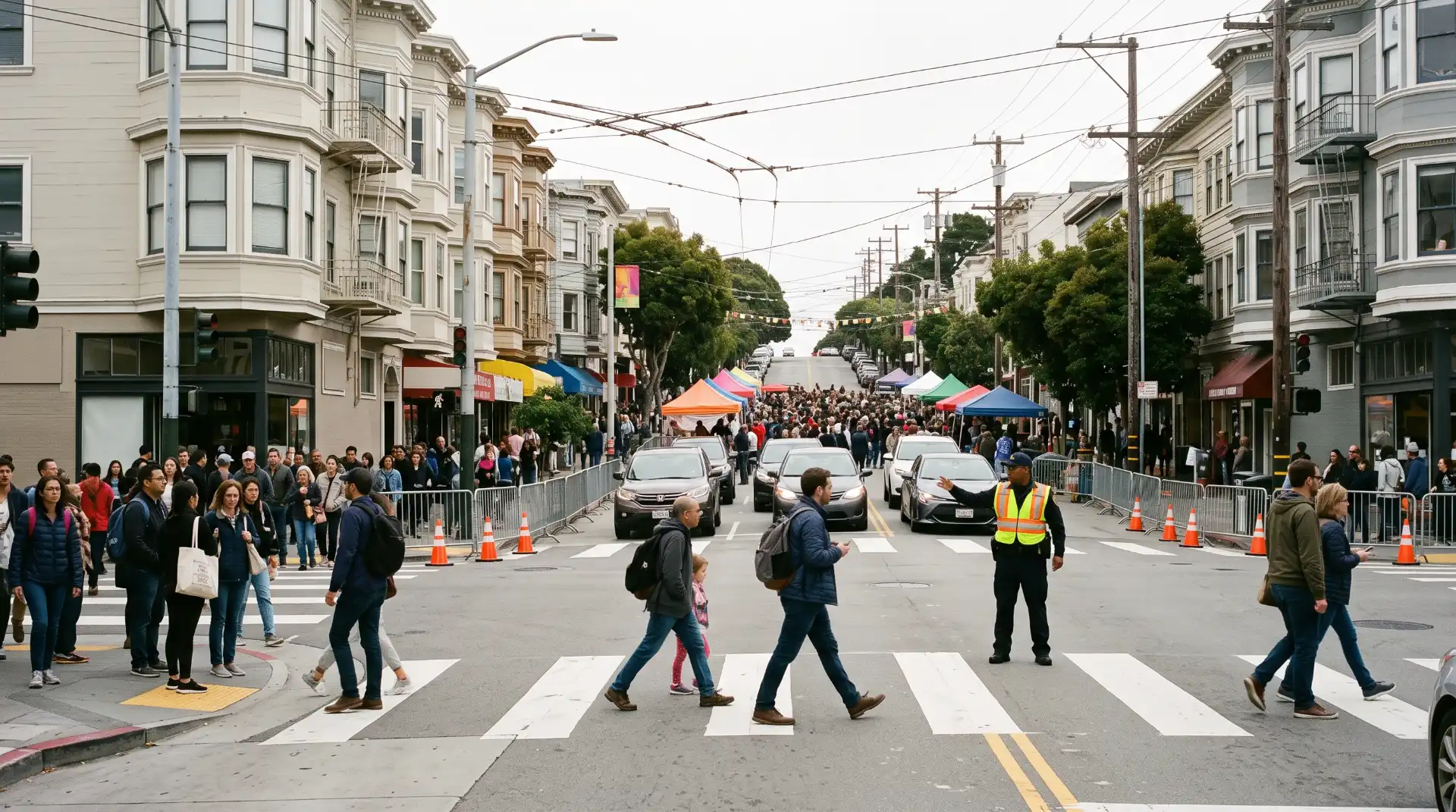
Preventing Traffic Accidents During Major San Francisco Events
Reducing event-related collisions requires cooperation among organizers, contractors, transportation providers, public agencies, drivers, and pedestrians. Effective planning can reduce foreseeable risks, although no traffic-management system can eliminate every possibility of an accident.
Responsibilities of Event Organizers
Organizers should consider traffic and pedestrian movement during planning, particularly around entrances, loading zones, parking areas, and nearby intersections. They should coordinate with the appropriate authorities and make sure the responsibilities for installing and maintaining temporary traffic controls are clear.
Plans should account for the expected number of attendees, emergency access, pedestrian accessibility, and the possibility of unexpected congestion. Where a foreseeable hazard develops, reasonable steps to address it may help reduce the likelihood of a collision.
Responsibilities of Contractors and Public Agencies
Traffic-control contractors should perform their assigned work carefully and follow applicable requirements. Signs and barricades should be installed in the intended locations, and any identified hazards should be communicated to the appropriate people.
Public agencies should carry out their applicable responsibilities for roadways and traffic operations. Their precise legal duties depend on the circumstances and governing law.
Clear communication between organizers, contractors, and public agencies can help prevent gaps in responsibility that might otherwise create unsafe conditions.
Responsibilities of Drivers and Event Attendees
Drivers should plan their routes, follow lawful detour instructions, maintain safe following distances, and adjust their speed to congestion and visibility. Motorists should avoid distracted driving and should not attempt sudden turns or unsafe maneuvers merely to save time.
Pedestrians should use designated crossings when available and follow instructions intended to keep them away from active vehicle lanes. Rideshare passengers should use designated pickup areas where possible rather than entering traffic to reach a vehicle.
These precautions cannot prevent every crash, but they can help reduce the risks associated with temporary traffic patterns and large crowds.
Frequently Asked Questions About San Francisco Event Traffic Accidents
Can an event organizer be sued after a traffic accident?
An organizer may face a claim when evidence establishes that its negligent conduct breached an applicable duty and contributed to the injury. Liability depends on the organizer’s actual responsibilities and the facts of the incident, not simply on the fact that the collision happened near an event.
Is the City of San Francisco responsible if a temporary road closure contributes to a crash?
Not automatically. A claim against a government entity must satisfy the applicable California legal requirements. Investigators may need to establish a recognized basis for liability, identify the responsible public entity, and comply with the required claim-presentation procedures.
What happens if a driver causes a crash while following a confusing detour?
The driver’s conduct remains relevant even when the detour is difficult to understand. Investigators may also examine whether the signs and traffic controls were reasonably implemented and whether another party’s negligence contributed to the collision.
Can multiple parties share responsibility for the same accident?
Yes. Depending on the evidence, a driver, contractor, organizer, employer, or public entity may share responsibility. California comparative fault principles may permit responsibility to be allocated among multiple parties.
What evidence is most useful after a road-closure accident?
Photographs, witness accounts, police reports, available video recordings, traffic-control plans, event permits, contractor records, and medical documentation may all be useful. The most important evidence depends on the circumstances and the disputed issues.
How long do I have to file an accident claim?
Many personal injury lawsuits against private parties are subject to a two-year general limitations period. Claims against public entities often require an administrative claim within six months, followed by additional deadlines depending on the agency’s response. Exceptions may apply, so the correct deadline should be confirmed promptly.
Conclusion: Identifying Liability After a San Francisco Event Traffic Accident
San Francisco event traffic accidents can involve complex questions about driver behavior, temporary road closures, pedestrian safety, event planning, contractor performance, insurance coverage, and government responsibility. Although a negligent driver may be responsible for a collision, other parties may warrant investigation when their actions or omissions contributed to the hazard.
Determining liability requires careful examination of the scene, the parties’ responsibilities, the applicable California law, and the connection between the alleged negligence and the resulting injuries. Photographs, video recordings, witness statements, traffic-control plans, medical records, and insurance documents may all help establish what happened.
Anyone injured in an event-related collision should prioritize medical care, preserve relevant evidence when safe, and pay close attention to filing deadlines. Claims involving public entities require particular care because the procedures and deadlines can differ significantly from those governing ordinary personal injury claims.
A thorough, fact-specific investigation can help clarify which parties may be legally responsible and what options may be available for pursuing compensation.
Legal disclaimer: This article is for general educational purposes and does not constitute legal advice. It does not create an attorney-client relationship. Liability, compensation, insurance coverage, and filing deadlines depend on the facts and applicable law. Individuals with questions about a specific accident should consult a qualified California attorney.