
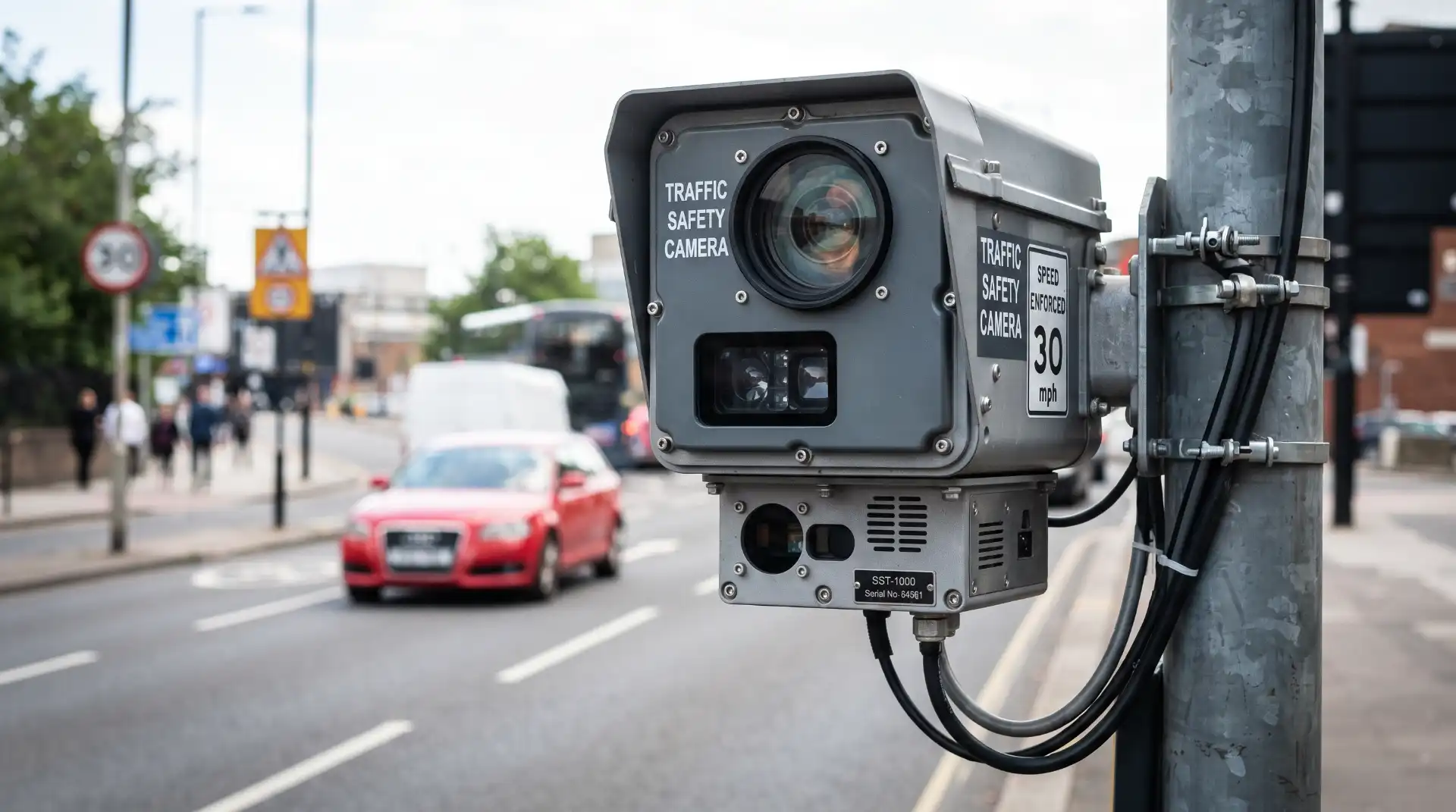
San Francisco’s speed safety cameras are changing more than traffic enforcement. They may also influence how attorneys, insurance companies, accident reconstruction specialists, and injured people investigate crashes near monitored streets. A camera record will not automatically prove who caused a collision, but it may help establish that a particular vehicle was present at a certain place and time or was traveling above the program’s enforcement threshold.
San Francisco activated 33 speed safety camera systems on March 20, 2025. After an initial warning period, the city began issuing civil citations in August 2025. The cameras are part of a California pilot program authorized by Assembly Bill 645 and are installed on city streets within San Francisco’s High Injury Network rather than on state highways, freeways, or expressways.
In June 2026, the San Francisco Municipal Transportation Agency reported that the number of vehicles traveling at least 10 mph above the posted limit had fallen by nearly 80 percent across the camera locations included in its speed study. According to the agency, that represented approximately 40,000 fewer daily instances of drivers traveling at least 10 mph over the speed limit.
Those results suggest that the program is changing driving behavior, but speed-related collisions can still happen. When they do, a nearby camera may raise important questions. Did it detect one of the vehicles shortly before the crash? Did it generate a warning or citation? Can other evidence identify the driver? Was the measured speed connected to the collision, or did another event actually cause the impact?
The answers may affect how fault is evaluated, how insurers negotiate the claim, and whether an accident reconstruction specialist can establish a reliable timeline.
What San Francisco’s Speed Safety Cameras Record
San Francisco’s cameras are designed to detect vehicles traveling above the posted speed limit. A vehicle must generally be traveling at least 11 mph over the limit before a civil citation is issued. The penalty begins at $50 for speeds between 11 and 15 mph over the limit and increases for higher speeds. It is issued to the vehicle owner and is treated as a civil penalty rather than a moving violation against the driver.
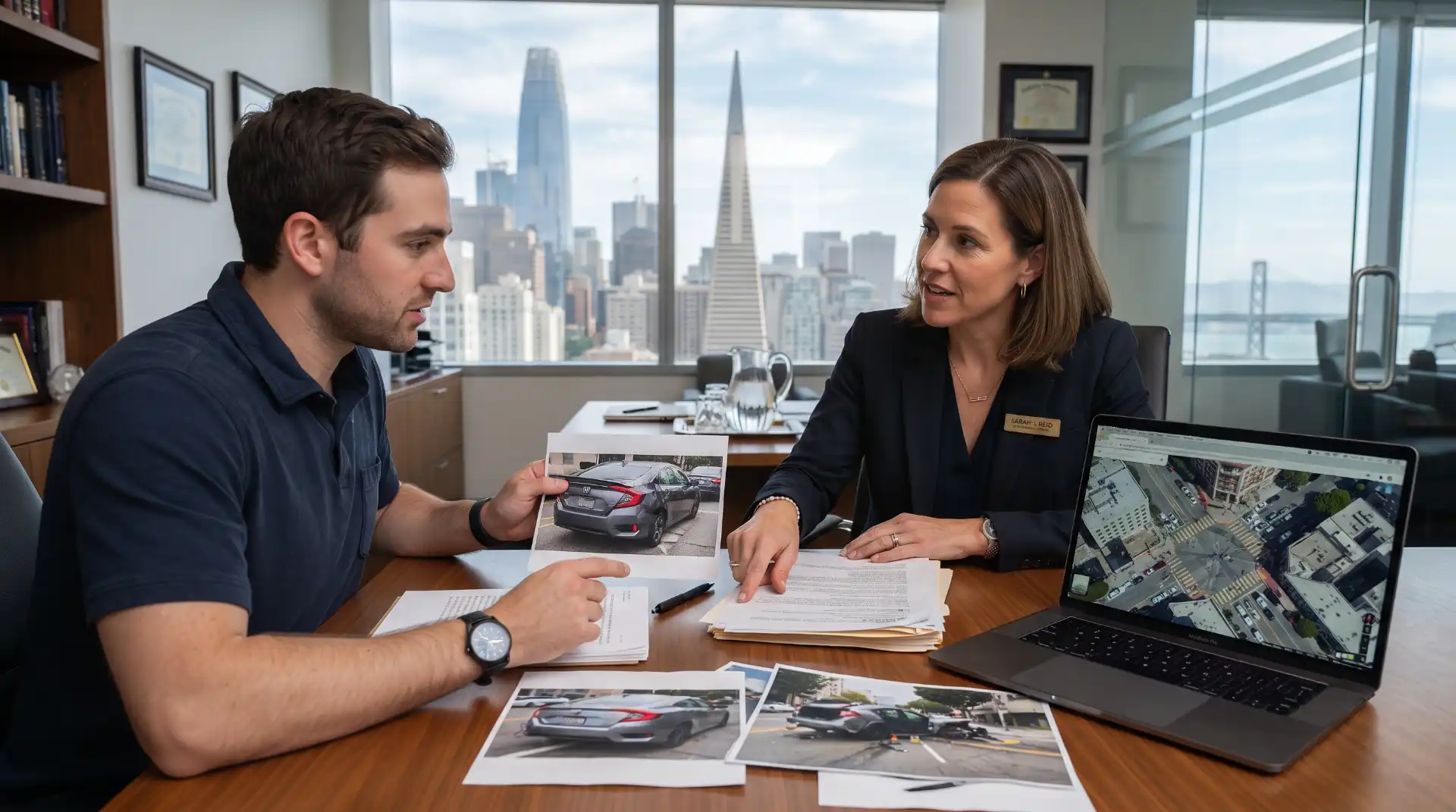
That distinction matters in a personal injury case. A notice mailed to a registered owner does not necessarily identify the person who was driving. A relative, employee, renter, or another person with permission to use the vehicle could have been operating it. A speed camera citation therefore cannot automatically prove that the registered owner personally drove negligently.
SFMTA states that the system captures the rear license plate of a speeding vehicle. The system is not the same as a continuous surveillance camera showing every movement on the street or the entire sequence leading to a collision. The agency also states that camera data is stored for up to 120 days and is not shared with another agency unless disclosure is ordered by a court.
An injured person should not assume that a camera image will remain available indefinitely or can be obtained through a simple informal request. Whether a particular record exists, can be preserved, and may be obtained for a civil case will depend on the facts and applicable legal procedures.
Readers can review current camera locations and program information through the official SFMTA Speed Safety Camera Program.
Why Speed Matters in a California Accident Claim
California drivers must comply with posted limits and the state’s Basic Speed Law. Under California Vehicle Code Section 22350, a driver must not travel at a speed that is greater than reasonable or prudent under the circumstances. Traffic, visibility, weather, the surface and width of the roadway, and other conditions may all be relevant.
This means a driver could be traveling unsafely even when driving below the posted maximum. Heavy rain, fog, crowded crosswalks, construction, stopped traffic, or limited visibility may require a driver to reduce speed.
Speed can affect every stage of a collision. A faster vehicle covers more distance while the driver is reacting, requires more room to stop, and may create greater impact forces. At an intersection, excessive speed may prevent a driver from responding to a turning car, a pedestrian in a crosswalk, or traffic slowing ahead.
In a rear-end crash, speed may help explain why a driver could not stop before striking another vehicle. In a multi-vehicle collision, it may explain why an initial impact developed into a chain reaction involving several cars.
To establish negligence, an injured person generally must show that another party owed a duty of care, failed to use reasonable care, caused the collision, and produced legally compensable harm. Camera material may support an allegation of unsafe driving, but it does not independently prove causation, injuries, and damages.
A Camera Citation Does Not Automatically Establish Fault
A speed camera record may appear persuasive because it is generated by an automated system, but it has important limitations. It may show that a vehicle crossed the detection zone above the enforcement threshold. It may not show what happened several seconds later, whether another driver entered the lane unexpectedly, whether a traffic signal changed, or whether the photographed vehicle was actually involved in the collision.
The distance between the camera and the crash is also important. Suppose a vehicle was detected speeding but the collision happened one or two blocks away. Investigators would need to determine how much time passed between the detection and impact. The vehicle could have accelerated, slowed, turned, changed lanes, or stopped after passing the camera.
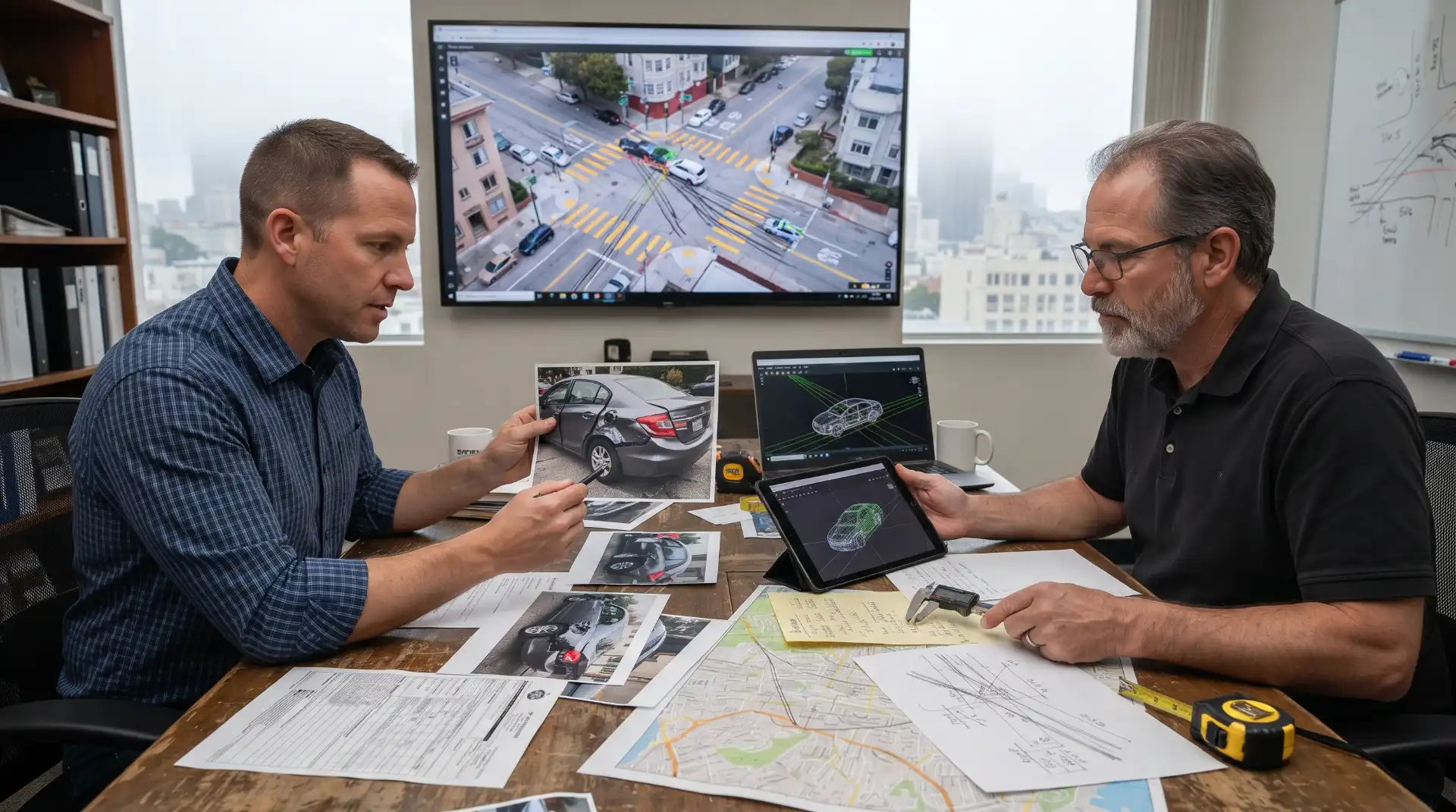
When the speed reading and crash location are separated, an accident reconstruction specialist may need additional evidence before reaching a reliable conclusion. The specialist may examine roadway measurements, signal timing, vehicle damage, braking information, sight lines, witness accounts, and electronic vehicle data.
The civil citation is also directed to the vehicle owner rather than necessarily to the person who was operating it. Driver identity may have to be established through witness testimony, statements, rental records, employment documents, phone location information, or other evidence.
These limitations do not necessarily make camera information unhelpful. They show why liability should be evaluated using the complete factual record rather than a citation alone.
How Camera Records Could Become Part of a Claim
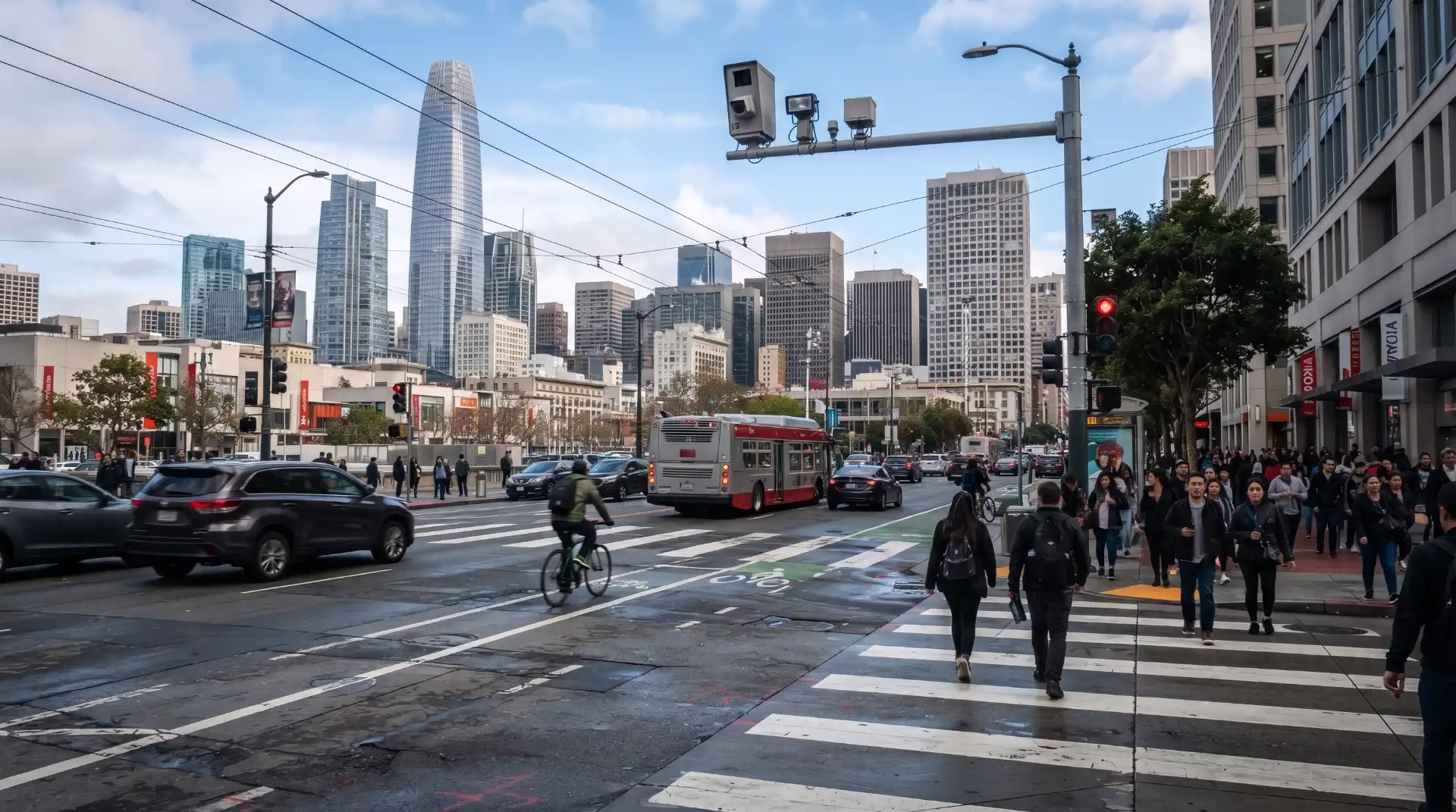
Because SFMTA camera information is not open for unrestricted use, obtaining it may require a focused legal process. An attorney may first determine whether the collision occurred within or near one of the city’s 33 camera locations. The investigation should identify the date, approximate time, direction of travel, vehicles involved, and precise crash location.
A preservation notice may then identify the material that should be retained. Depending on SFMTA’s procedures and whether a lawsuit has been filed, formal discovery, a subpoena, or a court order may be necessary.
Timing can be crucial. SFMTA’s public information states that camera data may be stored for up to 120 days. Footage from stores, apartment buildings, garages, buses, dashcams, and private security systems may be overwritten much sooner.
Beginning the investigation promptly may improve the chance that useful records are located before they are deleted through routine retention practices.
Even when material is obtained, the parties may need to establish how the system was calibrated, whether it was operating correctly, when the record was created, and how it was stored. A court may also have to determine whether the material is admissible and the purpose for which it may be used.
For example, a record might be permitted to help establish a timeline but not to prove every allegation about the crash. These questions depend on the circumstances of the individual case.
Combining Camera Material With Other Evidence
Strong accident claims rarely depend on one item. Speed camera information will usually be more useful when it supports photographs, vehicle damage, witness accounts, police observations, electronic vehicle data, and medical records.
A camera record may place a vehicle on a monitored corridor shortly before impact. A witness may describe the same vehicle passing traffic at a high rate of speed. The vehicle’s event data recorder may contain speed or braking information from the seconds before the crash. Skid marks, debris, crush patterns, and final vehicle positions may support an accident reconstruction analysis.
Together, these sources may create a more complete timeline than any one item could provide.
Nearby business footage can be particularly valuable because it may show lane position, traffic signal phases, pedestrian movement, and the collision itself. Dashcam video may capture the same details from a driver’s viewpoint. A police report may identify witnesses, citations, roadway conditions, and statements made at the scene, but it should still be compared with the underlying evidence.
The site’s guide explaining how to prove fault in a San Francisco car accident discusses why police reports, photographs, witness testimony, medical documentation, and expert analysis are often considered together.
A speed camera record should generally be viewed as another potential part of that larger evidentiary picture.
Comparative Negligence May Divide Responsibility
California applies pure comparative negligence. Under this system, responsibility may be divided among multiple people. An injured person’s recovery may be reduced according to that person’s percentage of fault rather than being eliminated entirely. California adopted this approach in Li v. Yellow Cab Co., which allows damages to be allocated in proportion to fault even when the injured person bears a substantial share of responsibility.
Consider a crash in which one driver makes an unsafe left turn while an approaching driver is speeding. The turning driver may bear substantial responsibility for entering the path of oncoming traffic. Evidence that the approaching vehicle was traveling too fast may nevertheless support an argument that the speeding driver also contributed by reducing the available reaction and stopping time.
The percentages would depend on the complete facts, not simply on which driver received a citation.
The same issue can arise when an insurer accuses the injured claimant of speeding. Camera information, vehicle data, or witness testimony may be used to argue that the claimant shares fault. That does not automatically defeat the case, but it may reduce the amount recoverable.
The site’s article about comparative negligence in San Francisco car accident cases provides additional information about shared responsibility.
How Insurers May Respond to Speed Camera Evidence
An insurance adjuster will often examine whether the evidence identifies the driver, whether the speed measurement is reliable, and whether the alleged speeding caused or contributed to the collision.
If the photographed vehicle belongs to the insured but another person may have been driving, the insurer may seek rental documents, employment records, witness testimony, or statements from household members. If the owner operates a business, the insurer may examine driver schedules, delivery records, GPS information, or vehicle assignment documents.
The insurer may also argue that the speed reading was too remote in time or distance from the crash. It may claim that another driver’s turn, lane change, failure to yield, or sudden stop was the primary cause.
When injuries are involved, the insurer may separately challenge whether the crash caused the claimed medical conditions. It may question the necessity of treatment, point to a prior condition, or argue that a delay in seeking care makes the claim less reliable.
Reliable evidence of substantial speeding may still make it harder for an insurer to portray a crash as unavoidable or minor. It could support an accident reconstruction opinion, explain severe damage, and corroborate witnesses who observed aggressive driving.
Settlement value, however, will continue to depend on the complete evidence of liability, injuries, damages, credibility, and available insurance coverage.
For a broader explanation of the process, readers can review the guide to navigating insurance claims after a San Francisco auto accident.
Injured people should be cautious about giving recorded statements or signing broad authorizations before understanding how an insurer may use the information.
How Camera Evidence May Apply in Rear-End Collisions
In a rear-end collision, the following driver may be accused of traveling too fast, following too closely, or failing to react to stopped traffic. A nearby camera record could support that allegation when it identifies the vehicle shortly before impact.
Other evidence may still be needed to show braking, traffic conditions, and the events immediately before the crash. The lead vehicle’s brake lights, a sudden lane change, an object in the roadway, construction, or a mechanical problem could also affect the analysis.
Electronic vehicle information may be especially useful because it may reflect braking or speed changes closer to the moment of impact than a camera located farther down the street.
Speed Cameras in Intersection and Pedestrian Claims
Speed may become central in intersection and pedestrian cases. A turning driver may misjudge the available time because an approaching vehicle is traveling substantially above the limit. A pedestrian may begin crossing with a reasonable expectation that an approaching vehicle has enough time to stop.
Camera information can be compared with traffic signal timing, sight lines, crosswalk markings, surveillance footage, and witness accounts. Investigators may also examine whether parked vehicles, construction equipment, or street design limited visibility.
San Francisco’s camera locations were selected from city streets associated with serious injury risks, schools, vulnerable road users, or documented speed concerns.
The site’s 2026 guide to dangerous San Francisco intersections provides related information about local traffic patterns and street design.
Multi-Vehicle and Chain-Reaction Collisions
A chain-reaction crash can involve several separate acts of negligence. One driver may initially lose control, another may follow too closely, and a third may enter the crash zone at an unsafe speed.
A camera record might help establish that one vehicle was speeding before reaching the collision area. It will not necessarily explain the order of every impact or identify which impact caused a particular injury.
Investigators may need to reconstruct each collision separately. Vehicle damage, roadway debris, electronic data, photographs, and witness statements may help establish the order in which the vehicles made contact.
That distinction can be important when several insurance companies dispute responsibility or when the available policy limits are insufficient to cover everyone’s losses.
Speed Camera Information in Hit-and-Run Cases
In a hit-and-run case, a rear-license-plate image may help identify a vehicle that was near the crash location. It is not proof that the vehicle caused the collision, but it may provide an investigative lead when combined with witness descriptions, paint transfer, body damage, or other video.
Identifying the registered owner is only the beginning. Investigators must still determine who was driving and whether the vehicle’s condition is consistent with the collision.
When the responsible driver cannot be identified or located, the injured person may need to examine uninsured motorist coverage and other possible sources of compensation.
What to Do After a Crash Near a Speed Camera
Medical care should come first. Some injuries become more noticeable during the hours or days after a collision. Prompt evaluation creates a record of symptoms, diagnosis, and recommended treatment. A person experiencing serious symptoms should follow emergency instructions rather than remain at the scene solely to collect evidence.
When it is safe, photograph the vehicles, roadway, traffic signs, skid marks, debris, nearby businesses, and visible camera equipment. Record the exact location, direction of travel, and approximate time.
Camera placement can be difficult to reconstruct later, particularly when a crash happens along a long corridor rather than at a clearly marked intersection.
Report the collision as required and obtain the police report or incident number. Collect the names and contact information of witnesses without pressuring anyone to assign blame. Notify the appropriate insurers within the time required by the policies, but avoid guessing about speed, distance, or fault.
Because public and private recordings may be deleted, legal advice should be considered promptly when injuries are serious, liability is disputed, or government-controlled material may be important. An attorney can investigate the location, send targeted preservation notices, communicate with insurers, and evaluate whether formal legal procedures are appropriate.
Damages in a Speed-Related Accident Claim
A speed camera record does not determine how much compensation an injured person may receive. Damages are based on the losses caused by the collision.
Depending on the circumstances, an injured person may pursue compensation for reasonable medical expenses, future treatment, lost income, reduced earning capacity, property damage, and noneconomic harm such as pain, physical limitations, inconvenience, and emotional distress.
The severity of the impact may help explain the injuries, but medical evidence remains essential. Treatment records, diagnostic imaging, physician opinions, employment documentation, and testimony about daily limitations can help connect the collision to the claimed losses.
Strong liability evidence cannot replace adequate damages documentation. Similarly, serious injuries do not eliminate the need to prove that another party caused or contributed to the accident.
Frequently Asked Questions
Can a San Francisco Speed Camera Prove That Another Driver Was Speeding?
It may document that a particular vehicle exceeded the program’s enforcement threshold at a specific place and time. It does not automatically establish who was driving, what happened at the moment of impact, or whether the speeding legally caused the collision.
Can Anyone Request a Speed Camera Image?
Not necessarily. SFMTA states that the collected material is for agency use and is not shared with another agency unless disclosure is ordered by a court. Access in a civil claim may require preservation efforts and formal legal procedures.
How Long Does SFMTA Keep Speed Camera Information?
The agency’s public FAQ states that camera data is stored for up to 120 days. Because the availability of a specific record may depend on program procedures and the status of a citation, its existence should be investigated promptly.
Does a Citation Mean the Vehicle Owner Is Responsible for the Crash?
No. The civil notice is issued to the registered owner, while someone else may have been driving. Fault also depends on the complete sequence of events and whether the speeding contributed to the collision.
Can a Driver Recover Compensation When Partially at Fault?
Potentially. California’s pure comparative negligence system permits recovery to be reduced according to the injured person’s percentage of responsibility instead of automatically eliminating the claim.
Conclusion
San Francisco’s speed safety camera program can create useful evidence, but its role in a car accident claim is narrower than many people assume. A record may support an allegation of speeding, identify a vehicle, or help establish a timeline. It may not show the driver, the complete traffic scene, or the moment of collision.
The most persuasive claims combine camera material with police documentation, witness accounts, photographs, vehicle data, surveillance footage, medical records, and qualified expert analysis. Acting promptly can be important because SFMTA and private businesses do not preserve every record indefinitely.
Anyone injured in a speed-related San Francisco collision should consider the entire evidence picture before accepting an insurer’s version of events or signing a settlement. A qualified California attorney can evaluate whether camera information may be available, whether it can be lawfully obtained, and how it fits within the broader questions of fault, causation, damages, and insurance coverage.