
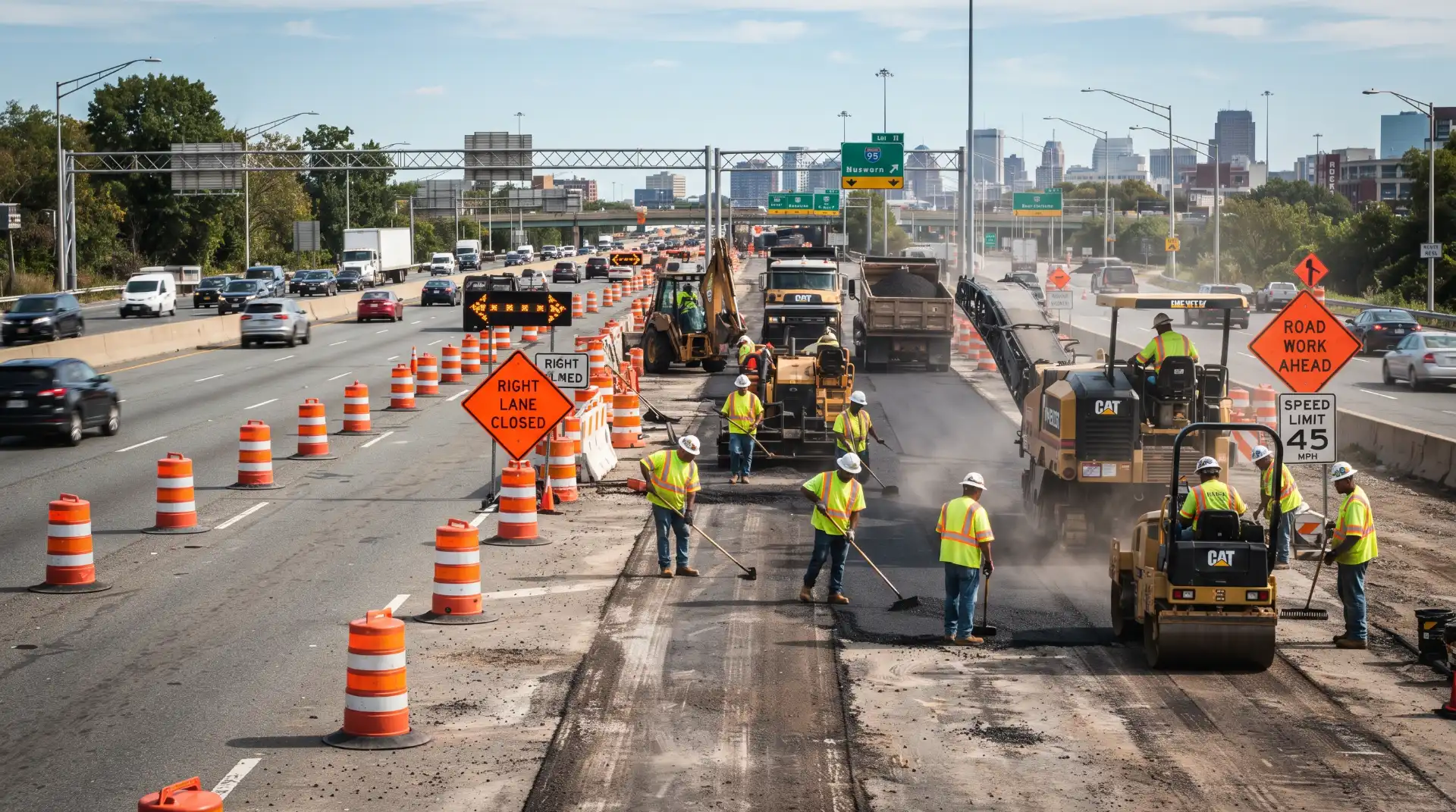
Navigating the streets of San Francisco requires constant vigilance even under ideal driving conditions. Between steep grade inclines, heavy transit traffic, bicycle corridors, and dense urban congestion, drivers must process an enormous amount of visual and environmental information. When street repairs, utility excavations, or major infrastructure overhauls are added to the equation, driving conditions quickly transform into high-risk navigation zones.
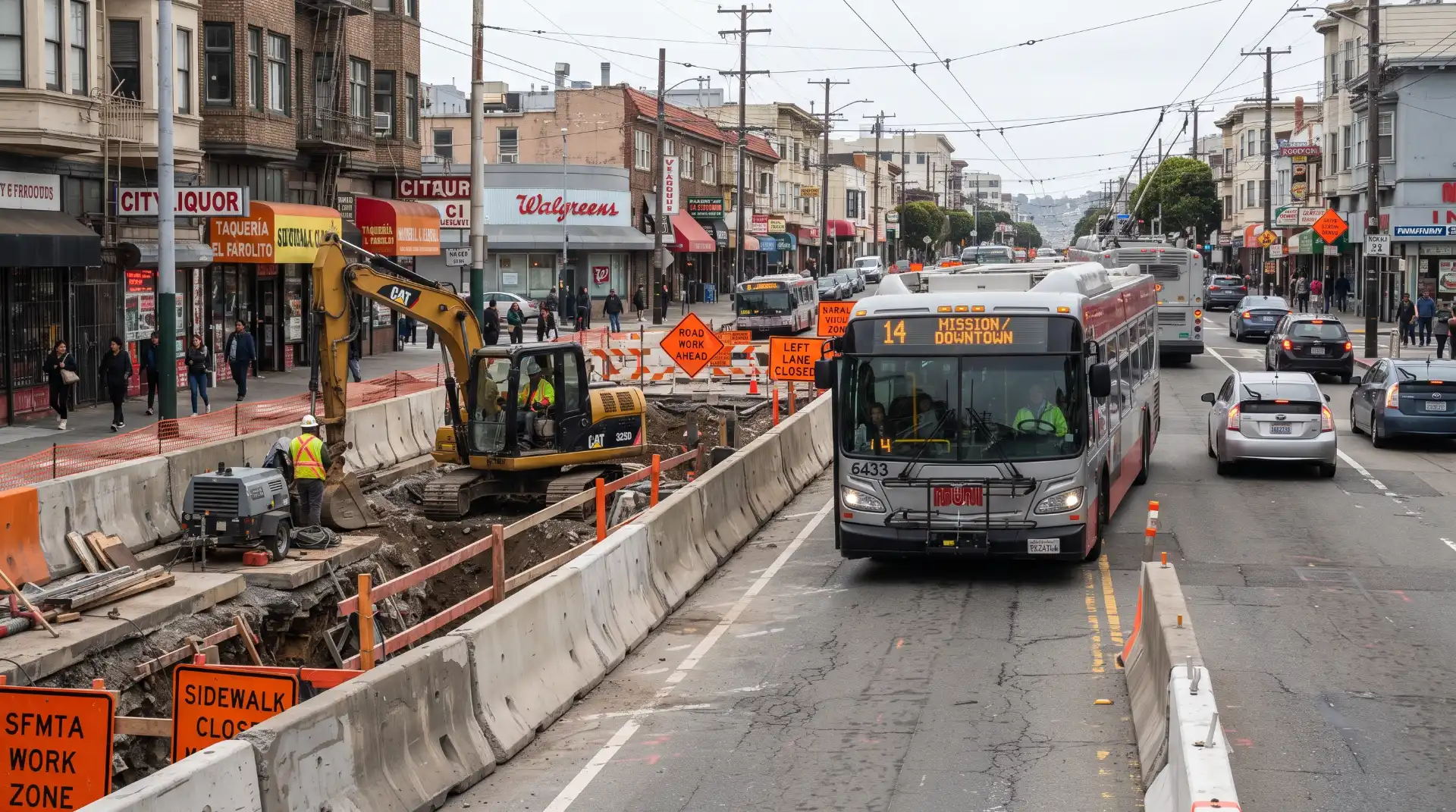
Roadwork is an ongoing reality across the Bay Area. While street improvements are essential for updating public utilities and maintaining transit routes, active construction zones introduce complex hazards. Traffic lanes suddenly shift, asphalt surfaces become uneven, heavy machinery enters traffic without warning, and clear visibility gives way to dense rows of orange cones and flashing arrow boards.
When a collision occurs within or near a San Francisco work zone, determining responsibility is far more complicated than a standard two-vehicle accident. Instead of looking solely at driver error, legal investigations must evaluate whether construction site operators, municipal authorities, equipment manufacturers, or private subcontractors played a role in creating an unsafe environment. Understanding how California tort law applies to construction zone accidents is crucial for anyone seeking accountability and fair compensation after a serious crash.
Why Work Zone Accidents Are Unique and Complex
A standard car accident on a traditional street usually centers on a straightforward question: which driver failed to exercise reasonable care? A driver might run a red light, fail to yield at a stop sign, or follow another vehicle too closely. However, a construction zone fundamentally changes the driving environment by introducing external variables that directly influence driver behavior and vehicle handling.
In a work zone, the physical road structure changes unexpectedly. Normal lane markings may be ground off or obscured, replaced by temporary paint lines that can clash with old patterns under bright sunlight or rain. Concrete K-rails and plastic barrels shrink available lane width, leaving almost zero margin for error if a vehicle swerves. Temporary gravel surfaces reduce tire traction, while dropped tools or debris create immediate road hazards.
Beyond physical obstructions, work zones alter human psychology and reaction time. Drivers forced to merge unexpectedly often panic or make aggressive maneuvers. Reduced sightlines caused by parked construction vehicles hide incoming traffic or pedestrians. When a crash occurs in these environment, the accident is rarely caused by a single isolated action. It is often the cumulative result of flawed site design, inadequate warning signs, and driver confusion.
Identifying Responsible Parties in a Construction Zone Crash
Determining liability after a San Francisco work zone collision requires examining every entity responsible for designing, managing, and navigating the roadway. Depending on the root cause of the crash, legal responsibility may fall on one or multiple parties.
1. Negligent Motorists
Motorists retain a legal duty to adjust their driving to match active road conditions. Under California Vehicle Code 22362, driving faster than the posted temporary speed limit when workers are present creates a legal presumption of unlawful speed. Drivers who engage in the following behaviors remain primary targets for liability:
-
Distracted Driving: Checking navigation apps or texting while navigating unfamiliar lane shifts reduces reaction time during sudden stops.
-
Speeding and Tailgating: Exceeding temporary speed limits reduces the time available to merge safely, frequently causing rear-end collisions.
-
Failure to Obey Flaggers or Signs: Ignoring human flaggers, directional arrow trailers, or temporary signal lights directly creates multi-vehicle hazards.
2. Private Construction Contractors and Subcontractors
General contractors and specialized subcontractors tasked with executing road repairs bear a heavy responsibility to maintain a safe environment for passing traffic. When contractors prioritize speed over safety protocols, motorists face severe risks. Contractors can be held liable for:
-
Improper Traffic Control Setup: Setting up lane closures that fail to provide adequate taper distance for merging traffic.
-
Inadequate Signage: Placing warning signs too close to the active work area, depriving drivers of sufficient advance warning to slow down.
-
Unsafe Equipment Operation: Driving heavy machinery into active travel lanes without proper spotters or warnings.
-
Debris and Obstructions: Leaving tools, gravel, or construction materials in lanes open to public traffic.
3. Government and Municipal Agencies
In San Francisco, roadwork often involves city agencies like the San Francisco Municipal Transportation Agency (SFMTA), San Francisco Public Works (SFPW), or state entities like the California Department of Transportation (Caltrans). Public entities must adhere strictly to established traffic management guidelines, such as the standards detailed in the official SFMTA Construction Regulations Manual (Blue Book).
When municipal entities fail to approve safe temporary traffic control plans, neglect routine safety inspections, or allow dangerous road conditions to persist without warning, they may be named as defendants under California government liability statutes.
4. Equipment Manufacturers and Maintenance Vendors
Sometimes a work zone crash is triggered by equipment failure rather than operational negligence. If temporary traffic signals malfunction, arrow boards lose power without warning, or heavy machinery suffers mechanical failures due to defective manufacturing, the companies that produced or maintained that equipment can be held accountable through product liability claims.
Evaluating Liability Across Key Construction Zone Causes
To assign fault accurately, investigators analyze the specific mechanical or operational breakdown that caused the collision. The table below illustrates how common work zone hazards align with potential legal claims and responsible parties.
| Hazard Type | Common Cause | Potentially Liable Parties | Primary Legal Theory |
| Inadequate Warning | Missing advance “Work Zone Ahead” signs or dark electronic arrow boards. | General Contractor, Traffic Sign Subcontractor, SFMTA/Caltrans | Negligence, Dangerous Condition of Public Property |
| Abrupt Lane Taper | Traffic cones placed too steeply, forcing last-second merges into occupied lanes. | Traffic Control Company, Site Supervisor | Failure to adhere to MUTCD / SFMTA Safety Manual standards |
| Pavement Drop-Offs | Deep, un-ramped asphalt edges or uncovered utility trenches without warning signs. | Excavation Contractor, Public Works Inspector | Premises Liability, Contractor Negligence |
| Rear-End Collisions | Driver speeding through sudden traffic backups created by lane closures. | Following Driver, Contractor (if tail-back warning was absent) | Motor Vehicle Negligence, Comparative Fault |
| Equipment Obstruction | Machinery backing into open lanes without a dedicated spotter or flashing lights. | Equipment Operator, Construction Company | Vicarious Liability, Operational Negligence |
Navigating Government Claims in California
Filing a personal injury claim against a private individual or corporation in California generally carries a two-year statute of limitations. However, when an accident involves a municipal body like the City and County of San Francisco, SFMTA, or a state agency like Caltrans, entirely different rules apply.
Under the California Government Tort Claims Act, injured parties face strict procedural hurdles:
The Six-Month Claim Deadline
Before filing a formal lawsuit against a city, county, or state public entity, you must file an administrative government claim directly with the agency within six calendar months of the accident date. Missing this mandatory deadline almost always permanently bars you from seeking financial recovery from that government entity.
Dangerous Condition of Public Property
To hold a public agency liable under California Government Code Section 835, you must prove that the property was in a dangerous condition at the time of the crash, that the condition created a reasonably foreseeable risk of the kind of injury that occurred, and that the public entity had actual or constructive notice of the dangerous condition far enough in advance to have taken measures to protect against it.
Establishing “constructive notice” requires showing that the dangerous setup existed for such a length of time and was so obvious that the city or state should have discovered and corrected it during routine inspections.
The Role of California’s Pure Comparative Negligence Law
A common defense raised by insurance companies and government attorneys in construction zone cases is that the driver was traveling too fast or failed to pay attention. In many states, being partially at fault can destroy your right to recover damages entirely.
California, however, operates under a pure comparative negligence system. This rule allows an injured person to recover financial compensation even if they were partially at fault for the accident, though their total recovery is reduced proportionately by their percentage of fault.
For instance, if a court determines that a driver was 20% at fault for traveling slightly above the reduced speed limit, but a construction contractor was 80% at fault for failing to illuminate a lane barrier at night, the driver can still recover 80% of their total calculated damages.
Because defense teams frequently try to shift maximum blame onto the motorist, gathering clear objective evidence immediately after a collision is critical to protecting your rights.
Essential Evidence to Preserve After a Work Zone Accident
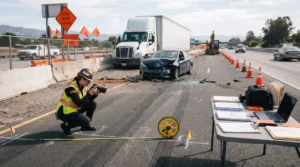
Work zones change rapidly. A construction crew may reconfigure traffic cones, repair warning lights, or clear debris within hours of a severe crash. Preserving evidence immediately is essential for constructing an accurate account of what happened.
-
Photos and Video of the Entire Scene: Capture wide-angle images of the approach to the work zone. Photograph the placement of advance warning signs, speed limit postings, cone placement, sightline obstructions, and lighting conditions.
-
Dashcam Footage: Forward-facing video recordings offer undeniable proof of how the work zone was laid out at the exact moment of the crash.
-
Police and Incident Reports: Ensure local law enforcement, such as the San Francisco Police Department or California Highway Patrol, generates a detailed traffic collision report.
-
Permits and Traffic Control Plans: Legal counsel can subpoena approved Special Traffic Permits (STPs), site safety logs, and contract documentation from SFMTA or Caltrans to compare actual site conditions against mandated legal requirements.
-
Eyewitness Statements: Obtain contact information from non-involved drivers, pedestrian bystanders, or shop workers who observed the collision or noted previous near-misses at the same location.
Available Compensation for Work Zone Accident Victims
Car accidents occurring in dense urban work zones often produce severe bodily injuries due to collisions with concrete barriers, heavy machinery, or sudden multi-vehicle impacts. Victims are entitled to seek both economic and non-economic damages under California civil law.
Economic damages compensate for verifiable financial losses, including past and future medical bills, emergency room costs, physical therapy, lost wages, reduced future earning capacity, and property damage.
Non-economic damages address intangible losses such as physical pain and suffering, emotional distress, loss of enjoyment of life, permanent disfigurement, and physical impairment. In tragic cases resulting in fatal injuries, surviving family members may pursue recovery through a wrongful death claim to address funeral expenses and the loss of financial and emotional support.
Final Thoughts: Protecting Your Legal Rights
Construction zone accidents in San Francisco involve an intricate web of city codes, state traffic regulations, private contractor duties, and short procedural deadlines. When multiple parties share potential responsibility, insurance carriers often attempt to point fingers at one another, leaving injured victims caught in the middle.
If you or a loved one has been injured in a collision within a San Francisco work zone, taking prompt action to secure evidence and consult with experienced legal counsel can ensure that all responsible entities—whether private contractors, public agencies, or negligent drivers—are held fully accountable.