
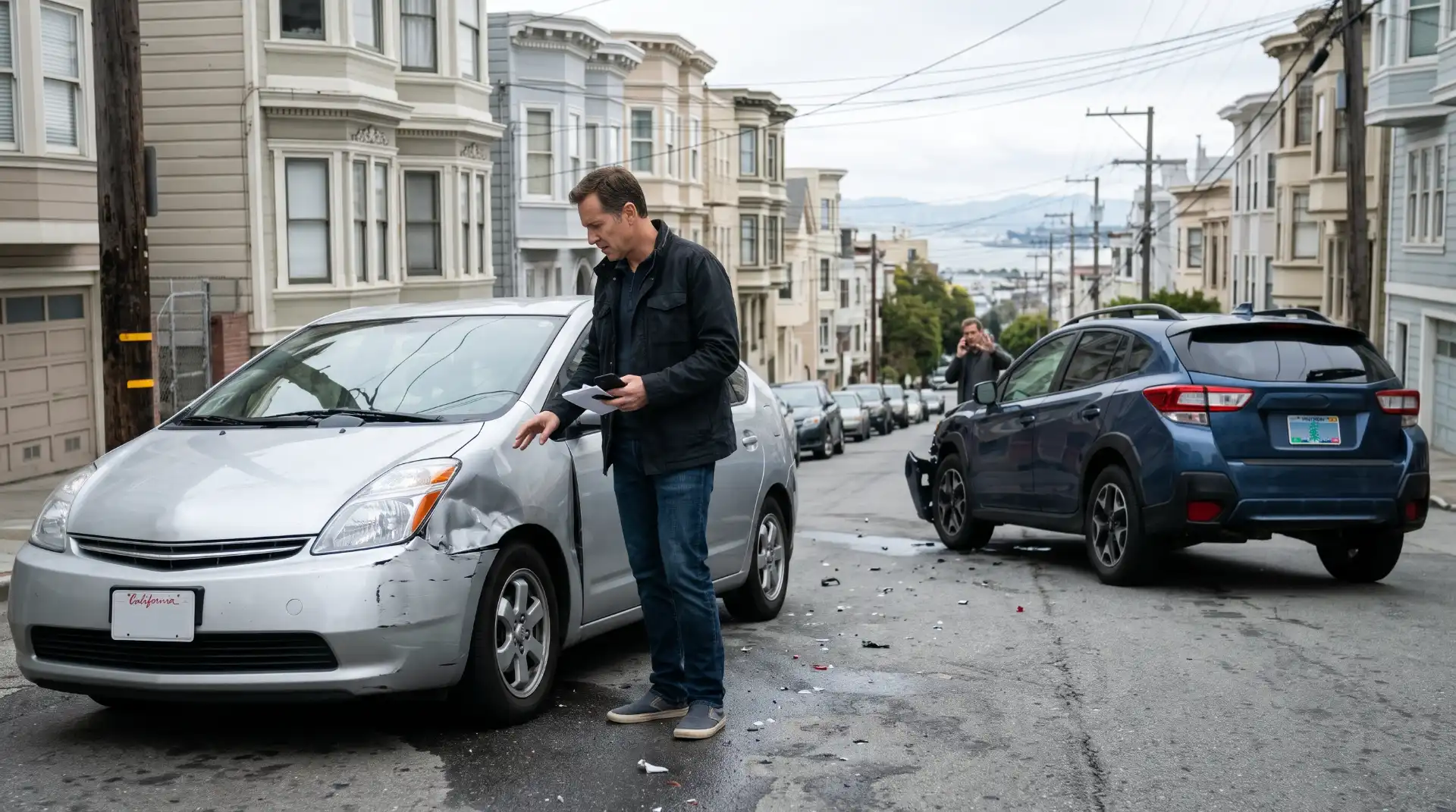
San Francisco attracts millions of visitors every year. Tourists arrive to explore the city’s neighborhoods, business travelers attend conferences, students relocate for educational opportunities, and families travel throughout California for vacations and special occasions. Many visitors bring their own vehicles, while others rent cars or borrow vehicles from friends and relatives. Although traveling by car offers flexibility, unfamiliar roads, changing traffic conditions, and crowded intersections can increase the possibility of serious collisions.
When an out-of-state driver causes a car accident in San Francisco, injured victims may face insurance questions that do not usually arise in collisions involving two California residents. The at-fault driver might have an insurance policy issued in another state, a vehicle registered elsewhere, or coverage governed by contractual provisions that differ from California insurance practices. Victims may also encounter insurance adjusters who work outside California and are unfamiliar with local accident circumstances.
One of the most important questions is which state’s insurance rules apply when a collision happens within California but the responsible driver comes from somewhere else. The answer depends on several factors, including where the accident occurred, the applicable insurance policy, the type of vehicle involved, and the circumstances surrounding the collision.
California law generally governs driving conduct and personal injury claims arising from accidents on California roads. However, insurance coverage can involve additional contractual and interstate considerations. Understanding these distinctions can help injured motorists, passengers, pedestrians, and cyclists protect their rights after an accident involving a visitor.
This guide explains how San Francisco car accident claims involving out-of-state drivers work, which insurance requirements may apply, how victims can pursue compensation, and what practical steps can help prevent an insurance dispute from delaying recovery.
Why Out-of-State Driver Accidents Can Create Complicated Insurance Claims
A typical California car accident claim may involve two drivers who carry insurance policies issued by companies familiar with California regulations. When one driver comes from another state, the insurance process can become more complicated because the parties may be dealing with different policy provisions, state insurance requirements, and administrative procedures.
For example, imagine a driver visiting San Francisco from Texas who causes a collision while changing lanes on Interstate 80. A California motorist suffers a back injury and significant vehicle damage. The injured driver obtains the visitor’s insurance information and discovers that the policy was issued by an insurer operating primarily in Texas.
The California victim may wonder whether Texas insurance limits apply, whether California’s minimum liability requirements control, and whether the insurance company can require the victim to follow procedures associated with another state’s laws.
These are legitimate questions, but an out-of-state policy does not automatically prevent an injured California resident from pursuing a claim under California law.
The Location of the Accident Matters
When a collision occurs in San Francisco, the fact that the at-fault driver lives elsewhere does not ordinarily remove the accident from California’s legal jurisdiction.
California traffic laws generally apply to motorists operating vehicles on California roads, regardless of their state of residence. A visitor driving through a San Francisco intersection must obey applicable California rules governing speed, right-of-way, traffic signals, lane changes, and safe vehicle operation.
If the visitor negligently causes an accident, California personal injury law will generally provide the framework for evaluating the injured person’s claim.
This distinction is important because some visitors mistakenly believe that their home-state driving rules automatically control wherever they travel. They do not have permission to disregard California traffic laws simply because their vehicles carry plates from another state.
The circumstances of the collision remain central to determining whether the visitor acted negligently and whether that conduct caused another person’s injuries.
The Insurance Policy and the Accident Location Are Different Legal Questions
Although California law generally governs the driver’s conduct within the state, the insurance contract may raise separate questions.
The policy might have been issued in another state, and its coverage provisions may contain definitions, exclusions, reporting requirements, and liability limits that need to be reviewed.
An insurance company may also need to determine whether the vehicle involved in the accident was covered, whether the driver had permission to operate it, and whether the policy was active on the date of the collision.
The governing law for interpreting an insurance contract can depend on applicable choice-of-law principles and the policy’s circumstances. It should not be assumed that every provision automatically changes simply because the vehicle entered California.
For injured victims, the practical issue is identifying the available coverage and determining whether the insurer has a valid reason for accepting or disputing the claim.
Which State’s Insurance Laws Apply After a San Francisco Accident?
One of the most common misunderstandings involving interstate collisions is the belief that an insurance policy’s home state always determines the minimum coverage available to an injured person.
The situation is more nuanced. California’s financial responsibility requirements, the language of the insurance contract, and applicable interstate insurance rules may all become relevant.
California’s Minimum Liability Insurance Requirements
California requires drivers and vehicle owners to maintain financial responsibility when operating vehicles on public roads. Most motorists satisfy this requirement by purchasing automobile liability insurance.
Since January 1, 2025, California’s standard minimum liability limits have been:
-
$30,000 for bodily injury or death to one person.
-
$60,000 for bodily injury or death to multiple people in one accident.
-
$15,000 for property damage in one accident.
These limits are commonly described as 30/60/15 coverage.
The California Department of Motor Vehicles explains these requirements in its official California DMV insurance requirements.
California DMV
These minimums are important when evaluating accidents involving vehicles operated in California. However, the existence of California minimum requirements does not mean every out-of-state insurance policy automatically provides a separate $30,000, $60,000, and $15,000 payment to every accident victim.
The policy’s actual limits, its out-of-state coverage provisions, and the applicable legal requirements must be examined.
Does an Out-of-State Insurance Policy Have to Meet California Requirements?
Many automobile insurance policies provide coverage when an insured vehicle travels outside the state where it is registered. These provisions are commonly called out-of-state coverage or extended territorial coverage provisions.
Some policies also contain language addressing higher financial responsibility requirements in another state. In certain circumstances, an insurer may extend coverage to satisfy the minimum limits required where the accident occurs.
The California Department of Insurance explains that most automobile insurance policies provide coverage in other states and that some policies increase coverage when the destination state’s financial responsibility requirements exceed the policy’s existing limits.
Its consumer guide, So You’ve Had an Accident, What’s Next?, discusses these interstate coverage issues.
California Department of Insurance
Nevertheless, victims should not assume that every policy operates identically. Some policies have different provisions depending on the vehicle’s registration, the insured’s residence, the type of vehicle, and the circumstances of the trip.
A proper coverage investigation should examine the complete policy rather than relying exclusively on the insurance identification card.
Can an Insurance Company Apply Another State’s Lower Liability Limits?
An insurance company may initially identify the limits printed on the policy declarations page. If the policy was issued in a state with different minimum liability requirements, the available coverage may appear lower than California’s standard minimum.
That does not necessarily end the analysis.
The policy may include an out-of-state provision that changes the applicable coverage when the vehicle is operated in California. Other statutory or contractual provisions may also affect the result.
For instance, a visitor’s policy may show relatively low liability limits because the vehicle is normally registered in another state. However, the insurer may have contractual obligations that need to be considered when the vehicle is operated in California.
An injured person should request clarification about the applicable limits and the contractual basis for the insurer’s position.
It is also important to distinguish between the legal minimum and the amount of compensation an accident victim may ultimately recover. A person with $100,000 in documented damages does not automatically receive $100,000 simply because the accident happened in California. The available coverage, liability findings, damages, and potentially recoverable assets all matter.
How California Traffic Laws Apply to Visitors Driving in San Francisco
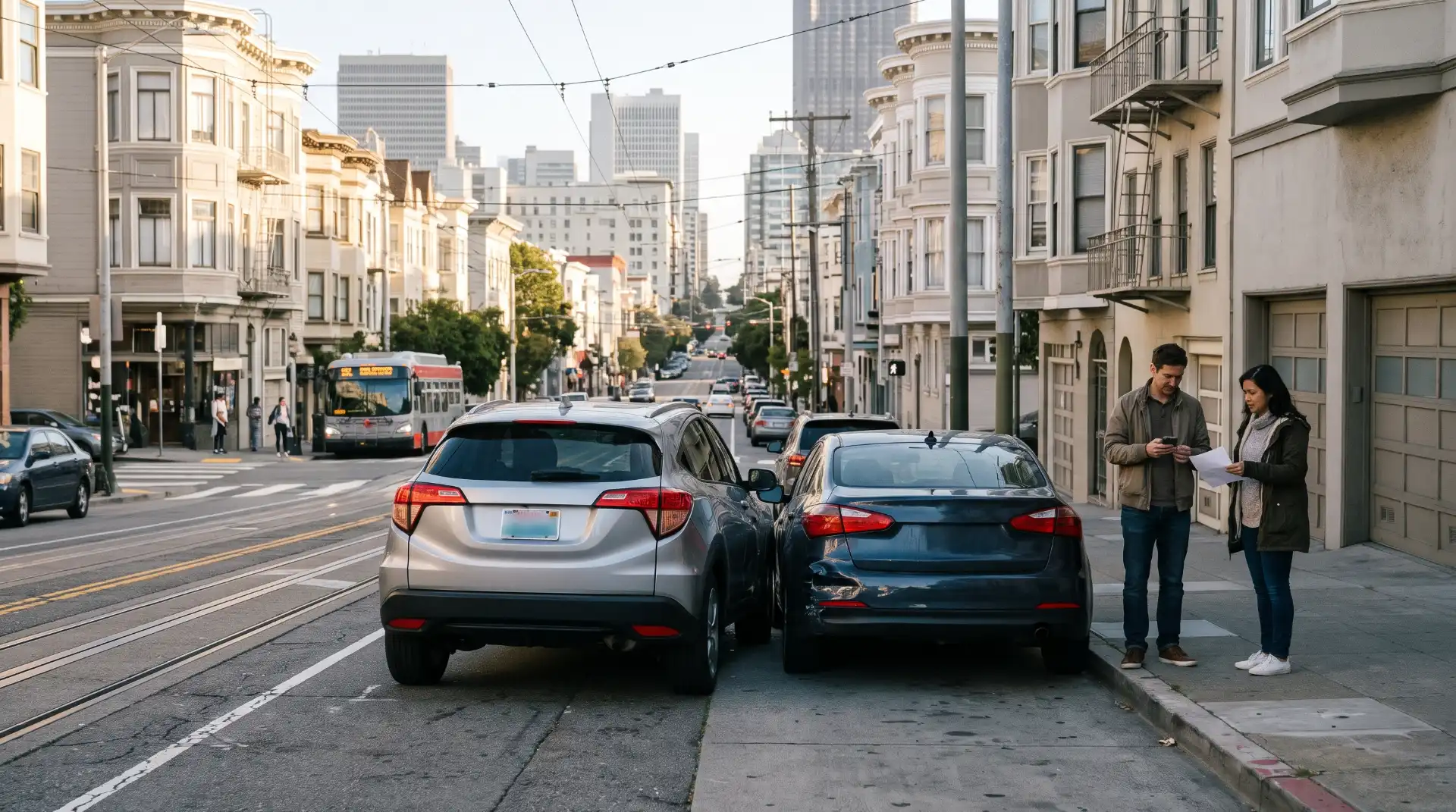
An out-of-state driver visiting San Francisco must generally follow the same California traffic laws as a resident motorist. A driver’s home-state license, vehicle registration, or insurance policy does not create an exemption from California road safety requirements.
This matters because liability in a car accident is often determined by examining whether a driver violated a legal duty and whether that violation contributed to the collision.
Speeding and Unsafe Driving on San Francisco Streets
San Francisco has a distinctive road environment. Drivers encounter steep hills, narrow streets, busy commercial districts, complex intersections, bicycle lanes, transit corridors, and heavily traveled pedestrian areas.
A visitor who is accustomed to driving on wide suburban roads may have difficulty adjusting to these conditions. Someone unfamiliar with the city’s one-way streets might make a sudden lane change, while another driver might approach a steep downhill street too quickly.
These circumstances do not automatically establish negligence, but they can become relevant when investigators evaluate how the accident happened.
California’s basic negligence principles require motorists to exercise reasonable care under the circumstances. A driver who fails to maintain control, disregards a traffic signal, follows too closely, or makes an unsafe maneuver may be held responsible when that conduct causes injuries.
For example, a visitor driving through downtown San Francisco might suddenly stop in a traffic lane after missing a turn. If a following vehicle collides with the visitor’s car, the investigation may examine whether the visitor created an unreasonable hazard and whether the following driver maintained an appropriate distance.
Both drivers’ conduct must be considered rather than assuming that the vehicle striking another vehicle is automatically responsible.
Failure to Yield and Unfamiliar Intersections
San Francisco’s intersections can be difficult for visitors who are unfamiliar with local street layouts. Some intersections have unusual angles, multiple turning lanes, pedestrian crossings, transit movements, and restricted visibility.
A driver approaching an unfamiliar intersection must still observe applicable signs, signals, lane markings, and right-of-way rules.
Suppose a visitor attempts to turn left across an intersection without yielding to approaching traffic. A California motorist traveling straight through the intersection may have little time to avoid the collision.
The visitor’s unfamiliarity with the road does not automatically excuse the unsafe maneuver. Investigators may review traffic signals, photographs, witness statements, surveillance recordings, and physical evidence to determine which driver had the right of way.
Comparative Negligence When Both Drivers Contribute
California follows a pure comparative negligence system. This means an injured person may generally recover damages even when partially responsible for an accident, although compensation is reduced according to that person’s share of fault.
For example, suppose a San Francisco resident suffers $100,000 in damages after a collision involving a visitor. The evidence ultimately establishes that the visitor was 80% responsible and the California driver was 20% responsible.
The injured driver could generally pursue $80,000 in damages, subject to the applicable legal and evidentiary requirements.
The visitor’s out-of-state residence does not eliminate California’s comparative negligence principles when California law governs the injury claim.
This issue can become particularly important when insurance companies disagree about how a collision occurred.
What Happens When an Out-of-State Driver Has Insufficient Insurance?
An accident victim may discover that the responsible visitor carries only limited liability coverage. This can become a serious problem when injuries involve hospitalization, surgery, rehabilitation, long-term medical treatment, or an extended absence from work.
Even when a driver has valid insurance, the available policy limits may not be sufficient to compensate everyone injured in a collision.
Understanding Per-Person and Per-Accident Limits
Liability insurance policies commonly use two separate bodily injury limits.
The per-person limit establishes the maximum amount available for injuries to one individual. The per-accident limit establishes the maximum amount available for all bodily injury claims arising from the same collision.
Consider a hypothetical visitor who causes an accident involving three California occupants. Each person requires medical treatment, and their combined documented damages exceed the available insurance coverage.
Even if all three individuals have legitimate claims, they may need to negotiate over a limited insurance fund.
For example, a policy with $30,000 per person and $60,000 per accident could provide no more than $60,000 in total bodily injury liability payments, subject to the policy terms and applicable law.
That amount could be inadequate when multiple people suffer serious injuries.
Property damage coverage is generally separate from bodily injury liability coverage. Damage to a vehicle, building, fence, or other property may be subject to a different policy limit.
Can an Injured Person Recover More Than the Insurance Policy Limits?
Potentially, yes.
An insurance policy’s liability limit does not necessarily establish the full value of an injured person’s legal claim. If the at-fault driver has insufficient insurance, an injured person may explore other available sources of compensation.
Depending on the facts, these may include:
-
The injured person’s own uninsured or underinsured motorist coverage.
-
Additional liability policies covering the responsible driver.
-
Applicable umbrella or excess insurance policies.
-
Coverage associated with an employer or business vehicle.
-
Other potentially responsible parties.
-
Personal assets of the responsible driver, where legally recoverable.
Each possibility requires a separate investigation.
For example, a visitor might have an automobile liability policy and an umbrella policy that provides additional protection under certain circumstances. A victim who initially receives information about only the automobile policy may not know that additional coverage exists.
Likewise, an out-of-state driver operating a company vehicle may have insurance arrangements that differ from an ordinary personal automobile policy.
When the Responsible Driver Has No Insurance
An out-of-state driver may be uninsured because of a canceled policy, missed premium payments, an excluded driver, or a vehicle that was not covered under the insurance contract.
The absence of valid insurance does not automatically eliminate the driver’s potential legal responsibility.
California generally requires drivers to establish financial responsibility. An uninsured motorist who causes a collision may face legal and financial consequences.
For an injured victim, however, obtaining a judgment against an uninsured driver does not guarantee that the person has enough assets to pay it.
This is one reason uninsured and underinsured motorist coverage can be important.
How Uninsured and Underinsured Motorist Coverage Can Protect California Drivers
Uninsured motorist (UM) and underinsured motorist (UIM) coverage can provide an important financial safeguard when an accident involves a driver who has no insurance or insufficient insurance.
These protections are particularly relevant in a large metropolitan area such as San Francisco, where residents regularly share roads with tourists, temporary visitors, commercial motorists, and drivers from other states.
What Is Uninsured Motorist Coverage?
Uninsured motorist bodily injury coverage may help pay for qualifying injuries when the responsible driver has no applicable liability insurance.
Depending on the policy and circumstances, coverage may extend to the insured driver and eligible passengers.
It can be particularly valuable when an out-of-state visitor causes an accident and then becomes difficult to locate or cannot provide evidence of valid insurance.
California insurers generally must offer uninsured motorist coverage to applicants for automobile liability insurance, although consumers may reject it in writing.
What Is Underinsured Motorist Coverage?
Underinsured motorist coverage may help when the responsible driver has liability insurance but the available coverage is insufficient to compensate the injured insured person.
For example, imagine a visitor causes a San Francisco collision resulting in $120,000 in documented injuries. The responsible driver’s applicable liability coverage is exhausted after paying a $30,000 claim.
The injured California driver may investigate whether their own UIM policy provides additional compensation.
The actual payment depends on the policy’s limits, applicable offsets, exhaustion requirements, coverage conditions, and other contractual provisions.
It is important to understand that UIM coverage is not automatically available whenever another driver’s insurance seems inadequate. The specific policy must be reviewed.
Can You Use Your Own Insurance Even When the Visitor Is Clearly at Fault?
In some circumstances, yes.
A California driver may have collision coverage that can help pay for vehicle repairs regardless of who caused the accident, subject to the deductible and policy conditions.
Medical payments coverage may also help with qualifying medical expenses, depending on the policy.
Uninsured and underinsured motorist coverage may apply when the relevant conditions are satisfied.
Using certain first-party benefits does not necessarily mean accepting responsibility for the accident. However, an injured person should coordinate with their insurer to understand reimbursement rights, subrogation, and any potential effect on other claims.
The California Department of Insurance provides consumer information about these coverage types in its automobile insurance guide.
California Department of Insurance
Accidents Involving Rental Cars and Out-of-State Visitors
Not every visitor drives a personally owned vehicle. Many tourists and business travelers rent automobiles after arriving in San Francisco.
Rental car accidents can create additional insurance questions because several different coverage arrangements may exist.
The responsible driver could have personal automobile insurance, coverage offered through the rental company, qualifying credit card benefits, or another applicable policy.
Determining which coverage applies requires examining the rental agreement and insurance documents.
Does the Rental Car Company’s Insurance Automatically Pay for the Accident?
No.
Rental vehicles are not automatically covered by unlimited insurance simply because they were obtained from a commercial rental company.
A rental company may provide certain liability protections, offer supplemental liability insurance, or rely on other arrangements depending on its operations and applicable legal requirements.
The driver’s personal automobile policy may also extend coverage to a rental vehicle, depending on the contract.
Credit card rental protections often focus on physical damage to the rented vehicle rather than providing general liability coverage for injuries caused to other people.
These distinctions are important because an injured person should not assume that a rental car company will automatically compensate them for every injury.
Who Is Responsible When a Visitor Causes a Rental Car Accident?
The person driving the rental car may be responsible if negligent driving caused the collision.
The rental agreement and insurance arrangements may determine what coverage is available.
Additional questions can arise if the driver was not authorized under the rental agreement, the vehicle was being used for an excluded purpose, or another party contributed to the accident.
For example, a visitor from Nevada rents a vehicle at San Francisco International Airport. While driving through a crowded downtown intersection, the visitor fails to yield and strikes another vehicle.
The injured California motorist may need to identify the driver, rental company, applicable liability policy, and any additional coverage.
The rental agreement may be important, but it should not be treated as the only document relevant to the claim.
Peer-to-Peer Car Rentals and Shared Vehicles
Some visitors obtain vehicles through peer-to-peer car-sharing platforms instead of traditional rental agencies.
These arrangements can involve a vehicle owner, a temporary driver, a platform, and insurance coverage associated with the trip.
The specific insurance program and contractual terms must be examined to identify the applicable protections.
Our related article, Turo and Peer-to-Peer Car Sharing Accidents in San Francisco, explains why identifying the vehicle’s ownership, authorized driver, and insurance arrangements can be important after a collision.
This is particularly relevant when a visitor causes an accident while operating a vehicle that does not belong to them.
Commercial Vehicles and Employer Responsibility in Out-of-State Driver Accidents
Not every out-of-state driver is visiting San Francisco for personal reasons. Some motorists travel into California for business, deliveries, construction projects, transportation services, or other commercial activities.
When an accident involves a commercial vehicle, identifying the responsible insurance policy can become more complicated because the driver may be working for an employer or operating a vehicle owned by another business.
When an Out-of-State Employee Causes an Accident
An employee who causes a collision while performing job-related duties may create potential liability for the employer under the legal doctrine of respondeat superior.
This doctrine generally allows an employer to be held responsible for certain negligent acts committed by an employee within the scope of employment.
For example, imagine a delivery driver employed by an Arizona distribution company who travels to San Francisco to deliver commercial goods. While attempting to merge onto a busy freeway, the driver fails to check an adjacent lane and strikes a California motorist.
The injured driver may have a claim involving the employee’s negligence. Depending on the circumstances, the employer may also face potential liability.
However, an employer is not automatically responsible for every accident involving an employee. The investigation must establish whether the employee was acting within the scope of employment and whether the applicable legal requirements are satisfied.
Who Insures a Commercial Vehicle Registered in Another State?
Commercial vehicles may have insurance policies that differ significantly from ordinary personal automobile policies.
A trucking company, delivery business, transportation contractor, or other commercial operator may maintain a commercial automobile liability policy covering multiple vehicles and drivers.
The policy may also include additional protections or exclusions depending on the nature of the business.
For example, a commercial vehicle traveling from Oregon into San Francisco might be insured under a fleet policy issued to a company headquartered outside California.
The fact that the policy was issued elsewhere does not automatically prevent an injured California resident from making a claim.
The insurer, however, may need to investigate the vehicle’s ownership, the driver’s employment status, the purpose of the trip, and whether the particular activity was covered.
Independent Contractors and Business Relationships
Some businesses use independent contractors rather than traditional employees. This distinction can affect whether a company may be held responsible for a driver’s conduct.
An independent contractor arrangement does not automatically eliminate every potential claim against a business. Depending on the circumstances, questions may arise about negligent hiring, vehicle ownership, agency relationships, retained control, or other legal duties.
Consider a transportation company that hires an out-of-state contractor to transport equipment into San Francisco. If the contractor causes an accident while driving a vehicle connected to the business, investigators may need to examine the actual relationship between the parties.
The labels in a contract are not necessarily the final answer to every liability question.
An injured person should identify all potentially relevant businesses, insurance policies, and vehicle owners rather than assuming the individual driver is the only possible defendant.
Can You File a Car Accident Claim in California if the Other Driver Lives in Another State?
Generally, yes.
If an accident occurs in San Francisco and causes injuries, an affected person may pursue a claim under applicable California law even when the responsible motorist lives thousands of miles away.
The fact that the driver returns home after the accident does not automatically eliminate the victim’s legal rights.
California Courts and Personal Jurisdiction
California courts can generally exercise personal jurisdiction over a nonresident driver when the driver’s conduct in California gives rise to the lawsuit.
For example, a visitor who negligently causes a collision while driving through San Francisco has a direct connection to the state through the conduct that allegedly caused the injury.
The driver cannot ordinarily avoid a California injury claim simply by returning to another state.
However, jurisdictional questions can become more complicated when additional parties are involved, particularly businesses, insurance companies, vehicle owners, and corporate defendants.
A lawyer may need to determine where a lawsuit should be filed, which parties can be included, and whether any special procedural requirements apply.
Does the Victim Have to Travel to the Other Driver’s State?
Not necessarily.
When the accident occurred in San Francisco, California may be an appropriate location for pursuing the personal injury claim or related lawsuit.
However, the location of a lawsuit and the location where a person may need to participate in certain proceedings are separate issues.
Depending on the case, witnesses, medical providers, accident investigators, and other individuals may be located in different states.
Some proceedings may permit remote participation, while others may require in-person attendance.
The specific court rules and circumstances determine what is required.
What if the At-Fault Driver Returns Home Before the Insurance Claim Is Resolved?
This is a common practical concern for accident victims.
A visitor may leave California a few days after a collision, particularly if the person was traveling for vacation or business.
Fortunately, an insurance claim does not ordinarily require the responsible driver to remain physically present in San Francisco.
The insurance company can investigate the accident, communicate with its policyholder, evaluate liability, and negotiate with the injured person after the driver returns home.
The injured victim should still preserve important information, including the driver’s full name, contact details, insurance company, policy number, vehicle registration, and any accident report information.
If the driver becomes difficult to contact, the insurer may still be able to process the claim through its established procedures.
What Evidence Should You Collect After an Accident Involving an Out-of-State Driver?
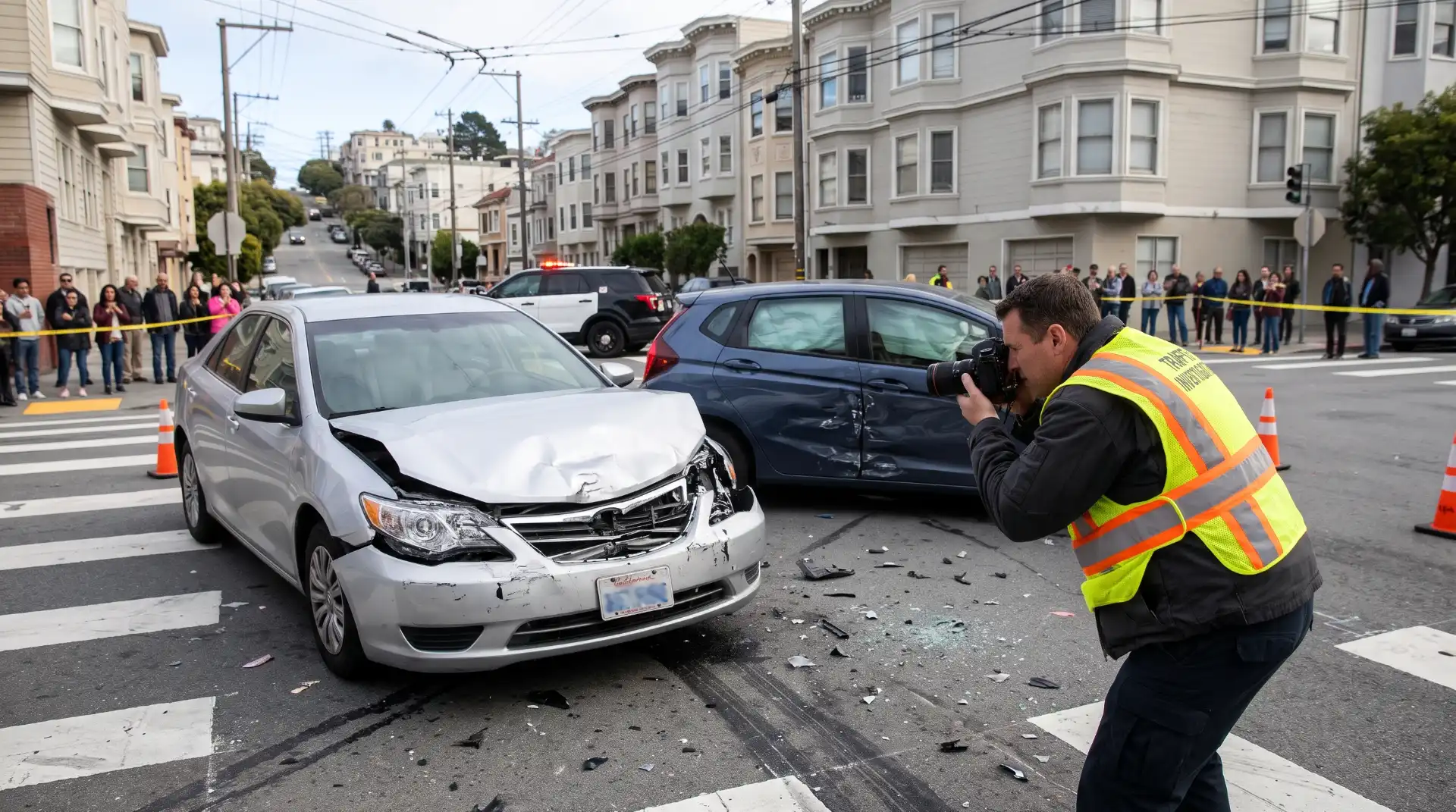
Evidence is important in almost every personal injury claim, but it can be especially valuable when the responsible motorist lives outside California.
An injured person may have limited opportunities to obtain information directly from the visitor before that individual leaves the state.
Preserving available evidence early can help prevent unnecessary disputes later.
Obtain Complete Driver and Insurance Information
After a collision, exchange information with the other driver when it is safe to do so.
Important details include the driver’s full legal name, residential address, telephone number, driver’s license information, vehicle registration, license plate number, insurance company, and policy number.
Photograph the insurance identification card and registration document if the driver permits it and the circumstances allow.
Make sure the information is readable. A photograph that cuts off the policy number or expiration date may not be useful when an insurer needs to identify the policy.
If the visitor is driving a rental car, commercial vehicle, or borrowed automobile, obtain information about the vehicle owner or rental company as well.
Photograph the Collision Scene
Photographs can help establish how the accident happened.
Take pictures of the vehicle damage, roadway layout, traffic signs, lane markings, intersections, skid marks, debris, road conditions, and nearby landmarks.
In San Francisco, the surrounding roadway may be particularly important because steep grades, narrow lanes, parked vehicles, and complicated intersections can affect how a collision occurs.
For example, a photograph showing a vehicle positioned across a bicycle lane or blocking an intersection may help provide context about the events leading to the collision.
Avoid placing yourself in danger to obtain photographs. Emergency treatment and personal safety must always come first.
Identify Independent Witnesses
Witnesses may be especially useful when the out-of-state driver disputes responsibility after returning home.
A person who observed the collision may be able to explain which vehicle entered the intersection first, whether a driver changed lanes suddenly, or whether someone ignored a traffic signal.
Obtain names and contact information when possible.
Independent witness accounts can be valuable because they do not depend entirely on the memories or interests of the people directly involved in the accident.
Preserve Dashcam and Surveillance Footage
Dashcam footage may document the collision and the actions immediately before impact.
Nearby businesses, residential properties, parking facilities, and commercial buildings may also have security cameras.
However, surveillance recordings are not always stored indefinitely. Some systems automatically overwrite older recordings.
If you know that a camera may have captured the accident, identifying its owner and requesting preservation promptly can be important.
A written preservation request may help alert the relevant party that the recording could be important evidence.
Obtain Medical Records and Document Your Injuries
Medical records help establish the nature and extent of accident-related injuries.
A victim should seek appropriate medical evaluation even when symptoms initially appear manageable.
Some injuries, including soft-tissue injuries, concussions, and certain spinal conditions, may become more noticeable after the immediate shock of a collision has passed.
Keep copies of medical bills, treatment records, prescriptions, rehabilitation documents, and recommendations from healthcare professionals.
If the accident causes time away from work, preserve pay records and documentation showing lost income.
These materials may become important when calculating economic damages.
For additional practical guidance, see our article, What to Do After a Car Accident in San Francisco: A Step-by-Step Guide.
How Insurance Companies Investigate Out-of-State Driver Claims
Insurance companies generally conduct investigations before deciding whether to accept responsibility and how much compensation may be appropriate.
When the insured driver lives in another state, the process may involve additional communication and documentation.
Contacting an Insurance Company Outside California
An injured California motorist may need to communicate with an insurance adjuster located in another state.
The adjuster may request photographs, medical documentation, vehicle repair estimates, statements, and information about the collision.
Some companies use centralized claims departments that handle accidents across multiple states.
The location of the adjuster does not determine which state’s traffic laws apply to the accident.
A claim involving a San Francisco collision should still be evaluated under the applicable legal rules, even when the insurance company processes the claim from another state.
Why Insurance Adjusters May Dispute Liability
An insurer may question the circumstances of the accident, particularly when the drivers provide different accounts.
For example, the visitor might claim that the California motorist changed lanes unexpectedly, while the injured driver maintains that the visitor failed to check a blind spot.
The insurance company may request additional evidence before determining responsibility.
Adjusters may also investigate whether the insured driver had permission to operate the vehicle, whether the policy was active, and whether any exclusions apply.
These questions should be distinguished from the separate question of whether the driver acted negligently.
Be Careful When Giving Recorded Statements
An insurance company may request a recorded statement shortly after an accident.
Although providing basic information may be appropriate, an injured person should be careful about making statements before understanding the full extent of their injuries and the facts of the collision.
Pain, stress, medication, and confusion can affect how someone remembers an accident.
A person should avoid guessing about speed, distance, timing, or the precise sequence of events.
It is also important not to speculate about fault.
When the claim involves significant injuries, disputed coverage, or multiple insurance companies, obtaining legal guidance before providing detailed statements may help protect the injured person’s interests.
Why an Insurance Settlement Offer May Be Inadequate
A visitor’s insurance company may attempt to resolve a claim relatively quickly.
An early settlement offer can be tempting, particularly when medical expenses are accumulating and the injured person needs money for transportation, repairs, or household expenses.
However, accepting a settlement may require signing a release that prevents additional recovery for the injuries covered by that agreement.
This can become problematic if the person later discovers that additional medical treatment is necessary or that the injury has affected their ability to work.
Before accepting compensation, an injured person should understand the full scope of the damages, available coverage, and legal consequences of signing a release.
Important Deadlines After a San Francisco Accident Involving an Out-of-State Driver
Accident victims should understand that insurance negotiations and legal deadlines are separate matters.
An insurance company may take several weeks or months to investigate a claim. However, waiting for the insurer to make a decision does not necessarily extend the deadline for filing a lawsuit.
California’s Personal Injury Statute of Limitations
California generally provides two years from the date of an injury to file a personal injury lawsuit under California Code of Civil Procedure Section 335.1.
This deadline generally applies to personal injury claims arising from automobile accidents, including collisions caused by out-of-state drivers.
There may be exceptions depending on the circumstances. For example, claims involving minors, delayed discovery, or other legally recognized circumstances may require a different analysis.
Claims against government entities are subject to separate and generally much shorter administrative claim requirements.
An injured person should not assume that negotiations with an out-of-state insurance company will preserve the right to file a lawsuit.
Property Damage Deadlines
Vehicle damage claims generally have a different filing deadline.
Under California Code of Civil Procedure Section 338, actions involving injury to personal property are generally subject to a three-year limitations period.
However, property damage and personal injury claims may involve different evidence, insurance procedures, and legal considerations.
A person should address both claims rather than assuming that resolving vehicle repairs automatically resolves the injury claim.
California’s SR-1 Accident Reporting Requirement
California also has a separate accident reporting requirement.
Under California law, drivers generally must submit an SR-1 Report of Traffic Accident Occurring in California to the DMV within 10 days when an accident results in injury, death, or property damage exceeding $1,000.
This requirement is separate from reporting the accident to the police or an insurance company.
The requirement may apply even when the other driver is visiting California from another state.
Drivers should consult the California DMV’s current reporting instructions to determine how to complete the necessary documentation.
What Compensation Can You Recover After an Out-of-State Driver Causes an Accident?
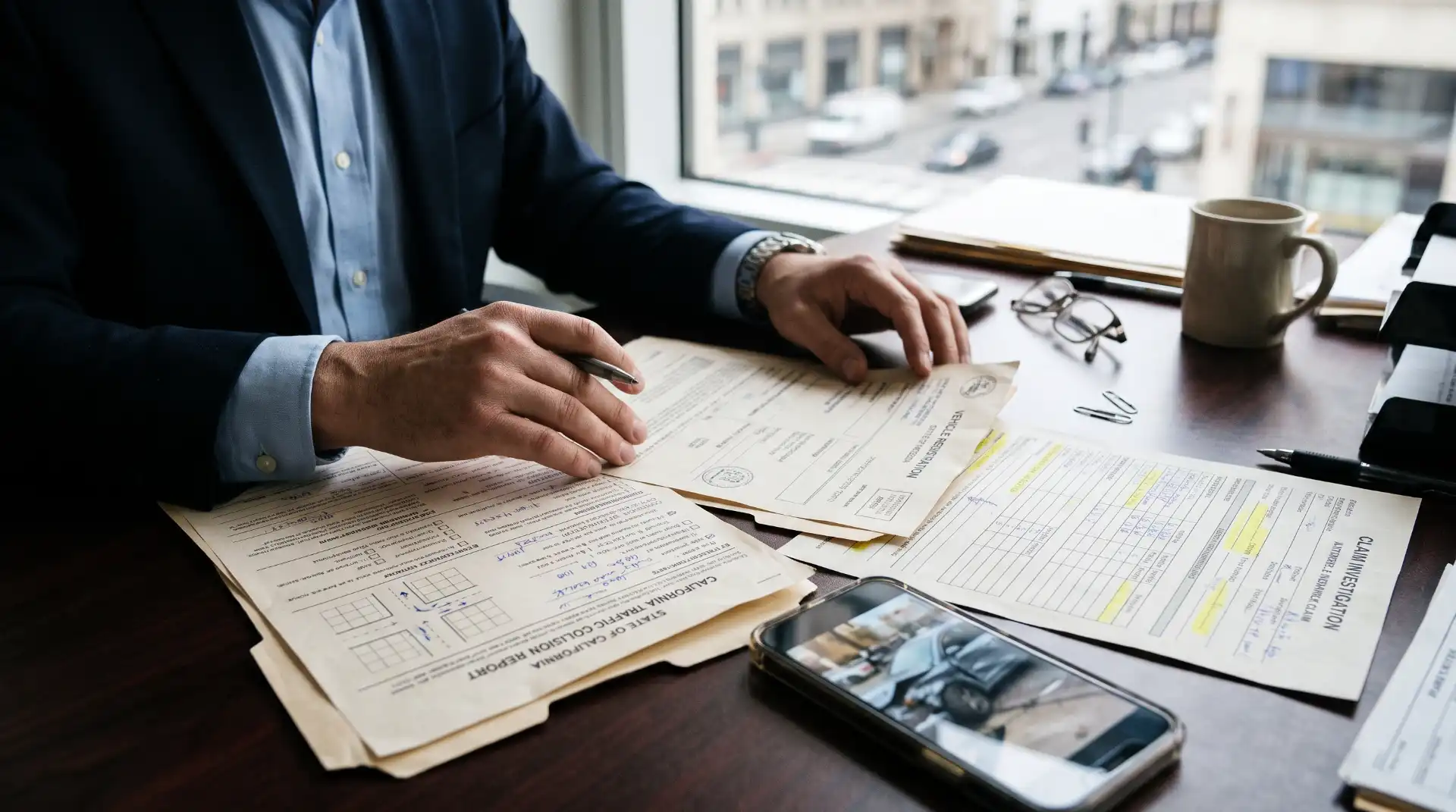
An injured person may be entitled to pursue several categories of damages when another driver’s negligence causes a collision.
The amount depends on the injuries, financial losses, evidence, available insurance coverage, and applicable legal rules.
Medical Expenses
Medical expenses may include emergency transportation, hospital treatment, diagnostic imaging, surgery, medication, physical therapy, rehabilitation, and follow-up appointments.
Depending on the circumstances, recoverable damages may include reasonable future medical expenses supported by appropriate evidence.
For example, a San Francisco resident who suffers a serious back injury after being struck by a visitor’s vehicle may require months of treatment.
The claim should account for the medical care reasonably connected to the collision, rather than focusing exclusively on the first emergency room bill.
Lost Income and Reduced Earning Capacity
An accident may prevent someone from returning to work immediately.
Lost income can include wages, salary, qualifying self-employment earnings, and other documented employment-related losses.
Some injuries have longer-lasting effects. A person who cannot return to their previous occupation or work the same number of hours may also have a potential claim for diminished future earning capacity.
Employment records, tax documents, employer statements, and medical opinions may help establish these losses.
Pain and Suffering
Personal injury claims may also include non-economic damages.
These can involve physical pain, emotional distress, inconvenience, limitations on daily activities, and loss of enjoyment of life.
For example, a visitor-caused collision may leave a San Francisco resident unable to participate in recreational activities, exercise, or normal family responsibilities.
The impact of an injury is not always reflected in medical bills alone.
Vehicle Damage and Related Expenses
Property damage claims may include reasonable repair costs or the vehicle’s applicable value if it is considered a total loss.
Other potentially recoverable expenses may include towing, storage, and qualifying rental transportation costs.
The availability and amount of these damages depend on the circumstances and applicable insurance arrangements.
Permanent Disability and Long-Term Consequences
Some collisions result in injuries that permanently affect mobility, physical independence, or the ability to work.
These cases may involve substantial future medical expenses, assistive equipment, rehabilitation, and long-term personal care.
The fact that the responsible driver is from another state does not automatically reduce the value of an otherwise valid California injury claim.
The important consideration is establishing the injuries, their relationship to the accident, and the damages supported by the evidence.
Common Examples of Out-of-State Driver Accidents in San Francisco
Understanding how these claims develop in practical situations can help illustrate why insurance investigations require attention to detail.
A Tourist Causes a Collision While Following Navigation Directions
A visitor from Florida is driving through San Francisco for the first time. While approaching a busy intersection, the driver becomes confused by navigation instructions and suddenly changes lanes.
A California motorist traveling in the adjacent lane cannot avoid the collision.
The visitor’s insurance company may investigate whether the driver made an unsafe lane change, whether the California motorist contributed to the accident, and whether the visitor’s policy covers the collision.
The fact that the driver was unfamiliar with San Francisco does not automatically excuse negligent driving.
A Visitor Causes a Multi-Vehicle Accident
A driver from Nevada approaches slow-moving traffic on a San Francisco freeway and fails to stop in time.
The vehicle strikes the car ahead, which is pushed into another vehicle.
Several occupants suffer injuries, and multiple insurance claims arise.
The investigation must determine how the collision occurred, whether more than one driver contributed to the accident, and how available liability limits apply to multiple injured people.
This situation may also raise questions about underinsured motorist coverage.
An Out-of-State Business Driver Injures a Local Motorist
A delivery driver employed by an out-of-state company causes an accident while making a scheduled delivery in San Francisco.
The injured person discovers that the vehicle is registered outside California and the insurance company is headquartered in another state.
The investigation may need to establish whether the driver was working within the scope of employment, who owned the vehicle, and which commercial insurance policies may apply.
The business relationship may create additional potential sources of liability beyond the individual driver’s personal responsibility.
A Rental Car Accident Involving a Visitor
A tourist rents a car at the airport and causes a collision while driving through downtown San Francisco.
The injured motorist may need to identify the rental agreement, the driver’s personal automobile policy, and any supplemental liability coverage.
A complete investigation can help determine which insurance arrangements apply and whether additional parties may have responsibility.
These examples demonstrate why the identity and residence of the other driver are only part of the overall investigation.
How to Protect Your Rights After an Accident With an Out-of-State Driver
Although the insurance process can be complicated, taking practical steps immediately after a collision can make a meaningful difference.
First, prioritize safety. Call 911 when appropriate and request medical assistance for anyone who may be injured. Do not delay necessary medical care because the other driver is visiting from another state or because insurance information has not yet been confirmed.
Second, obtain the driver’s complete information. Make sure you have the correct name, contact details, insurance company, policy number, vehicle registration, and license plate information.
Third, document the accident scene. Photograph the vehicles, surrounding roadway, traffic signs, and visible damage. If independent witnesses are available, obtain their contact information.
Fourth, report the accident through the appropriate channels. Depending on the circumstances, this may involve law enforcement, your insurance company, and the California DMV.
Fifth, preserve medical and financial records. Keep documentation of medical appointments, prescriptions, transportation expenses, missed work, and vehicle repairs.
Finally, be cautious about signing settlement agreements or accepting payment before understanding the full consequences.
Why Legal Guidance May Be Helpful
Claims involving out-of-state motorists can require coordination between California personal injury law and insurance contracts issued elsewhere.
An attorney familiar with California automobile accident claims may help identify applicable policies, evaluate disputed liability, preserve evidence, communicate with insurers, and determine whether additional parties may be responsible.
This can be particularly useful when the visitor has returned home, multiple people were injured, the available insurance appears insufficient, or the insurance company disputes coverage.
The objective is to understand all potentially available avenues for compensation rather than accepting the first explanation provided by an insurance adjuster.
Frequently Asked Questions About San Francisco Accidents Involving Out-of-State Drivers
Does California law apply if the driver who caused my accident lives in another state?
Generally, yes. When a collision occurs in San Francisco, California traffic and personal injury laws will generally govern the driver’s conduct and resulting injury claim. The driver’s home-state residence does not automatically change that result.
Can I file a claim against a driver who has returned to another state?
Yes. Returning home does not automatically eliminate the driver’s potential legal responsibility. An injured person may generally pursue an insurance claim and, when appropriate, a lawsuit under applicable California law.
Does an out-of-state driver need California car insurance?
Not necessarily. Visitors may operate vehicles insured under policies issued in other states. However, drivers operating vehicles in California must comply with applicable financial responsibility requirements. Whether an existing policy satisfies those requirements depends on the policy and applicable law.
What if the visitor’s insurance has lower limits than California requires?
The policy should be examined for out-of-state coverage provisions and any applicable legal requirements. An injured person may also investigate additional policies and their own uninsured or underinsured motorist coverage. The correct answer depends on the specific policy and accident circumstances.
Can I use my own insurance if the out-of-state driver caused the accident?
Potentially. Collision coverage, medical payments coverage, and uninsured or underinsured motorist coverage may be available depending on the policy and circumstances. Using your own coverage does not automatically mean you were responsible for the accident.
What if the other driver was driving a rental car?
The driver’s personal automobile insurance, rental-related liability coverage, and any applicable supplemental insurance may need to be reviewed. The rental agreement and identity of the authorized driver can also be important.
Can an out-of-state driver’s employer be responsible for the accident?
Potentially. An employer may be responsible when an employee negligently causes an accident while acting within the scope of employment. Other theories of business liability may also apply, depending on the facts.
How long do I have to file a lawsuit after a San Francisco car accident?
California generally provides two years from the date of injury for personal injury lawsuits. Different deadlines and exceptions may apply, especially when government entities are involved. Prompt legal evaluation is important.
Does the insurance company have to send an adjuster to San Francisco?
Not necessarily. An insurance company may investigate through local representatives, remote communications, photographs, records, and other evidence. The adjuster’s physical location does not determine which state’s law governs the accident.
What if the out-of-state driver refuses to cooperate?
The injured person may still pursue available insurance and legal remedies. Accident reports, photographs, witness statements, medical documentation, and other evidence may help establish the facts even when the responsible driver does not cooperate.
Conclusion: Out-of-State Drivers Must Follow California Rules When Driving in San Francisco
San Francisco’s busy streets attract visitors from across the United States, and accidents involving out-of-state drivers can create insurance and legal complications that require careful attention.
Although a visitor may carry an insurance policy issued in another state, that does not automatically prevent an injured California resident from pursuing compensation under applicable California law.
The accident location, the driver’s conduct, the insurance contract, available liability limits, and the circumstances surrounding the collision all matter when determining how a claim should proceed.
Injured motorists should not assume that an out-of-state insurance company can avoid responsibility simply because its policyholder lives elsewhere. They should also avoid assuming that California’s minimum insurance limits automatically replace every provision in an out-of-state policy.
A thorough investigation should identify the responsible driver, verify applicable insurance coverage, preserve evidence, document injuries, and evaluate all potentially responsible parties.
For anyone injured in a collision involving a visitor, understanding these issues early can help prevent avoidable insurance disputes and protect the ability to pursue fair compensation.
If you or a loved one has been injured by an out-of-state driver in San Francisco, obtaining guidance from a California personal injury attorney may help clarify your legal options and the insurance coverage potentially available for your claim.