
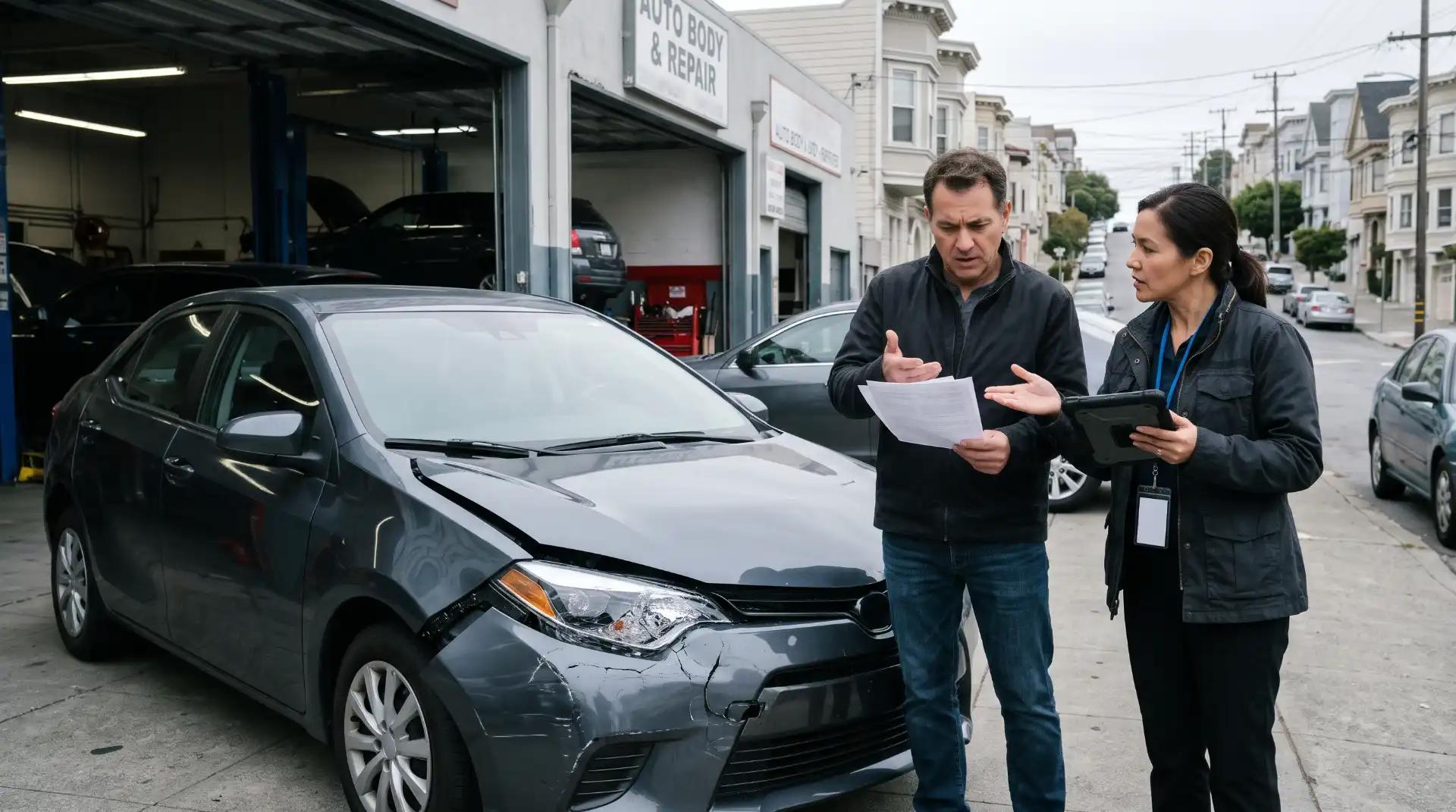
Imagine being involved in a car accident in San Francisco. Your vehicle has a damaged bumper, a dented fender, and perhaps a broken headlight, but the engine starts, the transmission shifts, and the car can still move under its own power. You may reasonably assume that the vehicle can be repaired and returned to the road.
Then the insurance company calls with a different conclusion: your car is a total loss.
For many California drivers, this decision is confusing and frustrating. If the vehicle still runs, why should the insurer treat it as totaled? Can an insurance company legally declare a drivable car a total loss? Do you have to surrender the vehicle? Can you insist on repairs instead of accepting a settlement? And what happens if the insurer’s valuation is far below what it would cost to replace your car?
The important distinction is that a vehicle’s ability to start and move does not necessarily determine whether it is economically or legally repairable. Insurance companies generally evaluate the cost of restoring a vehicle, its pre-accident market value, the nature of its damage, and the applicable insurance policy and California claims regulations. A vehicle can remain operational while still being considered uneconomical to repair or unsafe to return to the road.
California drivers do have rights when an insurer declares a vehicle a total loss. Those rights include receiving a fair valuation, reviewing the information used to calculate the settlement, challenging inaccurate comparisons, understanding deductions, and examining whether keeping the damaged vehicle is an option.
This guide explains how California total loss claims work, what you can do when you disagree with the insurance company’s decision, and how to protect your financial interests after a car accident.
What Does It Mean When an Insurance Company Declares Your Car a Total Loss?
A total loss declaration means the insurer has determined that the vehicle should not be repaired under the applicable claim evaluation. This decision does not necessarily mean the car is physically incapable of moving, that its engine is destroyed, or that every major component has stopped working.
Instead, the decision often involves economics and safety.
For example, imagine that a driver owns a 2018 sedan with an estimated pre-accident market value of $13,000. After a collision, the vehicle still starts and can move around a parking lot. However, the inspection reveals damage to the front suspension, steering components, radiator support, airbags, and structural areas behind the bumper.
The repair estimate may reach $10,500 before accounting for additional damage that could be discovered after disassembly. Once the insurer considers the vehicle’s value, repair expenses, and other relevant costs, it may decide that repairing the car is not economically reasonable.
The vehicle is still operational, but that does not make the proposed repair financially sensible.
A Total Loss Is Not the Same as a Vehicle That Cannot Move
Drivers sometimes associate a totaled car with severe wreckage: a crushed engine compartment, a missing wheel, a destroyed roof, or a vehicle that has been pushed off the road. Those are obvious examples of major damage, but they are not the only circumstances in which an insurer may declare a total loss.
A car can appear relatively normal while having expensive hidden damage. Modern vehicles contain electronic sensors, cameras, airbag systems, advanced driver assistance technology, and complex structural components. Even a collision that looks minor from the outside may affect systems that are costly to inspect, calibrate, or replace.
A vehicle may also be unsafe even when it can be driven. A damaged steering assembly, compromised suspension, malfunctioning airbag system, or weakened structural component can create serious risks.
For this reason, the question is not simply whether the engine starts. The more important questions are whether the vehicle can be restored safely, what the complete repair would cost, and how that cost compares with the vehicle’s pre-accident value.
Why Insurers Consider More Than the Initial Repair Estimate
An initial repair estimate may not include every problem caused by a collision. A body shop may need to remove exterior panels, inspect structural components, disconnect electrical systems, or perform diagnostic testing before it can identify the full extent of the damage.
Supplemental repair estimates can increase the expected cost substantially.
For example, a rear-end collision might initially appear to require a replacement bumper and trunk panel. Once the repair shop removes the bumper, technicians may discover damage to the rear body panel, parking sensors, wiring harnesses, and structural supports. The final repair cost may be much higher than the original estimate.
Insurers also consider whether repairs can restore the vehicle to its pre-accident condition. A car that can be made to run is not necessarily a car that can be repaired safely, reliably, and economically.

Can an Insurance Company Declare a Drivable Car a Total Loss in California?
Generally, yes. An insurer may determine that a vehicle is a total loss even when it remains drivable. California’s insurance rules do not make the ability to start or move the vehicle the controlling test for a total loss settlement.
The California Department of Insurance explains that an insurer generally pays the lesser of the amount necessary to repair the vehicle or its actual cash value, subject to the policy’s terms. Actual cash value, or ACV, generally means fair market value in California.
The insurer’s decision must still comply with applicable policy provisions and California fair claims settlement requirements. It cannot simply assign an arbitrary value or disregard relevant information about the vehicle.
California Does Not Use a Simple Drivable-versus-Not-Drivable Test
A vehicle’s operating condition is only one part of the broader assessment. An insurer may consider repair costs, structural damage, safety concerns, parts availability, and the vehicle’s pre-accident value.
It is also important not to assume that every insurer uses the same internal percentage or formula. Consumers may encounter references to a 70%, 75%, or 80% threshold, but those figures should not be treated as a universal California rule that automatically decides every claim.
The applicable policy, claims regulations, and facts of the particular loss matter. The insurer should explain the basis for its decision rather than relying on a percentage without showing how it applies.
The Difference Between an Economic Total Loss and a Safety Concern
An economic total loss occurs when the expected cost of repairing the vehicle makes repair financially unreasonable compared with its value.
A safety-related determination is different. A vehicle may have damage that prevents it from being restored safely, even if the estimated repair bill appears relatively modest.
These issues can overlap. A car with structural damage may require extensive repairs, and those repairs may also involve specialized procedures and safety inspections. The insurer may therefore conclude that the vehicle should be treated as a total loss for more than one reason.
If the adjuster tells you that your vehicle is totaled, ask whether the decision is based primarily on repair economics, safety concerns, or both. Request the written estimate and supporting explanation.
How California Insurance Companies Determine a Vehicle’s Actual Cash Value
One of the most important parts of a total loss claim is the vehicle’s actual cash value before the accident.
The ACV is not necessarily the amount you originally paid for the car, the balance remaining on your auto loan, or the price of a brand-new replacement vehicle. It is generally the fair market value of the vehicle immediately before the collision.
California Code of Regulations, Title 10, Section 2695.8 establishes specific standards for automobile total loss claims. When an insurer elects to make a cash settlement, the amount is generally based on the actual cost of a comparable automobile, less any applicable deductible under the policy. The settlement must also account for applicable taxes and certain transfer and registration-related fees.
This matters because a settlement should not be based on an unexplained estimate that leaves the owner unable to understand how the amount was calculated.
Comparable Vehicles Should Actually Match Your Car
Insurance valuation reports commonly use comparable vehicles to estimate market value. These comparisons should reflect vehicles with similar characteristics, including:
-
Model year and make.
-
Model and trim level.
-
Mileage.
-
Factory-installed features and options.
-
Overall pre-accident condition.
-
Geographic market and availability.
A comparison can be misleading if the insurer uses a lower trim level, a vehicle with substantially higher mileage, or a model with fewer features.
For example, imagine you own a 2021 vehicle with a premium technology package, upgraded interior, and relatively low mileage. If the insurer’s valuation relies on basic-trim models with higher mileage, the proposed ACV may not reflect what a comparable vehicle would actually cost in your market.
You should review every comparable vehicle listed in the report. Check the model, trim, mileage, equipment, and condition. If the insurer used a vehicle that is not genuinely comparable, identify the specific difference and explain why it affects market value.
Recent Maintenance and Upgrades May Matter
Drivers often believe that every dollar spent on a vehicle should increase its value by the same amount. That is not necessarily how market valuation works. Routine maintenance does not automatically add its full cost to a vehicle’s resale price.
However, documentation can help establish that the vehicle was in better-than-average condition before the collision.
Useful records may include receipts for recently installed tires, major mechanical repairs, a replacement transmission, a new battery, or other substantial work. Factory options and permanently installed equipment should also be accurately identified.
If the vehicle had specialized equipment or modifications, check whether the policy provides coverage for those items. Some policies limit coverage for aftermarket parts unless additional equipment coverage was purchased.
Local Market Conditions Can Affect the Valuation
The price of a comparable vehicle can vary by region. A vehicle available in another state may not accurately reflect the local cost of replacing a similar vehicle in the San Francisco Bay Area.
California’s total loss regulations address comparable automobiles and local market considerations. If the valuation report uses distant listings or vehicles that are not realistically available to you, ask the adjuster to explain why those comparisons were selected.
You can also collect your own evidence. Search for comparable vehicles at established dealerships and reputable vehicle marketplaces. Save the listings, record the mileage and trim information, and note the date you accessed them.
Remember that asking prices are not always the same as completed sale prices. Nevertheless, carefully selected listings can help show that the insurer’s estimate may be too low.
What Rights Do California Drivers Have When They Disagree With a Total Loss Decision?
An insurer’s total loss declaration does not mean you must automatically accept every part of its evaluation without question. You can request information, identify errors, present supporting evidence, and challenge an offer that does not comply with the policy or applicable claims standards.
Your rights depend partly on whether you are making a claim under your own policy or seeking payment from the other driver’s insurance company.
You Can Request the Valuation Information
Start by requesting the complete total loss valuation report and the repair estimate. Ask the insurer to identify the comparable vehicles it used, explain any condition adjustments, and provide a breakdown of the settlement calculation.
You should be able to understand how the company reached its proposed amount.
Review the report for errors involving mileage, trim level, factory options, prior damage, or vehicle condition. Even a seemingly small error can affect the final valuation.
If the insurer has omitted a valuable feature or used an incorrect model designation, provide documentation showing the correct information. A copy of the original window sticker, purchase documents, maintenance records, or photographs may help.
You Can Dispute an Inaccurate Actual Cash Value
If you believe the insurer has undervalued your vehicle, respond in writing. Explain why the valuation is inaccurate and attach evidence supporting a higher amount.
A useful dispute should be specific. Instead of simply stating that the offer is too low, identify the errors and explain their financial impact.
For example, you might explain that the report uses a base model even though your vehicle is a higher trim, lists mileage that is 18,000 miles too high, and excludes a factory-installed package. You could then provide comparable listings for vehicles with the correct specifications.
A written response creates a record of the disagreement and makes it easier to track what the insurer has reviewed.
You May Have an Appraisal Option Under Your Policy
Many California auto insurance policies contain an appraisal provision. This can provide a method for resolving disputes over the amount of a covered loss.
The California Department of Insurance explains that an appraisal provision may allow either the policyholder or the insurer to demand an appraisal. Each side selects a competent appraiser, and the appraisers select a neutral umpire. If the appraisers cannot agree, the disagreement may be submitted to the umpire. An amount agreed upon by two of the three participants can become binding under the applicable provision.
However, appraisal is not automatically available in every type of dispute, and the exact policy language matters. It may address the amount of loss rather than every disagreement about coverage or liability.
Before invoking appraisal, read the policy carefully. Consider the cost of hiring an appraiser, the potential amount in dispute, and whether the appraisal clause applies to your situation.
You Can File a Complaint With the California Department of Insurance
If you believe the insurer is mishandling your claim, failing to explain its valuation, or violating applicable claims practices, you may contact the California Department of Insurance.
The Department provides consumer information and a complaint process for insurance-related concerns. A complaint does not guarantee a particular settlement, but it can bring the issue to the regulator’s attention and may help address certain claim-handling problems.
Keep copies of your policy, the valuation report, repair estimates, photographs, emails, letters, and notes from phone calls. Organized documentation makes it easier to explain what happened and what you believe the insurer should correct.
Can You Keep Your Car After the Insurance Company Declares It a Total Loss?
In many situations, an owner may be able to retain a vehicle after a total loss settlement. This is commonly called owner-retained salvage. However, keeping the vehicle can affect the amount of money you receive, the vehicle’s title status, and your ability to register and insure it in the future.
Before agreeing to retain the car, understand the financial and legal consequences.
How an Owner-Retained Total Loss Settlement Works
When an insurer takes possession of a totaled vehicle, it generally accounts for the vehicle’s salvage value as part of its financial recovery. If you want to keep the damaged car, the insurer may deduct the estimated salvage value from the settlement.
For example, suppose the insurer determines that your vehicle’s actual cash value is $15,000 and estimates that the damaged vehicle is worth $2,500 as salvage. If you choose to retain it, the settlement may be reduced by that salvage amount, along with any applicable deductible under your policy.
The exact calculation depends on the claim, the policy, and the applicable settlement rules. Ask the insurer to provide a written breakdown showing the gross value, deductible, salvage deduction, taxes, and fees.
Do not agree to keep the car simply because you believe it can be repaired cheaply. First obtain an independent inspection and determine whether the vehicle can be restored safely and legally.
California Salvage Titles and Vehicle Registration
A vehicle that has been declared a total loss may receive a salvage designation. This can affect its future title, resale value, registration, and insurance options.
The California Department of Motor Vehicles explains that a total loss salvage vehicle may receive a Salvage Certificate. If the vehicle is later rebuilt and meets the applicable requirements, it may qualify for registration as a revived salvage vehicle. The DMV’s process can involve ownership documents, a vehicle inspection, and required brake and light certificates.
A salvage designation is not merely an administrative detail. It can remain part of the vehicle’s history and affect what a future buyer is willing to pay.
California also distinguishes a salvage vehicle from a non-repairable vehicle. A vehicle that receives a non-repairable certificate cannot be titled or registered for ordinary road use. That is why you should not assume that every vehicle you retain after a total loss can legally return to the road.
Review the DMV’s Total Loss Salvage and Non-Repairable Vehicles guidance before deciding to retain a damaged car.
What if You Want to Repair the Vehicle Yourself?
If you retain the vehicle, you may be able to arrange repairs independently, subject to its title status, safety requirements, and registration rules. However, the insurer’s settlement does not guarantee that the vehicle will pass every inspection or qualify for road use.
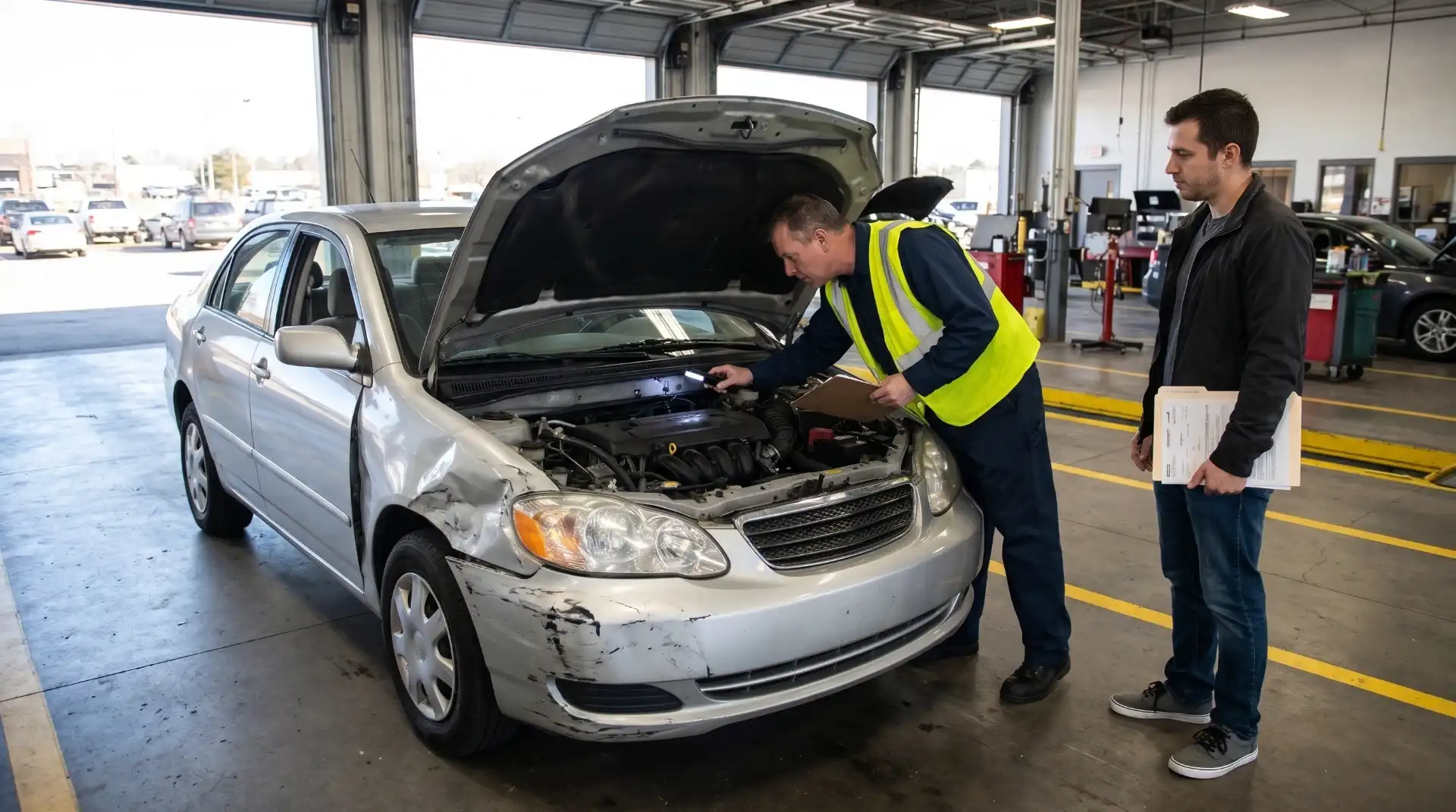
Before spending money on repairs, ask a qualified repair facility to evaluate the vehicle’s structural integrity, steering, suspension, airbag systems, seat belts, electrical components, and other safety-related equipment. Modern cars may also require electronic system calibration after certain repairs.
A vehicle that appears to drive normally could have hidden damage that makes it unsafe. The fact that the insurer has paid a total loss settlement does not make the vehicle safe to operate.
If you plan to rebuild it, keep invoices, parts receipts, inspection records, and photographs of the repair process. These documents may be important when dealing with the DMV, a future buyer, or an insurance company.
What Happens if You Still Owe Money on a Totaled Car?
A total loss can create an additional financial problem when the vehicle is financed. Some drivers discover that the insurance settlement is not enough to pay off the remaining loan balance.
This situation is often called being upside down on an auto loan.
For example, imagine that your vehicle has an outstanding loan balance of $21,000, but the insurer determines that its actual cash value is only $17,000. Even if the insurer pays the full covered amount, the lender may still be owed the remaining balance, subject to the loan terms and any applicable coverage.
The accident does not automatically cancel your financing agreement.
Does Gap Insurance Cover the Difference?
Guaranteed asset protection, commonly called GAP coverage, may help pay some or all of the difference between the vehicle’s covered value and the outstanding loan balance. However, coverage depends on the contract.
Some GAP products exclude certain fees, missed payments, extended warranties, negative equity carried over from an earlier vehicle, or other amounts. The coverage may also have a maximum benefit.
If you purchased GAP coverage through a dealership, lender, or insurance company, request the actual contract and ask how the benefit is calculated. Do not rely only on a salesperson’s description of what the product supposedly covers.
You should also confirm whether the GAP provider needs the insurer’s final settlement statement, loan payoff statement, or other documentation.
Who Receives the Insurance Settlement?
When a vehicle has an outstanding loan, the lender generally has a financial interest in the vehicle. The insurer may issue payment jointly to the owner and lienholder or pay the lienholder directly, depending on the ownership documents and policy.
If the settlement exceeds the loan payoff, the remaining amount may be payable to the owner. If the settlement is lower than the loan balance, you may remain responsible for the difference unless GAP coverage or another applicable agreement addresses it.
The California Department of Insurance discusses this issue in its consumer guide, explaining that borrowers remain responsible for an unpaid loan balance when the insurance payment does not cover the debt.
What if the Other Driver Caused the Accident?
Not every total loss claim is filed under the vehicle owner’s own collision coverage. If another driver caused the accident, you may seek compensation through that driver’s liability insurance.
This distinction matters because a first-party claim and a third-party claim do not involve identical contractual rights.
Filing Under Your Own Collision Coverage
If you have collision coverage, you may be able to submit a claim to your own insurer even while fault is being investigated. Your policy will determine whether the loss is covered and what deductible applies.
This can sometimes move the property damage process forward more quickly than waiting for the other driver’s insurer to accept liability. Your insurer may then pursue reimbursement from the responsible party or their insurance company through subrogation.
If your insurer successfully recovers money, your deductible may be reimbursed according to the amount recovered and the policy’s applicable terms. Ask whether the company intends to pursue subrogation and how it will handle your deductible.
Filing a Third-Party Property Damage Claim
If the other driver was responsible, their liability insurer may be required to compensate you for the vehicle damage, subject to liability, available coverage, and applicable law.
The insurer may investigate the collision before accepting responsibility. It may review the police report, photographs, witness statements, vehicle damage, and other evidence.
California’s automobile claims regulations include standards for total loss valuation in third-party claims. However, the regulations do not transform the other driver’s insurance policy into your own contract. The precise rights and remedies available to a third-party claimant can differ from those available to the policyholder.
If the other insurer disputes fault or refuses to make a reasonable offer, you may need to evaluate other options, including using your own collision coverage if available.
Do Not Confuse the Vehicle Settlement With Your Injury Claim
A total loss settlement concerns property damage to the vehicle. It does not automatically resolve a separate claim for bodily injuries caused by the collision.
For example, a driver may accept payment for a totaled sedan while still receiving treatment for neck, back, shoulder, or head injuries. The property damage claim and personal injury claim should be evaluated separately.
Be careful when signing settlement documents. Read any release language closely to determine whether it applies only to the vehicle or also releases bodily injury claims, medical expenses, lost wages, and other damages.
If you are injured, do not assume that a document described as a vehicle settlement is limited to property damage. Ask for clarification before signing anything that could affect your injury rights.
For more information about the steps involved in pursuing compensation after a collision, see the site’s guide on filing a personal injury claim after a San Francisco car accident.
Can You Demand That the Insurance Company Repair Your Car Instead?
This is one of the most common questions after a total loss declaration. Owners may feel that a repairable vehicle should be repaired rather than written off, especially when the damage appears limited or the car has sentimental value.
However, the fact that you prefer repairs does not automatically require the insurer to pay for them.
Under a standard physical damage policy, the insurer generally pays the lesser of the amount necessary to repair the vehicle or its actual cash value, subject to policy terms. If the cost of restoring the vehicle exceeds its covered value, the insurer may be entitled to settle the claim as a total loss.
When a Repair Dispute May Be Worth Challenging
You may have a reason to question the total loss decision if the repair estimate contains incorrect information, includes unrelated damage, or relies on work that is not actually necessary.
For example, an estimate might include replacing a component that can be repaired under an appropriate manufacturer-approved procedure. Alternatively, the estimate may include damage that existed before the accident. Those issues can affect the insurer’s calculation.
You can ask for an itemized repair estimate and have an independent repair facility inspect the vehicle. If the independent assessment differs significantly, submit it to the adjuster and request a written explanation.
A disagreement about repair costs is different from a disagreement about actual cash value. Make clear which part of the insurer’s decision you are challenging.
You Generally Cannot Force an Insurer to Ignore the Policy’s Settlement Terms
If the insurer has properly determined that the covered loss should be settled as a total loss under the policy and applicable rules, the owner may not be entitled to demand a full repair payment simply because the car remains drivable.
That does not mean the insurer’s decision is automatically correct. It means the dispute should focus on the evidence, policy language, valuation method, and applicable regulations rather than the vehicle’s ability to move alone.
How to Challenge a Low Total Loss Settlement in California
A total loss offer can be financially significant. If the insurer undervalues your vehicle by several thousand dollars, you may not have enough money to purchase a comparable replacement.
A careful, evidence-based response is usually more effective than an emotional disagreement.
Step 1: Obtain the Complete Valuation Report
Request the report used to calculate your vehicle’s actual cash value. Do not rely only on a phone call or a single settlement figure.
Review the report for the correct year, make, model, trim, mileage, factory options, and condition. Confirm that the comparable vehicles are genuinely similar and that the geographic market makes sense.
If you find errors, list them individually.
Step 2: Collect Comparable Vehicle Listings
Find vehicles that closely match yours in year, trim, mileage, equipment, and condition. Focus on the local market where you would reasonably replace your vehicle.
Save screenshots or print the listings. Record the dealer, location, mileage, advertised price, and date. A collection of carefully selected comparisons is more useful than a long list of unrelated vehicles.
Step 3: Gather Maintenance and Ownership Records
Collect purchase documents, maintenance invoices, service records, receipts for recent major repairs, and documentation of factory-installed equipment.
If the vehicle was in unusually good condition before the accident, photographs may help support that position. Images showing the interior, exterior, tires, and odometer can be useful if they were taken before the collision.
Step 4: Request a Written Reassessment
Send the insurer a concise letter or email explaining why you disagree with the valuation. Attach your supporting records and identify the corrections you want made.
Ask the adjuster to provide a revised valuation or explain why the company will not change its offer.
Keep the tone professional and preserve copies of every communication.
Step 5: Review the Appraisal Clause and Other Options
If the claim is under your own policy, review the appraisal provision and determine whether it can resolve the amount-of-loss dispute. Consider the likely cost of the process compared with the amount in dispute.
If the insurer’s conduct appears unreasonable or violates applicable claims rules, consider contacting the California Department of Insurance or consulting a lawyer.
What Other Expenses May Be Included in a California Total Loss Claim?
A vehicle settlement is not always limited to the vehicle’s base market value. Depending on the claim and applicable rules, certain taxes, transfer fees, registration-related fees, towing charges, storage expenses, and transportation costs may also be relevant.
Taxes and Transfer Fees
California’s total loss valuation rules address applicable taxes and certain fees associated with transferring ownership of a comparable vehicle. The insurer should explain how these amounts are reflected in the settlement.
Review the offer to make sure the calculation does not omit required amounts or include unexplained deductions.
Towing and Storage Charges
After a collision, a vehicle may be towed to a repair facility, impound lot, or storage yard. Storage charges can accumulate quickly.
Keep all towing and storage receipts. Ask the insurer how it intends to handle reasonable charges and whether it has authorized the vehicle to be moved.
If the vehicle is sitting at a facility that charges daily storage, promptly discuss moving it to an appropriate location. Do not authorize unnecessary storage or allow fees to accumulate without understanding who may be responsible.
The California Department of Insurance’s guide to what happens after an accident explains several important aspects of physical damage claims, including towing, settlement, and rental coverage.
Rental Car and Loss-of-Use Expenses
Losing access to a vehicle can disrupt work, school, childcare, medical appointments, and everyday responsibilities.
If you purchased rental reimbursement coverage, your policy may pay up to a specified daily amount and maximum number of days. The coverage period may end when the loss is paid or another policy limit is reached.
If another driver caused the collision, you may also have a claim for reasonable loss-of-use damages under applicable law. The amount and duration can depend on liability, the circumstances, and the evidence.
Keep rental agreements, receipts, and records showing when the vehicle became unavailable and when a reasonable replacement was obtained. If the insurer says rental coverage is ending, ask for the policy provision or written explanation supporting that position.
How a Total Loss Declaration Can Affect Your Vehicle’s Future Value
A total loss designation can have long-term consequences, particularly when the owner retains the damaged vehicle.
A salvage title may make it more difficult to sell the vehicle, obtain certain types of insurance, or secure financing for a future buyer. Even if the vehicle is rebuilt and passes required inspections, its history may affect its market value.
A vehicle with a salvage or revived salvage history is not equivalent to a comparable vehicle with a clean title. Buyers may be concerned about hidden damage, repair quality, and future reliability.
This is another reason to carefully consider the owner-retained salvage option. The settlement deduction may appear manageable at first, but the future costs of inspection, repairs, registration, insurance, and resale can change the financial picture.
What Should San Francisco Drivers Do Immediately After a Total Loss Declaration?
When an insurer declares a car totaled, it is easy to feel pressured to make a quick decision. However, taking a few organized steps can help protect your financial position.
First, obtain the written total loss evaluation and repair estimate. Ask the insurer to explain the basis for the decision and provide the valuation report.
Second, remove personal belongings from the vehicle when it is safe and permitted. Check the glove compartment, trunk, center console, and any storage compartments. Modern vehicles may also contain personal data in navigation systems, connected phone profiles, garage-door settings, and saved contacts.
Third, preserve documents and photographs. Keep the accident report, photographs of the damage, towing receipts, repair records, and all insurer communications.
Fourth, avoid signing title documents or settlement releases before you understand their effect. If you have a loan, contact the lender and obtain an accurate payoff amount.
Finally, consider whether the vehicle’s damage or the insurer’s valuation raises issues that deserve independent review. If you were injured, remember that the vehicle settlement is not necessarily the end of your injury claim.
Drivers who need a broader accident-response checklist can also review what to do after a car accident in San Francisco.
Can an Insurance Company Pressure You to Accept Its First Offer?
An insurance company may present a settlement offer and ask you to complete the paperwork so it can close the property damage claim. However, receiving an offer does not mean you have to agree immediately.
You should have a reasonable opportunity to review the valuation, ask questions, and identify errors. If the insurer is relying on inaccurate information, you can request that it reconsider the calculation.
Be especially cautious if an adjuster says the offer is final without explaining the valuation or providing the supporting information. Ask for the company’s position in writing.
Understand What You Are Releasing Before Signing
Total loss paperwork may include title transfer documents, a settlement agreement, an authorization to release the vehicle, and other forms. Each document can have a different legal effect.
Before signing, confirm whether the agreement concerns only the vehicle or includes a broader release of claims arising from the accident. If you have injuries, unresolved medical treatment, or disputed damages, do not assume that a property damage settlement automatically preserves every other claim.
You should also confirm whether the settlement amount is gross or net of deductions, whether the lienholder will be paid directly, and whether you are giving up the right to retain the vehicle.
What if the Insurer Delays the Settlement?
California’s Fair Claims Settlement Practices Regulations impose requirements on insurers handling claims. The California Department of Insurance explains that, after a settlement is reached, an insurer generally must issue payment promptly and no later than 30 calendar days after the date of agreement, subject to the applicable regulations and circumstances.
If payment is delayed, ask the insurer to identify what remains outstanding. There may be legitimate issues involving title documents, lienholder information, ownership verification, or unresolved settlement terms. Keep a written record of the delay and the company’s explanation.

When Should You Speak With a California Car Accident Attorney?
Not every total loss claim requires legal representation. A straightforward property damage claim with an accurate valuation and no injury dispute may be resolved directly with the insurer.
However, legal guidance may be useful when the financial consequences are substantial or the insurer’s position creates additional problems.
Consider speaking with an attorney if the insurer refuses to explain its valuation, uses inaccurate comparable vehicles, disputes responsibility for the collision, or pressures you to sign a release that could affect other claims.
Legal advice may also be important if you suffered injuries, have significant medical expenses, or are dealing with multiple responsible parties.
When Property Damage and Personal Injury Claims Overlap
A collision that totals a vehicle may also cause physical injuries. The driver may need medical treatment, miss work, experience ongoing pain, or require rehabilitation.
These losses are separate from the market value of the vehicle. A property damage settlement should not be confused with compensation for medical expenses, lost income, pain and suffering, or other legally recoverable injury-related damages.
If the accident involved an uninsured or underinsured driver, there may be additional insurance questions. Your own policy may provide certain protections, depending on the coverage purchased and the circumstances. The site’s article about uninsured driver accident claims in San Francisco discusses another important issue drivers may face when the responsible motorist does not have adequate insurance.
Understanding California’s Filing Deadlines
Property damage and personal injury claims can have different legal deadlines. In many California cases, a lawsuit for injury caused by negligence must be filed within two years, while an action for damage to personal property generally has a three-year limitations period. Exceptions can apply, including cases involving government entities, minors, or other special circumstances.
These deadlines are not extended simply because the insurance company is still negotiating. If a public entity may be responsible, a much shorter administrative claim deadline can apply.
For a broader explanation of injury-related deadlines, review the site’s article on the statute of limitations for car accident claims in California, if available on the site. Do not wait until negotiations end to investigate the deadlines that apply to your own situation.
Practical Example: A Drivable Car Declared a Total Loss in San Francisco
Consider a hypothetical San Francisco driver whose 2020 crossover is struck at an intersection. The front bumper and hood are damaged, one headlight is broken, and the vehicle’s cooling system is leaking. Despite the damage, the engine starts and the vehicle can move.
The driver expects a repair estimate of a few thousand dollars. After inspection, however, the adjuster identifies additional damage to the front structural components, cooling system, sensors, and airbag-related equipment. The repair estimate increases substantially.
The insurer then determines that the expected repair cost makes the vehicle a total loss.
The driver receives an offer based on an actual cash value of $16,500. After reviewing the valuation report, the driver notices that the insurer used a lower trim level and included comparable vehicles with significantly higher mileage. The report also omits a factory-installed technology package.
Instead of accepting the offer immediately, the driver requests the complete valuation report, gathers dealership listings for similar vehicles, and provides documentation of the missing equipment. The driver also requests an explanation of how applicable taxes and transfer fees were calculated.
After reviewing the evidence, the insurer may revise its valuation. If it does not, the driver can consider the policy’s appraisal provision, seek regulatory assistance, or obtain legal advice.
This example illustrates an important point: the insurer may have a valid reason to declare a vehicle a total loss even though it still runs, but that does not mean its valuation must be accepted without review.
The driver should also consider whether retaining the vehicle makes financial sense. The salvage deduction, title requirements, inspection costs, repairs, and future resale value all matter.
Frequently Asked Questions About Total Loss Claims in California
1. Can an insurance company total my car if it still starts and drives?
Yes. A vehicle’s ability to start and move does not prevent an insurer from declaring it a total loss. The company may consider the estimated repair cost, pre-accident market value, hidden damage, and safety issues. A drivable car can still be uneconomical or unsafe to repair.
2. Does California have a fixed percentage that automatically makes a car a total loss?
You should not assume that one percentage applies universally to every California total loss claim. Insurers may use different internal thresholds and valuation methods, but the applicable policy and California claims regulations govern the settlement. Ask the adjuster to explain the specific basis for the decision.
3. Can I refuse the insurance company’s total loss offer?
You can dispute an offer you believe is inaccurate or unsupported. You may request the valuation report, identify errors, provide comparable vehicle listings, and submit maintenance or equipment records. Whether you can require a different settlement method depends on the policy, the facts, and applicable law.
4. Can I keep my totaled car in California?
In many situations, an owner can retain a total loss vehicle, but the settlement may be reduced by its salvage value. The vehicle may also receive a salvage designation. Before retaining it, investigate repair costs, DMV requirements, inspections, registration, and future insurance availability.
5. Does a salvage title mean I can never drive the car again?
Not necessarily. A vehicle with a salvage designation may qualify for registration as a revived salvage vehicle after it has been properly repaired and meets California’s requirements. A vehicle classified as non-repairable is different and cannot be registered for ordinary road use.
6. What happens if the insurance settlement is less than my auto loan balance?
You generally remain responsible for the unpaid loan balance. GAP coverage may help pay some of the difference if the contract applies. Contact your lender and GAP provider to obtain the payoff information and determine whether a benefit is available.
7. Can I challenge the insurance company’s vehicle valuation?
Yes. You can dispute incorrect mileage, trim level, equipment, condition adjustments, and unsuitable comparable vehicles. Provide specific documentation rather than simply stating that the offer is too low. If your policy includes an appraisal provision, review whether it applies to the dispute.
8. Does a total loss settlement automatically end my personal injury claim?
No. A property damage settlement and a bodily injury claim are generally separate matters. However, the wording of the documents you sign is important. Review any release carefully before accepting payment, especially if you are still receiving medical treatment.
9. Does the insurance company have to pay sales tax and transfer fees?
California’s total loss settlement regulations generally require applicable taxes and certain ownership transfer and registration-related fees to be included in the cash settlement calculation. Review the insurer’s written breakdown and ask about any omitted amounts.
10. Should I hire a lawyer if the insurer declares my vehicle totaled?
It depends on the circumstances. A lawyer may be helpful when the valuation is substantially disputed, liability is contested, the accident caused injuries, or the insurer is requesting a release that could affect other claims. A straightforward property damage claim may not require legal representation.
Final Thoughts: Know Your Rights Before Accepting a Total Loss Settlement
Having a car that still runs declared a total loss can be frustrating, particularly when you believe the damage is repairable. However, a vehicle’s ability to move does not determine whether an insurer can economically or safely justify repairing it.
California drivers should focus on understanding the insurer’s reasoning, reviewing the repair estimate, checking the actual cash value calculation, and making sure the settlement includes the amounts required under applicable rules. You may also have options to challenge the valuation, use an appraisal provision in your policy, or retain the damaged vehicle subject to salvage requirements.
Do not overlook the financial consequences of an outstanding auto loan, salvage deductions, rental expenses, storage charges, and future registration costs. If the accident also caused injuries, keep the property damage settlement separate from decisions about your bodily injury claim.
Most importantly, do not assume that the first offer is necessarily the correct one. Request the supporting documents, preserve your records, and take time to understand what you are being asked to sign.
If an insurer has declared your vehicle a total loss after a San Francisco car accident, understanding your California insurance rights can help you make a more informed decision and protect your interests during the claims process.