Modern vehicles are increasingly equipped with advanced safety features designed to reduce human error and make driving more convenient. Among the most widely available technologies are lane-keeping assistance, lane-centering systems, automatic steering corrections, adaptive cruise control, and other advanced driver-assistance systems. These features can help drivers maintain their position on the road, recognize certain hazards, and respond to situations that might otherwise lead to a collision. However, despite their potential safety benefits, these technologies can create another problem when motorists begin relying on them more than they should.
A driver who believes a vehicle can effectively steer itself may gradually pay less attention to surrounding traffic, roadway conditions, and other motorists. Instead of actively controlling the vehicle, the driver may allow automatic steering technology to influence decisions that should remain under human supervision. When the system encounters a situation it cannot properly recognize or manage, the consequences can be serious. A vehicle may drift into an adjacent lane, strike another car, force a motorcyclist off the road, or cause a multi-vehicle collision.
These incidents raise important legal questions. Can an injured person sue a driver who depended too heavily on lane-keeping assistance? Does activating automatic steering reduce the driver’s responsibility for a collision? Could a vehicle manufacturer also be responsible if the technology contributed to the accident? What happens when both driver negligence and a potential technology defect play a role?
In California, the answers depend on the circumstances of the collision, the driver’s conduct, the capabilities of the technology, and the evidence available to establish liability. A driver generally cannot avoid responsibility simply by claiming that an automated steering feature was activated when the accident occurred. However, certain cases may involve additional legal claims against vehicle manufacturers, software developers, maintenance providers, or other responsible parties.
Understanding these issues is particularly important in San Francisco, where vehicles regularly share crowded streets with motorcycles, bicycles, pedestrians, buses, delivery vehicles, and other motorists. As advanced driver-assistance technology becomes more common, accidents involving overreliance on automatic steering may create increasingly complicated personal injury claims.
Understanding Lane-Keeping Assistance and Automatic Steering Technology
Before determining who may be legally responsible for an accident, it is important to understand what lane-keeping assistance actually does. Although manufacturers use different names for their systems, many modern vehicles include technology designed to help prevent unintended lane departures or maintain a vehicle’s position within marked travel lanes.
Lane-keeping assistance commonly uses forward-facing cameras and, depending on the vehicle, additional sensors to identify lane markings. When the system detects that a vehicle is approaching a lane boundary without an appropriate signal or steering input, it may provide a warning or apply corrective steering. Some systems offer more continuous lane-centering assistance, which attempts to maintain the vehicle near the middle of its lane.
These technologies can be useful, especially during ordinary highway driving. However, their capabilities are not unlimited. A lane-keeping feature may have difficulty interpreting faded markings, temporary construction lines, sharp curves, unusual road layouts, poor visibility, or other conditions that interfere with its ability to recognize the roadway.
It is also important to distinguish between lane departure warnings, lane-keeping assistance, and lane-centering technology. A warning system may simply alert a driver that the vehicle is drifting. Lane-keeping assistance may briefly apply corrective steering, while lane-centering systems can provide more continuous steering support. These functions do not necessarily operate in the same way, even when manufacturers use similar marketing language.
The National Highway Traffic Safety Administration (NHTSA) explains the different types of driver-assistance technology and emphasizes that drivers using ordinary assistance features remain responsible for operating their vehicles. Its official guide to driver-assistance technologies is a useful resource for understanding the distinction between assistance and automated driving.
The legal significance is straightforward: a motorist should not assume that activating a steering-assistance feature transfers responsibility for driving to the vehicle. The technology is intended to support the driver, not eliminate the need for attention, judgment, and control.
Can You Sue a Driver Who Relied Too Much on Automatic Steering?
Yes. An injured person may have grounds to pursue a personal injury claim when another motorist’s excessive reliance on automatic steering contributes to a collision. The central issue is generally whether the driver acted negligently under the circumstances and whether that conduct caused or contributed to the injuries.
California drivers have a responsibility to operate their vehicles with reasonable care. This includes paying attention to traffic, maintaining appropriate control, observing road conditions, and responding to hazards. A driver who activates lane-keeping assistance does not automatically satisfy these responsibilities simply because the vehicle is equipped with advanced safety features.
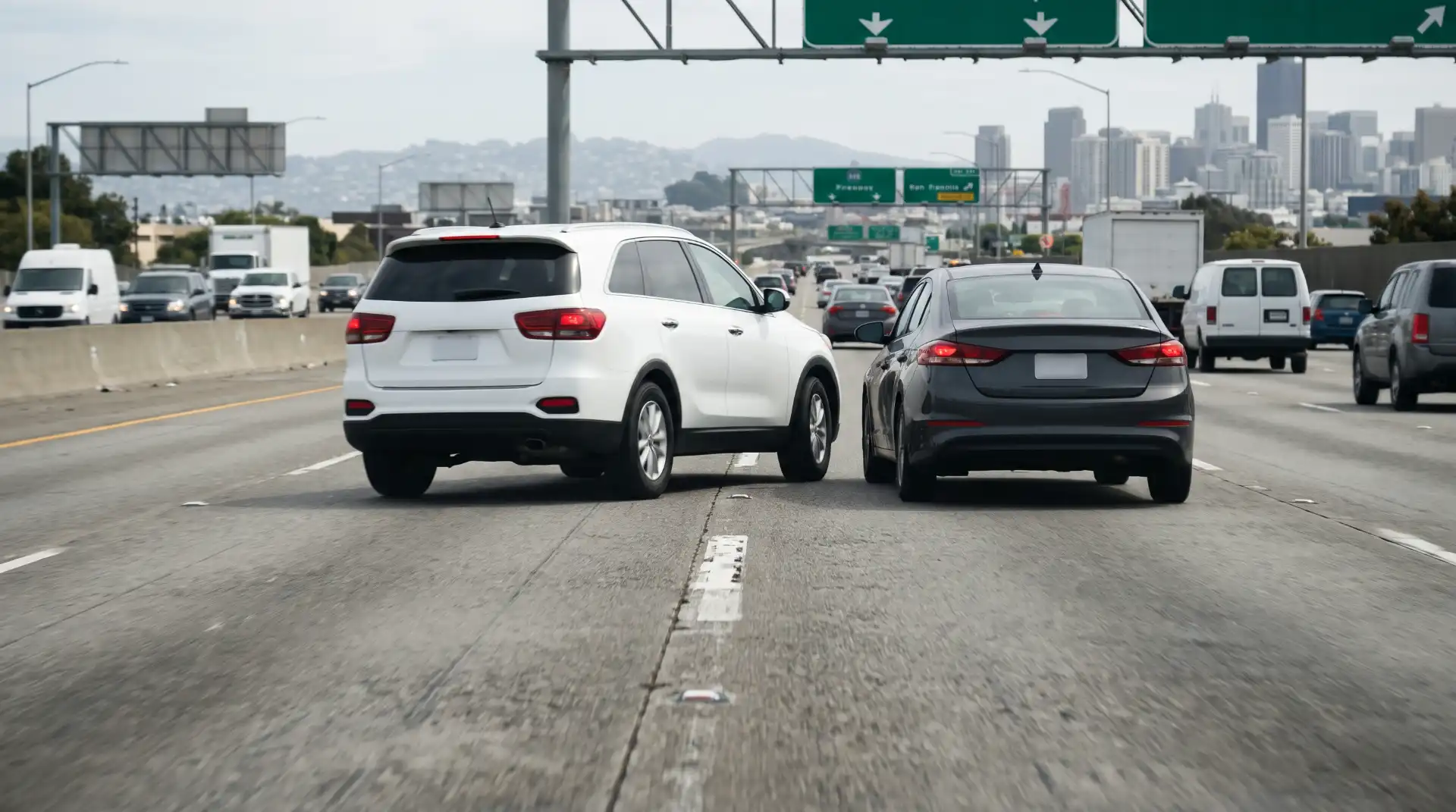
Consider a situation involving two vehicles traveling along a busy San Francisco freeway. The driver of the first vehicle activates lane-centering assistance and begins paying less attention to the road. As traffic slows, the vehicle gradually moves toward the neighboring lane. The driver assumes the steering system will make the necessary correction and does not immediately intervene. The vehicle eventually strikes another car, causing the second driver to lose control and collide with additional vehicles.
In this situation, the injured motorists may argue that the first driver failed to maintain proper attention and control. The fact that automatic steering was activated would not necessarily excuse that behavior. In fact, evidence showing that the motorist knowingly relied on the system instead of monitoring traffic could strengthen an argument that the driver acted negligently.
The same principle applies when a driver looks away from the road, uses a smartphone, watches entertainment, or engages in another distracting activity because they believe automatic steering will keep the vehicle safely positioned.
However, liability is not automatic in every accident involving driver-assistance technology. Investigators must examine what happened, whether the driver had a reasonable opportunity to respond, and whether another factor contributed to the collision.
How Overreliance on Lane-Keeping Technology Can Cause Car Accidents
Overreliance on driver-assistance technology can contribute to several different types of collisions. Some involve ordinary driver inattention, while others involve a combination of road conditions, system limitations, and inappropriate driver responses.
Drivers Stop Paying Attention to Surrounding Traffic
One of the most concerning situations occurs when motorists gradually become less attentive because they believe their vehicles can manage basic driving tasks.
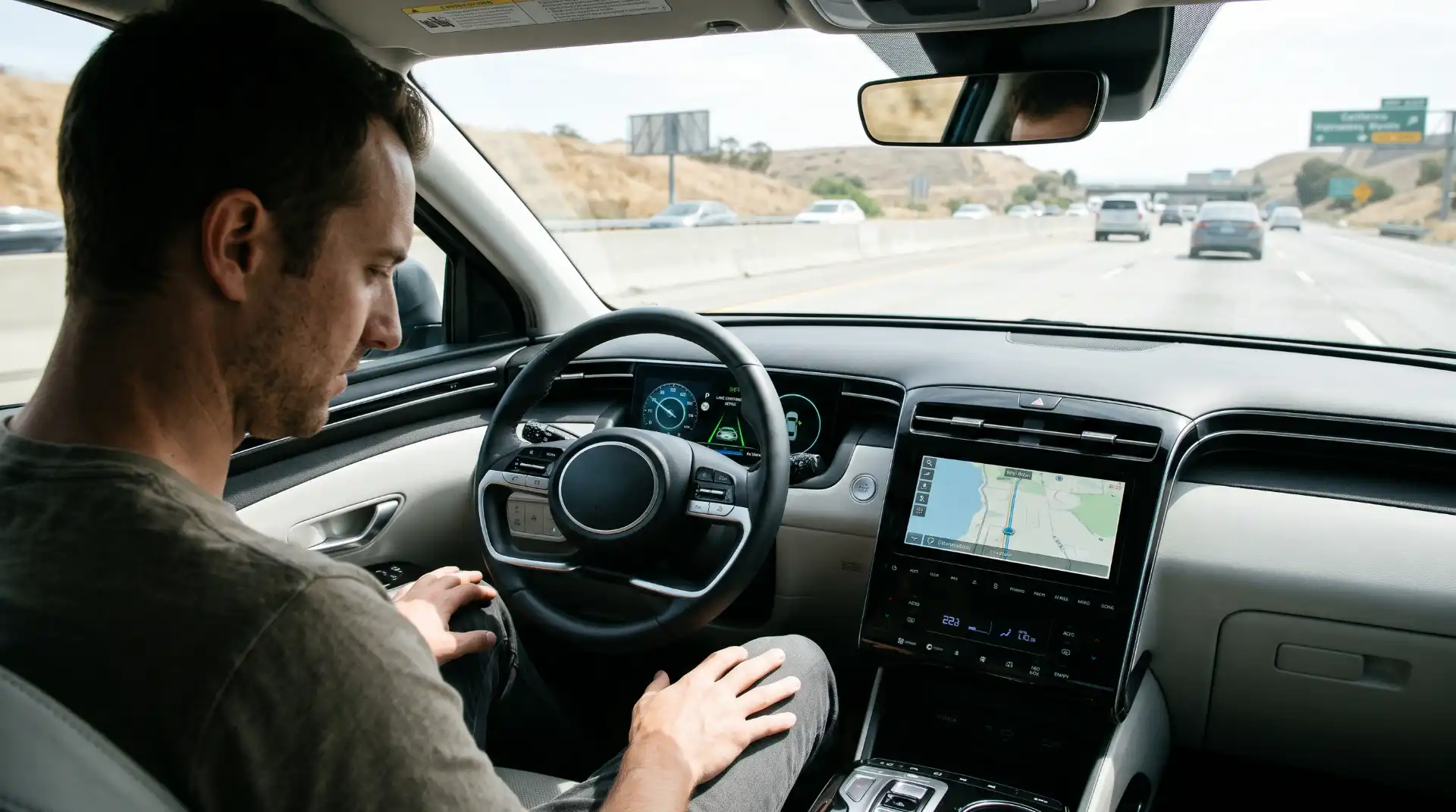
A driver may initially use lane-keeping assistance as intended, keeping both attention and awareness focused on the roadway. Over time, however, repeated exposure to steering corrections may create a false sense of security. The motorist may begin checking a phone, adjusting navigation settings, reaching for an object, or looking away from traffic for longer periods.
This behavior becomes dangerous when another vehicle suddenly brakes, traffic merges, or a pedestrian enters the roadway.
Even if the steering system successfully keeps the vehicle within its lane, it may not recognize every hazard that requires human judgment. The driver must still understand what is happening around the vehicle and respond appropriately.
If a motorist causes a collision after becoming distracted by activities unrelated to driving, the injured party may have a negligence claim based on the driver’s failure to maintain reasonable attention.
Automatic Steering Fails to Respond to Changing Lane Markings
Lane-keeping technology generally depends on identifying roadway boundaries. When those boundaries become unclear, the system may not respond as the driver expects.
This can happen on roads with faded paint, temporary construction markings, uneven pavement, or multiple overlapping lane lines. A system may also have difficulty interpreting unusual lane configurations or temporary traffic patterns.
Imagine a vehicle traveling through a San Francisco construction zone where permanent lane markings have been partially covered and temporary lines direct traffic into a different position. The driver assumes the lane-centering feature will follow the correct path and fails to monitor the construction signs.
If the vehicle follows an outdated marking and moves toward another travel lane, the driver may cause a collision.
The motorist may argue that the technology behaved unexpectedly. However, the investigation would also consider whether a reasonably attentive driver should have recognized the temporary lane configuration and taken control.
Drivers Misunderstand the Capabilities of Their Vehicles
Another potential cause of accidents is misunderstanding what a particular driver-assistance system can actually do.
Some motorists assume that lane-centering technology provides a level of control similar to an autonomous vehicle. Others believe that automatic steering will prevent nearly every lane departure, even when the roadway is difficult to navigate.
These assumptions can create dangerous driving habits.
A motorist might activate steering assistance on a winding road, travel through heavy rain, or approach a complicated intersection without appreciating the system’s limitations. If the feature stops operating or provides an unexpected correction, the driver may not react quickly enough.
Vehicle owners are generally expected to follow applicable safety instructions and understand the limitations of the features they use. A driver’s unfamiliarity with a system does not automatically establish liability, but it may become relevant when evaluating whether the motorist acted reasonably.
Overreliance Can Lead to Dangerous Lane Changes
Automatic steering technology can also complicate lane changes.
A driver may assume the vehicle will maintain a safe position while the motorist concentrates on another task. Meanwhile, another car may be traveling in the adjacent lane or approaching from a blind spot.
If the driver initiates an unsafe lane change or fails to recognize that another vehicle is alongside them, a sideswipe collision may occur.
The problem becomes more complicated when the driver claims that automatic steering influenced the vehicle’s movement. Investigators must determine whether the system actually applied steering input, whether the driver attempted to change lanes, and whether the motorist used appropriate signals.
The presence of driver-assistance technology does not remove the importance of checking mirrors, observing blind spots, signaling, and making sure a lane change can be completed safely.
Who May Be Legally Responsible for an Automatic Steering Accident?
Determining responsibility after a technology-related collision requires examining every factor that may have contributed to the incident. Although the driver is often the primary person investigated, other parties may sometimes share legal responsibility.
The Driver Who Overrelied on the Technology
In many cases, the driver who depended too heavily on automatic steering may be the primary defendant in a personal injury claim.
A motorist can potentially be found negligent when they fail to maintain reasonable control, become distracted, ignore road conditions, or fail to respond to a developing hazard.
For example, a driver traveling on Interstate 280 may activate lane-centering assistance and begin reading a message. If the vehicle drifts into another lane and strikes a neighboring car, the injured motorist may argue that the driver failed to maintain proper attention.
The investigation may examine whether the driver had sufficient time to notice the vehicle’s movement and correct it. It may also consider whether the motorist received steering-wheel warnings, audible alerts, or other indications that intervention was necessary.
Evidence of repeated warnings or ignored system notifications could be particularly relevant when establishing whether the driver understood that the system required continued supervision.
The Vehicle Manufacturer
A vehicle manufacturer may become involved when evidence suggests that a defective design, manufacturing problem, or other product-related issue contributed to the accident.
For example, an automatic steering system might provide an unexpected steering correction because of a defect in its design. A camera or sensor could malfunction, or the system might fail to provide an appropriate warning under circumstances where a reasonable safety design should have done so.
Product liability claims are different from ordinary negligence claims. Depending on the circumstances, they may involve allegations of design defects, manufacturing defects, or inadequate warnings and instructions.
However, a collision involving lane-keeping assistance does not automatically prove that the vehicle was defective. A system may function according to its design while the driver uses it improperly or encounters conditions outside its intended operating range.
A successful product-related claim generally requires evidence connecting an alleged defect to the accident and resulting harm.
Software and Technology Developers
Modern vehicles increasingly depend on software to control safety-related functions. In some situations, a software-related problem may contribute to unexpected vehicle behavior.
For example, an update could introduce an error affecting how the system interprets lane markings or responds to steering input. A technical investigation may examine whether a particular software version was installed, whether the manufacturer had identified a related problem, and whether the issue could have been corrected.
Depending on the product, contractual relationships, applicable law, and available evidence, a technology supplier or software-related company may also become relevant to a product liability investigation.
Identifying the correct responsible party can be difficult because vehicle systems may involve components and software supplied by multiple companies.
Repair Shops and Maintenance Providers
A repair facility may also face scrutiny when improper maintenance or calibration contributes to a collision.
Many advanced driver-assistance systems rely on cameras and sensors that must remain properly positioned and functional. Windshield replacement, front-end repairs, suspension work, or wheel alignment may require additional inspection or calibration procedures.
Suppose a vehicle undergoes windshield replacement after a minor collision. The repair shop fails to perform a required camera calibration, and the vehicle subsequently provides unreliable lane assistance. If the resulting problem contributes to an accident, investigators may examine whether the repair facility performed the work appropriately.
Maintenance records, invoices, calibration reports, and diagnostic information can help determine whether the vehicle was properly serviced.
Multiple Parties May Share Responsibility
Some accidents involve more than one contributing factor.
A driver may be distracted while using automatic steering, a vehicle component may malfunction, and confusing roadway markings may make the situation more dangerous.
In these circumstances, liability may involve several parties rather than a single defendant.
An investigation should therefore avoid assuming that either the driver or the manufacturer must be entirely responsible. The evidence must establish what happened and how each contributing factor relates to the collision.
How California Comparative Negligence Applies to Lane-Keeping Assist Accidents
California follows a system of pure comparative negligence. This means that an injured person may still recover compensation even if they were partially responsible for the accident. However, the amount they receive can be reduced according to their percentage of fault.
This legal principle can become especially important in collisions involving automatic steering technology because more than one driver may have contributed to the incident.
For example, imagine that a driver using lane-centering assistance drifts into an adjacent lane and strikes another vehicle. The injured motorist was traveling slightly above the speed limit at the time of the collision. An investigation determines that the first driver was 80% responsible, while the injured motorist was 20% responsible.
If the injured motorist has $100,000 in recoverable damages, their compensation could be reduced by 20%, leaving a potential recovery of $80,000.
The exact allocation of fault depends on the evidence and applicable law. A driver’s use of automatic steering does not automatically make that person 100% responsible, just as an injured motorist’s minor driving mistake does not necessarily eliminate their right to compensation.
Comparative negligence can also become relevant when a vehicle manufacturer or repair facility is included in a lawsuit. If several parties contributed to the accident, the court may need to evaluate their respective legal responsibilities.
For injured people, this means that accepting an insurance company’s initial explanation of fault may not always be in their best interests. A thorough investigation can reveal additional circumstances that affect how responsibility should be allocated.
How to Prove That a Driver Relied Too Much on Automatic Steering
Proving overreliance on lane-keeping technology requires more than showing that a vehicle was equipped with an advanced driver-assistance system. The injured person generally needs evidence establishing how the driver behaved, what the technology was doing, and how those circumstances contributed to the collision.
Traditional accident evidence remains important, but technology-related cases may require additional investigation.
Vehicle Event Data and Electronic Records
Modern vehicles may store information about their operation before and during a collision. Depending on the vehicle, system, and available recording features, relevant information may include vehicle speed, braking activity, steering inputs, acceleration, and certain system-related events.
An event data recorder, commonly called a black box, may provide useful information about the moments surrounding a crash. However, it is important to understand that not every event data recorder captures lane-keeping status, camera images, driver attention, or every steering correction.
Some information may be stored in separate electronic control modules or manufacturer-specific systems. Accessing and interpreting those records may require specialized equipment and technical expertise.
For example, investigators examining a sideswipe collision may want to determine whether the vehicle was moving toward the adjacent lane before impact, whether the driver applied steering input, and whether the vehicle recorded a relevant warning or system event.
Electronic evidence can help reconstruct the accident, but it should be interpreted alongside physical evidence and other available records.
Dashcam and Surveillance Footage
Video evidence can be particularly useful when a driver claims that automatic steering caused an unexpected movement.
A dashcam recording may show whether the vehicle gradually drifted, made a sudden steering movement, or continued traveling toward another lane without apparent correction.
Footage from nearby businesses, traffic cameras, parking facilities, or other vehicles may also help establish the sequence of events.
In San Francisco, surveillance footage may be especially useful around busy intersections, commercial districts, parking entrances, and major roadways.
However, recordings may be overwritten or deleted after relatively short periods. Anyone involved in a serious collision should consider identifying potentially useful footage as early as possible.
Witness Statements
Independent witnesses may provide information that cannot be obtained from vehicle records alone.
A witness might have observed a driver looking down at a phone, failing to react to changing traffic, or allowing a vehicle to drift across a lane boundary.
Other witnesses may have noticed that a vehicle made an unusual steering movement immediately before impact.
Witnesses can also help establish the position of the vehicles, the condition of the roadway, and whether another motorist attempted to avoid the collision.
For additional information, readers can review our guide on the role of witnesses in San Francisco auto accident cases.
Police Reports and Accident Reconstruction
Police reports may contain important observations about the collision, statements from the drivers, witness information, roadway conditions, and preliminary findings.
However, a police report does not necessarily provide a complete technical explanation of how an automatic steering system behaved.
In more complicated cases, accident reconstruction specialists may examine vehicle damage, tire marks, vehicle positions, roadway geometry, photographs, and electronic records.
A reconstruction specialist may help determine whether the vehicle crossed a lane boundary gradually, whether the driver had an opportunity to respond, and whether the physical evidence supports the reported sequence of events.
Technical experts may also need to examine the specific vehicle model and its driver-assistance features.
Driver Phone and Distraction Evidence
Phone records and other available evidence may help establish whether a driver was engaged in distracting activity before the accident.
However, phone records do not automatically prove that someone was using a device at the exact moment of impact. Their significance depends on the type of information obtained, applicable privacy rules, and how the records relate to the accident timeline.
Other evidence may include vehicle infotainment records, available cabin-camera footage, witness observations, and statements made by the driver.
The goal is to establish whether the motorist was paying reasonable attention rather than simply assuming that automatic steering was responsible for maintaining the vehicle’s position.
What Happens When a Driver Claims the Technology Caused the Accident?
After a collision, the driver responsible may claim that automatic steering unexpectedly moved the vehicle into another lane or failed to correct a dangerous movement.
This explanation can create complications for an injured person’s insurance claim.
The driver may argue that they were using the system properly and that the vehicle manufacturer should be responsible. The manufacturer may respond that the system operated as designed and that the driver failed to monitor the road.
An insurance company may also attempt to characterize the incident as an unavoidable technology malfunction rather than a preventable driving error.
These competing explanations make evidence preservation particularly important.
A driver’s statement that the vehicle steered unexpectedly should not automatically be accepted as proof of a defect. At the same time, investigators should not dismiss a possible system malfunction simply because the driver was behind the wheel.
The actual system design, operating conditions, available warnings, driver inputs, and vehicle records must be considered.
Understanding the Difference Between Driver Error and System Failure
A driver can be negligent even when the vehicle’s technology functions properly.
For example, a motorist may assume that lane-centering assistance will prevent every lane departure, despite receiving warnings that the system requires active supervision.
If the driver ignores those warnings and causes a crash, the primary issue may be negligent driving.
A different situation arises when a system unexpectedly applies steering input because of a malfunction or defective component. In that case, a product liability investigation may be appropriate.
There may also be situations in which the driver and technology both contribute to the accident. For instance, a system could provide an unexpected correction while the driver is distracted and unable to respond promptly.
Distinguishing among these possibilities is essential when determining which legal claims may be available.
Why San Francisco Roads Can Create Additional Risks
San Francisco presents a distinctive driving environment that can make excessive reliance on automatic steering particularly dangerous.
Unlike long stretches of straight highway, many city streets contain sharp turns, steep hills, narrow travel lanes, parked vehicles, bicycle lanes, transit corridors, and complicated intersections.
Drivers may encounter changing lane configurations within relatively short distances. A road that appears straightforward at one point may quickly become more difficult because of construction, traffic restrictions, or vehicles entering and leaving the roadway.
These conditions require active observation and decision-making.
Narrow Streets and Parked Vehicles
Some San Francisco streets provide limited clearance between moving traffic and parked vehicles.
A driver relying too heavily on lane-centering assistance may fail to recognize that the vehicle is traveling too close to another car or a cyclist.
Even a relatively small steering movement can create a dangerous situation when there is little space between vehicles.
If the driver assumes that automatic steering will maintain a safe path without monitoring the surroundings, the risk of a sideswipe or other collision may increase.
Bicycle Lanes and Vulnerable Road Users
San Francisco has substantial bicycle activity, and many streets contain designated bicycle lanes or shared roadway areas.
Drivers must remain aware of cyclists even when using advanced driver-assistance technology.
A system designed primarily to identify lane boundaries should not be assumed to recognize every cyclist or understand every interaction between motor vehicles and vulnerable road users.
If a vehicle drifts toward a bicycle lane and strikes a cyclist, the injured person may have grounds to pursue a claim against the driver.
Depending on the evidence, other responsible parties may also need to be investigated.
Highway Merges and Changing Traffic Patterns
San Francisco drivers regularly encounter merging traffic, lane reductions, freeway entrances, and construction-related changes.
These situations can require immediate judgment.
A driver who relies excessively on automatic steering may fail to recognize that another vehicle is entering the same lane or that a temporary lane shift requires manual intervention.
When a collision occurs, investigators may examine the driver’s speed, steering activity, lane position, system status, and the surrounding traffic pattern.
Can You Sue the Vehicle Manufacturer for a Defective Automatic Steering System?
In some circumstances, yes. An injured person may have a product liability claim if a defective automatic steering system contributed to the collision.
However, establishing that a system malfunctioned is not the same as proving that the product was legally defective.
Product liability claims generally require evidence connecting a product-related problem to the injury. Depending on the circumstances, an investigation may consider several different theories.
Design Defects
A design defect claim may arise when the system’s design creates an unreasonable safety risk.
For example, investigators might examine whether the steering system responds unpredictably to certain lane configurations or whether its design inadequately addresses foreseeable operating conditions.
The relevant legal analysis depends on the specific product, applicable California product liability standards, and available technical evidence.
A design that performs poorly in an unusual situation is not automatically defective. Experts may need to evaluate the intended operating conditions, foreseeable misuse, alternative designs, and relevant safety considerations.
Manufacturing Defects
A manufacturing defect claim may arise when a particular vehicle or component differs from its intended design.
For example, a defective sensor, improperly assembled steering component, or incorrectly installed electronic part might cause one vehicle to behave differently from otherwise identical models.
The investigation may involve inspecting the physical component, reviewing manufacturing information, and comparing the affected vehicle with the manufacturer’s intended specifications.
Failure to Provide Adequate Warnings
Manufacturers may also face allegations that warnings or instructions were inadequate.
A vehicle owner may not understand that a particular steering feature requires continuous driver supervision or has important limitations in certain weather or roadway conditions.
Investigators may examine the owner’s manual, dashboard notifications, system warnings, advertising, and other information provided to consumers.
The question is whether the manufacturer provided legally adequate information about the risks and limitations of the product.
Product Recalls and Safety Complaints
A recall or technical service bulletin may provide useful background information during an investigation.
If a manufacturer has identified a problem involving lane-keeping assistance, steering behavior, cameras, or sensors, those records may help investigators understand whether the same issue affected the vehicle involved in the accident.
However, the existence of a recall does not automatically establish liability in every case. The specific defect, vehicle identification, repair history, and connection to the accident must be examined.
Similarly, the absence of a recall does not necessarily prove that a product was safe or free from defects.
What Compensation Can You Recover After a Lane-Keeping Assist Accident?
If another driver’s negligence or a legally actionable product defect caused an accident, injured victims may be able to pursue compensation for several categories of damages.
The value of a claim depends on the severity of the injuries, available insurance coverage, evidence of liability, and applicable legal rules.
Medical Expenses
Medical expenses are often a major part of a personal injury claim.
Depending on the circumstances, recoverable medical damages may include emergency transportation, hospital treatment, surgery, diagnostic testing, prescription medication, physical therapy, rehabilitation, and other necessary care.
Some injuries require continuing treatment long after the initial collision.
For example, a motorist struck by a vehicle that suddenly crosses into their lane may suffer a spinal injury requiring surgery and months of rehabilitation.
The financial impact may extend beyond the initial emergency room visit.
Medical records, treatment documentation, and appropriate expert opinions can help establish the nature of the injuries and their relationship to the accident.
Lost Income and Reduced Earning Capacity
A serious car accident may prevent an injured person from returning to work immediately.
Some victims lose several days or weeks of income, while others experience long-term limitations that affect their ability to perform their previous jobs.
Compensation may include qualifying lost wages and, when supported by the evidence, diminished future earning capacity.
Employment records, pay statements, tax documentation, and expert evaluations may help establish the financial impact.
Pain and Suffering
California personal injury claims may also include noneconomic damages.
These damages can compensate for physical pain, emotional distress, inconvenience, and other qualifying effects of an injury.
For example, a person involved in a serious sideswipe collision may experience chronic pain, difficulty sleeping, anxiety while driving, or limitations in everyday activities.
The amount recoverable depends on the facts of the case and the available evidence.
Vehicle Damage and Other Financial Losses
An injured motorist may also seek compensation for qualifying property damage and related expenses.
These losses can include vehicle repair or replacement costs, damaged personal belongings, and certain transportation expenses resulting from the collision.
Documentation such as repair estimates, invoices, photographs, and valuation reports can help support these claims.
What Should You Do After an Accident Involving Automatic Steering Technology?
The actions taken after a collision can affect both immediate safety and the ability to investigate what happened.
Although every accident is different, several practical steps can help preserve important evidence.
Seek Medical Attention
Medical attention should be the first priority after an accident involving injuries or possible injuries.
Some conditions may not produce obvious symptoms immediately. Head injuries, soft-tissue damage, spinal injuries, and internal injuries can sometimes become apparent hours or days later.
A medical evaluation can help identify injuries and create documentation connecting the treatment to the collision.
Anyone experiencing concerning symptoms should seek appropriate medical care rather than assuming that the absence of immediate pain means there was no injury.
Document the Accident Scene
When it is safe to do so, photographs and videos can help establish what happened.
Useful images may show vehicle positions, damage, lane markings, traffic signs, road conditions, construction activity, and nearby vehicles.
If the accident involved a lane departure, photographs showing the roadway layout may become particularly important.
For example, temporary lane markings or faded paint could help explain why the system or driver moved toward an adjacent lane.
Preserve the Vehicle and Electronic Evidence
Do not casually discard, repair, sell, or alter a vehicle that may contain important evidence.
Depending on the circumstances, the vehicle may contain electronic records relevant to the system’s operation.
Repairing or dismantling certain components could make a later technical inspection more difficult.
An appropriate preservation process may involve documenting the vehicle’s condition, identifying relevant electronic systems, and arranging a qualified inspection.
The specific steps depend on the vehicle and the nature of the alleged defect.
Keep Maintenance and Software Records
Vehicle service records may help determine whether a camera, sensor, steering component, or other system was recently repaired or calibrated.
Owners should preserve maintenance invoices, windshield replacement documentation, repair orders, recall notices, and relevant software-update information.
If the driver received a warning about a malfunction before the accident, that information may also be important.
Obtain Witness Information
Anyone who witnessed the accident may have information about the vehicle’s movement, the driver’s behavior, or the conditions immediately before impact.
If possible, obtain names and contact details without interfering with emergency response or roadway safety.
Witnesses may later help clarify whether the vehicle drifted gradually, made an unusual steering movement, or failed to respond to changing traffic.
Be Careful When Speaking With Insurance Companies
Insurance representatives may request statements and information shortly after a collision.
It is important to provide accurate information, but injured people should be cautious about making assumptions concerning fault or the operation of a technology system they do not fully understand.
For example, someone who did not inspect the vehicle’s electronic records should avoid confidently stating that a particular component malfunctioned.
Likewise, an injured person should not accept responsibility simply because the other driver claims that automatic steering caused the collision.
The available evidence should guide the investigation.

How Insurance Companies Investigate Lane-Keeping Assist Accidents
Insurance companies may approach accidents involving automatic steering differently from ordinary collisions because the technology introduces additional questions about driver behavior and vehicle operation.
An insurer representing the driver may argue that the motorist relied on the technology reasonably and that an unexpected system response caused the accident. Another insurer may argue that the driver was distracted or failed to maintain control.
These disagreements can delay settlement negotiations and make liability more difficult to establish.
Determining Whether the Driver Was Negligent
An insurance investigation may examine the driver’s statements, vehicle position, road conditions, available video footage, and electronic records.
Investigators may also review whether the motorist received system warnings or whether the vehicle’s owner’s manual described limitations relevant to the accident.
If the evidence indicates that the driver ignored warnings or failed to respond to an obvious hazard, the insurer may have difficulty arguing that the collision was entirely unavoidable.
Evaluating Potential Product Liability
When a vehicle defect is suspected, the insurance investigation may become more complicated.
The parties may need to determine whether the manufacturer, technology supplier, or repair facility could share responsibility.
This may require technical experts who understand automotive electronics, steering systems, vehicle diagnostics, and accident reconstruction.
An injured person should understand that a manufacturer’s involvement does not necessarily eliminate the driver’s responsibility. Both claims may need to be investigated independently.
Challenging an Unfair Liability Decision
An insurer’s initial decision about fault is not necessarily the final word.
If an investigation overlooks electronic records, witness testimony, vehicle damage, or other important evidence, additional information may change the liability assessment.
A well-supported claim should explain how the collision happened, identify the parties whose conduct contributed to it, and connect that conduct to the injuries and financial losses.
How Long Do You Have to File a Car Accident Lawsuit in California?
Time limits are another important consideration for people injured in accidents involving lane-keeping assistance or automatic steering.
Under California Code of Civil Procedure Section 335.1, the general deadline for filing a personal injury lawsuit is two years from the date the injury occurred. Certain exceptions may apply depending on the circumstances.
Property damage claims generally have a different deadline. Claims involving government entities can also have much shorter administrative filing requirements.
Technology-related cases may require additional time to investigate because electronic records, vehicle inspections, manufacturer documentation, and expert analysis can be complicated.
Waiting too long may make it more difficult to preserve important evidence.
For example, a vehicle may be repaired or sold, electronic records may become unavailable, and surveillance footage may be overwritten. Witnesses may also become harder to locate.
Anyone considering legal action should review the applicable deadlines promptly rather than assuming that ongoing insurance negotiations will preserve the right to file a lawsuit.
For additional information, see our article on understanding the statute of limitations for car accident claims in California.
How a San Francisco Auto Accident Attorney Can Help
Accidents involving automatic steering technology can require a more detailed investigation than conventional vehicle collisions.
A San Francisco auto accident attorney may help an injured person identify potentially responsible parties, preserve evidence, evaluate insurance coverage, and determine whether a claim should involve driver negligence, product liability, or both.
One important part of the process is identifying the exact technology installed in the vehicle. Different manufacturers use different systems, and even vehicles from the same manufacturer may have different capabilities depending on their model year, software, and equipment package.
An attorney may also work with accident reconstruction specialists and automotive experts to examine the vehicle’s behavior before impact.
This can be important when the driver claims that the system suddenly applied steering input or failed to respond to a hazard.
Another consideration is preserving evidence before the vehicle is repaired or electronic information becomes unavailable. A technical inspection may help determine whether the system was operating normally, whether a warning appeared, and whether a component may have malfunctioned.
An attorney can also help evaluate the injured person’s damages. Medical expenses, lost wages, future treatment needs, physical limitations, and other losses may all affect the value of a claim.
If multiple parties contributed to the accident, the legal investigation may need to address each party’s potential responsibility under California law.
Readers interested in the general process of establishing liability can also review our guide on how to prove fault in a San Francisco car accident.
Frequently Asked Questions About Lane-Keeping Assist Car Accidents
Can a driver be sued for relying too much on lane-keeping assistance?
Yes. A driver may face a personal injury claim if excessive reliance on lane-keeping assistance causes them to become inattentive, lose control, or fail to respond to changing traffic conditions. California drivers generally remain responsible for operating their vehicles safely, even when using driver-assistance features.
Is automatic steering considered self-driving technology?
Not necessarily. Lane-keeping assistance and lane-centering systems are generally classified as driver-assistance technologies rather than fully autonomous driving systems. The driver is generally expected to remain attentive and ready to intervene. The exact classification depends on the system’s capabilities and the applicable automation standards.
Can I sue a car manufacturer if its automatic steering system caused an accident?
Potentially. A manufacturer may face a product liability claim if a defective component, design problem, manufacturing defect, or inadequate warning contributed to the collision. However, evidence must establish a legally actionable product defect and its connection to the accident.
What if the driver says the vehicle suddenly steered into my lane?
That explanation should be investigated rather than automatically accepted. Vehicle records, diagnostic information, dashcam footage, photographs, witness statements, and technical inspections may help determine whether the system applied unexpected steering input or whether the driver failed to maintain control.
Can I recover compensation if I was partially responsible for the collision?
Yes, potentially. California follows pure comparative negligence principles. Your recovery may be reduced according to your percentage of fault, but partial responsibility does not automatically prevent you from pursuing compensation.
Can lane-keeping technology cause sideswipe accidents?
A collision may occur when a vehicle moves into an adjacent lane while lane-keeping assistance is active. However, the cause must be established through evidence. Driver distraction, road conditions, system limitations, and possible technical defects may all require investigation.
What evidence is important in an automatic steering accident?
Potentially useful evidence includes vehicle event data, available electronic system records, dashcam footage, surveillance video, witness statements, police reports, photographs, repair invoices, software information, and expert analysis. The specific evidence available depends on the vehicle and circumstances.
Should I preserve my vehicle after a lane-keeping assist accident?
If a vehicle may contain evidence relevant to a suspected system malfunction, preserving it can be important. Repairs, component replacement, or disposal may make certain investigations more difficult. A qualified professional can help determine what should be documented and preserved.
How long do I have to file a lawsuit after a California lane-keeping assist accident?
The general California deadline for a personal injury lawsuit is two years from the date of injury, although exceptions may apply. Claims involving government entities and certain other circumstances may have different requirements. It is important to obtain legal guidance about the deadline that applies to the specific case.
Conclusion: Automatic Steering Does Not Eliminate a Driver’s Legal Responsibility
Lane-keeping assistance and automatic steering technology can improve vehicle safety when used appropriately. These systems can help motorists maintain their lane position, provide steering corrections, and reduce certain types of driving errors. However, they cannot replace the attention and judgment required to operate a motor vehicle safely.
When a driver becomes overly dependent on automatic steering and causes a collision, injured victims may have grounds to pursue compensation under California personal injury law. A motorist generally cannot avoid responsibility simply by claiming that the vehicle was supposed to steer itself.
At the same time, not every accident involving lane-keeping assistance is necessarily caused by driver negligence. A defective sensor, software problem, improperly calibrated camera, or other vehicle-related issue may contribute to a collision. In some situations, several parties may share responsibility.
For injured people in San Francisco, identifying the actual cause of the accident is essential. Preserving vehicle data, obtaining witness statements, documenting the roadway, reviewing maintenance records, and examining the available technical evidence can help establish what happened.
As driver-assistance technology becomes more common, understanding the difference between vehicle assistance and autonomous driving will remain an important part of determining accident liability.
If you or someone you love has been injured in a San Francisco car accident involving lane-keeping assistance or automatic steering technology, understanding your legal options can be an important first step toward protecting your rights and pursuing compensation.
Disclaimer: This article provides general educational information about California personal injury law and vehicle safety technology. It is not legal advice and does not establish an attorney-client relationship. The outcome of an individual claim depends on its specific facts, evidence, and applicable law.