
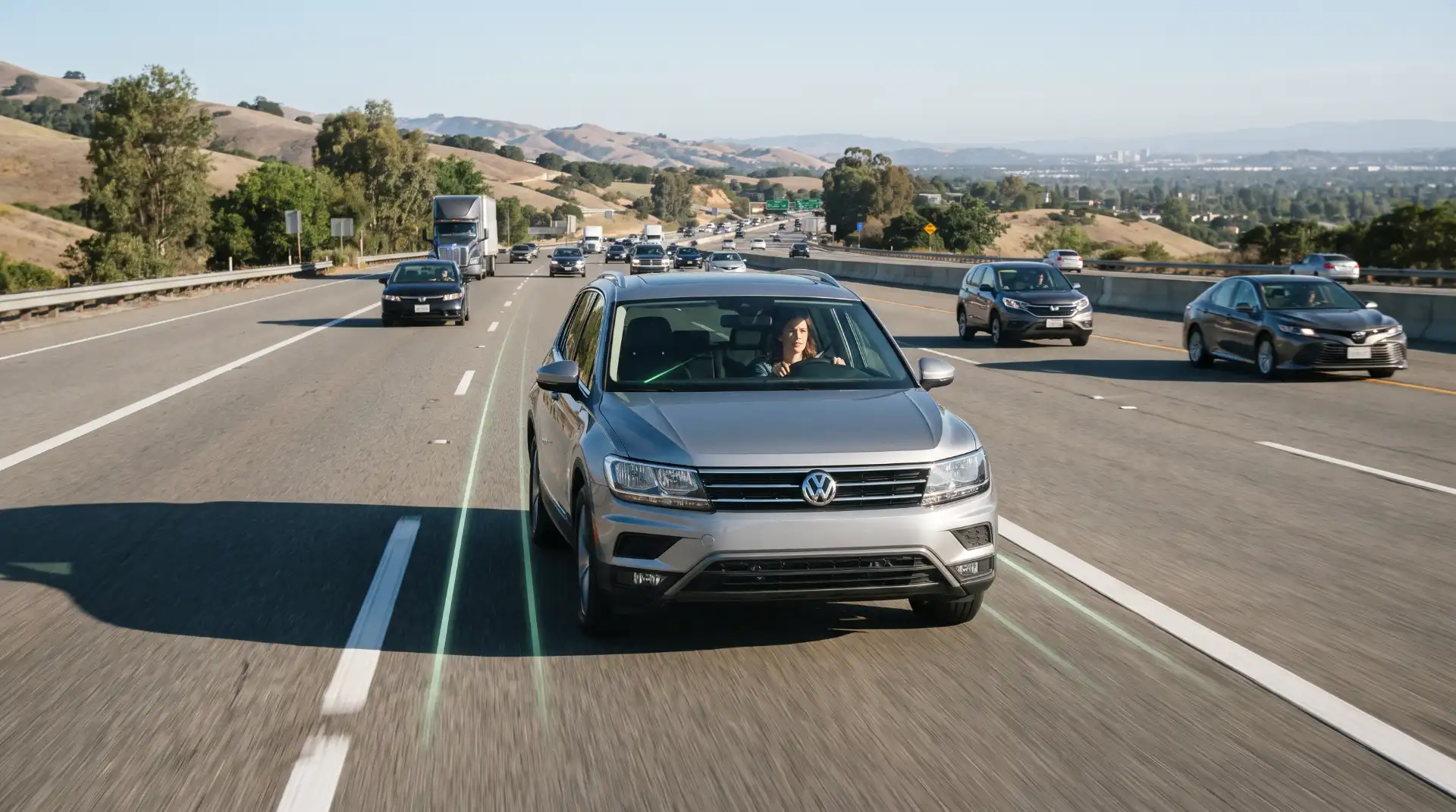
Modern cars increasingly rely on cameras, sensors, steering assistance, and other technology designed to help motorists remain safely within their lanes. Lane keeping assist is one of the most common examples. The system can detect when a vehicle begins drifting toward a lane marking and may provide steering input to guide it back.
Despite its capabilities, lane keeping assist does not normally replace the driver. The National Highway Traffic Safety Administration explains that drivers using this type of assistance remain responsible for operating their vehicles and monitoring traffic.
This distinction can become important after lane keeping assist accidents. A driver may argue that the vehicle moved unexpectedly, failed to correct its path, or responded incorrectly to road markings. At the same time, investigators may examine whether the driver remained attentive and reacted appropriately.
Determining responsibility can require looking at human behavior, roadway conditions, vehicle data, system limitations, maintenance, and possible defects.
What Is Lane Keeping Assist?
Lane keeping assist, often abbreviated LKA, is an advanced driver-assistance system designed to help prevent unintended lane departures.
Most systems use a forward-facing camera or other sensors to identify lane markings. When the vehicle begins moving toward or across a detected lane boundary without an intended lane change, the system may provide steering assistance.
Some vehicles also generate visual, audible, or steering-wheel warnings.
Lane keeping assist should not be confused with every other lane-related technology.
Lane departure warning generally alerts a motorist when the vehicle starts leaving its lane but does not necessarily steer the vehicle.
Lane centering assistance is somewhat different because it can continuously provide steering input intended to keep a vehicle closer to the center of the lane.
Lane keeping assist generally intervenes when a vehicle begins drifting toward a lane boundary.
The exact operation varies among manufacturers and models. Drivers should therefore understand the system installed in their own vehicle rather than assuming every lane-assistance feature behaves the same way.
The National Highway Traffic Safety Administration provides information explaining lane keeping assistance and other advanced driver-assistance technologies.
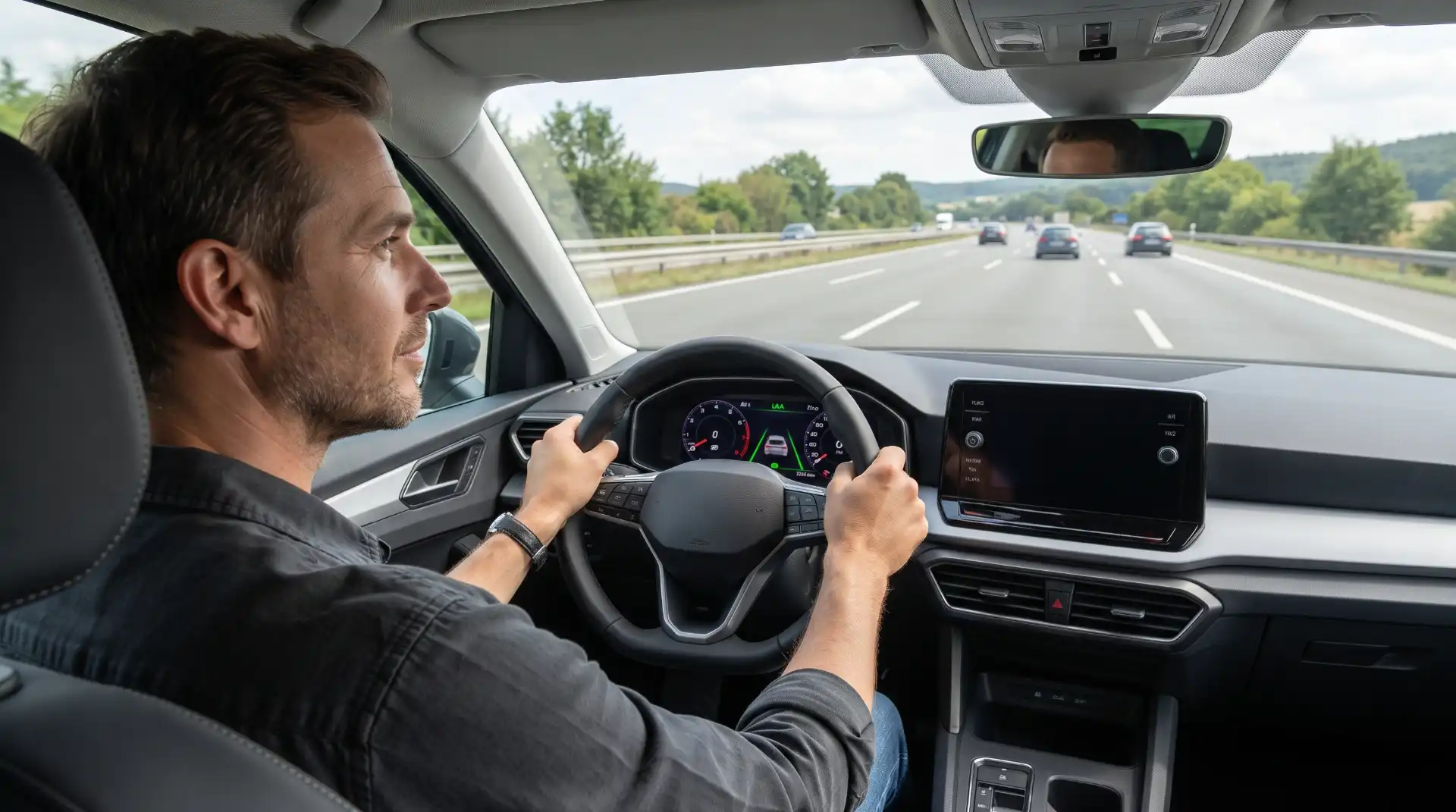
Lane Keeping Assist Does Not Make a Vehicle Self-Driving
One of the most important issues surrounding lane keeping assist accidents involves misunderstanding what the technology can actually do.
A vehicle equipped with lane keeping assistance is not automatically an autonomous or self-driving vehicle.
NHTSA describes basic lane keeping assistance as technology that provides steering assistance while the person behind the wheel remains responsible for driving.
That means the driver still needs to monitor the road, maintain control, watch surrounding traffic, recognize hazards, and intervene when conditions require it.
Drivers should not assume that engaging lane keeping assist allows them to look away from traffic, use a phone, read messages, or stop monitoring the vehicle’s movement.
Advanced technology can assist with certain tasks, but its capabilities have limits.
Those limitations may become central when an accident occurs.
How Lane Keeping Assist Accidents Can Happen
Lane keeping technology can become involved in crashes in several ways.
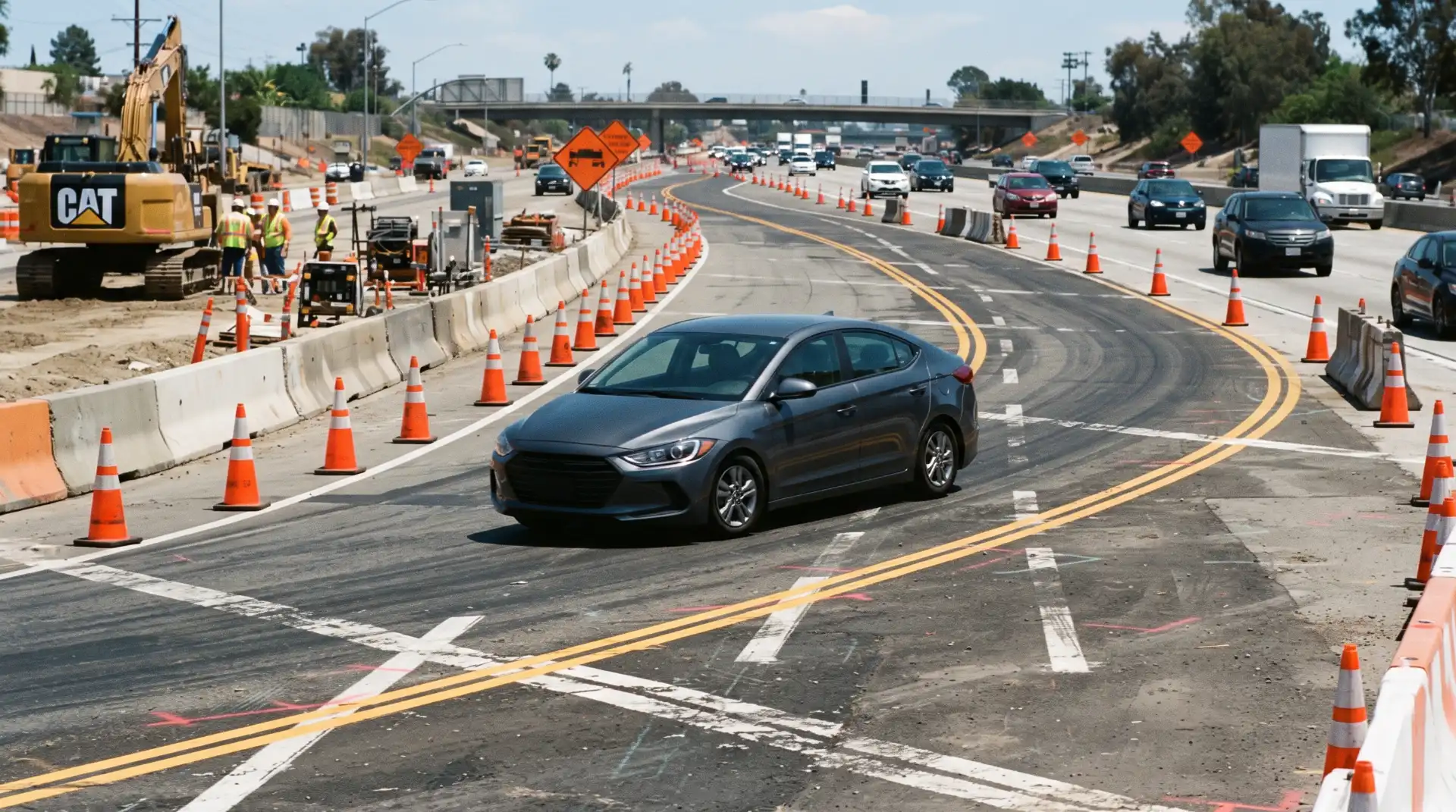
A system might fail to identify fading lane markings. It could respond to temporary construction markings. A driver may misunderstand a steering correction and overcorrect in response.
Another accident may occur because the driver expects the system to intervene but it does not.
Road conditions can also affect performance.
Curves, shadows, construction zones, rain, faded paint, unusual road surfaces, glare, debris, or partially obscured lane markings can make lane detection more difficult.
Drivers may encounter additional challenges when lanes merge, split, widen, narrow, or temporarily shift.
A system that performs consistently on a well-marked interstate may behave differently on a complicated city street.
For this reason, determining what happened requires examining the specific vehicle, roadway, and circumstances instead of simply blaming either the driver or the technology.
Who Is Responsible When Lane Keeping Assist Is Active?
In many cases, the driver remains the first person investigators examine after a lane keeping assist accident.
Driver-assistance technology generally does not eliminate ordinary responsibilities behind the wheel.
A driver still needs to observe traffic, control the vehicle, follow applicable laws, maintain a safe speed, and respond to changing conditions.
Suppose a vehicle begins drifting toward another lane while lane keeping assistance is engaged.
If the system does not correct the movement, the driver may still have an obligation to steer the vehicle safely.
Likewise, if the system provides an inappropriate steering correction, the driver may need to override it.
However, that does not mean vehicle technology can never become relevant to liability.
If a defect, software problem, sensor malfunction, or other vehicle issue contributed to the crash, additional parties may become involved in the investigation.
Responsibility depends on why the vehicle moved and whether the driver had a reasonable opportunity to prevent the collision.
Driver Distraction and Overreliance on Technology
Advanced driver-assistance systems can create a particular concern when motorists begin trusting the technology more than its actual capabilities justify.
A driver may become less attentive because the vehicle seems capable of controlling its position.
That can create problems when conditions suddenly fall outside the system’s operating limits.
For example, a driver might look away from the road while approaching a construction zone where old and temporary lane markings overlap.
The system may identify the wrong markings or stop providing assistance.
If the driver is not watching the road, valuable reaction time can be lost.
Distraction can involve mobile phones, infotainment screens, navigation systems, passengers, food, or other activities.
Investigators examining lane keeping assist accidents may therefore look at both the technology and the driver’s attentiveness.
Electronic records, phone information, onboard cameras, witness statements, and vehicle data can sometimes help determine what the driver was doing immediately before impact.
Poor Lane Markings and Road Conditions
Lane keeping systems depend heavily on being able to interpret the roadway.
Clear lane markings generally provide the system with useful visual boundaries.
Faded, damaged, confusing, or temporary markings can create more difficult conditions.
Construction zones are a common example.
A road may contain old lane lines that have been partially removed alongside newer temporary markings. Traffic lanes may shift unexpectedly or become narrower.
Human drivers need to interpret these changes and follow construction signs, cones, barriers, and surrounding traffic.
A camera-based lane assistance system may face additional difficulties identifying which markings represent the current travel lane.
Similar issues can arise on roads with damaged pavement, accumulated dirt, shadows, intense glare, or poor visibility.
When road conditions contribute to a crash, investigators may examine photographs, road-maintenance records, construction plans, previous complaints, and the condition of lane markings.
Readers can learn more about roadway-related issues in our article discussing whether poor road maintenance can contribute to accident liability.
Lane Keeping Assist in Construction Zones
Construction zones deserve particular attention because they can create environments that differ significantly from ordinary highway driving.
Lanes may shift around barriers.
Temporary paint or tape may replace permanent markings.
Construction equipment can obscure portions of the roadway.
Workers may direct traffic differently from what normal lane geometry suggests.
Drivers relying too heavily on lane keeping assist in these conditions may encounter unexpected steering input.
A system might attempt to follow an old lane marking rather than a temporary traffic pattern.
In another situation, the system may become unavailable because it cannot confidently identify the lane.
Drivers remain responsible for observing signs, barriers, workers, cones, and other temporary traffic controls.
A technology-related steering issue does not remove the need for human supervision.
Our guide to car accidents in construction zones discusses additional factors that can affect responsibility when crashes occur in work areas.
Curves Can Challenge Lane Assistance Systems
Curved roads can also present different conditions from straight highway segments.
Lane keeping systems need to interpret road geometry and determine the path of the lane as it bends.
Some systems may operate only within certain ranges of speed, curvature, visibility, or lane quality.
Drivers should not assume that steering assistance can handle every curve automatically.
A motorist approaching a sharp bend too quickly may remain responsible for controlling speed and steering safely.
If a crash occurs after the vehicle crosses a lane line on a curve, investigators might examine vehicle speed, steering input, road geometry, lane markings, tire condition, electronic system activity, and whether lane assistance was active.
The system’s involvement may be one part of the investigation rather than the only cause.
What Happens If the System Steers Toward Another Vehicle?
One particularly concerning allegation after an accident is that lane keeping assistance provided steering input toward another vehicle.
A driver might report feeling resistance in the steering wheel or experiencing unexpected movement.
This does not automatically establish that the system malfunctioned.
Investigators need to determine what the vehicle actually detected and what inputs occurred.
Vehicle data may indicate whether lane keeping assistance activated.
Steering-angle information could provide evidence about driver input.
Camera data, when available, may reveal what lane markings were visible.
Other records could indicate system warnings or sensor errors.
The physical roadway is also important.
Temporary lane markings, road repairs, shadows, merging lanes, or unusual geometry could potentially influence what the camera detected.
A thorough investigation may therefore require technical vehicle evidence in addition to ordinary accident documentation.
Can Drivers Override Lane Keeping Assist?
Lane keeping assist is generally designed to provide assistance rather than completely take control from the driver.
Drivers can normally provide steering input when needed.
That makes driver reaction important after an unexpected system response.
Suppose a vehicle begins moving toward the left lane while another car is traveling beside it.
The driver may need to immediately steer away from the neighboring vehicle.
Waiting for the assistance system to resolve the situation could reduce the time available to avoid contact.
After a collision, the parties may disagree about whether the driver had enough time to intervene.
Vehicle data, video footage, witness statements, and accident reconstruction may help answer that question.
Responsibility can depend not only on whether technology behaved unexpectedly but also on whether a reasonable driver could have recognized and corrected the movement.
Lane Keeping Assist and Side-Swipe Accidents
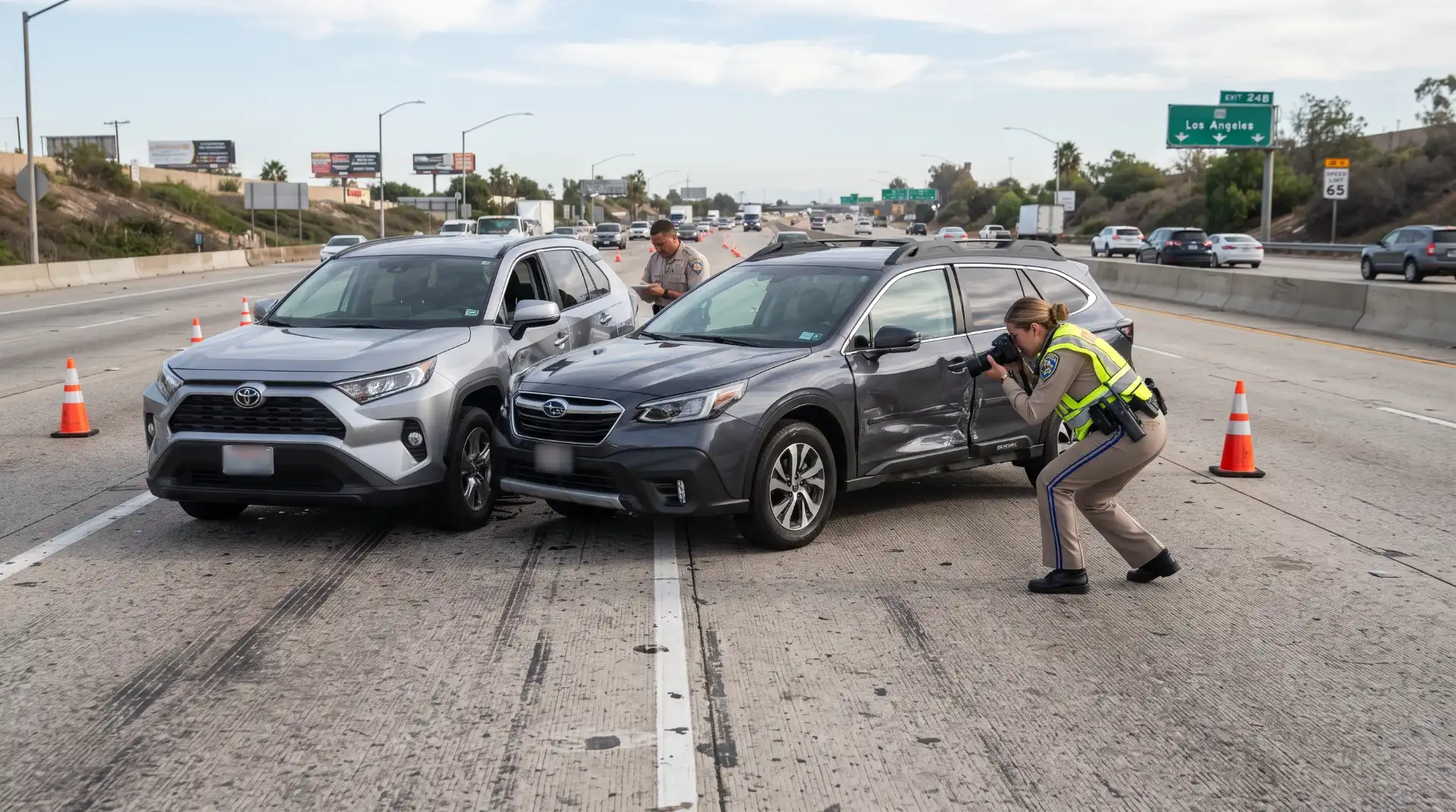
Sideswipe collisions are one type of crash that may involve lane keeping assistance.
These accidents occur when vehicles traveling beside each other make lateral contact.
A lane departure can quickly lead to a sideswipe when traffic is dense.
One driver may argue that the other vehicle drifted into their lane.
The other driver may claim that a steering-assistance system pushed the car unexpectedly.
Determining which vehicle crossed the lane boundary can require examining damage patterns, roadway markings, dashcam footage, surveillance video, witness accounts, and vehicle information.
Some accidents may involve shared responsibility.
One vehicle might drift from its lane while another driver simultaneously attempts an unsafe lane change.
California’s comparative fault rules allow responsibility to be divided when more than one person’s conduct contributed to an accident.
Lane Departure Accidents With Motorcycles
Motorcyclists are particularly vulnerable when a passenger vehicle unexpectedly moves across a lane boundary.
A slight lateral movement that results only in minor contact between two cars could have much more serious consequences for a motorcycle rider.
Drivers using lane assistance technology still need to monitor motorcycles in neighboring lanes.
Blind spots and rapidly changing traffic conditions make this particularly important.
A lane keeping system should not be treated as a substitute for mirrors, shoulder checks, turn signals, and active driver awareness.
If a vehicle drifts toward a motorcycle, investigators may examine whether lane assistance activated, whether the driver attempted to correct the movement, and whether the motorcycle was visible before the collision.
Lane Keeping Assist and Bicycle Accidents
Cyclists can face similar risks.
On urban streets, bicycle lanes may run directly beside vehicle travel lanes.
A sudden steering correction could potentially move a vehicle closer to a cyclist, particularly where lane markings change or road geometry becomes complicated.
Drivers remain responsible for maintaining awareness of cyclists and allowing appropriate space.
Technology designed to keep a car within its lane does not necessarily recognize every nearby road user or safely manage every bicycle-related situation.
San Francisco’s combination of cars, bicycles, buses, pedestrians, delivery vehicles, and other road users creates circumstances where attentive driving remains especially important.
Could the Automaker Be Responsible?
Some lane keeping assist accidents may raise questions about the vehicle manufacturer or technology provider.
A product-related issue might be investigated when evidence suggests the system behaved differently from its intended design because of a hardware, software, sensor, or manufacturing problem.
Potential evidence may include diagnostic records, recalls, service bulletins, software information, repair history, consumer complaints, and data stored by the vehicle.
A single unusual steering event does not prove that a vehicle is defective.
Many alternative explanations may exist.
The driver may have provided steering input. Road conditions may have affected lane detection. A camera may have been obstructed. Lane markings may have been unclear.
A technical investigation is often necessary to distinguish between these possibilities.
Product-related claims may involve legal and technical issues that differ from ordinary negligence cases.
Maintenance Can Affect Driver-Assistance Technology
Modern safety systems depend on components that need to function correctly.
A forward-facing camera may need an unobstructed view.
Sensors can sometimes require calibration after windshield replacement, collision repairs, suspension work, wheel alignment, or other vehicle service.
Damage, dirt, ice, or other obstructions may interfere with certain systems.
Drivers should pay attention to warning messages indicating that a system is unavailable or requires service.
Repair shops may also have responsibilities when performing work that affects sensors or calibration.
If lane assistance behaves unexpectedly after recent vehicle repairs, maintenance documentation may become relevant.
Invoices and service records can show what work was performed and whether calibration procedures were included.
Software and Vehicle Updates
Software increasingly controls advanced vehicle functions.
Manufacturers may issue updates that modify driver-assistance behavior, address bugs, change warnings, or alter system performance.
After a crash, investigators may want to identify which software version was installed at the time.
Questions can arise about whether an update was available, whether it had been installed, and whether the update related to the system involved.
These issues become increasingly important as vehicles rely more heavily on computer-controlled functions.
Software evidence can be more difficult to preserve than photographs of physical damage.
For that reason, technical records may need attention early in an investigation.
Evidence in a Lane Keeping Assist Accident
Traditional accident evidence remains important even when advanced technology is involved.
Photographs can establish vehicle positions, lane markings, road conditions, construction zones, signs, weather, damage, and surrounding traffic conditions.
Witnesses may describe whether a vehicle drifted suddenly or gradually.
Dashcams can provide direct evidence of lane position.
Police reports may record initial statements from the drivers.
Vehicle data may add another layer of information.
Depending on the model and system, records might contain speed, steering inputs, warning information, system status, braking activity, or other operational details.
Not every vehicle records the same information, and not every form of data remains stored indefinitely.
This can make preservation an important issue.
Readers can also review our guide on the role of witnesses in San Francisco auto accident cases for additional information about witness evidence.
NHTSA Is Giving Lane Keeping Assist Greater Attention
Lane keeping assist has become significant enough that federal vehicle-safety testing is expanding its evaluation.
NHTSA updated its New Car Assessment Program to include lane keeping assist among the advanced driver-assistance technologies evaluated under the program for the 2026 model year.
The agency’s testing considers how lane keeping systems detect lane departures and provide intervention.
This federal attention reflects the growing role of driver-assistance technology in new vehicles.
It does not mean that every system performs identically or that the technology prevents every lane departure.
Drivers still need to understand the specific capabilities of their vehicles.
The NHTSA Driver Assistance Technologies resource provides an authoritative overview of lane keeping assistance, lane departure warning, lane centering assistance, automatic emergency braking, and other systems.
Is Lane Keeping Assist the Same as Autonomous Driving?
No.
This distinction can become especially important in accident investigations.
NHTSA categorizes different levels of vehicle automation based on how much of the driving task technology performs.
Basic driver-assistance features can provide steering or braking assistance while the driver remains responsible for vehicle operation.
Higher levels of automation involve substantially different capabilities.
A vehicle equipped with lane keeping assist should therefore not automatically be described as a self-driving vehicle.
Using accurate terminology helps clarify what the system was designed to do and what responsibilities remained with the driver.
Our article on self-driving vehicle crashes and legal responsibility provides additional information about accidents involving more advanced automated-driving technology.
Insurance Claims After Lane Keeping Assist Accidents
Insurance investigations involving these crashes may include competing explanations.
A driver may state that the vehicle unexpectedly steered.
An insurer may argue that the driver failed to remain attentive.
Another motorist may claim the vehicle crossed a clearly marked lane line without warning.
Determining what happened may require more than taking statements from those involved.
Vehicle data, repair history, photographs, videos, system warnings, and manufacturer information can provide useful evidence.
Medical and damage records are also important when evaluating the consequences of the crash.
Insurance disputes can become more complicated when responsibility may involve both driver behavior and a potential vehicle issue.
What Drivers Should Do After a Technology-Related Crash
Safety should remain the immediate priority following any collision.
Anyone with injuries or facing an active roadway danger may need emergency assistance.
When conditions permit, documenting the scene can help preserve important evidence.
Photographs should capture lane markings, vehicle positions, road conditions, traffic controls, damage, construction activity, and other relevant surroundings.
Drivers should avoid changing or deleting vehicle settings or electronic information that may later become useful.
Keeping repair records and noting any dashboard warnings can also help establish what occurred.
If the vehicle recently underwent repairs, those records may deserve preservation as well.
Our step-by-step guide after a San Francisco car accident discusses other considerations following a collision.
Driver Responsibility Remains Central
Lane keeping assistance represents an important development in modern vehicle safety.
The technology can help identify unintended lane departures and, under certain conditions, provide steering assistance.
However, assistance should not be confused with complete vehicle autonomy.
Drivers generally remain responsible for monitoring traffic and maintaining control.
When lane keeping assist accidents occur, investigators may need to examine both human and technological factors.
The driver’s attentiveness, speed, steering response, road conditions, lane markings, system warnings, maintenance history, software, and vehicle data can all become relevant.
Some crashes may result primarily from driver error.
Others may raise legitimate questions about system performance or vehicle defects.
Still others may involve several contributing factors.
As advanced driver-assistance systems become more common throughout the United States, understanding the difference between assistance and autonomy becomes increasingly important.
Technology may help drivers avoid certain mistakes, but it does not remove the need for active judgment behind the wheel.
A careful investigation of the available evidence can help clarify whether a lane keeping assist accident resulted from driver behavior, roadway conditions, technology, or a combination of factors.