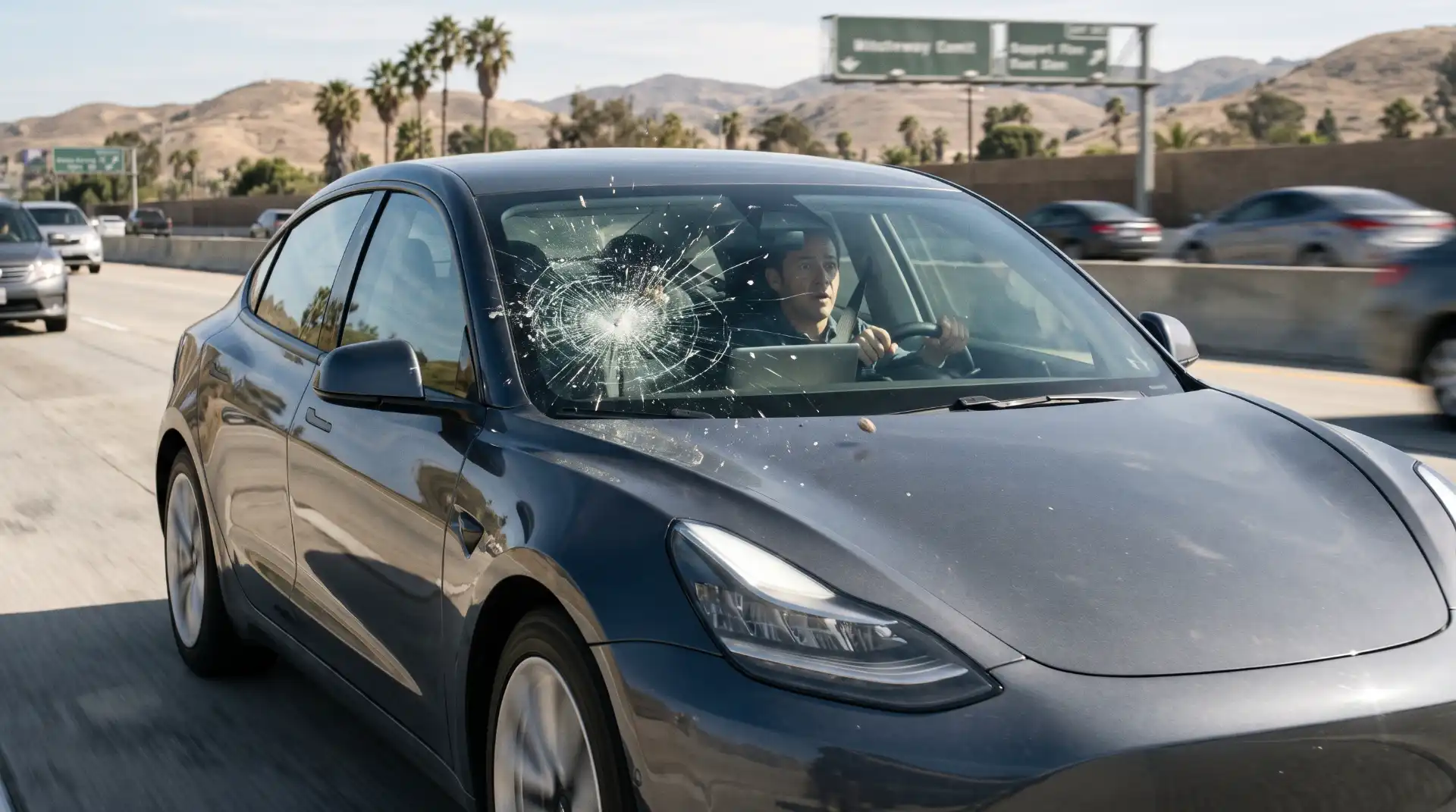
A damaged windshield may seem like a relatively minor consequence of a car accident, especially when compared with serious injuries, extensive vehicle damage, or a collision that requires emergency medical treatment. However, modern windshields are increasingly important components of vehicle safety. In many newer vehicles, cameras and sensors positioned near or behind the windshield help operate advanced driver assistance systems (ADAS), including automatic emergency braking, lane departure warnings, lane-keeping assistance, and adaptive cruise control.
When a windshield is damaged and repaired or replaced, the work may involve more than installing a new piece of glass. Depending on the vehicle and the manufacturer’s requirements, certain cameras and sensors may need calibration or recalibration to ensure that safety systems continue operating as intended. An improperly completed repair or unsuccessful calibration can potentially affect how a vehicle detects other cars, pedestrians, lane markings, and obstacles.
California has responded to concerns surrounding automotive glass repairs and insurance claims by enacting Senate Bill 988, known as the California Motor Vehicle Glass Act. Approved by Governor Gavin Newsom on September 27, 2026, and chaptered as Chapter 666 of the Statutes of 2026, the legislation establishes new consumer protections and requirements for motor vehicle glass repair businesses. Its key provisions take effect January 1, 2027.
The law is particularly relevant to drivers who need windshield repairs or replacements after a collision. It addresses how certain insurance benefits may be handled, what repair shops must disclose about ADAS technology, when an insurance claim must be initiated, what estimates and invoices customers should receive, and how consumers may choose a repair facility.
For accident victims, understanding these changes can help prevent confusion during the repair process and highlight why proper documentation matters. Although the law does not automatically establish liability for a car accident or create a new personal injury claim, its requirements may become relevant when evaluating a disputed windshield repair, an insurance payment, or a vehicle safety concern following a collision.
Understanding the California Motor Vehicle Glass Act
The California Motor Vehicle Glass Act was established through SB 988, which adds a new title to the California Civil Code beginning with Section 1784.50. Its purpose is to regulate certain practices involving motor vehicle glass repair and replacement, particularly when an insured driver intends to use automobile insurance to pay for the work.
The legislation recognizes that automotive glass repairs have become more complicated as manufacturers incorporate cameras, sensors, and other electronic safety equipment into vehicle designs. A windshield replacement may affect the positioning or operation of equipment that supports driver assistance features. If calibration is necessary, the repair process must account for the manufacturer’s specifications.
The Act also addresses consumer concerns involving insurance claim assignments, repair estimates, misleading statements about coverage, incentives for directing insurance claims, and pressure to use particular repair facilities.
These provisions are important because a driver dealing with an accident may be under considerable stress. The vehicle may be undriveable, the windshield may be severely damaged, and the owner may need to arrange repairs quickly. Under those circumstances, a consumer may not fully understand the documents presented by a repair business or the difference between authorizing a repair and transferring insurance rights.
The new law establishes requirements intended to make these transactions more transparent.
The California Bureau of Automotive Repair has also identified SB 988 as enacted legislation affecting businesses primarily engaged in automotive glass repair and replacement. Its published legislative update highlights the new ADAS disclosure, calibration-result notification, itemized invoice, and insurance claim authorization requirements.
Consumers can review the chaptered text of California SB 988 and the California Bureau of Automotive Repair’s legislative update for additional information.
When the New Rules Take Effect
The California Motor Vehicle Glass Act was signed into law on September 27, 2026. Its new requirements are scheduled to apply beginning January 1, 2027.
This effective date is important for consumers, insurance companies, and automotive glass businesses preparing for the transition. Contracts entered into on or after January 1, 2027, that violate the Act’s restrictions on assigning insurance duties or benefits are void and unenforceable.
The law also establishes operational requirements for glass repair businesses. These include providing specified information about ADAS equipment before service, obtaining an insurance claim or referral number before entering into certain insurance-paid repair contracts, providing estimates, and supplying written information about calibration results.
Drivers should understand that the Act does not mean every windshield repair performed after January 1, 2027, will be covered by insurance. Coverage continues to depend on the policy, the nature of the damage, applicable deductibles, exclusions, and the insurer’s determination of the claim.
The legislation regulates certain practices surrounding covered repairs. It does not eliminate the need to review an insurance policy or confirm coverage with the insurance company.
For someone involved in a collision near the beginning of 2027, the date of the repair agreement and the applicable policy terms may therefore matter. Drivers should keep copies of repair contracts, estimates, insurance communications, invoices, and calibration records.
Why Windshield Repairs Are More Complicated in Modern Vehicles
Windshields have traditionally served several basic purposes. They protect vehicle occupants from wind and debris, provide visibility, and contribute to the structural design of the vehicle. Modern automotive engineering has added another important function: supporting advanced driver assistance technology.
Many vehicles now have forward-facing cameras mounted near the rearview mirror or integrated into the windshield area. Depending on the manufacturer and vehicle design, additional sensors may be positioned around the vehicle.
These systems can support features such as:
- Forward collision warnings.
- Automatic emergency braking.
- Lane departure warnings.
- Lane-keeping assistance.
- Traffic sign recognition.
- Adaptive cruise control.
- Pedestrian and cyclist detection.
The exact equipment varies by manufacturer, model, year, and trim level. Not every vehicle has all of these features, and the presence of a windshield-mounted camera does not mean every repair requires the same calibration procedure.
When a windshield is replaced, even a small change in the position or angle of a camera can potentially affect how the system interprets its surroundings. A camera that is not properly aligned may provide inaccurate information to the vehicle’s electronic safety systems.
For example, a forward-facing camera may be designed to recognize lane markings and help the vehicle maintain its position. If the camera is improperly positioned after windshield replacement, the system may not interpret lane boundaries accurately.
Similarly, a camera used by an automatic emergency braking system may need calibration to ensure that its measurements correspond with the vehicle’s actual position and orientation.
This is why manufacturers may require static calibration, dynamic calibration, or a combination of procedures after certain windshield repairs or replacements. The correct method depends on the vehicle manufacturer’s specifications.
The California Motor Vehicle Glass Act makes these issues part of the information that qualifying glass repair businesses must disclose to customers.
New ADAS Disclosure Requirements for Windshield Repairs
One of the most significant parts of the new law concerns disclosures about advanced driver assistance systems.
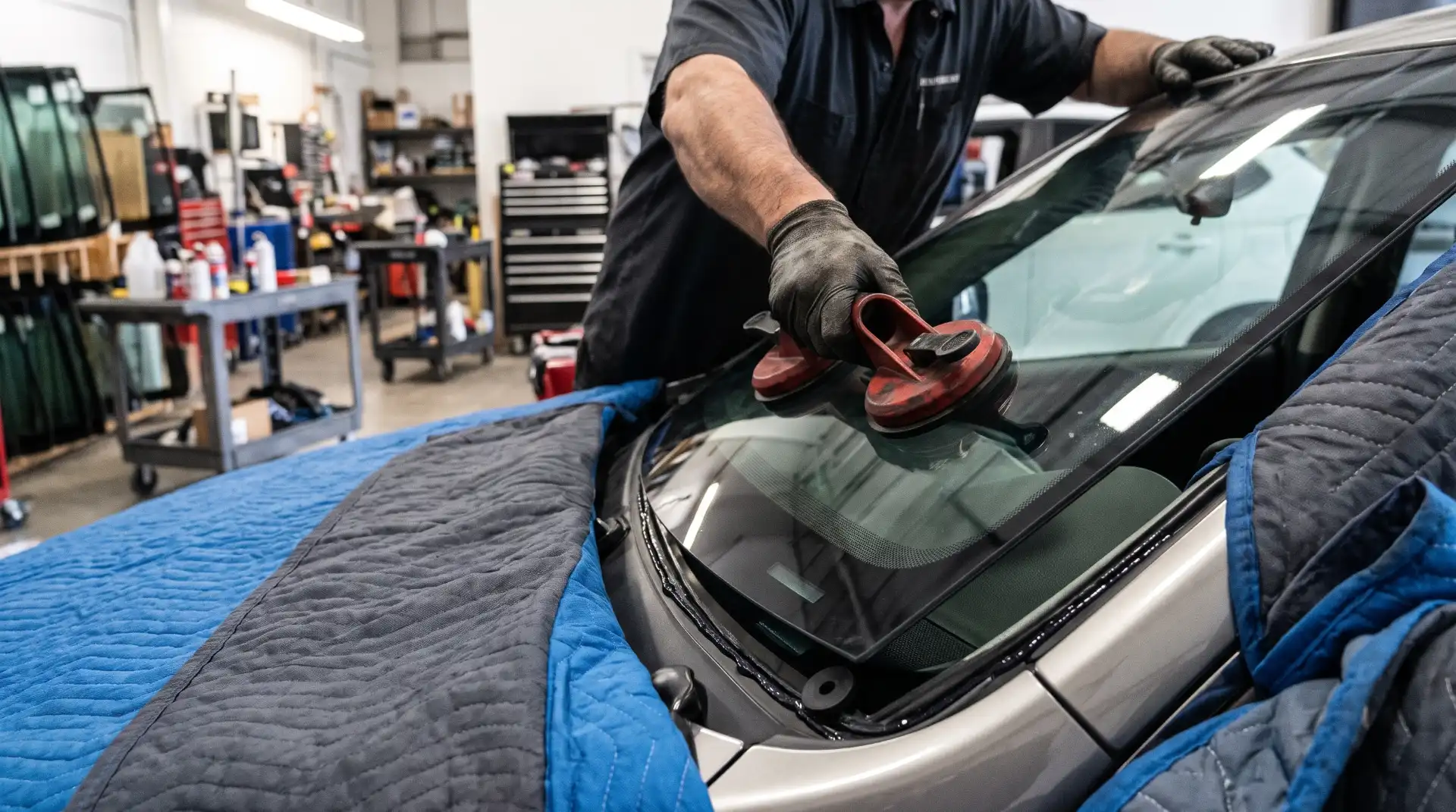
Under Civil Code Section 1784.53, a motor vehicle glass repair shop must notify the customer before providing service whether the vehicle has an ADAS. If the vehicle is equipped with such a system, the shop must also provide information about whether calibration or recalibration is needed after the windshield repair or replacement, based on the vehicle manufacturer’s recommendations.
The shop must explain whether it intends to perform the calibration in a manner that meets the manufacturer’s specifications.
If the business cannot perform the necessary calibration, or does not intend to perform it, the customer must be informed that the vehicle should be taken to the manufacturer’s certified dealership or a qualified specialist capable of completing the procedure.
These disclosures are important because customers may not know that their vehicle’s safety technology depends on equipment located near the windshield.
A driver might assume that replacing a cracked windshield is a straightforward glass installation. However, if the vehicle manufacturer requires camera calibration, the work is not necessarily complete when the replacement glass is installed.
The new requirements give customers more information before deciding how to proceed.
For example, consider a driver whose vehicle is struck by debris during a freeway collision. The windshield develops a large crack, and the driver contacts a glass repair business. The vehicle has a forward-facing camera that supports automatic emergency braking and lane-keeping assistance.
Before beginning the covered repair, the business must disclose whether the vehicle has ADAS and whether the manufacturer recommends calibration after the work. It must also explain whether the shop intends to perform calibration according to the manufacturer’s specifications.
If the shop cannot perform the necessary procedure, the customer should be told that a qualified dealership or specialist may need to complete it.
This information can help prevent a consumer from unknowingly accepting a repair arrangement that leaves an important safety procedure unfinished.
Written Confirmation of ADAS Calibration Results
The Act does not stop at requiring a repair shop to explain whether calibration is necessary. It also addresses what happens after calibration is performed.
Under Section 1784.53, when the shop performs ADAS calibration or recalibration, it must provide written notice stating whether the procedure was successful.
If calibration was unsuccessful, the written notice must explain that the vehicle should be taken to the manufacturer’s certified dealership or a qualified specialist capable of performing the calibration correctly.
The completion requirements also address the customer’s need to know whether the ADAS was successfully calibrated. If calibration was unsuccessful, the shop must advise the customer not to rely on the affected ADAS until the system has been successfully calibrated or recalibrated by an appropriate facility.
This requirement has practical safety implications.
Imagine that a vehicle’s windshield is replaced after a collision. The repair shop completes the glass installation and attempts to recalibrate the forward-facing camera. However, the calibration procedure does not succeed because of a sensor fault, an alignment issue, or another technical problem.
Without a clear written explanation, the customer might assume that the vehicle’s safety features are operating normally. The driver could then rely on lane-keeping assistance or automatic emergency braking without knowing that calibration remains incomplete.
Written notice can help prevent this misunderstanding. It also creates documentation showing what the repair business did and whether the calibration procedure was successful.
For accident victims, these records may become particularly important if a later collision involves the same vehicle and questions arise about the operation of its driver assistance technology.
However, an unsuccessful calibration does not automatically prove that a later crash was caused by the repair shop. Establishing responsibility would require evidence connecting the calibration problem to the vehicle’s performance and the collision.
Restrictions on Assigning Insurance Benefits to Glass Repair Shops
Another major feature of the California Motor Vehicle Glass Act concerns the assignment of insurance benefits.
An assignment of benefits, sometimes called an AOB, generally involves transferring certain rights or benefits under an insurance policy to another party. In some repair transactions, a customer may sign documents allowing a repair business to pursue payment directly from the insurer.
SB 988 addresses this practice specifically for motor vehicle glass repair and replacement.
Under Civil Code Section 1784.52, an insured whose automobile insurance policy covers windshield and calibration repair or replacement may not assign, delegate, or otherwise transfer the insured’s policy duties or rights and benefits to another person, either before or after a claimed or covered loss.
A contract entered into on or after January 1, 2027, in violation of this provision is void and unenforceable.
The law is intended to prevent certain transfers of policy rights and responsibilities that may complicate the relationship between the customer, the repair business, and the insurance company.
For consumers, the important distinction is between assigning insurance rights and authorizing payment for completed services.
The statute expressly clarifies that it does not prevent an insured from authorizing or directing payment to a repair business, or from paying that business, for services and materials that may be covered under the insurance policy.
In other words, the Act does not prohibit a customer from using insurance benefits to pay for an eligible windshield repair. It addresses the transfer of policy rights and duties rather than eliminating ordinary payment arrangements.
Drivers should carefully review any document that asks them to transfer insurance rights, authorize a repair, approve a payment, or allow a business to communicate with an insurer.
These documents may have different legal effects. Consumers should not assume that every authorization form is an assignment of benefits, but they should ask questions before signing paperwork they do not understand.
Insurance Claims Must Be Initiated Before Certain Repair Contracts
The new law also establishes a sequence for certain repairs that will be paid through a first-party automobile insurance policy.
Under Section 1784.54, a motor vehicle glass repair shop may not enter into a contract with a customer for an insurance-paid repair or replacement until specified conditions are satisfied.
First, the customer must have made a first-party claim under the motor vehicle insurance policy for the damaged glass.
Second, the repair business must receive a claim or referral number for that claim.
Third, the required disclosures concerning ADAS equipment and calibration must have been provided.
These requirements are intended to ensure that the customer has begun the insurance process and received the necessary information before entering into the covered repair arrangement.
This can matter after an accident because a driver may contact a glass repair business before speaking with the insurance company. A repair shop may be able to explain its services, but the Act establishes conditions that must be met before it contracts for work that will be paid by a first-party policy.
A first-party claim generally means a claim made under the policyholder’s own insurance coverage. It is different from a third-party liability claim directed against another driver’s insurer.
That distinction is important. The Act’s requirements concerning insurance-paid glass repair should not be confused with the separate process of pursuing compensation from a driver who caused a collision.
A person injured by another motorist may have a bodily injury claim against the at-fault driver’s insurance. The person’s own policy may also provide collision, comprehensive, or other applicable coverage, depending on the circumstances.
The California Motor Vehicle Glass Act does not replace the rules governing those separate claims.
New Requirements for Repair Estimates and Itemized Invoices
Unexpected repair costs can create additional stress for accident victims. A customer may believe that a windshield replacement will be paid entirely by insurance, only to discover later that the policy has a deductible, a coverage limitation, or a charge that the insurer will not reimburse.
The California Motor Vehicle Glass Act establishes requirements intended to make pricing more transparent.
Under Section 1784.54, a motor vehicle glass repair shop must provide a good-faith estimate of the anticipated fees and costs for repairing or replacing damaged motor vehicle glass. Before performing the service, the shop must provide an updated estimate.
The law also prohibits a shop from charging more than reasonable and customary fees and costs for the glass work and any associated ADAS calibration or recalibration recommended by the vehicle manufacturer.
After the work is completed, the business must provide an itemized invoice and, upon payment, a receipt.
These documents can help customers understand what they are being charged for. Instead of receiving only a general amount for windshield replacement, a consumer should be able to review the individual services and costs included in the transaction.
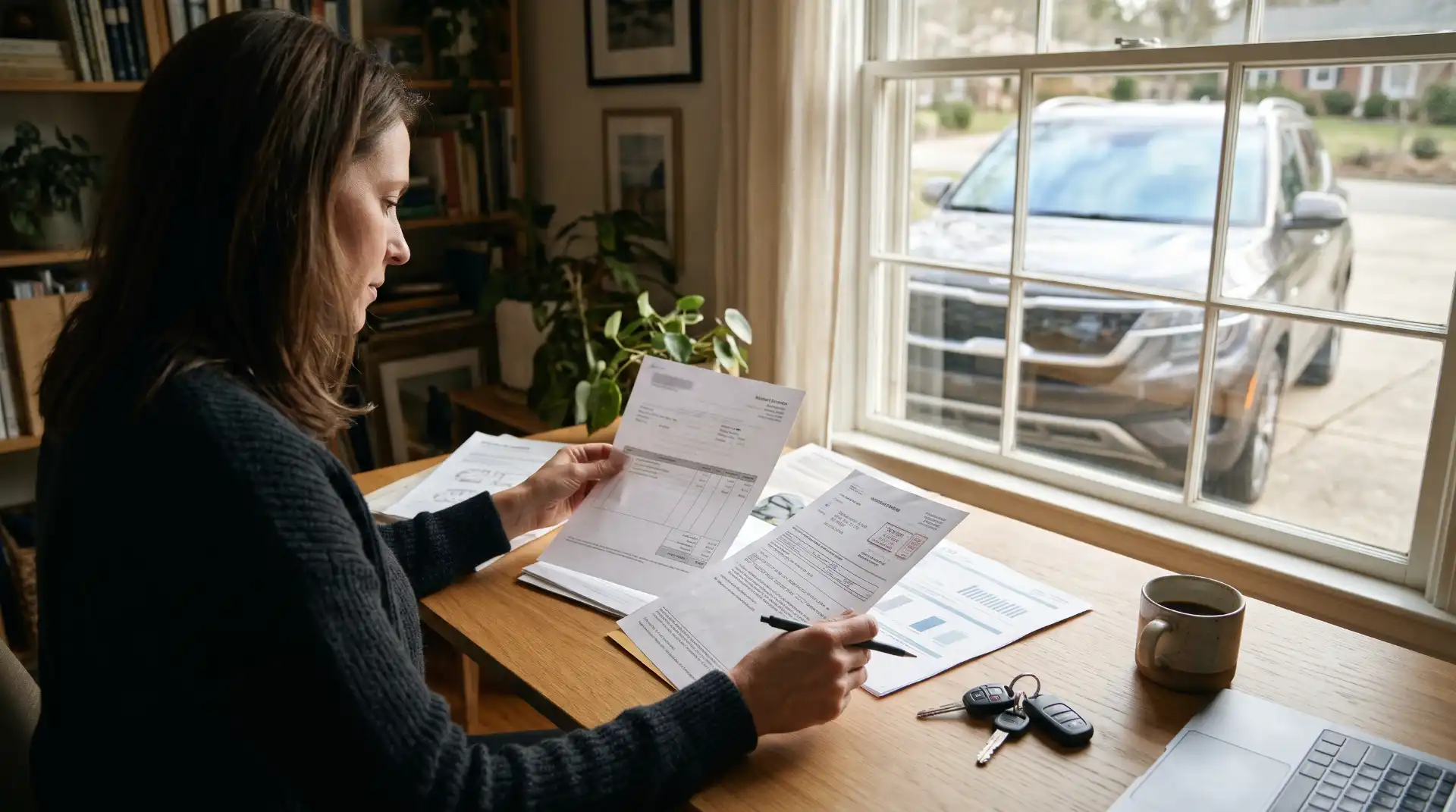
For example, an invoice may identify the replacement glass, installation labor, related materials, and applicable calibration services. The specific entries will depend on the work performed.
An itemized invoice can also help resolve disagreements about whether a particular service was completed or whether the amount charged was consistent with the original estimate.
Accident victims should retain these documents with their other collision-related records. They may be useful when discussing reimbursement with an insurer, reviewing an unexpected charge, or documenting a repair that may later become relevant to a vehicle defect or safety investigation.
Can an Insurance Company Force You to Use a Specific Glass Repair Shop?
Choosing a repair facility is another issue addressed by SB 988.
Under Section 1784.56, an insured who makes a first-party claim for damaged motor vehicle glass may not be required to use a particular glass repair shop or recalibration facility to receive claim payments or other benefits under the policy.
The customer’s right to select a preferred facility includes independent repair businesses, network and non-network shops, affiliated and nonaffiliated repair facilities, dealerships, and qualified specialists capable of performing the required work.
The law also prohibits insurers, insurance producers, insurance adjusters, and people acting on their behalf from purposefully misleading, threatening, or coercing an insured into using or avoiding a particular glass repair shop or calibration facility.
This provision is relevant when a customer receives a repair recommendation from an insurance representative.
An insurer may maintain a network of repair facilities and may recommend a business to the customer. It may also explain available coverage and applicable policy limits. The Act does not prohibit those activities.
The important distinction is between providing information and improperly pressuring a policyholder.
For example, an insurer may explain that a particular network facility has an established billing process or that certain services may be covered under the policy. However, the statute protects the insured’s ability to select a preferred qualified repair facility without being purposefully misled or coerced.
Consumers should therefore feel comfortable asking whether a recommendation is optional, what coverage applies to an independent facility, and whether a particular calibration provider meets the vehicle manufacturer’s requirements.
Choosing a repair business should involve more than convenience. Drivers should consider whether the facility has the appropriate equipment, training, experience, and access to the manufacturer’s calibration procedures.
Prohibited Incentives and Misleading Insurance Claim Practices
The Act also addresses incentives that may encourage consumers to make glass repair claims.
Under Section 1784.55, a motor vehicle glass repair shop or another person compensated for soliciting insurance claims may not offer a rebate, gift, gift card, cash, coupon, prize, bonus, payment, incentive, inducement, or anything else of value in exchange for directing or making an insurance claim for damaged motor vehicle glass.
The provision is intended to prevent financial inducements from influencing insurance claim decisions.
For example, a repair business cannot offer a gift card to a policyholder in exchange for filing a windshield replacement claim through the customer’s automobile insurance policy.
The law also prohibits several forms of deceptive or fraudulent conduct.
Among other things, a glass repair shop may not submit false, misleading, or incomplete information to an insured or insurer. It may not misrepresent the price of the proposed work or claim that the insurer has approved a repair without the required verification and written or recorded confirmation.
A business also may not tell a customer that an insurer will pay the entire bill and that the repair will cost the insured nothing unless coverage has been verified with the insurer or its agent.
Other prohibited conduct includes encouraging a customer to falsify the date of damage, misrepresenting where work was performed, falsely signing insurance-related forms, or encouraging a customer to damage a vehicle to increase the scope of a glass repair or replacement.
These restrictions matter because insurance claims depend on accurate information. A false damage date, inflated repair description, or misleading coverage statement can create problems for the policyholder as well as the business involved.
A driver should never agree to provide inaccurate information to an insurance company, even if a repair business claims that doing so will make the process easier.
How Improper Windshield Repairs Could Contribute to Future Accidents
The California Motor Vehicle Glass Act is primarily a consumer-protection law governing automotive glass repair and related insurance practices. Nevertheless, its ADAS requirements have an important connection to vehicle safety.
Modern driver assistance systems are designed to help drivers recognize hazards and respond to certain driving conditions. When a camera or sensor is incorrectly calibrated, the system may not perform as intended.
Consider a vehicle that receives a windshield replacement after a collision. The manufacturer requires calibration of the forward-facing camera, but the repair facility does not complete the procedure correctly.
Several problems could potentially follow. The system might misinterpret lane markings, provide inaccurate warnings, or fail to identify certain hazards at the expected distance.
Whether such a problem actually causes a collision depends on the vehicle, the system, the driving conditions, and the actions of the driver and other road users. ADAS features are driver-assistance technologies, not guarantees that a crash will be prevented.
However, if a later collision occurs and there is evidence that an improperly completed windshield repair affected a safety system, the repair history may become relevant to the investigation.
Investigators may examine whether the vehicle manufacturer required calibration, whether the shop performed the procedure, whether the calibration was successful, and whether the driver received written notice about any unresolved problem.
They may also consider maintenance records, diagnostic information, repair invoices, technical reports, and electronic vehicle data.
A driver who knows that a calibration was unsuccessful should not ignore the written warning. The Act specifically requires the shop to advise the customer not to rely on the affected ADAS until successful calibration has been completed by an appropriate facility.
Continuing to use a vehicle while relying on a potentially malfunctioning safety feature may create avoidable risks.
Who Could Be Liable if a Poor Windshield Repair Contributes to an Accident?
A collision involving a vehicle with a recently replaced windshield can raise complicated questions about responsibility.
The fact that a windshield was repaired before a crash does not automatically make the repair business liable. An investigation must establish whether the work was defective, whether a legal duty was breached, and whether that conduct contributed to the collision and resulting injuries.
Depending on the facts, several parties may need to be considered.
The Glass Repair Business
A repair business may face potential liability if negligent installation, improper calibration, or another defective service causes or contributes to a crash.
For example, a shop may install a windshield incorrectly, fail to follow manufacturer specifications, or improperly perform a calibration procedure that the vehicle requires.
A claim would need evidence showing how the work was deficient and how that deficiency caused the harm.
The Act’s written disclosure and calibration-result requirements may help establish what the business communicated to the customer. Estimates, invoices, and service records may also help identify the work that was performed.
However, a violation of the Act should not automatically be treated as proof of negligence or personal injury liability. The legal consequences depend on the particular statutory provision and the facts of the case.
The Vehicle Manufacturer
A manufacturer may become relevant when a crash involves a defect in the windshield design, camera mounting system, sensor technology, or related vehicle component.
For example, a defective camera mount or a system that does not function properly despite correct calibration could raise product liability questions.
An investigation may examine whether the component was defectively designed, improperly manufactured, or accompanied by inadequate warnings or instructions.
The manufacturer’s recommended calibration procedures may also be relevant when determining whether a repair facility followed the proper technical requirements.
For more information about this separate area of liability, readers can review the site’s article on San Francisco Vehicle Defect Accidents: Can a Manufacturer Be Liable When a Defective Part Causes a Crash?.
A Calibration Specialist or Dealership
Sometimes a glass repair shop installs the replacement windshield but sends the vehicle to another facility for calibration.
If the calibration specialist performs the procedure incorrectly, fails to identify an unresolved system problem, or provides inaccurate results, that business may need to be examined as part of the investigation.
The responsibilities of each business will depend on the agreements, services performed, technical requirements, and evidence of causation.
Another Driver
A separate driver’s conduct may still be the primary cause of a collision.
For example, a driver may run a red light and strike a vehicle whose windshield was recently replaced. Even if the vehicle has an unresolved calibration issue, the other motorist’s actions may be the principal cause of the crash.
In another situation, a driver may rely too heavily on a malfunctioning assistance feature and fail to respond to an obvious hazard.
California generally evaluates negligence and causation based on the circumstances of the incident. Responsibility may be shared when multiple parties contribute to an injury.
The presence of a repair-related problem does not automatically eliminate the responsibility of another negligent driver.
How the New Law Could Affect Accident Victims in San Francisco
San Francisco drivers regularly travel through congested streets, steep hills, busy intersections, freeway entrances, and areas with frequent pedestrian and bicycle activity.
A windshield damaged in a collision may need immediate attention because cracks can obstruct visibility or compromise the safe operation of the vehicle.
When the vehicle is equipped with ADAS technology, the repair process may involve additional steps. A replacement windshield could require camera calibration before the vehicle’s driver assistance systems can be relied upon again.
The new law gives consumers more information about these steps and establishes requirements for businesses handling certain insurance-paid repairs.
For example, a San Francisco driver involved in a rear-end collision may discover that the windshield has cracked during the impact. The driver contacts an auto glass business and plans to use comprehensive coverage or another applicable first-party benefit.
Under the new requirements, the repair business must provide the necessary ADAS disclosures before service, and the customer must initiate the insurance claim and provide the claim or referral number before the shop enters into the specified insurance-paid repair contract.
The business must also provide the required estimates and documentation.
If calibration is performed, the customer must receive written information about whether it was successful. If the procedure fails, the customer should be advised not to rely on the affected system until an appropriate specialist completes successful calibration.
These records can help the driver understand whether the repair was completed properly and what additional work may be necessary.
They may also become relevant if the vehicle later experiences a safety-system malfunction or another collision.
Drivers interested in broader local crash conditions can also read the site’s article about High-Injury Corridors in San Francisco and Car Accidents.
What Evidence Should You Keep After a Windshield Repair?
Documentation can be important when a driver disputes an insurance payment, questions the quality of a repair, or later suspects that a vehicle safety system was affected by the work.
Accident victims should consider retaining the following records:
Original accident photographs: Pictures of the damaged windshield, vehicle exterior, interior camera area, and surrounding collision damage may help establish the condition of the vehicle before repairs.
Repair estimates: Keep the original good-faith estimate and any updated estimate provided before the work begins. Comparing the documents can help identify changes in the proposed services or costs.
Insurance claim information: Save the claim number, coverage confirmation, communications with the adjuster, and any written approval or explanation of applicable deductibles and policy limits.
Repair authorization documents: Keep copies of the contracts and authorization forms signed before the repair. These records can help clarify what work the customer approved and whether any document attempted to transfer insurance rights.
Itemized invoices and receipts: These records identify the services performed and the amounts charged.
ADAS disclosure and calibration records: Save the written notices explaining whether the vehicle has ADAS, whether calibration was required, and whether the procedure was successful.
Diagnostic reports: If a warning light or driver assistance malfunction appears after the repair, diagnostic information may help determine whether the problem is related to the windshield installation or calibration.
Photographs after the repair: Pictures of the completed installation and any visible warning indicators may provide useful documentation.
Witness and collision evidence: If a later accident occurs, photographs, dashcam recordings, traffic camera footage, police reports, and witness statements may help establish how the crash happened.
The site’s guide to How to Prove Fault in a San Francisco Car Accident discusses how evidence can help establish responsibility and support an injury claim.
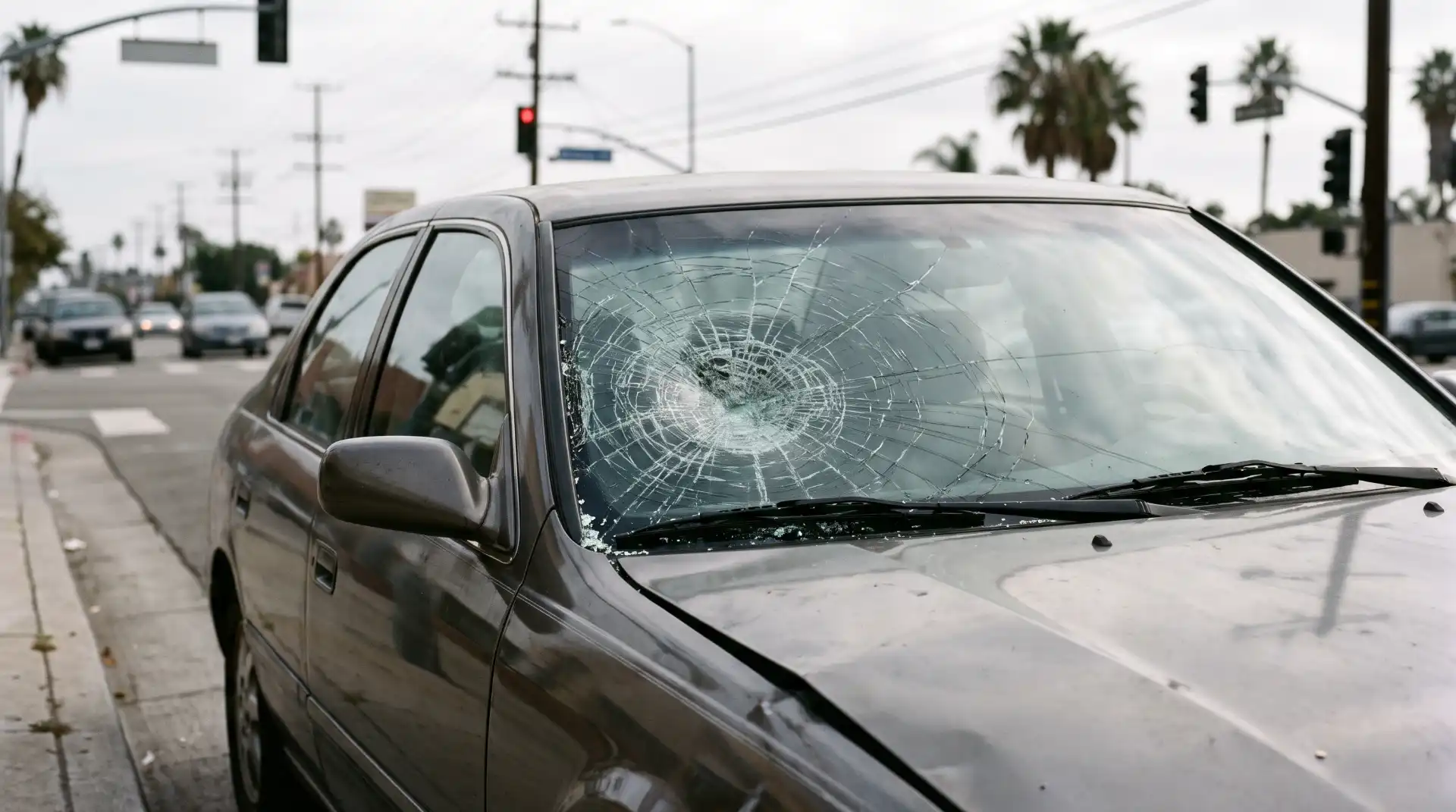
What Should You Do if Your Windshield Is Damaged in a California Accident?
A driver should address windshield damage promptly, especially when cracks obstruct the driver’s view or the damage may affect vehicle safety.
The following steps can help protect both the driver’s safety and the documentation needed for an insurance claim.
1. Document the Damage
Take photographs of the windshield from several angles. Include close-up images of cracks, chips, impact marks, and damage near any camera or sensor housing.
If the windshield was damaged during a collision, photograph the other vehicle damage and the accident scene when it is safe to do so.
2. Contact Your Insurance Company
Review the policy and ask whether the damage may be covered. Confirm whether the claim will be handled under comprehensive coverage, collision coverage, or another applicable provision.
Ask about deductibles, exclusions, coverage limits, and any documentation required before repairs begin.
3. Obtain the Insurance Claim Number
For repairs that will be paid through a first-party policy, the Act establishes a requirement that the glass repair shop receive a claim or referral number before entering into the specified repair contract.
Keep a record of the number and the insurer’s communications.
4. Ask About ADAS Calibration
If the vehicle has cameras or sensors associated with the windshield, ask whether the manufacturer recommends calibration after the proposed repair or replacement.
Find out whether the repair facility will perform the procedure according to the manufacturer’s specifications or whether the vehicle must be taken to a qualified dealership or specialist.
5. Review the Estimate and Authorization
Read the estimate carefully and ask the business to explain charges that are unclear.
Do not sign a document transferring insurance rights or responsibilities without understanding its terms. Remember that authorizing payment for services is not necessarily the same as assigning policy benefits.
6. Obtain Written Calibration Results
If calibration is performed, request and retain the written notice stating whether it was successful.
If the procedure is unsuccessful, follow the written advice about taking the vehicle to a qualified facility. Do not assume that the affected driver assistance systems are operating normally.
7. Preserve All Records
Keep the estimates, invoices, receipts, insurance communications, repair agreements, and calibration reports together.
These documents may be useful if a payment dispute arises or a later investigation examines whether the windshield repair contributed to a vehicle safety problem.
Does the California Motor Vehicle Glass Act Give Accident Victims a New Right to Sue?
This is an important distinction for anyone researching the law after a collision.
The California Motor Vehicle Glass Act establishes consumer protections and requirements for automotive glass repair businesses and related insurance practices. However, it does not create a general new personal injury lawsuit for every customer who experiences a problem with a windshield repair.
Section 1784.56 expressly states that the relevant provision protecting the customer’s choice of repair shop does not create a private cause of action. The Act also provides for civil penalties that may be recovered through actions brought in the name of the people of California by a city attorney, county counsel, or the Attorney General.
The penalties are not a payment automatically awarded to an individual customer or accident victim.
The statute establishes a civil penalty of up to $500 for a first violation and up to $2,000 for each subsequent violation.
That does not mean a person injured because of negligent repair work has no possible legal remedy. A separate claim may exist under applicable negligence, product liability, contract, or other legal principles if the required elements can be established.
For example, if a repair business negligently installs a windshield and the defective installation contributes to an accident, the injured person may have grounds to investigate a negligence claim. The existence and strength of that claim would depend on the evidence, the applicable law, and the connection between the alleged misconduct and the injury.
Similarly, a consumer who experiences misleading insurance practices may have options under other applicable consumer protection or insurance laws.
The important point is that a statutory violation, an insurance dispute, and a personal injury claim are not necessarily the same legal issue. Each may involve different procedures, evidence, and available remedies.
How California’s Comparative Fault Rules May Affect a Later Accident Claim
When a crash involves multiple contributing factors, determining responsibility can be complicated.
California follows a pure comparative negligence system. Under this approach, a person’s recovery in a negligence claim may be reduced according to the percentage of fault assigned to that person.
Consider a situation in which a driver is traveling through an intersection when another motorist makes an unsafe turn. The first driver’s vehicle has a recently replaced windshield, and an investigation later reveals that its forward-facing camera was not properly calibrated.
The other driver’s unsafe turn may have contributed to the collision. At the same time, investigators may need to determine whether the calibration issue affected the first driver’s ability to detect or respond to the hazard.
The evidence could support responsibility being assigned to more than one party, depending on what actually happened.
A calibration problem does not automatically establish that the vehicle owner was negligent. The driver’s knowledge of the problem, the warnings received, the operation of the vehicle, and the circumstances of the collision may all be relevant.
Likewise, a repair business should not automatically be held responsible simply because a vehicle was involved in an accident after windshield replacement.
The investigation must connect the alleged conduct to the crash and resulting injuries.
Frequently Asked Questions About the California Motor Vehicle Glass Act
When does the California Motor Vehicle Glass Act take effect?
The California Motor Vehicle Glass Act was enacted through SB 988, Chapter 666 of the Statutes of 2026. Its key requirements apply beginning January 1, 2027.
Does the new law apply to every windshield repair in California?
The Act establishes requirements for motor vehicle glass repair businesses and certain insurance-paid glass repair transactions. Some provisions specifically apply when the customer intends to use a first-party automobile insurance policy. The exact requirements depend on the service and circumstances.
Does the law require every windshield replacement to include ADAS calibration?
No. The law requires disclosure of whether calibration or recalibration is needed based on the vehicle manufacturer’s recommendations. Whether calibration is necessary depends on the vehicle, its equipment, and the specific repair or replacement.
Can a driver still choose an independent windshield repair shop?
Yes. The Act protects an insured’s right to select a preferred qualified glass repair shop or recalibration facility. An insurer may recommend a facility and maintain a repair network, but it may not purposefully mislead, threaten, or coerce the insured into using or avoiding a particular provider.
Can a glass repair shop still receive payment directly from an insurance company?
The Act does not prohibit an insured from authorizing or directing payment to a repair business for covered services. However, it restricts the assignment, delegation, or transfer of policy duties and rights or benefits under the circumstances described in the statute.
What happens if ADAS calibration is unsuccessful?
The repair business must provide written notice of the unsuccessful result and advise the customer not to rely on the affected ADAS until successful calibration is completed by the manufacturer’s certified dealership or a qualified specialist.
Does the law guarantee that insurance will pay for windshield replacement?
No. The Act does not automatically expand insurance coverage or eliminate deductibles. Whether a particular repair is covered depends on the policy and the insurer’s coverage determination.
Can a repair shop offer a gift card in exchange for an insurance claim?
The Act prohibits a glass repair shop or another person compensated for soliciting insurance claims from offering gifts, cash, gift cards, rebates, coupons, or other things of value in exchange for directing or making a qualifying insurance claim.
Does violating the Act automatically entitle an accident victim to compensation?
No. The Act provides for civil penalties recoverable by specified public prosecutors and expressly states that a relevant provision does not create a private cause of action. A separate personal injury or other legal claim may be possible under applicable law if the necessary elements can be established.
Can a driver be required to use the insurer’s preferred calibration facility?
The Act protects the insured’s right to select a preferred repair or recalibration facility. Insurers may recommend facilities and maintain networks, but they may not purposefully mislead, threaten, or coerce the customer into using or avoiding a particular provider.
Why the 2027 Rules Matter for California Drivers
The California Motor Vehicle Glass Act reflects how vehicle repair has changed as automotive technology has become more sophisticated. A windshield replacement may involve cameras, sensors, electronic safety systems, and calibration procedures that were not part of traditional glass repair work.
For accident victims, these developments create practical questions about repair quality, insurance coverage, payment authorization, and vehicle safety. A customer may need to understand whether the vehicle has ADAS, whether calibration is required, who will perform the work, and whether the procedure was successful.
Beginning January 1, 2027, the new law establishes specific disclosure, documentation, pricing, and insurance claim requirements for covered automotive glass services. It also protects consumers against certain improper transfers of insurance benefits, claim-related incentives, misleading statements, and coercion over repair-facility selection.
These protections do not guarantee that every repair will be covered or that every vehicle safety problem will result in a successful legal claim. They do, however, give consumers more information about the work being performed and establish clearer expectations for businesses handling qualifying insurance-paid repairs.
Drivers should continue to review their policies, communicate directly with their insurers, choose qualified repair facilities, and retain complete records. When a windshield repair or calibration issue may have contributed to a serious collision, the repair history and technical documentation may become important parts of a broader investigation.
Understanding the California Motor Vehicle Glass Act can help drivers make informed decisions after an accident and recognize why proper windshield installation and ADAS calibration are important to vehicle safety.
Legal Disclaimer: This article is for general informational purposes only and does not constitute legal, insurance, or technical advice. The application of the California Motor Vehicle Glass Act depends on the statutory language, the insurance policy, the repair transaction, and the facts involved. Drivers with questions about a specific accident, insurance dispute, or suspected defective repair should seek advice from an appropriately qualified professional.