
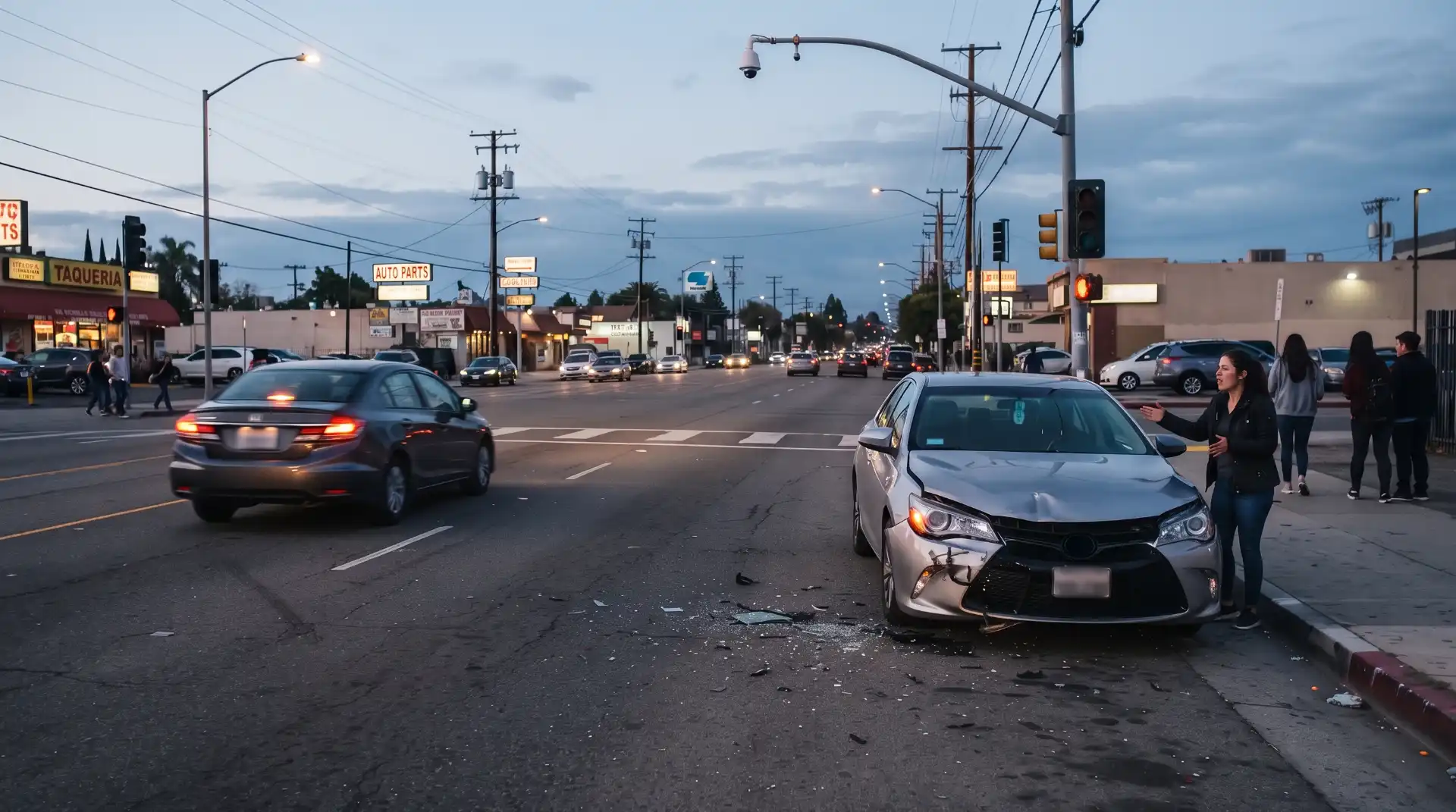
A hidden, altered, or unreadable license plate can make a hit-and-run investigation more difficult, but a plate number is only one way to identify a fleeing vehicle. California strengthened its license plate obstruction laws in 2026, while modern cameras, witness accounts, vehicle characteristics, debris, digital records, and other evidence may provide additional ways to investigate a hit-and-run crash.
Hit-and-run collisions create a particular problem for drivers, passengers, pedestrians, and cyclists. Instead of exchanging identification and insurance information, one motorist leaves the scene. The people who remain may have only seconds to notice the fleeing vehicle.
Sometimes a witness sees the entire license plate. In other cases, only a few characters are visible. A plate might also be concealed by a tinted cover, reflective material, frame, shade, or another device.
California lawmakers have responded to concerns involving deliberately obscured plates. Changes that took effect in 2026 strengthened restrictions involving products and alterations designed to interfere with visual or electronic plate recognition.
For people involved in a hit-and-run accident, understanding these rules also helps explain why license plate evidence is useful, what other evidence investigators may examine, and why documenting a collision scene can matter even when the fleeing vehicle’s complete plate number is unknown.
What Is Considered a Hit-and-Run Accident in California?
A hit-and-run generally occurs when a driver involved in a collision leaves without completing duties required by California law.
The requirements differ depending on whether a collision causes only property damage or results in injury or death.
Under California Vehicle Code Section 20002, a driver involved in an accident involving property damage must stop and provide specified identifying information. When the damaged property is unattended, the law establishes additional notification and reporting requirements.
California imposes more serious obligations when someone is injured or killed. Vehicle Code Section 20001 requires a driver involved in an accident resulting in injury or death to immediately stop and comply with applicable statutory duties.
Leaving the scene does not by itself establish every issue surrounding who caused the underlying collision. The events leading to the crash and the decision to leave afterward are separate questions that investigators may examine.
For example, a driver who was struck by another vehicle could still violate California’s hit-and-run requirements by leaving without completing required duties.
That distinction can become important when insurance companies, law enforcement, and attorneys review the available evidence.
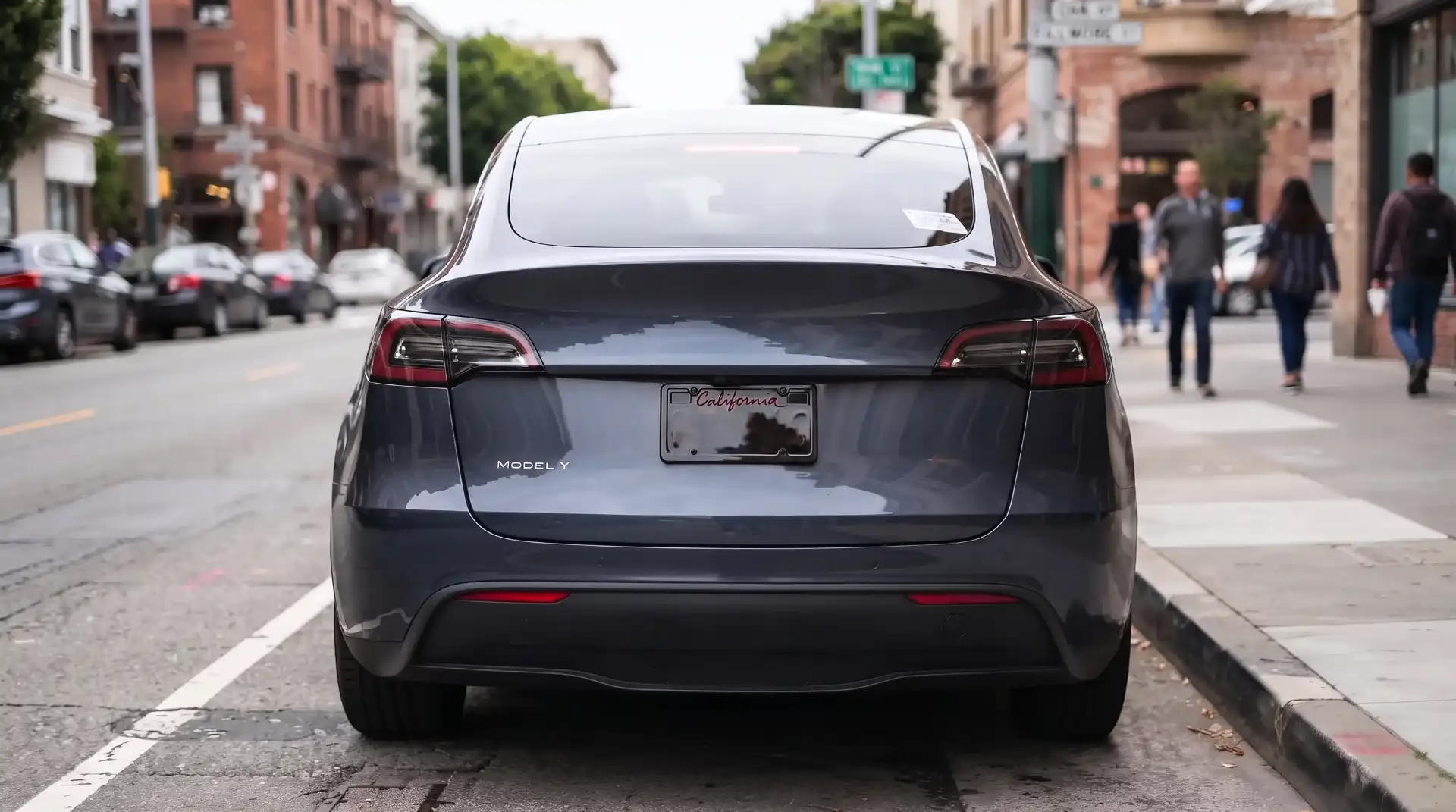
Why Hidden License Plates Have Become a California Issue
Automatic license plate readers, toll systems, red-light cameras, security cameras, parking systems, dashcams, and smartphones have made vehicle identification increasingly dependent on clear license plates.
At the same time, products designed to make plates difficult to read have become available.
Some covers appear transparent when viewed directly but interfere with cameras from particular angles. Others use tinting, reflective material, frames, shields, sprays, or other methods intended to reduce readability.
California law already required license plates to remain clearly visible and legible. The state strengthened its rules through Assembly Bill 1085.
The California Legislature approved AB 1085 in 2025, and the changes became effective January 1, 2026.
Under the updated Vehicle Code, California prohibits certain casings, shields, frames, borders, shades, tints, products, and other devices that obstruct or impair electronic recognition of a license plate.
The law also addresses alteration of a plate’s reflective coating or other changes intended to avoid visual or electronic capture.
The full statute can be reviewed through the California Legislative Information website.
The California Department of Motor Vehicles also included AB 1085 in its summary of new California driving laws for 2026.
These changes are relevant beyond traffic tickets. A plate intentionally designed to defeat cameras can create additional complications if that vehicle later becomes involved in a collision and leaves the scene.
What Changed Under California AB 1085?
AB 1085 amended California Vehicle Code Sections 5201 and 5201.1.
California law requires plates to remain securely attached, clearly visible, properly positioned, and legible.
The amended rules specifically include shades and tints among the products that cannot be attached to a vehicle when they interfere with electronic license plate recognition.
The legislation also prohibits manufacturing or selling certain devices intended to obscure plate recognition.
Under Vehicle Code Section 5201.1, manufacturing or selling prohibited products can carry a $1,000 fine per item. Operating a vehicle with a prohibited product or altering a plate to avoid visual or electronic capture can result in a $250 fine per violation.
These penalties concern the license plate violation itself. A driver who leaves an accident scene may face separate consequences under California’s hit-and-run laws depending on the circumstances.
A concealed plate therefore does not replace or merge with a hit-and-run violation. Investigators may examine both issues independently.
Why License Plate Evidence Matters After a Hit-and-Run
A license plate is one of the fastest ways to narrow an investigation.
Even a partial plate can sometimes be useful when combined with other vehicle details.
Suppose a witness remembers three characters from a plate and identifies the fleeing vehicle as a dark-colored SUV with damage to its front passenger side. Camera footage may provide additional information about the vehicle’s approximate year, model, direction of travel, or remaining plate characters.
Each detail can help create a more complete picture.
A clear license plate may potentially connect investigators to a registered vehicle. From there, further investigation may address who was operating the vehicle at the relevant time.
Registration alone, however, does not necessarily prove who drove the car during the collision.
That is why hit-and-run cases can depend on multiple pieces of evidence rather than a single photograph.
What If the License Plate Was Covered or Obscured?
An obscured plate can make identification harder, particularly when the collision occurs quickly or at night.
It does not necessarily make identification impossible.
Modern investigations can rely on the entire vehicle instead of the plate alone.
A camera might record the vehicle before or after the crash from a different angle. Another camera farther down the road might capture a clearer view. A witness could remember a bumper sticker, roof rack, unusual wheel design, body damage, aftermarket lighting, paint color, or other distinguishing characteristic.
The vehicle may also leave physical evidence at the collision scene.
Broken headlights, mirror pieces, paint transfer, trim, plastic fragments, glass, or other debris could provide information about the type of vehicle involved.
A concealed plate therefore represents one missing piece of evidence, not necessarily the end of an investigation.
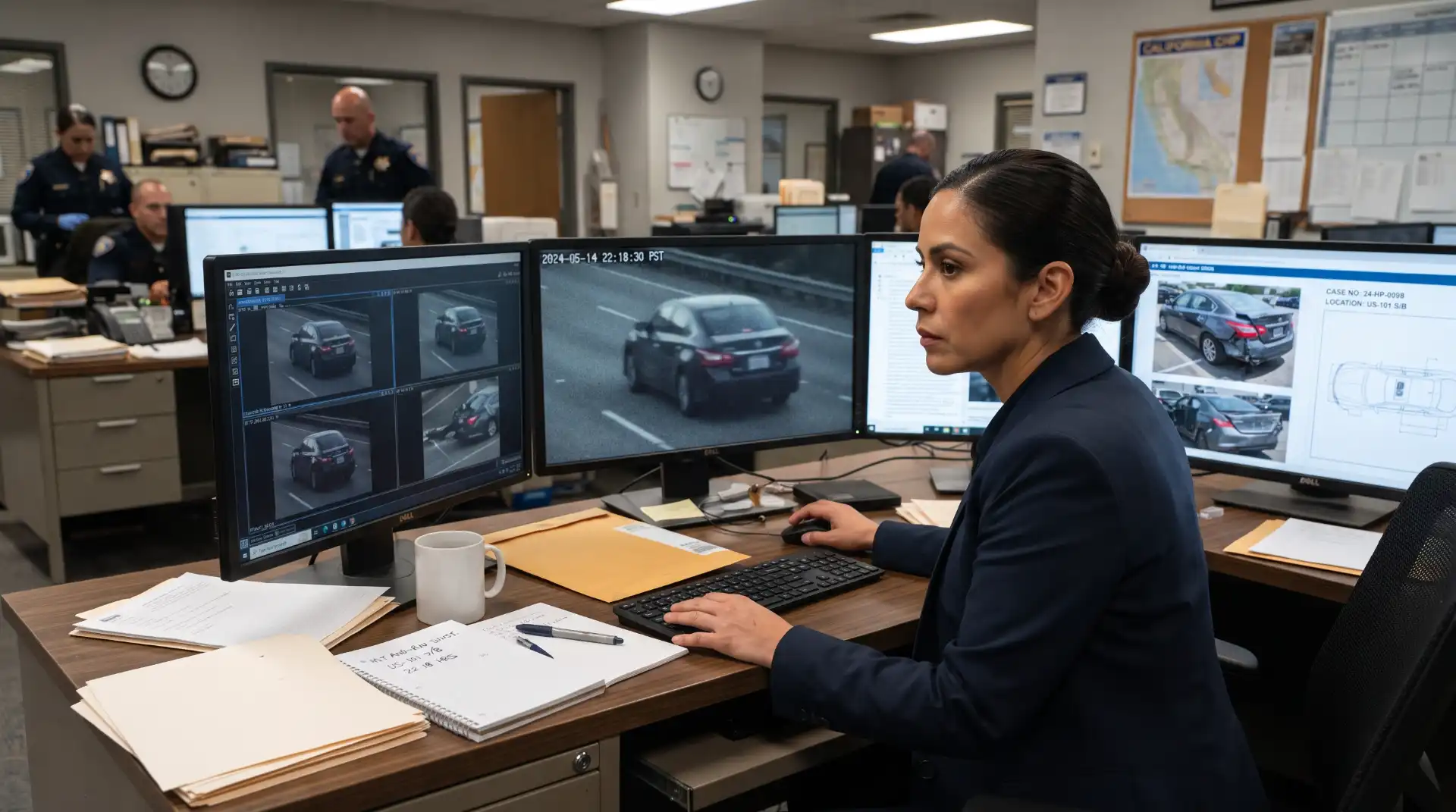
Surveillance Cameras Can Help Reconstruct a Hit-and-Run
California cities contain a growing network of cameras operated by private businesses, homeowners, transportation agencies, parking facilities, and motorists.
After a hit-and-run, nearby video can be particularly useful.
A camera does not have to capture the impact itself.
Footage recorded shortly before a crash might show the suspect vehicle approaching the area. Another recording may show it leaving seconds later.
Investigators can sometimes build a timeline by reviewing footage from several locations.
For example, one camera might establish the vehicle’s color and body style. A second might capture damage created during the collision. Another might show a portion of the plate.
This type of reconstruction becomes particularly valuable when the plate was partially hidden.
People involved in collisions may want to identify nearby cameras while details of the scene remain fresh.
Our guide on what to do after a car accident in San Francisco provides additional information about documenting a collision and gathering available evidence.
Dashcam Footage Can Capture Details a Driver Misses
A person involved in a sudden collision may not have time to memorize a fleeing car’s license plate.
A dashcam may have already recorded it.
Modern dashcams can capture vehicle movement, lane position, traffic lights, road conditions, the direction a driver fled, and identifying characteristics.
The quality of the recording depends on lighting, camera resolution, distance, motion, weather, and viewing angle.
Even footage that does not show a readable plate can still have value.
It may reveal that a vehicle had a distinctive rear light pattern, missing hubcap, damaged bumper, commercial marking, unusual color, or other identifying detail.
Drivers should preserve original recordings after an accident rather than relying only on compressed clips or screenshots.
The original file can contain more visual information and metadata.
Witnesses May Remember More Than a Plate Number
Witness testimony can play a major role in hit-and-run investigations.
People often assume witnesses must remember the exact license plate to provide useful information. That is not the case.
A witness might recall whether the vehicle was a sedan, pickup, crossover, van, motorcycle, or commercial truck.
They might remember its approximate color, age, direction of travel, number of occupants, visible damage, or unusual modifications.
One witness may remember information that another person missed.
When several observations are compared, they may create a stronger description of the fleeing vehicle.
Witness information can also help investigators understand how the collision happened.
Our article on how to prove fault in a San Francisco car accident discusses the broader role that photographs, witnesses, police reports, and other evidence can play in determining responsibility.
Vehicle Debris Can Become Identification Evidence
Hit-and-run drivers sometimes leave parts of their vehicles behind.
A collision can break a mirror, headlight assembly, bumper component, wheel trim, grille piece, reflector, or other exterior component.
Certain components may be associated with a particular manufacturer, vehicle family, or range of model years.
Paint transfer can also help document contact between two vehicles.
Physical evidence may become particularly useful if law enforcement later locates a suspected vehicle with corresponding damage.
For example, a vehicle missing a passenger-side mirror may attract additional attention if a matching mirror component was found at the collision scene.
People should avoid disturbing debris when doing so could create a traffic hazard or interfere with an investigation. Photographs can document where pieces were located in relation to the vehicles and roadway.
Photograph the Fleeing Vehicle If It Is Safe
A smartphone photograph can preserve details that are difficult to remember accurately.
If circumstances permit, a photo of the fleeing vehicle may capture its plate, body shape, paint color, damage, wheels, lights, stickers, or other characteristics.
Safety comes first.
Someone involved in a collision should not enter moving traffic or begin chasing another vehicle simply to obtain a photograph.
A distant or imperfect image may still contain useful details.
Several photos can be more informative than one because different frames may capture different angles.
Video can also document the vehicle’s direction of travel.
Do Not Chase a Hit-and-Run Driver
The urge to follow a fleeing vehicle can be strong, particularly when someone has been injured or significant property damage has occurred.
A pursuit can create additional risks.
The fleeing driver may already be driving unpredictably. Increasing speed, running signals, or following the vehicle into unfamiliar areas can lead to another collision.
A safer approach is generally to preserve the information already available.
Details can include the vehicle description, direction of travel, partial plate, time, location, visible damage, driver appearance if observed, and other distinguishing characteristics.
These details can then be reported to responding law enforcement.
Report the Collision and Preserve the Report Information
Reporting a hit-and-run creates an official record of the event.
Provide factual information about what occurred and distinguish between details you personally observed and information provided by someone else.
If you are unsure about a plate character, saying that it is uncertain can be more useful than presenting a guess as fact.
A mistaken character could point investigators toward the wrong vehicle.
Keep any report number or incident information provided to you.
The report may later become part of an insurance claim or legal investigation.
Look for Cameras Around the Accident Scene
After immediate medical and safety concerns are addressed, consider the surrounding environment.
Businesses frequently operate exterior security cameras.
Parking garages may record entrances and exits.
Apartment buildings can have doorbell or security systems.
Public transit vehicles may use onboard cameras.
Drivers nearby may have dashcams.
The important point is that the useful camera may not be positioned directly beside the crash.
If the vehicle fled east, cameras along that route could have captured it after the collision.
Some recording systems overwrite footage after a relatively short period. Identifying potential sources early can therefore matter.
Automated License Plate Readers May Add Another Source of Information
Automated license plate reader technology is used in various contexts to identify vehicles.
A plate intentionally covered or altered may interfere with recognition by some systems, which is one reason California’s 2026 legislation specifically addresses devices that impair electronic plate reading.
However, the effectiveness of any particular system depends on several factors, including camera position, lighting, plate condition, vehicle movement, and the type of obstruction.
A vehicle that avoids recognition by one camera might still appear clearly on another.
Investigators may therefore examine multiple sources instead of assuming an obscured plate prevented every possible identification.
Social Media Images Should Be Treated Carefully
After a hit-and-run, people sometimes turn to neighborhood groups or social media to locate the vehicle.
Public assistance can occasionally generate useful leads, but online identification also presents risks.
A similar vehicle may belong to an unrelated person.
A blurry image can make colors, models, and license plate characters appear different from reality.
Public accusations made before identification has been confirmed can create additional problems.
Information obtained online may be more useful when provided to investigators rather than treated as proof by itself.
A Hidden Plate Does Not Automatically Prove the Driver Caused the Crash
An illegal plate cover may be relevant evidence, but liability for the collision still depends on the circumstances that caused it.
Consider a hypothetical collision in which a vehicle with an obscured plate is struck by another motorist who ran a red light. The plate violation does not automatically transform the first driver into the person responsible for causing the collision.
Likewise, leaving the scene is serious conduct, but investigators may still need to reconstruct the events preceding the impact.
Evidence about speeding, lane changes, traffic signals, right-of-way, distraction, impairment, following distance, and other driving behavior may affect the liability analysis.
California uses comparative fault principles, meaning responsibility can potentially be allocated among multiple parties based on their respective conduct.
Insurance Questions After an Unidentified Driver Leaves
A hit-and-run can also create insurance complications because the other vehicle may initially remain unidentified.
The available coverage depends on the policy, facts, type of damage, and other circumstances.
Policyholders should review their own coverage rather than assume every hit-and-run loss is handled the same way.
Documentation can become especially important when the other driver cannot immediately be located.
Photographs, medical records, repair estimates, witness information, camera footage, and police documentation may help establish that a collision occurred and describe its consequences.
If the fleeing vehicle is later identified, additional insurance information might become available.
Evidence That May Help Identify a Fleeing Vehicle
License plate evidence remains highly useful, but an investigation may involve far more information.
Potential sources include traffic-camera recordings, business surveillance, residential security systems, dashcams, witness statements, photographs, vehicle debris, paint transfer, roadway evidence, repair records, distinctive vehicle modifications, and information obtained through law enforcement investigation.
These sources may reinforce each other.
A witness might remember only two plate characters. Surveillance footage might establish the make and color. Debris may narrow the model year. Another camera may document fresh collision damage.
Together, those facts may provide a clearer identification than any individual piece of evidence could provide alone.
Why Preserving Original Evidence Matters
Digital files can lose information when copied, cropped, edited, compressed, or uploaded to social media.
Original photographs and videos should generally be preserved.
Keep copies of relevant messages, photographs, recordings, repair documents, medical records, receipts, and correspondence associated with the collision.
Avoid modifying damaged vehicle components before they have been properly documented when those parts may contain useful evidence.
The condition of a damaged bumper, mirror, headlight, wheel, or body panel can help show the location and direction of impact.
Evidence preservation can also help when accounts of the crash later differ.
What California Drivers Should Know About Plate Covers in 2026
The legal landscape surrounding license plate visibility became stricter in 2026.
California Vehicle Code Section 5201 requires license plates to remain clearly visible and legible. The amended law expressly addresses shades, tints, frames, shields, and other devices that interfere with electronic reading.
Vehicle Code Section 5201.1 also prohibits operating a vehicle with specified prohibited products and prohibits altering plates to evade visual or electronic capture.
These provisions matter even for motorists who have no connection to a hit-and-run.
A decorative plate cover that interferes with electronic recognition may create a legal issue even if the driver did not install it specifically to leave an accident scene.
California motorists should therefore consider whether frames, tinted covers, coatings, or accessories interfere with the visibility or electronic readability of their plates.
What to Do After a Hit-and-Run Accident in California
The first concern after any serious collision is safety.
Move away from active traffic when circumstances permit and contact emergency services when someone is injured or the situation requires immediate assistance.
Try to remember or record identifying information without pursuing the fleeing vehicle.
Photograph the accident scene, your vehicle, debris, road markings, signs, traffic signals, and other relevant conditions.
Ask witnesses for contact information.
Look for nearby cameras.
Report the collision to the appropriate authorities and retain the report information.
Medical evaluation can also be relevant when injuries occur, including symptoms that are not immediately apparent.
More general post-crash information is available in our step-by-step guide after a San Francisco car accident.
Can a Hit-and-Run Driver Still Be Identified Without a Plate Number?
Yes. A complete license plate can simplify identification, but its absence does not necessarily prevent an investigation from progressing.
Modern accident investigations can combine physical evidence with digital information.
A distinctive vehicle seen on multiple cameras may eventually be connected to a particular owner. Repair activity following a crash could provide another investigative lead. Witness descriptions and physical debris may further narrow the possibilities.
The strength of any particular evidence depends on the circumstances.
That is why preserving seemingly minor details can matter.
A broken light, unusual wheel, partial plate character, distinctive sticker, dent, or direction of travel may become useful when compared with other information.
Hidden Plates Make Evidence Preservation More Important
California’s updated license plate laws recognize a modern reality. Cameras now play an important role in vehicle identification, while certain products have been designed to interfere with that technology.
AB 1085 strengthened California’s restrictions on plate-obscuring devices beginning in 2026.
For people affected by hit-and-run accidents, the development also highlights a broader point. A readable plate is valuable evidence, but it is not the only evidence that matters.
Surveillance video, dashcams, witnesses, physical debris, vehicle characteristics, photographs, police documentation, and digital records may help reconstruct what happened and potentially identify a fleeing vehicle.
A person dealing with a hit-and-run case can also review our article about San Francisco auto accidents and legal rights for additional information about accident evidence and California claims.
When identification or liability remains uncertain, reviewing the available evidence can help clarify what information exists and what questions remain unresolved.