
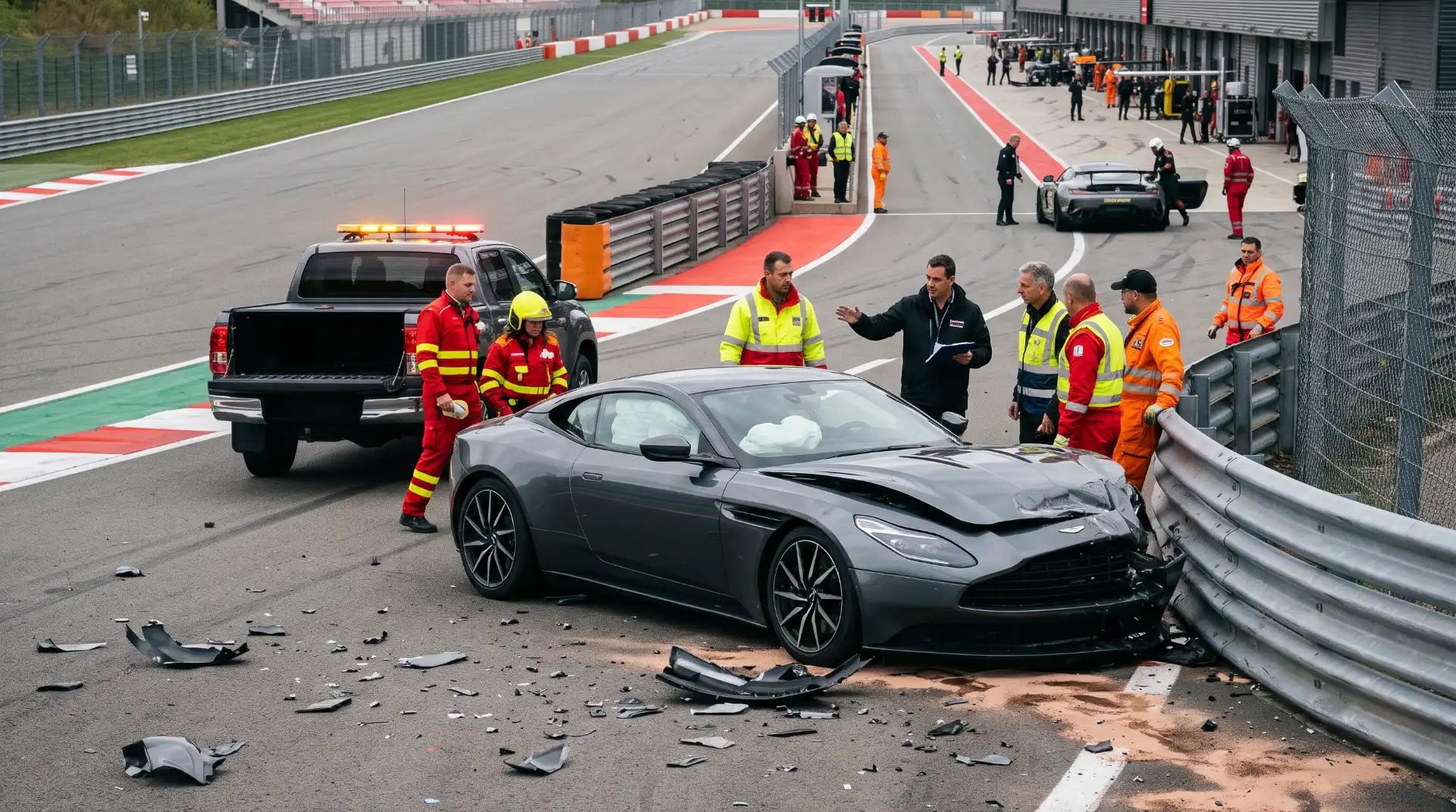
High-performance automobiles have become a major attraction at automotive exhibitions, manufacturer-sponsored driving experiences, dealership demonstrations, motorsports festivals, and private track events throughout the United States. These experiences allow consumers and automotive enthusiasts to explore the capabilities of powerful vehicles, experience advanced performance technology, and test cars that they might otherwise never have an opportunity to drive. From luxury sports car demonstrations in California to organized performance driving events at professional racing circuits, these activities combine entertainment, marketing, and high-speed driving in environments that can involve substantial risks.
Although manufacturers and event organizers often emphasize safety procedures, serious accidents can still happen. A participant may lose control of a vehicle during a high-speed demonstration, a professional instructor may provide inadequate supervision, a manufacturer may supply a vehicle with a dangerous mechanical defect, or an event organizer may fail to establish appropriate barriers between spectators and moving automobiles. In some situations, a collision may involve multiple vehicles, sending cars into restricted areas or causing injuries to drivers, passengers, event employees, spectators, and nearby pedestrians.
When these incidents result in serious injuries or fatalities, determining legal responsibility can become considerably more complicated than investigating an ordinary traffic collision. Several businesses and individuals may have participated in organizing the event, preparing the vehicles, supervising drivers, maintaining the facility, and controlling access to dangerous areas. Each party may have had different responsibilities, and the actions or omissions of more than one organization may have contributed to the crash.
For injured individuals and their families, an important question is whether the vehicle manufacturer, dealership, driving instructor, event promoter, race organizer, or property owner can be held legally responsible. The answer depends on the circumstances of the accident, the applicable state laws, the responsibilities assumed by each party, and the evidence connecting their conduct to the resulting injuries.
Understanding high-performance test drive accident liability is particularly important in California, where automotive events, luxury vehicle demonstrations, racing activities, and enthusiast gatherings regularly attract participants and spectators. Although signing a liability waiver or agreeing to follow event rules may affect a potential claim, these documents do not automatically resolve every legal issue or eliminate every possible source of responsibility.
The Growing Popularity of High-Performance Driving Experiences
High-performance driving experiences have developed into an important part of the automotive industry’s marketing and entertainment activities. Manufacturers frequently organize special events to introduce new models, demonstrate engineering improvements, and allow potential customers to experience vehicle performance under controlled conditions. Dealerships may also arrange private demonstrations, while independent event companies operate driving schools, performance clinics, and track-day programs.
Unlike an ordinary dealership test drive, which generally takes place on public roads at normal traffic speeds, a performance driving experience may involve acceleration exercises, emergency braking demonstrations, cornering techniques, skid-control training, or driving on a closed racing circuit. Participants may be encouraged to explore the vehicle’s acceleration, handling, braking capabilities, and electronic performance systems.
These activities can provide valuable educational experiences, but they also create safety challenges. High-performance vehicles may accelerate rapidly, generate considerable cornering forces, and require specialized driving techniques. Even experienced motorists may struggle when operating an unfamiliar vehicle near its performance limits.
A participant who has never driven a powerful rear-wheel-drive sports car, for example, may not understand how quickly the rear tires can lose traction during aggressive acceleration. Similarly, a driver unfamiliar with a high-performance braking system may apply the brakes incorrectly when approaching a corner at speed.
The risks become greater when organizers allow participants with different levels of driving experience to operate vehicles in the same event. A professional racing driver may understand how to maintain control during an emergency maneuver, while an inexperienced participant may react unpredictably when a vehicle begins sliding.
Event organizers must therefore consider the characteristics of the vehicles, the experience of participants, the design of the driving course, and the possibility that mistakes will occur. Safety planning should account for foreseeable human error rather than assuming that every participant will behave like a trained professional.
Why Serious Accidents Can Occur During Automotive Events
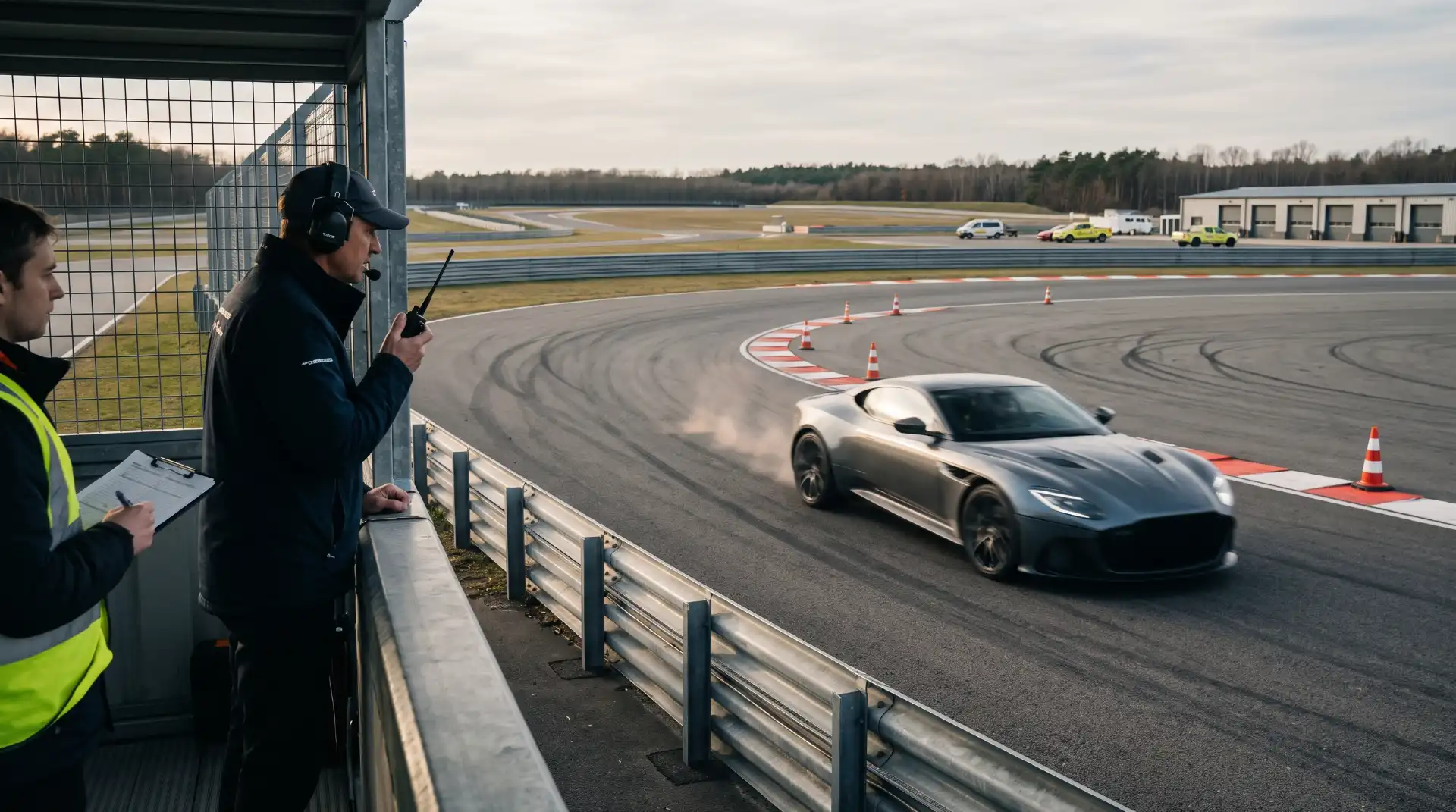
High-performance driving accidents can develop through several different mechanisms. Sometimes a crash results from an individual driver’s negligence. In other situations, mechanical problems, inadequate supervision, unsafe event conditions, or failures involving multiple parties contribute to the incident.
Excessive Speed and Loss of Vehicle Control
Speed is one of the most obvious risk factors associated with high-performance driving events. Vehicles designed for rapid acceleration and high-speed handling can reach dangerous speeds in a relatively short distance. When drivers exceed the limits of their experience or the available course conditions, they may lose control before they have enough time to correct the situation.
A driver participating in a manufacturer-sponsored demonstration might accelerate aggressively while exiting a corner. If the vehicle’s rear tires lose traction, the automobile could rotate, leave the driving surface, strike a barrier, or collide with another participant.
The fact that the event takes place on a closed track does not eliminate the possibility of serious injuries. High-speed impacts can cause substantial vehicle deformation, traumatic brain injuries, spinal cord injuries, internal bleeding, and other life-threatening conditions.
Investigators may examine whether the driver received adequate instructions, whether speed restrictions were communicated, and whether event personnel intervened when unsafe driving behavior became apparent.
Inadequate Driver Training and Supervision
Participants in performance driving programs do not necessarily have professional racing experience. Some may have limited knowledge of high-speed vehicle dynamics or emergency handling techniques.
A responsible organizer should evaluate participant experience before assigning vehicles and allowing individuals onto a driving course. Depending on the activity, this may involve reviewing driving histories, conducting safety briefings, requiring introductory instruction, and establishing restrictions on vehicle operation.
An accident may raise questions about whether an instructor properly explained braking distances, cornering techniques, vehicle stability systems, and emergency procedures.
Consider a situation in which an inexperienced participant is instructed to complete a high-speed driving exercise without receiving adequate preparation. If the driver loses control and strikes another vehicle, investigators may examine whether the instructor or event operator failed to provide reasonable supervision.
The participant’s own actions remain relevant, but an organizer may also face scrutiny if its training procedures were unreasonable under the circumstances.
Mechanical Failures and Vehicle Defects
High-performance vehicles place considerable demands on mechanical and electronic systems. Engines, transmissions, tires, suspension components, brakes, steering assemblies, and electronic stability systems must function properly when vehicles are operated under demanding conditions.
A defective brake component could reduce stopping ability during an emergency maneuver. A steering malfunction might prevent a driver from correcting the vehicle’s direction. A tire defect could cause sudden loss of control, particularly during aggressive cornering.
Manufacturing defects, design problems, inadequate maintenance, and improper modifications may all contribute to serious accidents.
In these cases, investigators should not automatically assume that the driver caused the collision simply because the vehicle left the track. A mechanical failure may have occurred before the driver lost control.
Unsafe Track Layout and Inadequate Safety Barriers
The physical environment of a driving event can significantly influence the severity of a collision. Racing circuits and performance driving facilities must consider runoff areas, barriers, surface conditions, track markings, emergency access routes, and separation between vehicles and spectators.
A poorly positioned barrier could expose spectators to vehicles leaving the track. Inadequate runoff space may increase the likelihood that a vehicle collides with a fixed object after losing control.
Organizers may also face questions about whether they selected an appropriate location for the event, inspected the course, restricted dangerous areas, and communicated relevant hazards to participants.
These issues can become especially important when a collision occurs near spectator viewing areas, temporary event structures, or pedestrian access routes.
Who May Be Legally Responsible for a High-Performance Test Drive Accident?
Determining liability requires identifying every party whose actions or failures may have contributed to the accident. Responsibility does not automatically belong to the vehicle manufacturer or the event organizer simply because they were associated with the activity.
Depending on the circumstances, multiple parties may share responsibility.
Vehicle Manufacturers and Automakers
Vehicle manufacturers may face product liability claims when a dangerous design, manufacturing defect, or inadequate warning contributes to an accident.
A high-performance vehicle may contain advanced braking systems, electronic stability controls, traction management technology, and specialized suspension components. These systems are intended to help drivers maintain control, but they must be designed and manufactured to function reasonably safely.
For example, imagine that a participant experiences an unexpected steering malfunction during a manufacturer-sponsored driving demonstration. The vehicle suddenly becomes difficult to control, leaves the track, and strikes a safety barrier.
If engineering evidence establishes that a defective steering component contributed to the crash, the manufacturer may face a product liability claim.
Manufacturers may also be responsible when they fail to provide adequate warnings about foreseeable risks associated with vehicle operation. A warning issue could arise if a manufacturer knows that a particular vehicle configuration creates a significant safety concern under certain operating conditions but fails to communicate that information appropriately.
However, a vehicle manufacturer is not automatically liable whenever one of its automobiles crashes. Investigators must establish a legally sufficient connection between an alleged defect or negligent act and the injuries sustained.
Dealerships and Authorized Vehicle Representatives
Dealerships sometimes organize performance demonstrations to attract customers and promote particular models. They may provide vehicles, coordinate appointments, arrange driving routes, or employ staff members who accompany participants.
If a dealership allows an individual to operate a vehicle without appropriate screening or supervision, its conduct may become relevant to a negligence investigation.
For example, a dealership employee might permit a participant with no relevant driving experience to operate an extremely powerful vehicle during an aggressive acceleration demonstration. If the participant loses control and injures a passenger or another motorist, questions may arise about the dealership’s safety procedures.
Dealership liability may also involve vehicle preparation. A car used for a demonstration should be inspected and maintained according to appropriate standards. If a known mechanical problem is ignored, the dealership or maintenance provider may become a potential defendant.
The precise legal relationship between the dealership, manufacturer, event company, and employee matters. A dealership may operate independently, act as an authorized representative, or participate under a separate event agreement.
Event Organizers and Promoters
Event organizers have responsibilities that may extend beyond advertising, ticket sales, and scheduling.
They often control participant registration, vehicle assignments, driving instructions, safety briefings, track access, event staffing, and emergency procedures. These responsibilities can create legal duties when an organizer’s conduct exposes participants or spectators to foreseeable dangers.
An organizer may face negligence allegations if it fails to establish reasonable safety procedures, permits dangerous driving behavior, or ignores known hazards.
For example, suppose a performance driving event allows several vehicles to enter a narrow section of the course simultaneously despite inadequate spacing and limited visibility. A collision occurs when one participant brakes unexpectedly, causing another vehicle to strike it.
Investigators may examine whether the organizer established appropriate vehicle spacing, communicated passing restrictions, and provided sufficient track supervision.
Event organizers may also be responsible for coordinating emergency medical response. Serious injuries during high-speed activities can require immediate treatment, and delays in emergency response may increase the consequences of an accident.
Whether an organizer is legally responsible depends on its actual duties, the foreseeability of the risk, and whether its conduct substantially contributed to the harm.
Driving Instructors and Safety Personnel
Driving instructors play an important role in performance demonstrations and advanced driving programs. They may provide direct instruction, supervise participants, explain vehicle controls, and determine whether a driver is ready to attempt more difficult exercises.
An instructor who provides incorrect information or fails to respond appropriately to an obvious safety problem may face negligence allegations.
For example, an instructor may know that a participant is struggling to control a vehicle but nevertheless allow the individual to continue a high-speed exercise without additional training.
Similarly, an instructor who gives confusing directions during an emergency maneuver may contribute to a collision.
Safety personnel may also have responsibilities involving track entry, vehicle spacing, communication systems, and emergency intervention. Their duties depend on the event’s structure and the roles assigned to them.
Racetrack Owners and Property Operators
A driving event may take place at a privately owned racetrack, motorsports facility, automotive proving ground, or other specialized property.
Property owners and operators may have responsibilities involving maintenance, inspections, barriers, access restrictions, drainage, lighting, and other conditions that affect visitor safety.
A dangerous surface defect, poorly maintained barrier, unsecured equipment, or unsafe spectator area may contribute to an accident.
In California, premises liability principles can become relevant when an injury results from the way a property was managed or maintained. The Judicial Council of California’s civil jury instructions explain the basic elements of premises liability, including property control, negligence, injury, and causation.
The relevant instructions can be reviewed in the California Judicial Council Civil Jury Instructions.
However, racetrack operators are not automatically responsible for every accident occurring on their property. The specific hazard, the operator’s knowledge, the applicable safety responsibilities, and the relationship between the condition and the injury must be evaluated.
Can a Signed Liability Waiver Prevent an Accident Victim From Filing a Lawsuit?
One of the most important legal issues involving high-performance driving experiences is the use of liability waivers. Before participating in a track day, driving demonstration, racing school, or manufacturer-sponsored event, individuals are frequently required to sign documents acknowledging the risks of the activity.
These agreements may contain language stating that participants understand the possibility of vehicle collisions, mechanical failures, serious injuries, and even death. They may also include provisions releasing the event organizer, property owner, manufacturer, sponsors, employees, and other associated parties from certain claims.
Although these documents can provide significant legal protection, their enforceability depends on the applicable law and the specific circumstances of the accident.
What Is an Assumption of Risk Agreement?
An assumption of risk agreement is a document through which a participant acknowledges certain dangers associated with an activity and agrees to accept specified risks.
For a high-performance driving event, the agreement may explain that participants understand the possibility of losing control, colliding with another vehicle, experiencing mechanical problems, or suffering injuries while operating or observing high-speed automobiles.
Some agreements also attempt to release organizers from liability for ordinary negligence.
The purpose is to establish that participants voluntarily accepted certain risks in exchange for permission to participate.
However, signing such a document does not necessarily mean that an individual has surrendered every legal right. The wording, scope, applicable state law, and nature of the alleged misconduct all matter.
Can an Event Organizer Avoid Responsibility Through a Waiver?
California courts have recognized that properly drafted liability releases can protect certain event operators from claims involving ordinary negligence.
A particularly relevant decision is Diamond v. Schweitzer, a 2025 California Court of Appeal case involving a spectator injured at a racing event. The plaintiff had signed a liability release before entering the restricted pit area of a racetrack. The appellate court upheld the release against the ordinary negligence claims presented, finding that its language covered the relevant circumstances.
The decision illustrates why event participants and spectators should carefully review liability documents before signing them.
However, the case should not be interpreted as establishing that every racing event waiver protects every organizer against every possible claim. The language of the agreement, the relationship between the alleged negligence and the event, and the circumstances of the injury remain important.
Are Claims Involving Gross Negligence Different?
Yes. California generally does not permit businesses to use liability agreements to release themselves from future gross negligence in recreational activities.
Gross negligence generally involves conduct that demonstrates an extreme departure from ordinary care, rather than a simple mistake or ordinary failure to exercise reasonable caution.
For example, an event organizer who knowingly allows participants to drive vehicles with a serious unresolved brake problem may face allegations that go beyond ordinary negligence, depending on the evidence.
Similarly, deliberately ignoring an obvious and substantial danger involving track access or spectator protection may create legal questions that cannot necessarily be resolved through a standard liability waiver.
California Civil Code Section 1668 also addresses agreements that attempt to exempt parties from responsibility for certain wrongful conduct, including violations of law.
The California Supreme Court’s decision in City of Santa Barbara v. Superior Court (2007) is an important authority concerning the unenforceability of releases for future gross negligence in recreational activities.
For this reason, individuals should not assume that a signed waiver automatically prevents them from pursuing compensation after a serious accident.
A Real California Legal Development: What a 2025 Racing Event Case Teaches Participants
The 2025 appellate decision in Diamond v. Schweitzer offers an especially useful example of how California courts evaluate liability agreements associated with motorsports activities.
The case involved an individual who attended a racing event and entered a restricted pit area after signing a document titled as a release and waiver of liability, assumption of risk, and indemnity agreement.
The plaintiff was subsequently injured during an incident involving another individual at the racetrack.
The lawsuit included negligence and premises liability allegations, among other claims. The defendants argued that the signed release barred the plaintiff’s claims.
The appellate court concluded that the release was sufficiently clear and broad to cover the ordinary negligence claims at issue. It also examined whether the conduct causing the injury was reasonably related to the purpose for which the release had been signed.
This decision is important because it demonstrates that liability agreements can extend beyond the person actually driving a race car. Spectators and individuals entering restricted areas may also be affected by the agreements they sign.
However, it also highlights the importance of examining exactly what the release covers. A waiver signed to enter a pit area does not automatically establish that every conceivable negligent act, unrelated danger, or product defect has been legally released.
For individuals injured at automotive events, a lawyer may need to review the actual agreement, the event rules, the location of the accident, and the conduct that allegedly caused the injury.
The case can be reviewed in the California Court of Appeal decision in Diamond v. Schweitzer.
When Can a Vehicle Manufacturer Face Product Liability?
Vehicle manufacturers may face product liability claims when a dangerous vehicle defect contributes to an accident and resulting injuries.
Product liability is particularly important in high-performance driving cases because vehicles may be subjected to demanding conditions during demonstrations and track activities.
The fact that a vehicle is designed for performance does not mean that its manufacturer can disregard reasonable safety expectations.
Design Defects
A design defect involves an alleged problem with the way a vehicle or component was designed.
For example, a vehicle may have a steering configuration, braking system, suspension arrangement, or stability control design that creates an unreasonable safety risk.
A design-related claim may arise if evidence establishes that a safer alternative design was feasible and that the existing design contributed to the accident.
Investigators may evaluate the vehicle’s engineering specifications, testing records, performance characteristics, and relevant safety information.
Manufacturing Defects
A manufacturing defect occurs when an individual vehicle or component differs from its intended design in a way that makes it unreasonably dangerous.
For example, a defective brake assembly may contain an improperly manufactured component that fails during a high-speed demonstration.
Similarly, a steering component may have been incorrectly assembled, creating a risk of sudden mechanical failure.
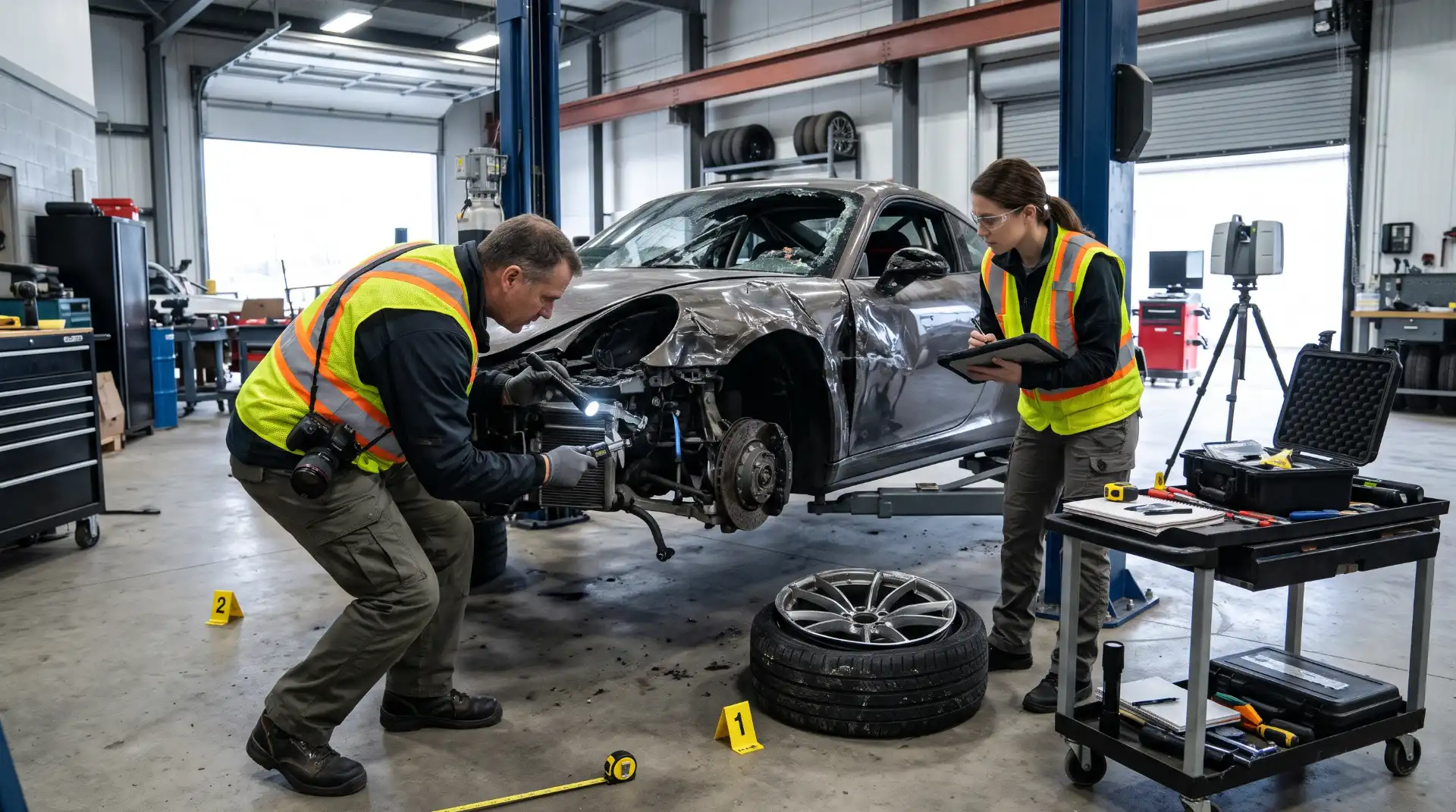
These cases often require expert examination of the damaged vehicle and its components.
Failure to Provide Adequate Warnings
Manufacturers may also face claims involving inadequate warnings or instructions.
A performance vehicle may have specific operating limitations, maintenance requirements, or safety restrictions that consumers and professional operators need to understand.
If a manufacturer fails to provide appropriate warnings about a known and foreseeable hazard, and that failure contributes to an injury, a product liability claim may arise.
However, the existence of an accident does not automatically establish that a warning was inadequate. The evidence must demonstrate that the warning issue was legally relevant to the injury.
Why Federal Vehicle Safety Investigations Matter
The National Highway Traffic Safety Administration (NHTSA) monitors vehicle safety complaints, investigates potential defects, and oversees safety recalls.
When a participant suffers injuries in a high-performance driving accident, information involving prior complaints, safety investigations, manufacturer communications, and recalls may become relevant.
For example, if a vehicle involved in a demonstration had an unresolved safety recall concerning a braking or steering component, investigators may want to determine whether the condition contributed to the collision.
NHTSA provides a public vehicle recall and safety investigation database, where consumers can search using a vehicle identification number or other available information.
An important distinction is that a recall does not automatically prove liability in an individual accident. However, recall information and related technical documents may help investigators identify potential safety issues.
How Event Organizers Can Be Held Responsible for Inadequate Safety Measures
High-performance driving events require more extensive safety planning than ordinary public-road driving because participants are intentionally operating vehicles in demanding conditions.
Organizers must consider how the event is structured, how drivers are supervised, where spectators are permitted, and how emergencies will be handled.
A failure in any of these areas may contribute to serious injuries.
Inadequate Participant Screening
Not every driver is prepared to operate a high-performance vehicle.
Organizers may need to evaluate participants’ experience, confirm appropriate licensing, explain the driving requirements, and determine whether individuals are suitable for particular activities.
For example, a participant with no previous experience operating a powerful sports car may not be ready for an advanced track exercise involving aggressive acceleration and cornering.
If an organizer allows inexperienced participants to enter an activity without reasonable preparation, its screening and supervision practices may become relevant to a negligence claim.
Failure to Establish Appropriate Speed Restrictions
Different sections of a driving facility may present different levels of danger.
A straight section of a track may accommodate higher speeds, while a narrow corner or area near a spectator enclosure may require stricter restrictions.
Organizers may need to communicate applicable speed limits, passing rules, vehicle spacing requirements, and prohibited maneuvers.
If participants are encouraged to drive aggressively without appropriate restrictions or supervision, the event’s safety procedures may come under scrutiny after a collision.
Insufficient Barriers and Spectator Protection
Spectators frequently attend automotive events to watch high-performance vehicles demonstrate acceleration, handling, and racing techniques.
However, spectators should not be exposed unnecessarily to moving vehicles.
Event organizers and property operators may need to establish designated viewing areas, physical barriers, restricted access zones, and appropriate separation between participants and the driving surface.
A vehicle that leaves the track may cause catastrophic injuries if spectators are standing too close to the course or if protective structures are inadequate.
The appropriate safety arrangements depend on the event, the facility, the expected vehicle speeds, and the foreseeable risks.
Inadequate Emergency Response Planning
A serious crash during a driving event can produce injuries requiring immediate medical attention.
Organizers should consider how emergency personnel will reach the scene, how injured individuals will be transported, and how communication will take place between track officials and medical responders.
Depending on the event’s size and risk level, appropriate arrangements may include medical personnel, emergency vehicles, fire response resources, communication systems, and designated access routes.
An accident investigation may examine whether the emergency response arrangements were reasonable and whether any avoidable delay contributed to the victim’s injuries.
Can a Driving Instructor Be Responsible for a Participant’s Negligence?
A common question involves whether an instructor or event operator can be held responsible when the person actually driving the vehicle caused the collision.
The answer depends on whether another party’s negligence contributed to the accident.
Drivers generally have responsibilities to operate vehicles safely, even when participating in an organized demonstration or receiving professional instruction.
However, an instructor may also have responsibilities when supervising the activity.
Consider a situation in which a driving instructor knows that a participant is having difficulty maintaining control of a high-performance vehicle. Instead of stopping the exercise or providing additional instruction, the instructor directs the participant to attempt a more demanding maneuver.
The participant loses control and strikes another vehicle.
Investigators may examine whether the instructor acted reasonably, whether the participant was qualified for the exercise, and whether the instructions contributed to the collision.
Other possible issues include:
-
Whether the instructor provided accurate safety instructions.
-
Whether the participant received adequate training.
-
Whether the instructor ignored warning signs of unsafe driving.
-
Whether the vehicle was appropriate for the participant’s experience.
-
Whether the event had reasonable procedures for stopping dangerous activities.
A participant’s negligence does not necessarily eliminate the possibility that an instructor or organizer also contributed to the accident.
Shared Liability When Multiple Parties Contribute to a Crash
High-performance driving accidents can involve several potentially responsible parties.
For example, imagine that a manufacturer organizes a sports car demonstration at a private driving facility. The manufacturer supplies the vehicles, an independent company manages registration and instruction, and the facility operator maintains the track.
During a demonstration, one vehicle experiences a braking problem and collides with another car. The second vehicle leaves the course and injures a spectator.
An investigation may identify several potential issues:
The manufacturer may face questions about a defective braking component. The event organizer may be examined for failing to inspect the vehicle before the demonstration. The facility operator may face allegations involving inadequate spectator barriers. The participant operating the vehicle may also have contributed to the collision through excessive speed or improper driving.
California generally follows a comparative fault system. This means that responsibility may be divided among parties according to their respective legal responsibility.
A person’s ability to pursue compensation is not necessarily eliminated because another individual or organization also contributed to the accident.
However, the allocation of responsibility can affect the amount of compensation available from particular defendants.
This is one reason complex automotive event cases often require detailed investigations rather than relying exclusively on the initial police report.
What Evidence Is Important After a High-Performance Driving Accident?
Evidence preservation is especially important after a collision involving a manufacturer-sponsored demonstration, racing event, or performance driving program.
Unlike an ordinary two-vehicle accident, these incidents may involve corporate records, event registration documents, mechanical inspection reports, instructor communications, and technical information about the vehicles.
The following evidence may help establish what happened and whether another party contributed to the accident.
Event Registration Documents and Liability Waivers
Registration records may identify the organizer, event sponsors, participating companies, and individuals responsible for managing the activity.
Signed waivers and participant agreements may also establish what risks were disclosed and which organizations were included in the release.
The complete document should be preserved, including any additional pages, electronic acknowledgments, and event-specific rules.
Vehicle Inspection and Maintenance Records
Maintenance records can help investigators determine whether the vehicle was inspected before the event and whether known mechanical problems were addressed.
Important documents may include brake inspections, tire condition reports, steering system maintenance, service histories, repair invoices, and manufacturer technical communications.
If a vehicle experienced mechanical problems before the accident, those records may become particularly important.
Video Footage and Photographs
Automotive events frequently use cameras to record demonstrations, promotional activities, and participant experiences.
Footage may exist from:
-
Trackside cameras.
-
Security systems.
-
Participant-mounted cameras.
-
Dashcams.
-
Professional event photographers.
-
Media production equipment.
-
Spectator smartphones.
Video can help establish vehicle speeds, driving behavior, track conditions, and the sequence of events immediately before the collision.
Photographs may also document vehicle damage, skid marks, debris, barrier conditions, and the location of injured individuals.
Witness Statements
Witnesses can provide important information when the available video footage does not capture the entire incident.
For example, an instructor may have observed a participant struggling with the vehicle before the collision. Another driver may have heard unusual mechanical noises. A spectator may have noticed that the safety barrier was damaged before the event began.
Witness testimony can help investigators understand circumstances that might not appear in the final crash report.
For additional information about how witness accounts support California injury claims, readers can review The Role of Witnesses in San Francisco Auto Accident Cases.
Electronic Vehicle and Event Data
Modern performance vehicles may record operational information through electronic control modules and other onboard systems.
Depending on the vehicle, available information may include vehicle speed, braking activity, steering inputs, acceleration, and other data relevant to a collision.
Event organizers may also maintain electronic registration systems, instructor communications, vehicle assignment records, and incident logs.
These materials may help establish whether a participant exceeded restrictions, whether a vehicle experienced a malfunction, and whether event personnel were aware of a developing safety concern.
However, not every vehicle records the same information, and electronic data may be subject to access restrictions, retention limits, and technical interpretation requirements.
Police Reports and Emergency Response Records
Police reports may document the initial investigation, statements from involved individuals, physical evidence, and observations about the accident scene.
Emergency medical records can also help establish the nature and severity of injuries.
For complex incidents, fire department reports, ambulance records, and facility incident reports may provide additional information about the sequence of events and the response to the collision.
For a broader explanation of the evidence used to establish liability, see How to Prove Fault in a San Francisco Car Accident.
What Should You Do After Being Injured at a High-Performance Driving Event?
An accident at a motorsports event or performance driving demonstration can leave victims facing serious medical problems, financial uncertainty, and complicated insurance questions.
Unlike a typical collision involving private motorists, an accident at an organized automotive event may require communication with several companies, insurance providers, property operators, and event representatives.
Taking appropriate steps after the incident can help protect an injured person’s health and preserve information that may become important during a legal investigation.
1. Obtain Immediate Medical Attention
Medical care should be the first priority after a serious collision.
High-speed accidents can cause injuries that are not immediately obvious. A participant or spectator may initially feel capable of walking or speaking normally despite suffering a concussion, internal bleeding, spinal injury, or other serious condition.
Emergency medical professionals should evaluate anyone who may have been injured.
Victims should also follow recommended treatment plans and attend necessary follow-up appointments. Medical documentation can establish the nature of the injuries, treatment requirements, and possible long-term consequences.
2. Report the Accident to Event Personnel
If possible, notify event organizers, facility management, or designated safety personnel about the incident.
An official incident report may document the time, location, vehicles involved, witnesses, and circumstances surrounding the collision.
However, injured individuals should be careful about making assumptions regarding fault before the investigation is complete.
A participant should not feel pressured to accept responsibility simply because event representatives suggest that the accident resulted from ordinary driving mistakes.
3. Preserve the Signed Agreements and Event Rules
Individuals should retain copies of all documents signed before participating in the event.
These may include liability waivers, registration forms, driving instructions, participant agreements, safety policies, and vehicle-use documents.
If the event used electronic registration, participants should preserve confirmation emails and downloadable copies of the agreements.
These documents may become important when determining which parties were involved and whether particular legal defenses apply.
4. Identify Witnesses and Request Available Footage
Participants and spectators should preserve the names and contact information of individuals who witnessed the collision.
They should also identify potential sources of video evidence, including event cameras, security systems, dashcams, and personal recordings.
This information can be particularly valuable when the organizer or another participant disputes how the collision occurred.
5. Avoid Authorizing Premature Vehicle Repairs or Disposal
When a mechanical defect may have contributed to an accident, the damaged vehicle and its components can become important physical evidence.
Premature repairs, dismantling, or disposal may destroy information that engineers need to determine whether a defect existed.
For example, if a steering assembly or brake component allegedly failed during a demonstration, investigators may need to inspect the original component before it is replaced.
Preservation should be coordinated through appropriate legal and technical channels. Injured individuals should avoid personally handling dangerous damaged components or attempting to conduct their own mechanical examinations.
6. Be Careful When Communicating With Insurance Companies
Insurance representatives may contact injured individuals shortly after an accident.
They may request statements, medical authorizations, event documents, or information about the circumstances of the collision.
Because several insurance policies may apply, victims should understand which company represents which party before agreeing to provide extensive information.
An injured participant may be dealing with personal automobile insurance, event liability coverage, commercial insurance, or another policy connected to the manufacturer or facility.
It is generally advisable to understand the implications of any settlement or release before signing documents that could affect future compensation rights.
7. Seek Legal Advice When Multiple Parties May Be Responsible
High-performance driving accidents involving serious injuries can present complicated legal questions.
A lawyer familiar with California personal injury and product liability matters may investigate whether the collision involved driver negligence, inadequate supervision, unsafe property conditions, defective vehicle components, or failures in event management.
Legal counsel can also review liability waivers, identify potentially responsible parties, and help preserve important evidence.
The earlier relevant evidence is identified, the better the opportunity to prevent important records or physical evidence from being lost.
What Compensation May Be Available to Injured Participants and Spectators?
When a person establishes that another party is legally responsible for an accident, compensation may be available for several categories of damages.
The amount and types of recoverable damages depend on the applicable law, the nature of the injuries, the available evidence, and the degree of responsibility assigned to each party.
Medical Expenses
Medical expenses are often among the largest components of a serious high-performance driving accident claim.
Depending on the injury, treatment may involve emergency transportation, hospital admission, surgery, diagnostic imaging, medication, specialist consultations, physical therapy, and rehabilitation.
Victims who suffer traumatic brain injuries, spinal cord damage, or severe fractures may require extended medical care.
A claim may include qualifying past medical expenses and reasonably supported future medical costs.
Lost Income and Reduced Earning Capacity
Serious injuries can prevent individuals from returning to work immediately.
Some victims may require weeks or months away from their jobs, while others may experience permanent physical limitations that prevent them from returning to their previous occupations.
Compensation may include documented lost income and, where supported by evidence, reduced future earning capacity.
Employment records, wage statements, medical opinions, and vocational assessments may help establish these losses.
Pain and Suffering
Physical injuries can produce consequences that extend beyond medical expenses.
Victims may experience chronic pain, limited mobility, emotional distress, sleep disturbances, and reduced ability to participate in ordinary activities.
Under applicable personal injury law, non-economic damages may include compensation for qualifying physical pain, emotional suffering, inconvenience, and loss of enjoyment of life.
The severity and duration of the injuries are important considerations.
Permanent Disability and Disfigurement
High-speed collisions can cause permanent disabilities, including spinal cord injuries, traumatic brain injuries, amputations, and serious burns.
Some victims may require lifelong assistance, adaptive equipment, rehabilitation, or modifications to their homes.
Permanent scarring and disfigurement may also affect a person’s physical comfort, confidence, and quality of life.
Future medical needs and long-term functional limitations should be carefully considered when evaluating compensation.
Property Damage
Participants and spectators may also suffer financial losses involving damaged vehicles, personal belongings, cameras, equipment, and other property.
The responsible party may be required to compensate victims for qualifying property losses, depending on the applicable legal rules and evidence.
In certain circumstances, claims involving high-performance vehicles may also require consideration of specialized repair costs and diminished vehicle value.
Special Considerations for San Francisco and California Automotive Events
California has a significant automotive culture that includes performance driving schools, private track events, luxury vehicle demonstrations, motorsports gatherings, and manufacturer-sponsored exhibitions.
San Francisco residents may travel to nearby facilities or other California locations to attend these activities. Manufacturers and dealerships may also organize demonstrations that involve public roads, temporary driving routes, or privately controlled facilities.
The location and structure of an event can affect which laws and legal duties apply.
California’s General Negligence Principles
California Civil Code Section 1714 establishes a general responsibility to exercise ordinary care in the management of one’s person or property.
This principle can be relevant when examining the conduct of drivers, event operators, instructors, property owners, and other parties.
However, the existence of a general duty does not mean every person involved in an event automatically owes the same responsibilities to everyone else.
Courts evaluate the particular relationship between the parties, the activity involved, applicable exceptions, and the circumstances surrounding the alleged negligence.
For example, an event organizer controlling participant access may have different responsibilities from a vehicle manufacturer that supplied an automobile for the demonstration.
Comparative Negligence in California
California follows a pure comparative negligence approach.
This means that a person may still recover damages even if their own actions contributed to an accident, although their compensation may be reduced according to their assigned percentage of responsibility.
Consider a hypothetical accident in which a participant suffers $500,000 in compensable damages.
If the participant is determined to be 20% responsible, the recoverable amount may be reduced by that percentage, subject to the applicable legal rules and any other defenses.
The remaining responsibility may be allocated among other legally responsible parties.
This approach can be important when an accident involves both participant conduct and alleged failures by event organizers or vehicle manufacturers.
Claims Involving Public Property or Government Agencies
Some automotive events take place on privately controlled property, while others may involve public roads, government facilities, or areas managed by public entities.
When a government agency may be responsible for a dangerous condition or negligent conduct, special California public entity liability rules can apply.
These claims may involve additional requirements, including government claim presentation procedures and shorter deadlines than ordinary personal injury lawsuits.
For this reason, identifying the exact location and responsible property operator is important.
An injured individual should not assume that the same filing deadlines apply to every defendant.
How Manufacturers and Event Organizers Can Reduce Accident Risks
Preventing high-performance driving accidents requires cooperation between manufacturers, dealerships, event promoters, instructors, facility operators, and participants.
Although no safety program can eliminate every risk, reasonable precautions can reduce the likelihood of serious collisions.
Comprehensive Vehicle Inspections
Vehicles should receive appropriate inspections before being used in demanding demonstrations.
Depending on the activity, inspections may include brakes, tires, steering, suspension, safety restraints, fluid levels, electronic systems, and other critical components.
Any vehicle with an unresolved safety concern should be removed from the activity until the issue has been properly evaluated.
Maintenance records should also be retained to document inspection dates and repairs.
Proper Participant Training
Organizers should match driving exercises to participants’ experience and demonstrated abilities.
An introductory participant should not automatically receive access to the same high-speed activities as an experienced performance driver.
Training should explain vehicle controls, acceleration, braking, cornering, passing restrictions, emergency procedures, and communication signals.
Participants should have an opportunity to ask questions before beginning the activity.
Qualified Instructors and Safety Staff
Driving instructors should possess appropriate experience for the activities they supervise.
Organizers should also establish clear responsibilities for personnel controlling track access, monitoring participants, and responding to dangerous situations.
If an instructor observes repeated unsafe behavior, there should be a clear procedure for stopping the activity.
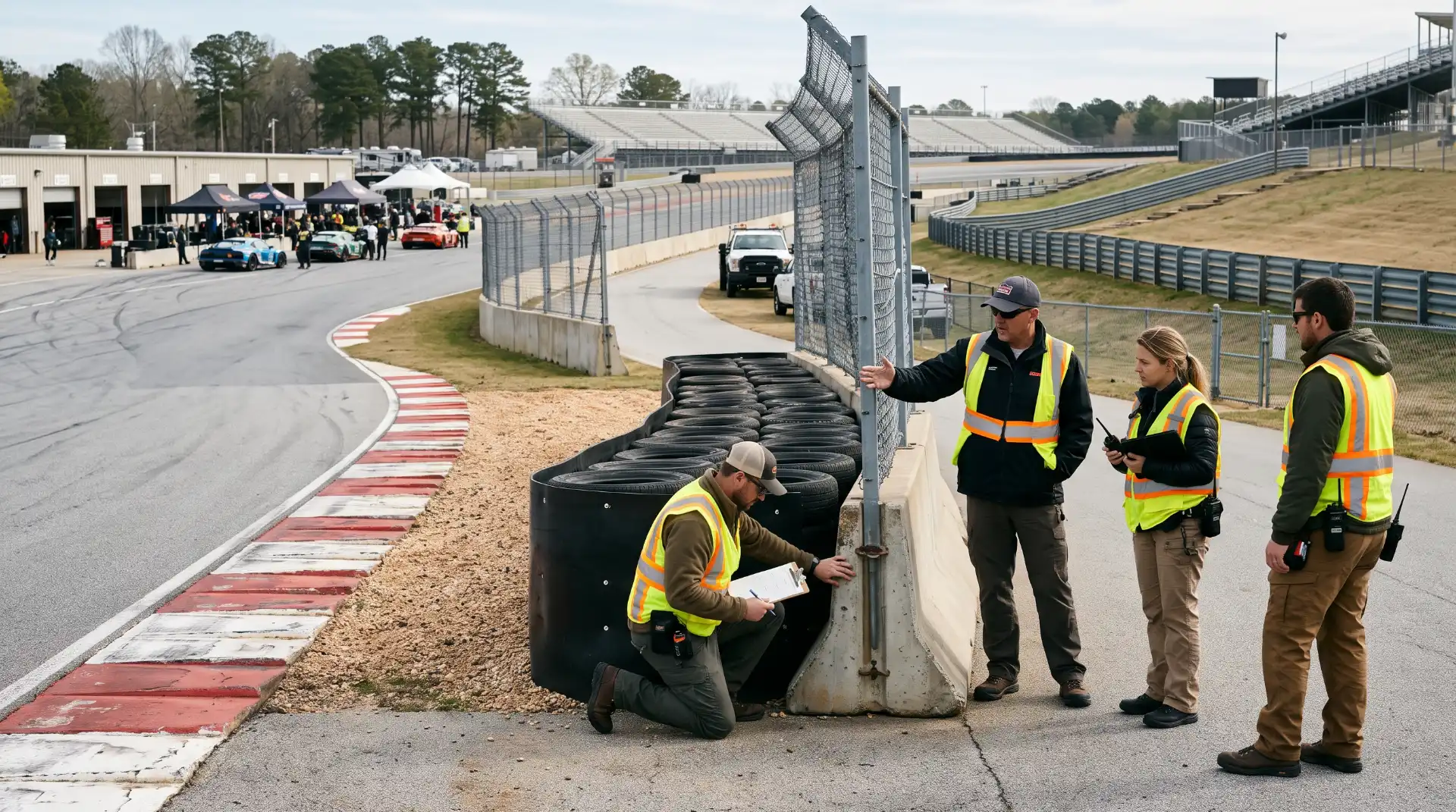
Effective Track and Spectator Protection
Facilities should evaluate the condition of their driving surfaces, runoff areas, barriers, and spectator viewing locations.
Access restrictions should be clearly communicated and enforced.
Event planners should consider the possibility that a vehicle may leave the intended driving surface and should organize the environment accordingly.
Emergency Response Preparation
Events involving high-speed driving should have appropriate emergency plans.
Personnel should understand how to communicate with emergency responders, identify the location of an accident, and coordinate access for medical and fire response teams.
Emergency equipment and personnel should be appropriate for the nature and scale of the activity.
Clear Communication of Safety Rules
Participants should receive understandable instructions before operating a vehicle.
Organizers should avoid relying exclusively on lengthy liability documents to communicate essential safety requirements.
Clear briefings, visible signs, understandable restrictions, and consistent supervision can help participants recognize the dangers associated with the activity.
Safety communication should also address what participants must do if they experience a mechanical problem, lose vehicle control, or observe another driver behaving dangerously.
Why These Cases Require Detailed Legal Investigation
High-performance driving accident claims can be considerably more complicated than ordinary automobile accident cases because they may involve several different areas of law.
A single collision could raise questions involving negligence, product liability, premises liability, contractual waivers, comparative fault, and insurance coverage.
For example, a vehicle manufacturer may argue that the driver exceeded the vehicle’s operating limits. The event organizer may claim that the participant signed a document accepting the risks of the activity. The racetrack operator may argue that the accident resulted from driver error rather than a dangerous property condition.
Meanwhile, the injured individual may maintain that a mechanical failure, inadequate instruction, or unsafe event arrangement contributed to the collision.
Resolving these competing arguments requires more than determining which vehicle struck another. Investigators may need to examine vehicle components, event policies, training records, safety procedures, electronic data, and witness accounts.
An experienced personal injury attorney may coordinate with accident reconstruction specialists, automotive engineers, medical professionals, and other experts to evaluate the available evidence.
It is also important to identify all potentially responsible parties before negotiating a settlement. If an injured person pursues a claim against only one participant without considering other contributing factors, additional sources of potential compensation may be overlooked.
Frequently Asked Questions About High-Performance Test Drive Accidents
Can I sue a car manufacturer if I crash during its test drive event?
Potentially, yes. A manufacturer may face liability if a vehicle defect, inadequate warning, or other legally actionable conduct contributed to the accident. However, the manufacturer is not automatically responsible simply because the crash occurred during its event. Evidence must establish a sufficient connection between the alleged misconduct and the injuries.
Can a dealership be responsible for an accident during a performance demonstration?
A dealership may face negligence allegations if its employees or representatives fail to exercise reasonable care in arranging or supervising a demonstration. Examples may include allowing an unsuitable participant to operate a vehicle, ignoring known mechanical problems, or providing inadequate safety instructions.
Does signing a liability waiver prevent me from filing a lawsuit?
Not necessarily. Liability waivers can affect a person’s ability to pursue certain claims, particularly claims involving ordinary negligence in recreational activities. However, enforceability depends on the wording, applicable state law, and circumstances of the accident. In California, releases generally cannot eliminate liability for future gross negligence in recreational activities.
Can spectators sue after being injured at a car event?
Potentially. Spectators may have claims involving negligent event management, dangerous property conditions, inadequate barriers, or other legally actionable conduct. However, liability waivers and assumption-of-risk principles may affect individual cases, particularly when spectators enter restricted or high-risk areas.
What if a professional driving instructor causes the accident?
An instructor may face liability if negligent instructions, inadequate supervision, or failure to respond to an obvious safety problem contributes to a collision. The instructor’s actual responsibilities and the circumstances of the event will determine whether a legal claim is available.
Can multiple companies be responsible for the same high-performance driving accident?
Yes. A manufacturer, dealership, event promoter, instructor, racetrack operator, maintenance contractor, and participant may all become relevant to an investigation. More than one party may share responsibility if their respective actions or failures contributed to the accident.
What if the accident happened on a private racetrack?
An accident on private property can still result in a personal injury claim. Property owners and operators may have responsibilities involving maintenance, access restrictions, safety barriers, and other dangerous conditions. However, the participant’s assumption of risk and any signed agreements may affect the outcome.
How long do I have to file a personal injury lawsuit in California?
California generally provides a two-year statute of limitations for personal injury lawsuits under Code of Civil Procedure Section 335.1. However, exceptions and different deadlines may apply, particularly when government entities are involved or when special legal circumstances exist. An injured person should obtain legal advice promptly rather than assuming the general deadline applies to every claim.
Conclusion
High-performance test drives and automotive events provide opportunities for manufacturers, dealerships, and driving enthusiasts to experience vehicles under demanding conditions. However, these activities also create safety responsibilities that should not be overlooked.
When serious accidents occur, legal responsibility may extend beyond the person operating the vehicle. Depending on the circumstances, manufacturers, dealerships, event organizers, driving instructors, racetrack owners, maintenance providers, and other parties may face allegations involving negligence, defective products, or unsafe property conditions.
Liability waivers and assumption-of-risk agreements can complicate these cases, but they do not automatically eliminate every possible legal claim. California courts have recognized that certain releases can protect racing event operators against ordinary negligence claims, while important legal limitations remain for gross negligence and other forms of wrongful conduct.
For injured participants and spectators, preserving evidence and understanding the responsibilities of everyone involved can be essential to pursuing compensation. Vehicle inspection records, event agreements, witness statements, video recordings, and technical evidence may all help establish what happened and whether preventable safety failures contributed to the collision.
As manufacturers continue using high-performance driving experiences to promote their vehicles, event safety and accountability will remain important issues. Every organization involved in these activities should take reasonable precautions to protect participants, employees, and spectators from foreseeable dangers.
When a serious crash occurs, injured individuals deserve an investigation that examines the complete circumstances rather than automatically placing responsibility on the person behind the wheel. Understanding the legal responsibilities of manufacturers and event organizers can help victims and their families make more informed decisions about their rights under California law.
Legal disclaimer: This article provides general educational information about U.S. and California personal injury law. It is not legal advice and does not establish an attorney-client relationship. Liability and available compensation depend on the specific facts, applicable laws, and evidence in each case.