
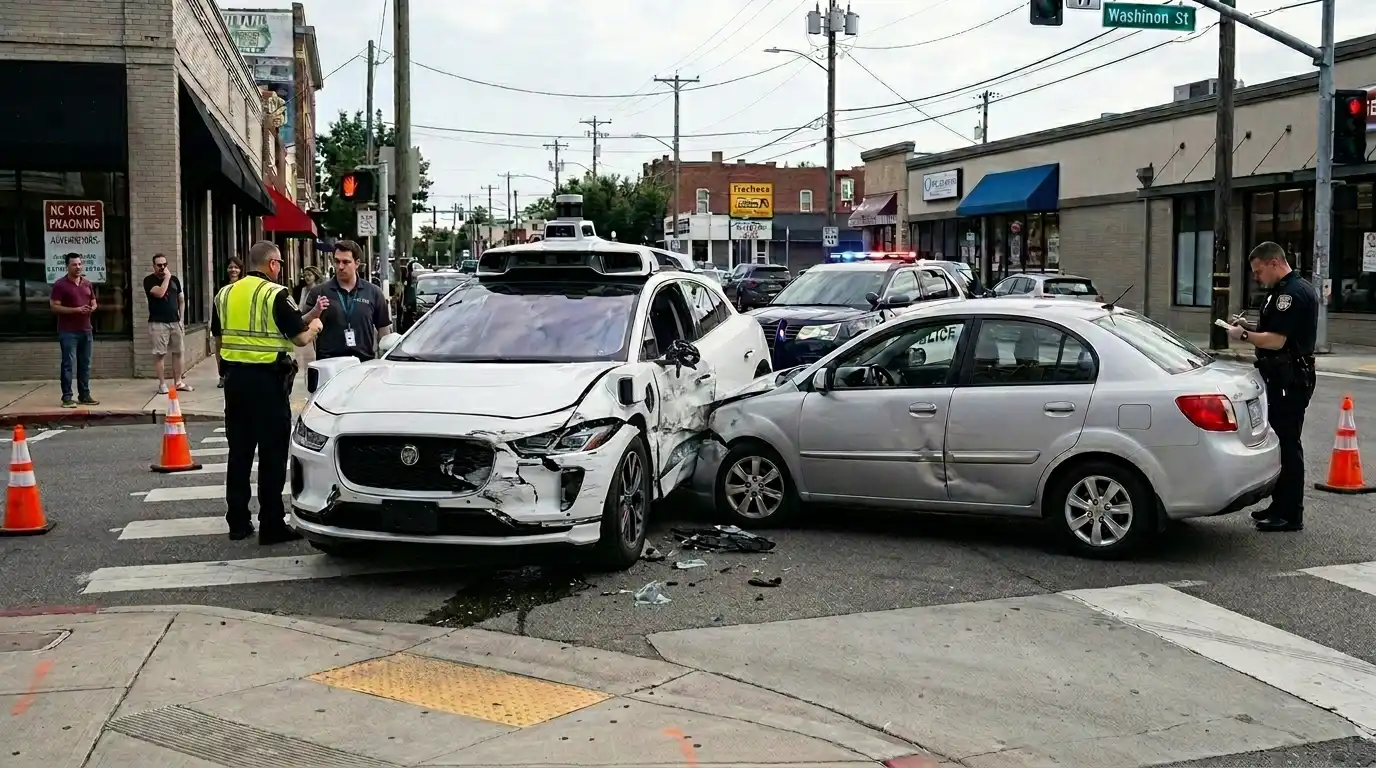
Self-driving vehicles have become one of the most promising innovations in transportation. While these autonomous cars are marketed as being safer and more efficient than their human-driven counterparts, they are not immune to accidents. In 2026, with self-driving technology continuing to evolve, questions surrounding legal responsibility in the event of crashes are more pressing than ever. Who is liable when an autonomous vehicle is involved in an accident? Is it the manufacturer, the software company, the car owner, or someone else? In this post, we will examine the legal responsibilities related to self-driving vehicle crashes in 2026, highlighting the challenges, changes in legislation, and potential outcomes for those affected.
What Are Self-Driving Vehicle Crashes?
Self-driving vehicles, or autonomous vehicles (AVs), are equipped with artificial intelligence (AI) and a variety of sensors that allow them to operate without human input. These vehicles can navigate roads, avoid obstacles, and make driving decisions autonomously. However, the technology is not foolproof, and accidents can still occur. These crashes range from minor fender benders to catastrophic collisions.
In most cases, accidents involving self-driving vehicles raise legal questions regarding liability. Traditional car accidents have well-established rules of responsibility, but the introduction of autonomous vehicles complicates matters. In these cases, determining the cause of the crash and identifying the responsible party becomes significantly more complex.
Who Is Legally Responsible for Self-Driving Vehicle Accidents?
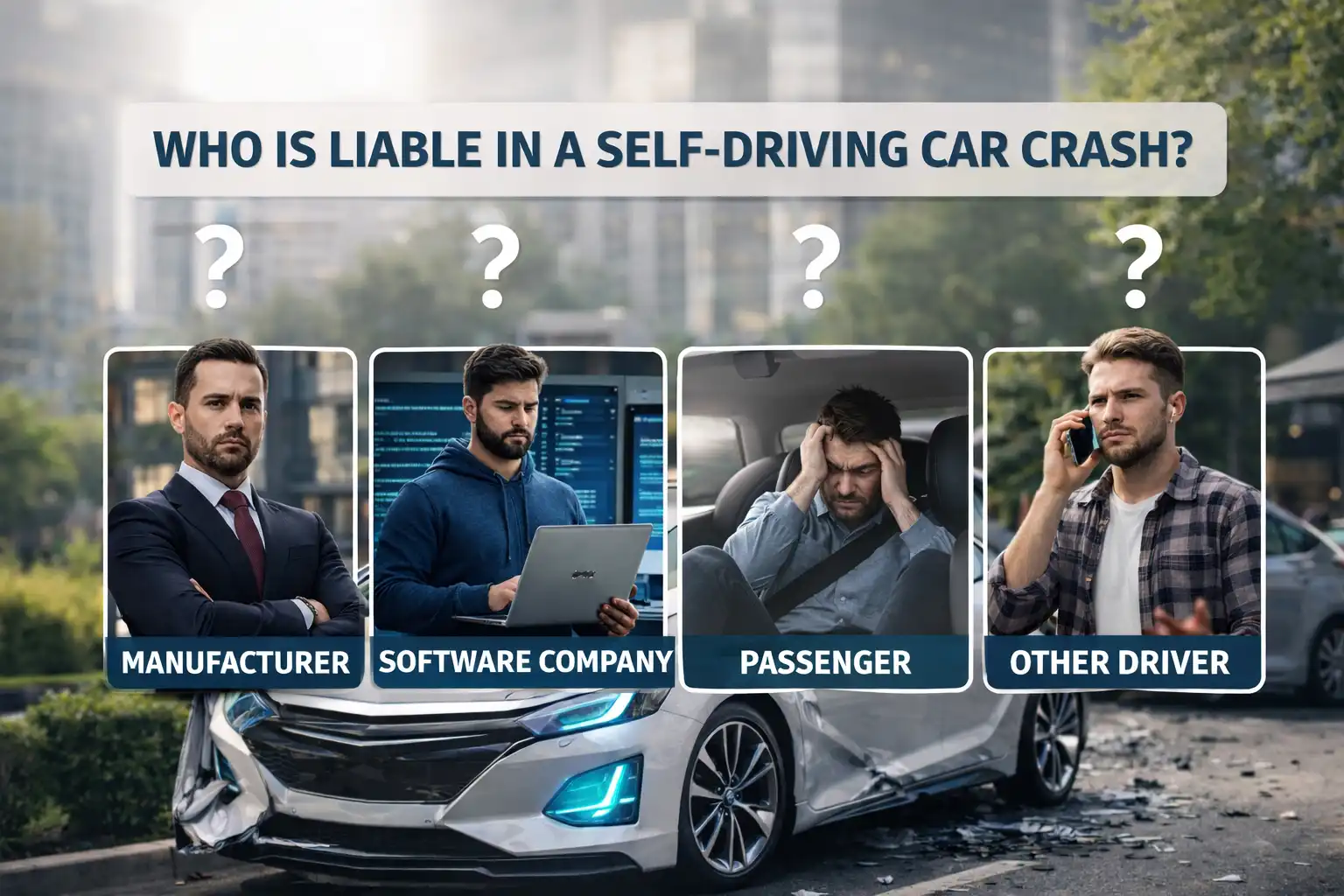
One of the primary concerns surrounding self-driving vehicle crashes is determining who is legally responsible. The complexities of these accidents lie in the fact that multiple parties could potentially be at fault, depending on the nature of the crash.
- The Manufacturer (Car Maker)
The manufacturer of the self-driving vehicle is often considered one of the primary parties responsible in the event of a crash. If the crash was caused by a failure in the car’s technology, such as malfunctioning sensors or faulty software, the car manufacturer could be held liable. In 2026, as autonomous vehicle technology becomes more advanced, manufacturers will likely be held accountable for defects in the vehicle’s design or its failure to perform as advertised. - The Software Developer
Many autonomous vehicles rely on third-party software developers for their AI and operating systems. If the software fails to process information correctly or causes the vehicle to make a wrong decision, the software company could be held liable. The growing number of self-driving car manufacturers partnering with technology firms to develop the AI means that legal accountability may extend beyond just the vehicle manufacturer. - The Human Driver
Although self-driving vehicles can function autonomously, they still require a human driver in certain situations, such as when the vehicle encounters a scenario it cannot handle on its own. If a human driver is present and fails to take control of the vehicle when necessary, they may be held liable for accidents caused by their negligence. - The Vehicle Owner
In cases where the self-driving car’s technology malfunctions or causes an accident while in the possession of its owner, the owner could be partially responsible. However, this would depend on whether the owner was in control of the vehicle or whether the crash occurred solely due to the autonomous system. - The Other Driver
If another vehicle is involved in the accident, the driver of that vehicle may also be held responsible. Like traditional car accidents, if the other driver was negligent, such as driving under the influence or running a red light, they may be at fault for the crash.
Legal Implications for Manufacturers, Drivers, and Insurers
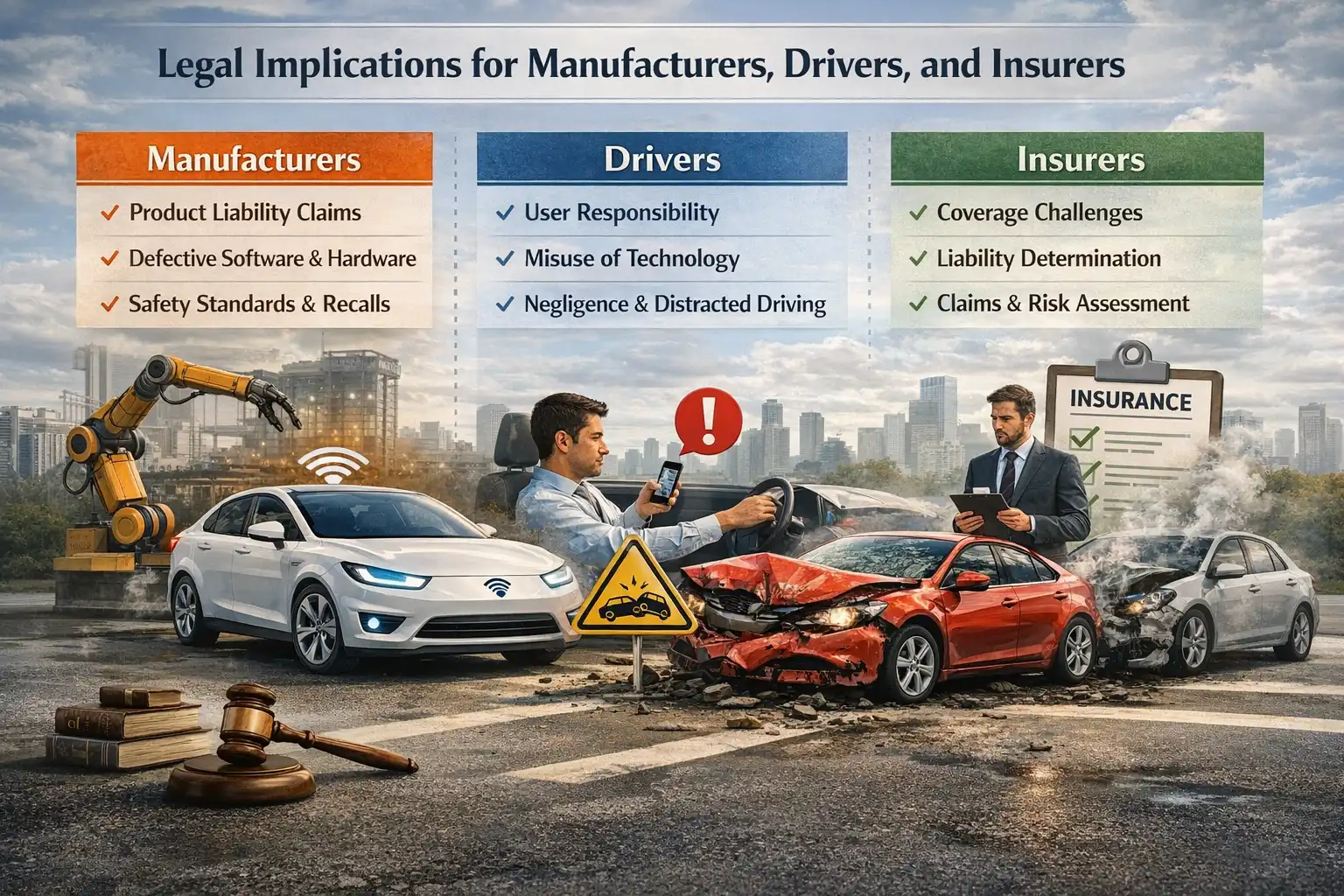
The rise of autonomous vehicles has introduced significant challenges for the legal system. In 2026, the regulatory landscape is evolving, and the legal framework surrounding AV accidents is in its infancy. Various legal implications exist for the parties involved in a self-driving vehicle crash.
- The Need for Clear Legislation
Currently, many states in the US have passed laws that allow autonomous vehicles to operate on public roads, but the rules governing crashes involving these vehicles are not yet fully clear. In 2026, lawmakers will likely be required to enact clearer legislation to address the specific circumstances of self-driving car accidents, including how to handle liability for both manufacturers and drivers. - The Role of Insurance
As self-driving vehicles become more prevalent, insurance companies are also adjusting to the new landscape. Traditional car insurance policies may need to evolve to cover autonomous vehicles, with insurers possibly offering specific coverage for the technological aspects of the car, including its AI and sensors. In the event of a crash, determining fault becomes more complex, and insurers will need to assess whether the accident was caused by human error, system failure, or another factor. - Manufacturers’ Liability
As the technology behind self-driving cars becomes more sophisticated, manufacturers may face increasing legal pressure. In cases where a vehicle’s failure directly leads to an accident, the manufacturer may be liable for damages. Legal experts have also raised concerns about the lack of transparency in how self-driving technology is developed and tested. As manufacturers are held more accountable, they will likely face stricter regulations to ensure that their vehicles meet safety standards.
Current Laws and Regulations in the US on Self-Driving Vehicles
In the US, self-driving vehicles are regulated by both state and federal laws. The National Highway Traffic Safety Administration (NHTSA) has issued guidelines for autonomous vehicles, which include recommendations for testing, design, and performance standards. However, the legal framework surrounding these vehicles is still evolving, and there is no unified national law governing self-driving vehicle crashes.
Some states, like California and Nevada, have established laws to permit testing and operation of self-driving vehicles on public roads. These states have also implemented rules that require manufacturers to report accidents involving autonomous vehicles. In 2026, the federal government may enact more comprehensive legislation, requiring manufacturers to meet higher safety standards and clearly defining liability in the case of accidents.
The Future of Legal Responsibility in Autonomous Vehicle Accidents
Looking forward, the legal responsibility surrounding self-driving vehicle accidents will continue to evolve. In 2026, as technology advances, the role of manufacturers, software developers, and insurers will become even more significant. Key areas to watch include:
- Updates to Liability Laws
New laws will likely be implemented to address the unique challenges posed by self-driving vehicle crashes. These laws will clarify responsibility, ensuring that victims have the means to pursue justice while holding manufacturers accountable for their products. - Integration of AI and Machine Learning in Legal Processes
With the increasing use of AI in self-driving vehicles, legal professionals may also start utilizing AI-driven tools to analyze and interpret accident data. This could lead to faster, more accurate investigations, as AI systems will be able to track the exact details of the crash and provide evidence for the legal proceedings. - International Considerations
As self-driving technology grows in popularity, international regulations may also play a role in determining legal responsibility. Different countries will likely adopt their own standards for autonomous vehicles, which may create complications for manufacturers that operate globally.
Conclusion
As autonomous vehicles continue to transform the landscape of transportation, understanding the legal responsibility for crashes involving self-driving cars is critical. In 2026, the legal environment surrounding self-driving vehicle accidents will become clearer, but challenges remain. It is essential for legislators, manufacturers, insurance companies, and drivers to navigate the evolving landscape to ensure that accountability is fairly distributed in the case of an accident.
With the introduction of clearer laws, advancements in AI technology, and the ongoing push for regulatory change, the future of self-driving vehicle liability will be shaped by both legal and technological forces.